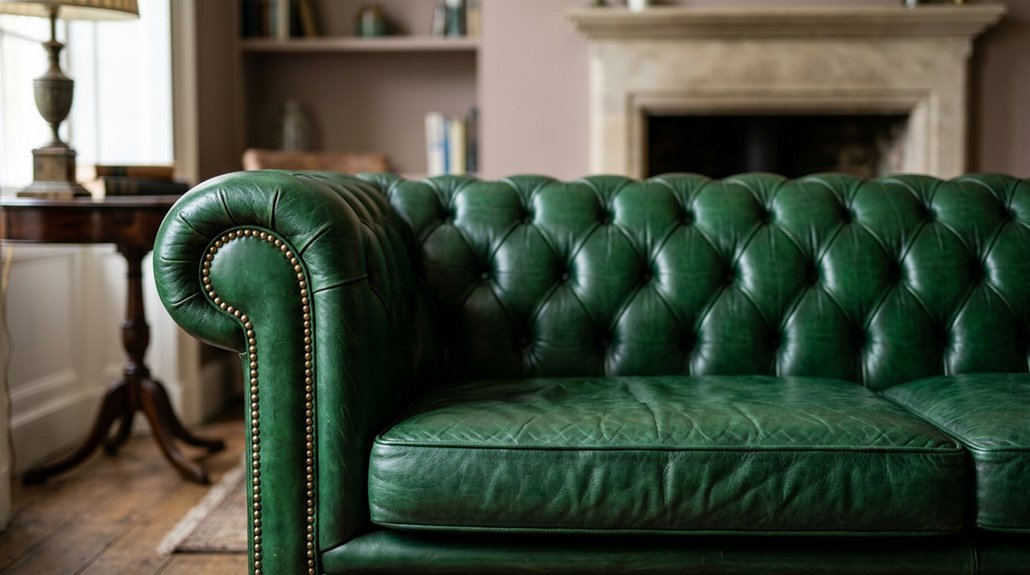
A Chesterfield sofa is the ultimate luxury centerpiece, featuring rolled arms that match the high back, deep button tufting creating diamond patterns, and serious craftsmanship. Named after an 18th-century British earl, it conveys wealth and refined taste. These sofas are typically 84 inches long with 22.5-inch seat depth, come in leather or velvet, and cost £2,439–£3,449. Victorians perfected the comfort by adding horsehair filling and strategic buttoning. Consider whether one fits your space and style.
What Defines a Chesterfield Sofa?
What Defines a Chesterfield Sofa?
The Signature Look
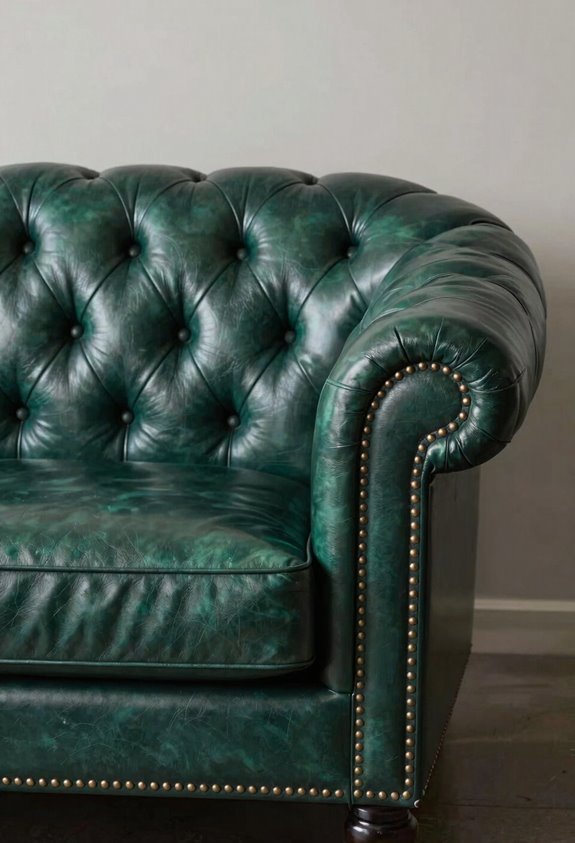
Chesterfield sofas are instantly recognizable by their distinctive rolled arms, which match the height of the back and create a uniform silhouette. The deep button tufting is another defining characteristic, contributing to their luxurious appearance.
Classic Materials
Traditional Chesterfield sofas typically feature dark leather upholstery, though modern versions come in velvet and fabrics. The low seat and sturdy frame construction ensure durability and comfortable use for years.
Historical Significance
Named after Lord Philip Stanhope, the 4th Earl of Chesterfield in the 18th century, these sofas became symbols of status and timeless elegance.
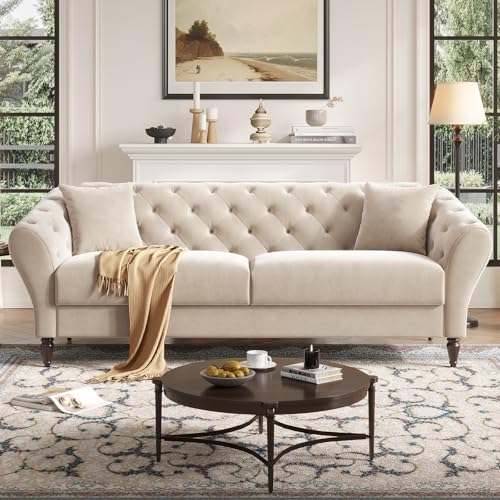
2-Seater Sofa - The sofa frame made of FSC-Certified wood. COPIAE'S sofa size 35.5"D x 81"W x 30"H, offering ample space for three people to sit comfortably. Ideal for living rooms, dens, apartments

【Elegant Classic Design】Featuring rolled armrests and decorative nailhead trim, this Kolavess sofa combines timeless charm with modern appeal. The tailored detailing enhances any interior décor, whether your space leans contemporary, traditional, or transitional. Its elegant design seamlessly complements any decor style, making it a perfect centerpiece for your living room, bedroom, or office.

【Elegant Classic Design】Featuring rolled armrests and decorative nailhead trim, this sofa combines timeless charm with modern appeal. The tailored detailing enhances any interior décor, whether your space leans contemporary, traditional, or transitional. Its elegant design seamlessly complements any decor style, making it a perfect centerpiece for your living room, bedroom, or office.
The Signature Features: Tufting, Rolled Arms, and High Backs
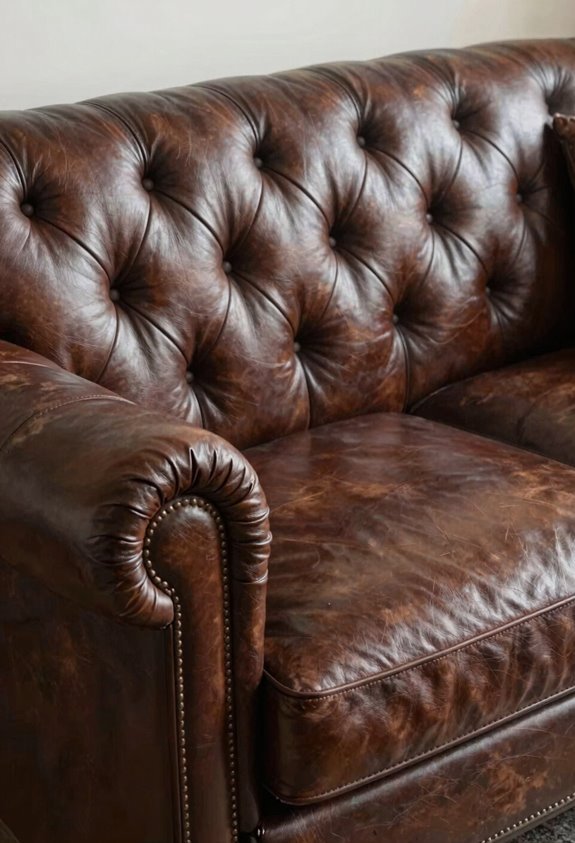
I’ve always been drawn to how a Chesterfield’s deep button tufting, usually arranged in that iconic diamond pattern, isn’t just visually appealing; it actually keeps the horsehair filling in place so your sofa stays comfortable for decades. What distinguishes this design is how those rolled arms sit perfectly level with the high back, creating this enclosed, fortress-like silhouette that conveys luxury through its proportions alone. These signature features make a Chesterfield unmistakably timeless, whether it’s wrapped in traditional dark leather or modern fabrics.

【Timeless Chesterfield Tufted Style】Bring classic elegance to your living space with this chesterfield sofa. Featuring button-tufted upholstery, rolled arms, nailhead trim, and birch wood legs, this L-shaped sofa combines traditional craftsmanship with modern appeal. The tufted sofa design creates a stylish centerpiece for living rooms, family rooms, and open living spaces

【Classic Tufted Chesterfield Sofa Design】 Featuring deep button tufting, rolled arms, and nailhead trim, this faux leather Chesterfield sofa brings timeless character to your living room furniture. The classic silhouette blends easily with modern, traditional, and transitional décor, making it a stylish choice for living rooms, family rooms, lounges, offices, or reception areas

【Chesterfield Style】Designed in classic Chesterfield style, the two-seater sofa incorporates all the key elements, including deep button tufting, nailhead trim, rolled arms and gourd legs. Perfect for your living room or bedroom.
Deep Button Tufting
The deep button tufting on a Chesterfield sofa serves both aesthetic and functional purposes. This technique, developed around 300 years ago, secures loose upholstery and creates that densely padded surface characteristic of the style.
Originally, craftspeople used horsehair filling, and tufting kept everything in place, preventing sagging over time. This structural integrity remains relevant today. The deep button tufting works alongside rolled arms and high backs to create the unmistakable Chesterfield silhouette, distinguishing authentic pieces from inferior imitations.
Rolled Arms Design
What really sets a Chesterfield apart from your average sofa? Those iconic rolled arms. I’ve sat on plenty of couches, and I can tell you these aren’t your standard armrests. They’re the same height as the back, creating an enclosed, luxurious feeling that provides comfort.
Why They Matter:
The rolled arms give a Chesterfield chair its signature plush appearance. When you sink into one, you’re surrounded by support. They’re not just functional; they’re a statement piece.
What Makes Them Special:
- Same height as the back
- Contribute to that prestigious look
- Provide genuine comfort and enclosure
- Work perfectly with the button tufting
These rolled arms transform any room instantly. They define what makes a Chesterfield sofa a distinctive furniture choice.
Origins in 18th-Century London and Why the Name Endured
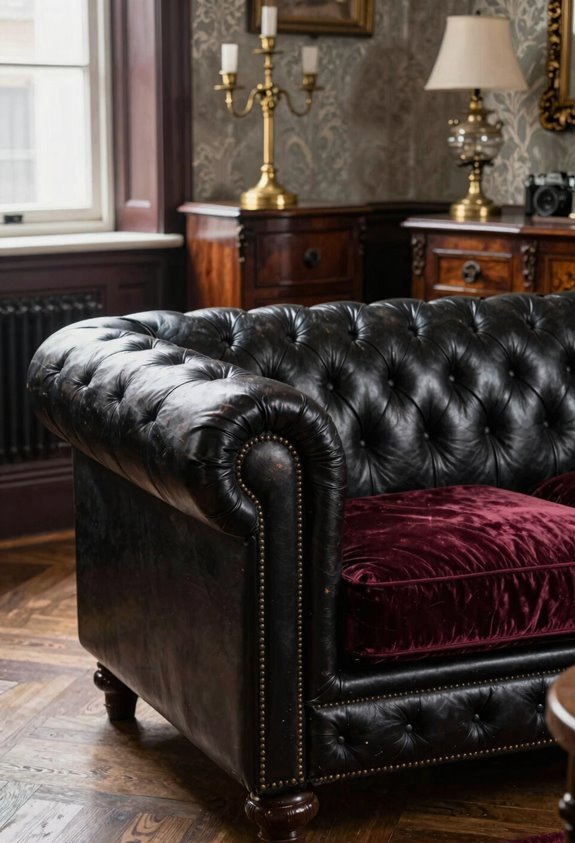
Ever wonder why a fancy sofa gets named after a person instead of, say, its shape or comfort level. The Chesterfield sofa carries the name of Philip Stanhope, the 4th Earl of Chesterfield, who commissioned Edward Jelleyman to design it in the 1700s London. This story endures because Chesterfield House itself, designed by Isaac Ware, became the iconic symbol of sophistication.
| Element | Details |
|---|---|
| Origin | 1700s London |
| Named After | 4th Earl of Chesterfield |
| Designer | Edward Jelleyman |
| House Designer | Isaac Ware |
The term “Chesterfield” didn’t actually appear until the mid-1800s. Once it did, the name stuck because Lord Chesterfield’s family kept the house until 1870, cementing the sofa’s association with elegance and an exclusive standard of refined taste.

CLASSIC CHESTERFIELD DESIGN – Deep button tufting, rolled arms, nailhead trim, and a high back create a timeless Chesterfield sofa that blends traditional elegance with modern comfort.

HIGH QUALITY MATERIAL: Our elegantly designed, high quality chesterfield style couch cover is made of 85% polyester and 15% spandex fabric,much softer,more comfortable. It makes these couch covers perfect fit for most sizes furniture, practical and aesthetic. High recommended on both leather and cloth sofa.

✨CLASSIC RETRO AESTHETICS: Crafted with timeless iconic Chesterfield styling that perfectly blends vintage luxury charm with sleek mid-century modern minimalism, this faux leather chesterfield sofa features exquisite handcrafted deep button tufting, elegant nailhead trims and sturdy premium wood legs that form an upscale refined silhouette.
What Victorians Changed About the Chesterfield
When I first learned about Victorian-era Chesterfields, I was surprised how much they ditched the original “sit-for-a-minute” design in favor of actual comfort. People could finally relax without feeling like they were perched on a board. The Victorians swapped out basic fillings for horsehair, which kept its shape far better, and introduced deep buttoning throughout the cushions and back. This transformed the sofa from a stiff status symbol into something genuinely inviting. The shift from pure ornamentation to functional comfort marked a major turning point, establishing the Chesterfield as a luxury piece that combined both style and substance.

【Modern Design】Crafted with dutch velvet fabric and wood frame, This sofa is built to last and is sturdy in build with capable of holding up to 600lbs, with a stable side armrest, it can be used as a support system or to prevent children from falling.

【Comfortable PU Leather】Upholstered with exquisite PU Leather material, this chesterfield sofa offers an enjoyable and comfortable feel, and won’t wrinkle so easily that you can sit and lie on the sofa freely.

Classic Chesterfield Style: This chesterfield sofa features the timeless look of a mid century modern sofa with tufted buttons, rolled armrests and nailhead trim that brings sophisticated vintage flair to any living space
Horsehair Filling Innovation
How’d the Victorians actually improve comfort on a sofa that was already pretty iconic? Early Chesterfield sofas relied heavily on horsehair filling, a practical choice that kept the piece’s shape intact, though comfort took a backseat to durability. The shift came when Victorians recognized that horsehair alone didn’t provide adequate lounging comfort. They introduced deeper tufting and buttoning techniques that worked alongside the filling, creating better support and structure. Eventually, they started blending horsehair with modern foam and polyester materials. This combination transformed Chesterfields into genuinely comfortable pieces while maintaining their iconic durability. The Victorians upgraded their approach without abandoning tradition, successfully balancing comfort with the structural integrity their sofas required.
Deep Button Enhancement
The deep buttoning technique transformed what I’d describe as a plain sofa into the ornate, luxurious piece we recognize today. During the Victorian era, craftspeople like myself would have appreciated how deeper tufting created that signature quilted look. It wasn’t just aesthetic; it actually improved functionality.
What Changed:
- Buttons sank deeper into the cushioning
- Tufting became more pronounced and structured
- Horsehair filling supported these deeper indentations
Victorians recognized that deeper buttoning served dual purposes: enhanced comfort and striking style. The padded, textured appearance distinguished Chesterfields from earlier, flatter designs. This innovation transformed a functional seat into a durable prestige piece that conveyed sophistication, which is exactly what Victorian homeowners desired.
Comfort Over Practicality
Why did Victorians prioritize comfort in their Chesterfields alongside practicality? As wealth grew, expectations for refined living spaces increased. The Chesterfield transformed from a basic seat into a symbol of leisure and sophistication.
| Era | Focus |
|---|---|
| Early Victorian | Practicality |
| Mid-Victorian | Comfort Introduction |
| Late Victorian | Luxury Emphasis |
| Modern | Both Combined |
Deep buttoning and tufting served both aesthetic and functional purposes. Horsehair fillings stabilized seating surfaces, allowing users to sink in without sacrificing support. The combination of comfort and status appeal made the Chesterfield the iconic sofa it remains today.
How Victorian Innovation Transformed Comfort
When you sink into a modern Chesterfield sofa, you’re experiencing decades of Victorian ingenuity that transformed how people thought about comfort.
Victorian designers revolutionized the Chesterfield through smart innovations:
Victorian designers revolutionized the Chesterfield through smart innovations that transformed comfort and style into one iconic piece.
- Deep buttoning replaced shallow tufting, creating better support
- Horsehair filling stayed secure thanks to strategic tufting techniques
- Enhanced padding made long sitting sessions actually enjoyable
- Structured cushioning preserved that iconic silhouette we all recognize
- Practical meets stylish design finally became a reality
Earlier Chesterfields prioritized looking good over feeling good. Victorian makers flipped that script entirely. They didn’t abandon the sofa’s distinctive appearance; they enhanced it while making it genuinely comfortable for hours of use. Deep-buttoned tufting became the signature that set Chesterfields apart from every other upholstered piece, combining aesthetic appeal with functional comfort.

[Spacious 3-Seat Sofa]: 89.5" wide with 66.5" of interior seat width and a 22.5" deep seat, providing comfortable space for up to three adults to relax, watch TV, read, or entertain.

[Spacious 3-Seat Sofa]: 89.5" wide with 66.5" of interior seat width and a 22.5" deep seat, providing comfortable space for up to three adults to relax, watch TV, read, or entertain.

Comfy & Ergonomic : Having roomy deep seat and designed with supportive wide square armrests and backrest,this nailhead trimmed 3 seater sofa is comfortably upholstered with premium velvet fabric and padded with high density foam
Why Chesterfields Became Status Symbols
I’ve always found it fascinating how the Chesterfield sofa went from being a practical piece of furniture to becoming an ultimate status symbol in Victorian society. When these sofas started appearing in exclusive London gentlemen’s clubs like the Savile Club during the mid-1800s, they were basically announcing to everyone that you had serious wealth and belonged to the upper class. The combination of their durable leather, those impressive rolled arms, and the intricate button tufting made them instantly recognizable as luxury items. This represented a significant form of social signaling during the period, as only the wealthy could afford such elaborately crafted furnishings.

Tailored for Chesterfield Sofas:Designed to fit most 3-seater Chesterfield sofas with classic rolled arms. The stretch fabric provides a neat, tailored appearance.
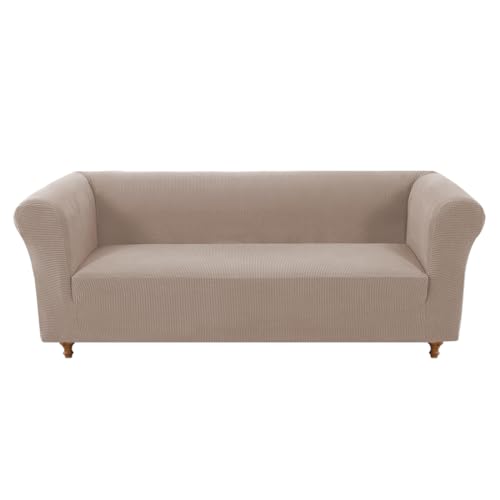
Tailored for Chesterfield Sofas:Designed to fit most 3-seater Chesterfield sofas with classic rolled arms. The stretch fabric provides a neat, tailored appearance.

[Classic Chesterfield Design] This 63-inch sofa beautifully blends the timeless elegance of Chesterfield style with mid-century modern simplicity. Featuring button-tufted upholstery, delicate nailhead trim outlining the contours, and gracefully rolled armrests, it creates a sophisticated focal point for any living room, office, or lounge area.
Wealth And Class Association
Because the Chesterfield sofa’s luxurious design conveyed wealth and taste, these pieces became the ultimate status symbol in mid-19th century London. Owning one signified that you’d arrived socially. What made them so desirable:
- Deep button tufting showed craftsmanship and expense
- Rolled arms signaled refined elegance and sophistication
- High-back silhouette commanded respect in any room
- Exclusive gentlemen’s clubs featured them prominently, creating aspirational appeal
- Aristocratic connections linked them to historic prestige and power
The Chesterfield represented more than furniture; it was your ticket to belonging among London’s elite. These sofas graced prestigious spaces like the Savile Club, communicating a clear message: durability, refinement, and unmistakable wealth. Even today, owning a Chesterfield conveys timeless luxury to anyone who sees it.
Exclusive Gentlemen’s Club Culture
How did the Chesterfield sofa become the ultimate ticket to London’s most exclusive clubs? The answer lies in what the Chesterfield represented. Back in the day, these elite gentlemen’s clubs became the place where wealth and status mattered most. The Chesterfield fit perfectly into this world because it communicated luxury and permanence.
Why Clubs Loved Them:
- Deep button tufting showed craftsmanship
- Substantial rolled arms displayed refinement
- Durable construction lasted generations
- Rich upholstery communicated exclusivity
The Savile Club bar area became famous for its Chesterfield prominence. These sofas were not just furniture; they were membership badges. When you sank into one of those commanding silhouettes, you were telling everyone you had arrived. Chesterfields transformed into status symbols that remain relevant today because they embodied the exclusivity and permanence that defined membership in these institutions.
Leather and Velvet: Traditional Materials Explained
Two materials stand out when you’re shopping for a classic Chesterfield sofa: leather and velvet. Each offers distinct advantages for your living space.
Why These Materials Work:
- Leather develops a beautiful patina over time, improving with age
- Velvet provides that sumptuous, luxurious texture
- Both pair perfectly with the signature button tufting
- Leather requires less maintenance for daily care
- Velvet demands gentle handling but offers elegant results
Leather suits high-traffic homes since it’s forgiving with spills. Velvet transforms your Chesterfield sofa into a statement piece that conveys sophistication. The rolled arms and deep buttons shine regardless of material choice. Your decision depends on lifestyle considerations: durability or luxury. Both options ensure your investment lasts generations.

Timeless Style for Any Space: Elevate your home's elegance with this luxurious Chesterfield sofa. Featuring rolled arms with silver nailhead trim and a deep tufted backrest, it creates a refined, layered look. Solid dark wood turned legs complete the classic design, making it a stylish centerpiece for any living room, office, or lounge

Elevate Your Living Room with Timeless Elegance – Make a statement in your home with our modern Chesterfield sofa. The striking button-tufted back, gracefully rolled arms, and chic nailhead trim bring that high-end designer look to your space without the sky-high price tag. Whether you're hosting guests or enjoying a quiet evening, this couch transforms your living room into a showcase of refined taste

✅ 【3-in-1 Convertible Sofa Bed Design】–Effortlessly transforms from a 4-seater sofa to a recliner or king-size bed in seconds. Includes a multifunctional ottoman for extra seating, footrest, or drink surface. Ideal for small spaces and apartments.
Modern Chesterfield Options: Styles and Materials
While classic leather and velvet remain timeless choices, today’s Chesterfield sofas offer far more flexibility than their Victorian ancestors. Modern designs successfully balance the iconic aesthetic with practical functionality for contemporary living.
Modern Chesterfield sofas blend timeless elegance with contemporary practicality, offering far greater flexibility than their Victorian predecessors.
Beyond Traditional Materials
Modern Chesterfield upholstery includes faux leather, durable fabrics, and velvet options. The rolled arms and button tufting remain defining features, while manufacturers now offer squared or French-influenced lines alongside classic designs.
Customization That Actually Works
The customization options are substantial. Over 100 material choices, five size variants, and detailed finishes like nailhead trim and varied wood feet allow you to match your space while maintaining the distinguished Chesterfield character.

CUSTOM FIT: Our newest modern stretch sofa slipcovers are constructed with 3 PIECE style (including 1 base cover and 2 individual cushion covers). Allow you to create the custom upholstered look. Best fits sofas 72 to 88 inches wide (outside arm to outside arm, straight across), 31 to 41 inches tall. Each individual cushion cover fits up to 35 to 40 inches length, 21.6 to 30.5 inches width, 2 to 10 inches height

[Luxurious Fabric & Comfortable Feel] Crafted with high-tech premium fabric, this sofa is soft, skin-friendly, and breathable, offering a delicate touch and ultimate comfort for relaxation.

【Classic Chesterfield Leather Sofa】With a minimalistic yet refined structure, this leather couch mid century furniture brings out a simplistic style that emphasizes comfort and functionality. Ultra soft and comfortable chesterfield style large sofa that has classic and sophisticated look.
Chesterfield vs. Wingback: Which Classic Sofa Fits You?
Once you’ve narrowed down your upholstery choices and customization options, you’ll face another decision: do you want a Chesterfield or a wingback?
Consider these key differences:
- Chesterfield’s rolled arms match the back height, creating a unified, elegant look
- Wingback’s towering silhouette dramatically frames the room and feels more regal
- Tufting defines Chesterfields, while wingbacks emphasize enveloping height
- Room scale matters: Chesterfields suit intimate spaces; wingbacks command larger rooms
- Your style preference: timeless sophistication versus dramatic presence
The choice depends on your room’s dimensions. The Chesterfield’s lower profile works better in cozy spaces, while a grand living room benefits from a wingback’s commanding presence.


Chesterfield Style: Featuring a classic Chesterfield design, this sofa showcases elegant deep-button tufting, nailhead trim accents, and gracefully rolled arms. The luxurious details give it a sophisticated, mid-century modern appeal. Perfect for living rooms, apartments, or home offices, this tufted leather sofa adds an upscale ambiance to your interior décor.

【Timeless Mid-Century Chesterfield Design】Embrace iconic style with this classic Chesterfield sofa. Featuring deep button tufting, elegant rolled arms, and gleaming silver nailhead trim, it brings a touch of sophisticated, mid-century modern elegance to any living room, office, or study.
Why Chesterfields Hold Up (and Hold Value)
I’ve learned that a Chesterfield isn’t just a pretty piece of furniture. It’s actually an investment that appreciates over time because of its rock-solid construction and timeless appeal. These sofas hold their value because they’re built with kiln-dried hardwood frames, quality leather or fabric, and handcrafted details like brass nailhead trim that don’t go out of style. When deciding between a trendy sofa that’ll look dated in five years or a Chesterfield that my grandkids might want to inherit, the choice is clear.

[Spacious 3-Seat Sofa]: 89.5" wide with 66.5" of interior seat width and a 22.5" deep seat, providing comfortable space for up to three adults to relax, watch TV, read, or entertain.
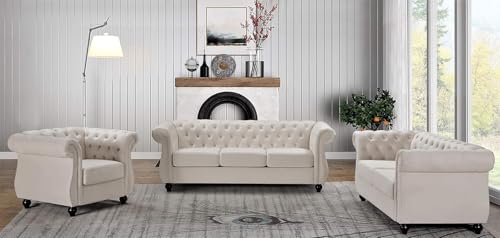
REGAL LIVING ROOM -Our sofas & couches transform any room into a regal retreat; This 3 pc sofa set displays a timeless chesterfield design, luxurious ivory velvet upholstery & deep diamond tufting

[Luxurious Chesterfield Design] Elevate your living space with this 61.25" deluxe sofa, featuring classic Chesterfield tufted buttons and a diamond-stitched design. Its elegant velvet upholstery and buttoned detailing create a sophisticated, upscale aesthetic, perfect for living rooms, offices, bedrooms, or lounges.
Durability Through Quality Materials
A Chesterfield sofa isn’t just a pretty face. It’s built with exceptional durability, which is why quality construction matters so much. What makes these sofas reliable is their rock-solid construction underneath all that gorgeous upholstery.
Here’s what defines their durability:
- Hardwood frames form the backbone, resisting warping and sagging for decades
- Top-grain leather and premium fabrics resist wear better than cheaper alternatives
- Deep button tufting distributes your weight evenly, preventing those annoying dips
- Rolled arms provide structural support that keeps the whole thing standing tall
- Lifetime warranties from experienced manufacturers back up these promises
Investing in quality materials upfront means you won’t need to replace your sofa every five years. This durability delivers measurable long-term savings and sustained comfort.
Timeless Design Investment Value
Why do Chesterfield sofas appreciate in value while most furniture depreciates the moment you bring it home? A Chesterfield isn’t just furniture. It’s a legacy piece. The classic deep button tufting and rolled arms never go out of style, which means you can resell yours for nearly what you paid.
What matters most:
British craftsmanship backs every quality Chesterfield. With 15+ years of manufacturing experience, makers ensure solid hardwood frames that last decades. The 25-year frame guarantee reflects genuine confidence in durability.
The prestige factor is significant. From 18th-century clubs to today’s homes, Chesterfields signal sophistication. That enduring association keeps demand strong and protects your investment long-term.
Styling a Chesterfield: Modern vs. Traditional Rooms
How you style your Chesterfield sofa depends on what vibe your room already has.
Traditional rooms need:
- Classic wood accents and brass nailhead trim
- Damask wallpaper to emphasize heritage
- Dark leather upholstery for authentic impact
- Pieces that celebrate the Chesterfield’s rolled arms and button tufting
For contemporary spaces, the approach differs:
- Minimalist furniture surrounding the sofa
- Lighter fabrics and neutral tones
- Focus on the sculptural silhouette itself
- Updated fabric finishes in varied colors
The typical 3-seat Chesterfield measures 84 inches long with a 22.5-inch seat depth, so scale matters significantly. Knowing your room’s proportions helps determine whether to embrace heritage styling or let the sofa’s beautiful structure function as a modern statement piece.
Price Range and Where to Buy
So, where do I actually find a quality Chesterfield without emptying my wallet?
British-made Chesterfields offer incredible value, especially during their June Sale with 20% off. Pricing ranges from £2,439 to £3,449, depending on the model you choose.
| Model | Starting Price | Styles Available |
|---|---|---|
| London | £3,049 | 17 |
| Wandsworth | £2,439 | 18 |
| Conrad | £3,449 | 20 |
Each sofa is handmade in Great Britain with 10-12 week delivery. You can customize across 100+ materials and five sizes for serious personalization without excessive cost. With assemblies and tools included, you’re investing in furniture built to last generations rather than just purchasing a piece.
How to Choose the Right Chesterfield for Your Space
Once you’ve found a Chesterfield that catches your eye, the real challenge begins: figuring out if it’ll actually work in your home.
Nailing this decision requires measuring twice and considering your space carefully. Here’s what to evaluate:
- Room dimensions – Measure your space first; most Chesterfields come in 5 sizes, so pick a length that doesn’t overwhelm the room
- Seating needs – Standard 3-seaters work for most households, but verify it fits your family size
- Frame quality – Look for hardwood frames and reinforced springs; they provide better durability
- Material choices – Choose from over 100 fabrics or leather options based on your lifestyle and maintenance preferences
- Design details – Nailhead trim and wood-tone feet either complement or clash with your decor, so visualize the placement carefully
The Chesterfield design’s timeless appeal means you’re investing in something that will retain its relevance for years, rather than following a temporary trend.
Common Mistakes to Avoid When Selecting a Chesterfield
I’ve learned that assuming all buttoned furniture is a true Chesterfield is mistake number one. Authentic Chesterfields feature rolls-arched arms, matching back height, and deep button tufting, not just any tufted couch.
Authentic Chesterfields demand rolled-arched arms, matching back height, and deep button tufting—not just any buttoned furniture.
I also discovered that skimping on materials backfires. Quality matters. I prioritize top-grain leather or premium fabrics with solid hardwood frames because they last.
Scale trips me up too. Oversized pieces destroy that classic proportion I’m after. I check seat depth (around 22.5 inches) and height (about 6.25 inches) for real comfort.
Finally, I almost missed customization options. Exploring sizes, materials, and finishes ensures my Chesterfield actually fits my space and lifestyle, not just my aesthetic vision.
Final Thoughts: Is a Chesterfield Right for You?
Why did it take me so long to realize that a Chesterfield isn’t for everyone, despite my clear preference for them?
After exploring everything from sizing to materials, I’ve learned that choosing a Chesterfield requires honest self-reflection. Consider these factors:
- Your space – Do you have room for those signature rolled arms?
- Your lifestyle – Can you maintain leather or fabric upholstery?
- Your budget – Are you ready to invest in durability and prestige?
- Your style – Does the classic silhouette match your home’s vibe?
- Your commitment – Will you appreciate it for decades?
Chesterfields reward thoughtful buyers. They’re timeless, striking pieces that command attention. They’re not necessary for everyone, though. If you’ve answered yes to most questions, you’re ready to invest in one. Otherwise, explore other furniture options without hesitation.