
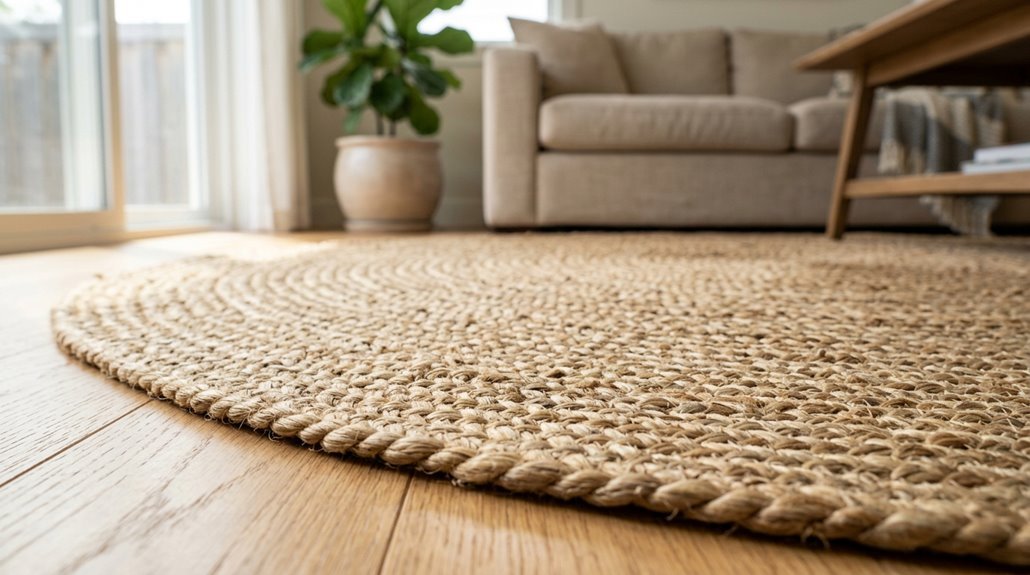
Jute rugs offer a natural, minimalist aesthetic at an affordable price point compared to wool.
Their lifespan ranges from 5–10 years in low-traffic areas, though moisture significantly reduces durability.
They perform best when placed away from kitchens and bathrooms.
Weekly vacuuming and prompt blotting of spills will extend their appearance and longevity.
Jute is fully recyclable, providing an environmental advantage.
Proper placement, maintenance practices, and cost-benefit analysis determine whether jute rugs suit your needs.
Why Jute Rugs Appeal to Modern Interiors

Jute rugs have become a popular choice for contemporary homes because their natural fibers balance style with substance. Their wheat-like color blends seamlessly with minimalist aesthetics, whether paired with polished floors or leather sofas.
Jute rugs balance natural style with substance, their wheat tones seamlessly complementing minimalist interiors and modern furnishings.
Why Jute Rugs Work in Modern Interiors:
- Affordability – Cost-effective compared to wool alternatives
- Understated elegance – The flat-weave construction feels intentional, not trendy
- Versatility – They layer beautifully with other patterns in a space
- Eco-friendly appeal – Biodegradable natural fibers
Jute anchors furniture arrangements, creating visual balance without overwhelming minimalist schemes. Handwoven pieces add personality and character to interiors. Their neutral tone serves as an effective foundation for layered design approaches.
How Jute Stacks Up Against Wool and Synthetics

I’ve compared jute, wool, and synthetic rugs myself, and jute wins on price—I saved about 40-60% compared to wool of the same size. Wool outperforms it in softness and durability, especially in high-traffic spots like my hallway where jute would wear thin within a few years. Synthetics (polyester and plastics) resist moisture significantly better than jute, making them practical for kitchens or bathrooms where spills could weaken the fibers, though they lack the natural, earthy texture of jute.
Cost And Affordability
When I’m shopping for a new rug, my wallet always has something to say about it. Jute rugs cost considerably less than wool alternatives of the same size, making them perfect for my budget. Here’s how they stack up:
| Rug Type | Cost | Durability |
|---|---|---|
| Jute | Low | Medium |
| Wool | High | High |
| Synthetic | Medium | High |
I appreciate jute’s affordability without sacrificing style. While wool lasts longer and synthetics clean easier, jute offers that natural, earthy look I love at a price that doesn’t strain my bank account. For low-traffic spaces, the cost-to-appearance ratio is unbeatable. I get genuine character without overspending.
Durability And Longevity
How long will your jute rug actually last? Durability depends heavily on where you place it. Here’s what to know about wear and tear:
- Low-traffic spots (like under a coffee table) keep jute rugs looking fresh for 5–10 years
- Moderate-traffic areas need replacing every 3–5 years with proper care
- High-traffic zones (hallways, kitchens) cause fraying and shedding within a couple years
Jute isn’t as soft or long-lasting as wool, but it’s gentler on your wallet. Unlike synthetics, jute struggles with moisture; spills can seriously damage it. You get that natural texture without breaking the bank, provided you’re strategic about placement and realistic about its lifespan.
How Long Do Jute Rugs Actually Last?

Jute rugs, a natural fiber option, typically last five to ten years with proper care. Durability really depends on how you treat yours.
What Affects Lifespan:
- Moisture exposure damages fibers quickly
- Heavy foot traffic causes premature wear
- Construction quality matters (handmade beats machine-made)
Regular maintenance extends longevity significantly. Vacuum on low settings, blot spills immediately, and rotate placement seasonally. Use rug pads and keep yours away from kitchens and bathrooms, since moisture is a jute rug’s worst enemy.
Jute rugs perform best in moderate-traffic areas rather than high-traffic spaces. This placement strategy maximizes their lifespan and maintains their appearance over time.
What Shortens a Jute Rug’s Lifespan: Moisture, Traffic, and Quality
While jute rugs can last 5-10 years with proper care, three main factors can significantly reduce that lifespan: moisture damage, heavy foot traffic, and rug quality. Spills near your kitchen sink weaken jute fibers, while pets and kids wear down the weave in high-traffic hallways. Machine-made rugs also deteriorate faster than handmade, tightly woven options. Understanding each of these factors will help you protect your investment.
Moisture Damage and Degradation
Because jute is a natural plant fiber, it’s basically a sponge for water, and that’s one of the biggest threats to your rug’s survival.
Moisture damage and degradation happen quickly. Water weakens those natural fibers, causing them to fray and break down. Key concerns include:
- Staining becomes permanent when water sits too long on jute
- Mold and mildew develop in damp conditions, ruining your rug from inside out
- Fiber strength decreases with repeated moisture exposure, cutting your rug’s lifespan significantly
Avoid water-based cleaning methods. Instead, blot spills immediately and let them dry completely. Keeping your natural fiber rugs in dry spaces, away from kitchens and bathrooms, protects them. Proper moisture control extends a rug’s life to 3–7 years instead of just a couple.
Heavy Traffic Wear Patterns
If you’ve ever watched a jute rug deteriorate in a high-traffic hallway, you’ll understand why placement matters as much as maintenance does. I learned this the hard way when my living room rug started fraying after just two years.
Heavy foot traffic is a jute rug’s biggest enemy. Constant walking breaks down fibers faster than expected. That’s why rug pads are essential under rugs; they distribute weight and reduce friction significantly.
| Traffic Level | Best Placement | Lifespan |
|---|---|---|
| Low | Bedrooms | 5-8 years |
| Moderate | Living rooms | 3-5 years |
| High | Hallways | 1-2 years |
| Very high | Entryways | Under 1 year |
| Mixed | Dining areas | 2-4 years |
Keep jute rugs away from bustling areas to extend their lifespan and prevent premature wear.
Construction Quality Impact
- Handmade rugs with tight weaves outlast machine-made options by years. Tight weaves prevent premature fraying, while loose weaves compress easily under furniture, creating permanent damage.
- Loose weaves compress easily under furniture, causing permanent damage that becomes apparent when moving furniture around.
- Quality craftsmanship costs more upfront but saves money long-term since you’re not replacing rugs constantly.
Tighter weaves resist wear better, especially in high-traffic areas like living rooms. Handmade rugs demonstrate sturdier fiber construction and better resilience compared to machine-made alternatives, which often feel flimsy by comparison.
Where Jute Rugs Work Best: The Right Rooms and Placements
Light, neutral color schemes work best. Avoid competing patterns that clash with jute’s natural wheat-beige tones. The textured look adds warmth to spaces where comfort is prioritized over heavy-duty durability requirements.
Routine Jute Rug Care: Vacuuming, Blotting, and Rotation
I’ve learned that keeping my jute rug looking fresh really comes down to two main things: how I vacuum it and how quickly I handle spills. Since jute’s coarse fibers trap dirt and hide it from view, I’ve found that vacuuming on a low setting without the beater bar is essential if I want to avoid fraying and shedding. When spills happen, I blot with a dry towel first, then use mild soap for anything stubborn, because water-based cleaners damage jute fibers.
Vacuuming Techniques and Frequency
Why do so many jute rug owners skip the vacuum? I used to think my jute rug could handle aggressive cleaning, but I was wrong.
Gentle vacuuming on low settings protects those delicate fibers. Here’s what I do now:
- Use an upholstery attachment instead of a beater bar. I noticed less fraying after switching.
- Vacuum in the direction of the weave. This prevents that frustrating fuzzy appearance.
- Rotate quarterly. I stopped favoring one high-traffic corner.
I vacuum weekly to remove dirt without damaging my investment. When I spot spills, I blot immediately rather than rubbing. This routine has transformed how my jute rug looks and feels. Proper vacuuming techniques are straightforward and essential for protecting your rug’s longevity and appearance.
Blotting Spills and Stain Prevention
For persistent stains, I use mild soap sparingly with blotting techniques rather than water-based methods, which can damage jute. I keep paper towels handy near high-traffic areas because quick response time prevents lasting damage. This simple habit has protected my rug substantially. By addressing spills fast, I extend my rug’s lifespan while maintaining its appearance.
When and Why Jute Rugs Fail: Wear Patterns and Repair Limits
I’ve watched my jute wear fastest in doorways and hallways where foot traffic never stops. The fibers compress, fray becomes visible, and the degradation is significant. What I’ve discovered about jute failure includes:
- High-traffic zones cause pile deformation that spreads across the rug surface
- Moisture from spills weakens fibers permanently, making mold a serious threat
- Edge unraveling develops gradually, especially with handwoven pieces
Repair limits are narrow. Minor unraveling can be tucked back, but significant fraying requires replacement. Mid-weight, handwoven jute survives 3–7 years with proper care in moderate traffic. Without proper maintenance, degradation occurs sooner.
How to Know When It’s Time to Replace Your Jute Rug
Understanding your jute rug’s breaking point requires recognizing actual warning signs in your home. Persistent stains, loose binding, and mismatched edges signal replacement time. Mold or mildew growth is non-negotiable; moisture compromises both the rug’s integrity and your family’s health. Watch for excessive shedding, fraying, and odors that proper care cannot fix. Heavy traffic wear matters too. When your rug looks tired despite your efforts, it affects your room’s overall appearance. Handmade jute rugs typically last five to ten years before needing replacement, even with excellent maintenance. Replacing them before they deteriorate completely keeps your space looking intentional and fresh.
Is a Jute Rug Worth the Cost?
When deciding whether to invest in a jute rug, weigh the upfront price against what you’re actually getting for your money.
The Real Value Proposition
Jute rugs offer genuine worth if you’re realistic about your space. Here’s what makes them worthwhile:
Jute rugs deliver genuine value when you match them thoughtfully to your space and lifestyle needs.
- Affordability meets aesthetics – You get that natural, earthy vibe without breaking your budget
- Visual aging gracefully – Handwoven jute actually looks better as it develops character over years
- Eco-conscious choice – You’re supporting sustainable materials
The Durability Factor
For low-to-moderate traffic areas, jute’s durability justifies the cost. You’re looking at 3–5 years minimum, potentially 5–10 years with quality construction. This represents solid value. Keep the rug away from moisture and heavy use, which isn’t difficult when you plan thoughtfully.
The Environmental Case for Jute
Beyond the price tag and durability concerns, jute offers another compelling environmental advantage.
Why Jute Wins Environmentally
Jute is a fast-growing natural fiber grown primarily in India and Bangladesh, making it genuinely renewable. Unlike synthetic alternatives, jute rugs are eco-friendly because they’re completely recyclable and biodegradable, allowing for guilt-free disposal.
The Production Advantage
The low energy-intensive production process stands out compared to synthetic manufacturing. Jute fibers get soaked, stripped, dried, then spun into yarn and woven using a straightforward method.
Choosing jute supports sustainable practices without sacrificing style or budget. This environmental advantage makes jute rugs a sound investment for environmentally conscious consumers.
Jute vs. Alternatives: Making Your Final Choice
So, how do you know if jute’s really the right pick for your space?
When deciding between jute, wool, and synthetics, weigh three key factors:
- Your lifestyle matters most—jute works best in low-traffic areas since it lasts 3–5 years with care, while wool handles heavy use better
- Your budget shapes everything—jute costs less than wool, freeing up money for other décor
- Your values count—choose jute when sustainability drives your decisions, knowing its natural beauty and recyclable nature align with eco-conscious goals
Jute’s natural durability shines in bedrooms and living rooms where foot traffic stays minimal. You’ll accept more shedding and staining in exchange for that earthy aesthetic. Pick jute if sustainability matters to you and you can tolerate these trade-offs in lower-traffic spaces.


