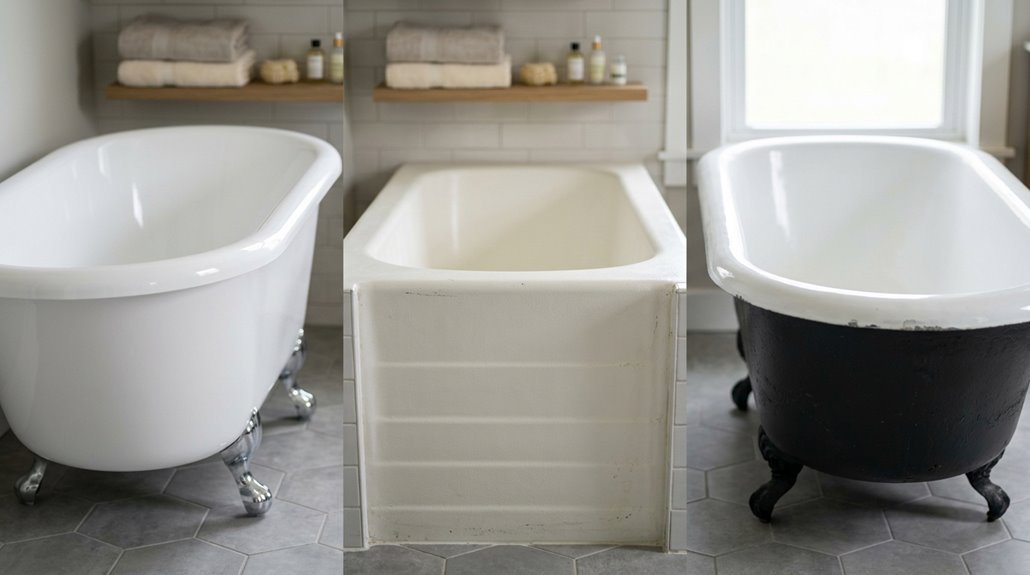
I’ve tested these three materials, and here’s my ranking: Acrylic wins for most people. It’s lightweight, budget-friendly, and keeps bathwater warm longer.
Fiberglass costs less upfront but the gel coat fades quickly, it feels flimsy underfoot, and your water gets cold fast.
Cast iron offers durability and heat retention but demands professional installation and costs significantly more.
Your choice depends on whether you prioritize saving money now or investing in long-term comfort. Continue reading for specifics on each material’s performance.
How to Choose: The 3 Criteria That Matter Most
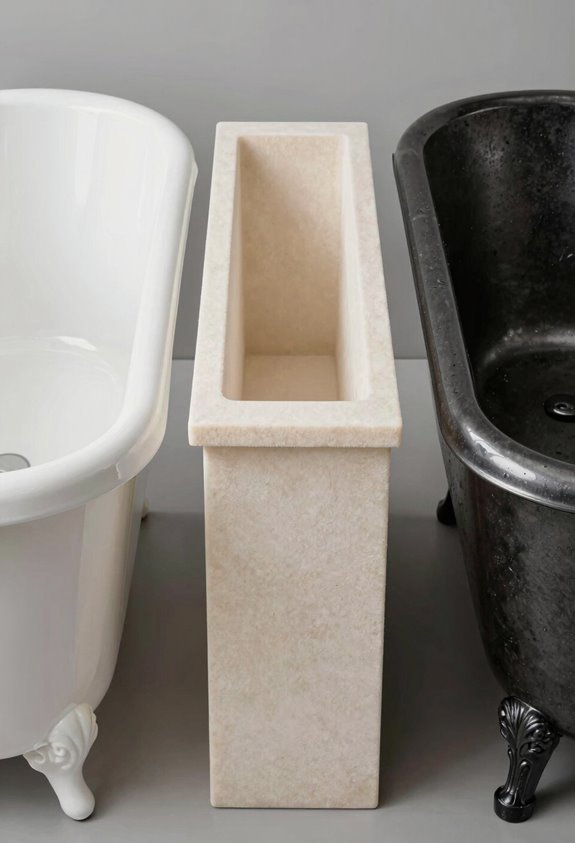
When I was shopping for a new bathtub, I quickly realized that just picking the prettiest one wasn’t going to cut it. I needed to think about what’d actually work in my home and my budget.
I discovered three criteria that genuinely matter: weight and installation, durability and long-term value, and heat retention plus maintenance. These factors shape everything else.
Weight and installation affected my floor support. I couldn’t just pick cast iron without reinforcing my bathroom. Durability meant weighing upfront costs against how long I’d keep the tub. Fiberglass lasts 5–10 years; acrylic, 10–15 years; cast iron, 30–70 years with refinishing.
Heat retention kept my bathwater warm longer, while maintenance needs, from acrylic scratching to fiberglass cracking, impacted my actual happiness using the thing daily.
Balancing these three criteria helped me choose what’d truly work for my life.

Universal Compatibility:Designed exclusively for Delta,Delex,Peerless,and LDR two-handle faucets,these replacement handles fit “D”-shaped valve stems perfectly,ideal for bathtubs,showers,sinks,and lavatories,they ensure seamless integration with your existing setup

✅ [DIMENSIONS AND SPECIFICATIONS]: Exterior Dimension: 67" Long x 31 1/2" Wide x 22 7/8" Deep

DURABILITY — Crafted meticulously from scratch-resistant ABS acrylic, our products ensure unparalleled longevity, capable of withstanding daily wear and tear effortlessly
Acrylic: Best for Budget and Easy Installation
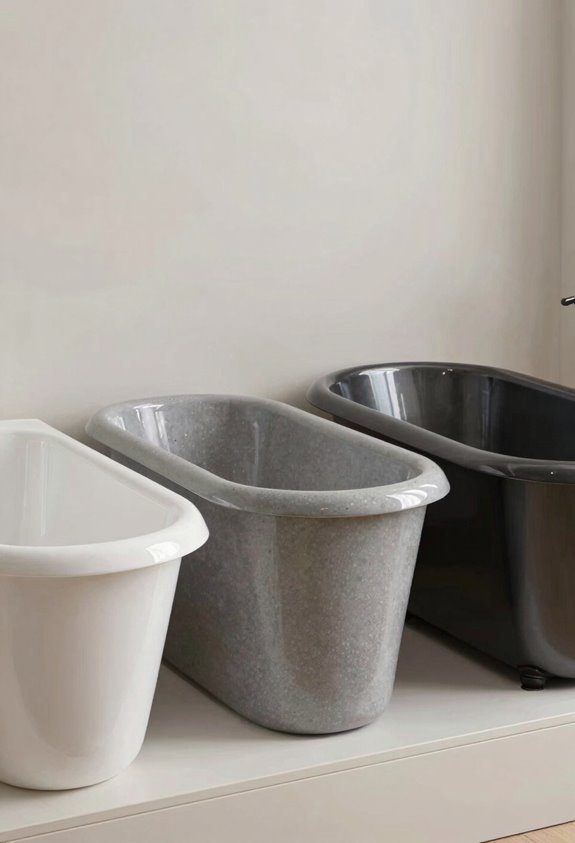
After narrowing down my options using those three criteria, acrylic kept appearing as the smart choice for my bathroom remodel. Acrylic tubs are lightweight and easy to install, which meant I didn’t need professional help. They’re budget-friendly, allowing me to splurge elsewhere in my bathroom.
What appealed to me most was their non-porous surface, excellent heat retention, and smooth feel. The reinforced fiberglass backing adds durability without breaking the bank. Acrylic stays warm longer than other materials.
Premium upgrades like AquateX™ offer stronger finishes and better hygiene benefits while remaining affordable. Lower-grade options scratch easier, but quality acrylic outperforms fiberglass long-term. For remodels requiring both performance and affordability, acrylic delivered the needed results.

Marine Fiberglass Repair Kit: This all-in-one epoxy filler can fix fiberglass boat damage efficiently, repairing deep scratches, cracks, chips, and holes in the boat, jet ski, yacht, surfboards, and other water vehicles. Our fiberglass repair kit has super strong adhesion and perfectly achieves seamless repair of marine gel coat, giving the boat finish a new life.rine Fiberglass Repair Kit

EFFECTIVE MARINE FIBERGLASS REPAIR KIT — Cracks, chips, scratches and holes on boat or fiberglass surfaces can worsen over time due to sun, water, and vibration. The Nanoxa gelcoat repair kit for boats helps repair damage effectively and prevent minor issues from spreading. This fiberglass repair kit works on boats, yachts, jet skis, kayaks, surfboards, decks and other watercraft

Exclusive tinting pigments – Easily match with your boat's white color with our 6 quality tinting pigments of 1/4 oz each. You won't find this offer elsewhere. Pigment colors include popular White, Black, Yellow, Blue, Red, and Brown. Adding color to white gelcoat creates lighter, pastel colors. Marine Coat One white gel coat with wax can be can be tinted by adding up to 1% polyester resin or gelcoat colorants prior to adding MEKP catalyst.
Fiberglass: Best for Affordability (With Trade-offs)
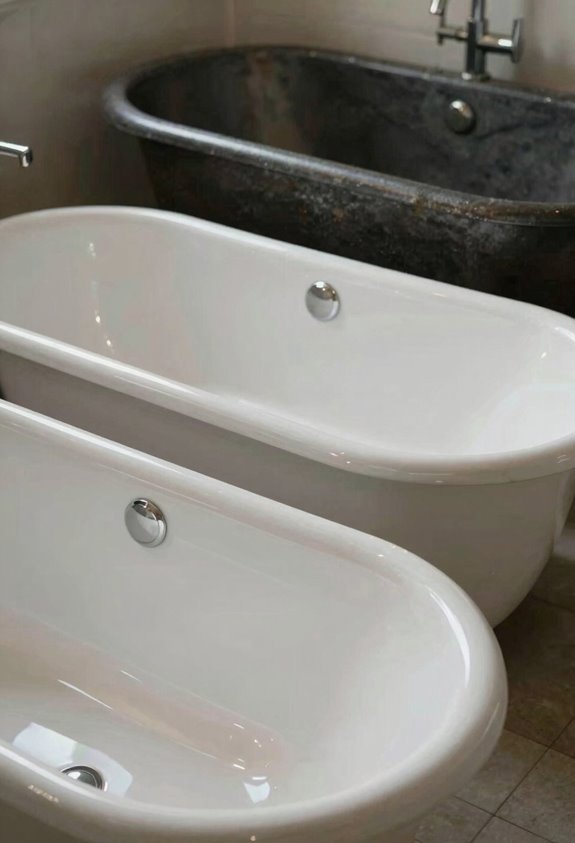
Why’d I almost pick fiberglass for my bathroom remodel? The affordability was tempting. Fiberglass tubs are genuinely cheap, lightweight, and install fast, perfect for budget bathrooms. I liked that they’re built by layering fiberglass over a mold with a gel coat surface.
Fiberglass tubs are genuinely cheap, lightweight, and install fast—perfect for budget bathrooms, but durability concerns stopped me cold.
The durability concerns stopped me. That gel coat fades, discolors, and cracks easily. Surface wear happens quickly, and the lifespan is shorter than acrylic or cast iron. Plus, fiberglass flexes noticeably underfoot; it doesn’t feel sturdy.
The maintenance trade-off proved problematic. Yes, cleaning’s simple, but refinishing the gel coat later gets expensive. Heat retention’s weak too, meaning cold baths.
Fiberglass works for guest baths you’ll rarely use. For my primary bathroom, I needed something lasting longer than five years.
PREMIUM QUALITY CONSTRUCTION: The Laurent Double Ended Clawfoot Tub is constructed from premium class A porcelain enamel over cast iron. Cast iron is one of the most popular and durable of all tub materials and has unparalleled heat retention.

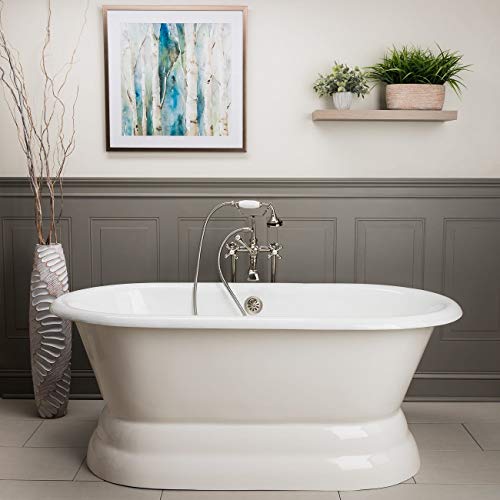
PREMIUM QUALITY CONSTRUCTION: The Mila Double Ended Pedestal Tub is constructed from premium class A porcelain enamel over cast iron. Cast iron is one of the most popular and durable of all tub materials and has unparalleled heat retention.

These tubs are made of cast iron with a coating of porcelain enamel that is tough to scratch and easy to clean. Cast iron tends to retain heat very well, making them ideal for longer soaking.