
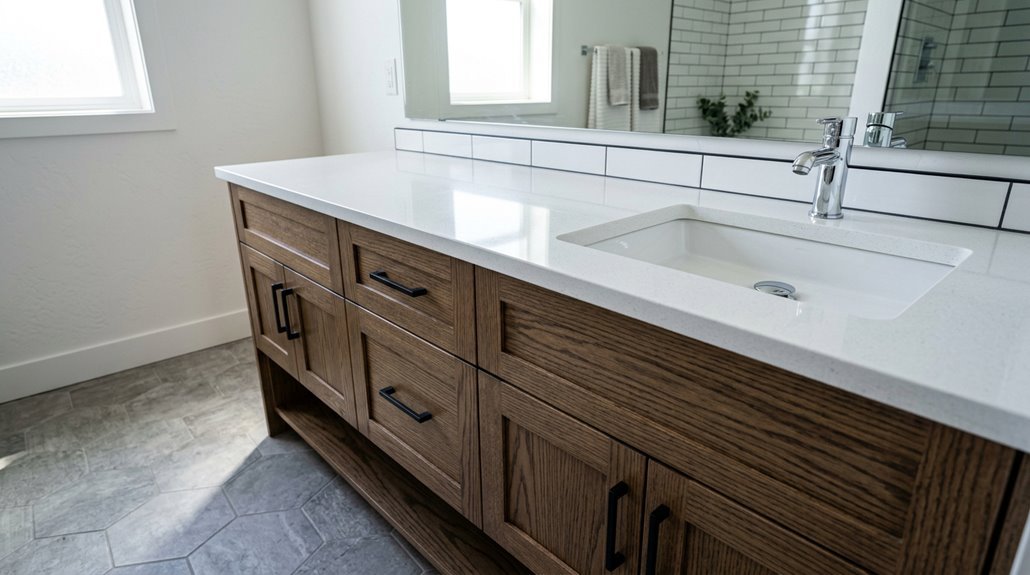
Standard bathroom vanities come in at 21 inches deep, but that measurement covers just the cabinet. Adding the 1 to 1.5-inch countertop overhang brings your actual depth to 22 to 22.5 inches. This affects your storage capacity, the comfort of your morning routine, and foot traffic flow in front of the sink.
Deeper vanities (22–24 inches) provide significantly more drawer space and counter room, while shallower options (16–18 inches) work better in tight bathrooms. The right depth choice depends on your bathroom size, sink type, and available elbow room in front.
The Industry Standard: 21 Inches Deep
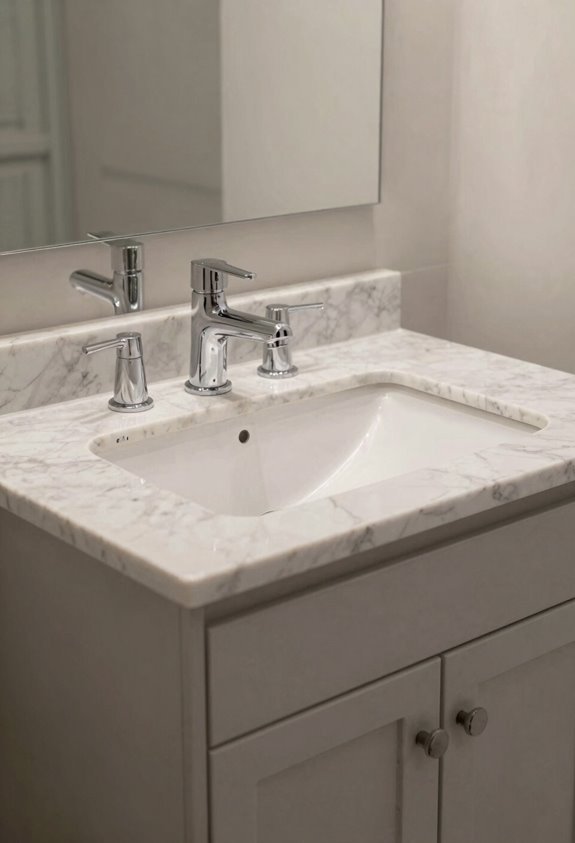
The actual installed depth is deeper than the standard measurement. That counter overhang, typically 1 to 1.5 inches, pushes the final measurement to roughly 22 to 22.5 inches.
This 21-inch standard remains North America’s go-to choice because it balances storage space with comfort. You get room for your stuff without sacrificing the walkway space you need.
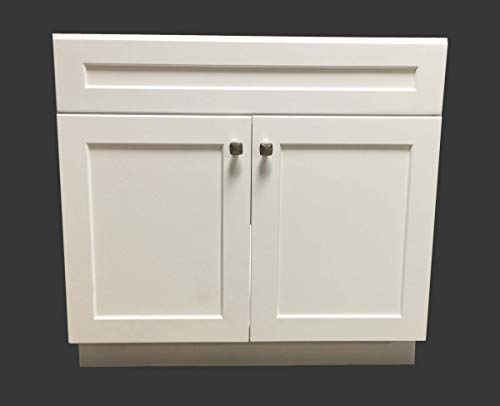
Bathroom Vanity Cabinet 30" W x 21" D x 34.5"H
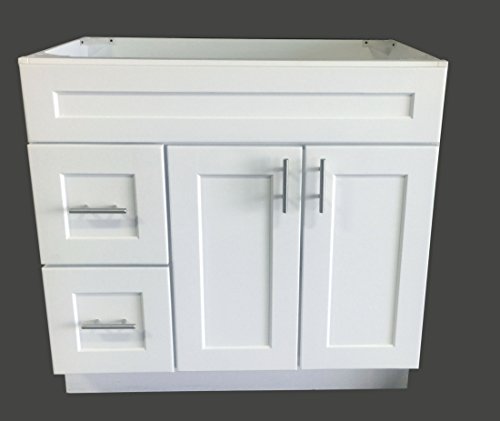
White Shaker Cabinet 36" W x 21" D x 34.5" H

Full-Overlay White Vanity: Featuring a full-overlay profile in a matte white laminate finish, this vanity complements various bathroom aesthetics. The panels use blister molding technology to resist moisture and support long-term durability. A recessed toe-kick at the base allows you to stand closer to the sink, enhancing comfort and ease during daily use.
Why Vanity Depth Affects Function, Storage, and Layout
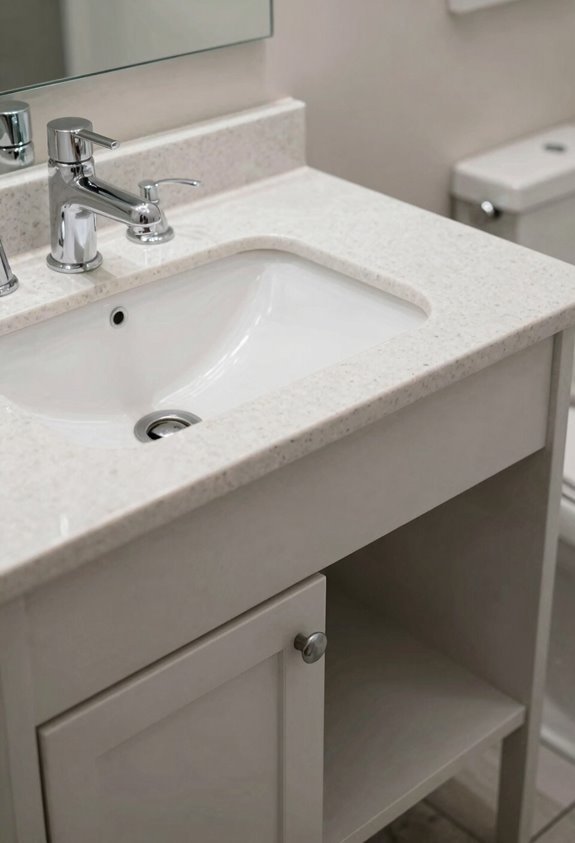
Vanity depth isn’t just a spec you pick randomly. It directly shapes how your bathroom functions, how much you can store, and whether you’ll stub your toe every morning. When I chose my 21-inch vanity, I didn’t realize how that single measurement would affect my storage capacity, the way traffic flows through my bathroom, and whether I could comfortably reach my sink without contorting myself. Getting this depth right matters significantly for storage organization, layout clearance, and daily comfort when using your bathroom.

Functional Construction: Frameless design promotes increased storage space and accessibility for toiletries to keep your countertop free of clutter

📐【Dimensions】 The bathroom vanity's top dimensions are 24 in wide x 22 in deep, the top thickness is 3/4 inch and the backsplash &sidesplash is 4 in height, fits most standard 24-in W x 21-in D vanity cabinets, elevate your bathroom decor with our Quartz Bathroom Vanity Top.

📐【Dimensions】 The bathroom vanity's top dimensions are 30 in wide x 22 in deep, the top thickness is 3/4 inch and the backsplash &sidesplash is 4 in height, fits most standard 30-in W x 21-in D vanity cabinets, elevate your bathroom decor with our Quartz Bathroom Vanity Top.
Storage Capacity and Organization
When designing a bathroom vanity, depth is a critical factor for storage. It determines whether you can organize items efficiently or resort to inefficient stacking.
Here’s what matters about vanity depth and storage capacity:
- Deeper cabinets (21–24 inches) maximize drawer and shelf space, allowing you to organize toiletries, cleaning supplies, and personal items without overcrowding
- Countertop overhang adds 1–1.5 inches beyond cabinet depth, so a 21-inch vanity actually provides roughly 22–22.5 inches of usable workspace
- Shallow vanities (16–18 inches) limit storage but work well for vessel sinks, maintaining an open bathroom feel
Selecting the right storage capacity prevents constant reorganization and the need for precarious stacking arrangements.
Bathroom Layout and Clearance
Why does vanity depth matter so much when you’re planning your bathroom layout?
Vanity depth directly impacts how your bathroom functions. You’ll need at least 30 inches of clearance in front for comfortable movement and door swing room. When choosing a vanity, consider these factors:
| Vanity Depth | Best For | Storage | Space Needed |
|---|---|---|---|
| 16–18 inches | Powder rooms, tight spaces | Limited | Compact bathrooms |
| 20–21 inches | Standard bathrooms | Good | Most homes |
| 21–24 inches | Large bathrooms | Excellent | Spacious layouts |
User Comfort and Ergonomics
How often have you stood at a vanity that felt either cramped or awkwardly shallow? Vanity depth directly impacts your comfort and how you actually use the space. When choosing a vanity, depth affects three critical things:
- Countertop space – Deeper vanities (21 inches) give you room for toiletries and daily items
- Reach distance – You won’t strain your back leaning over shallow sinks
- Movement freedom – You need about 30 inches of clear floor space to move comfortably
Ergonomics significantly affect bathroom functionality. Standard 21-inch depths work best for most bathrooms, while shallower 18-inch options actually help small spaces feel less crowded. Select the depth that lets you move naturally without reaching awkwardly or feeling squeezed in.
How Bathroom Size Determines Your Ideal Depth
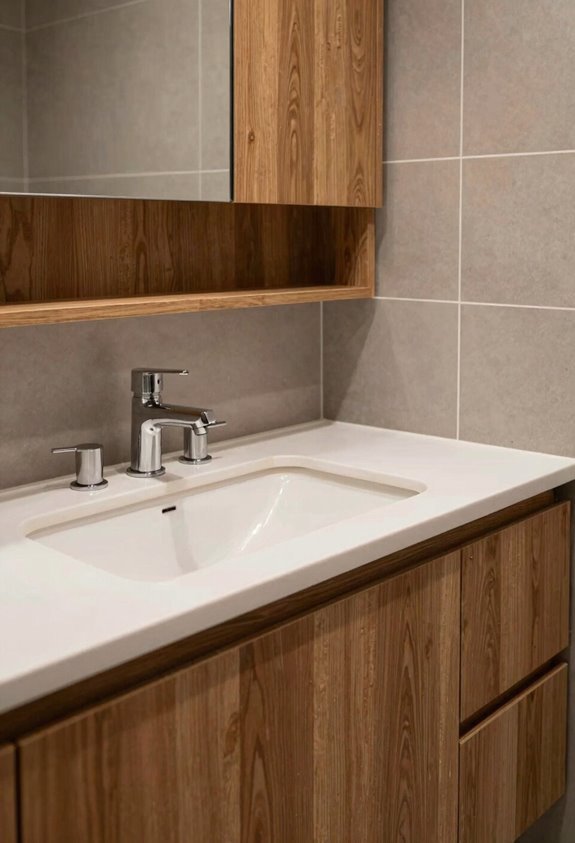
I’ve learned the hard way that my bathroom’s size is the primary factor when it comes to picking the right vanity depth. In a tiny powder room, I hunt for those skinny 16–18 inch options just to keep things from feeling cramped, but in a sprawling master bath, I choose the deeper 22–24 inch cabinets for serious storage capacity. Think of it like finding vanity proportions that work: not too shallow, where you lose precious space, and not too deep, where you risk tripping over yourself, but appropriately sized for how you actually use your bathroom. The right choice depends on what you’re working with.

[Elegant Farmhouse Styling]This freestanding bathroom vanity boasts sleek cabinet lines and carved solid wood legs to elevate your bath space.Double-layered drawers paired with silver metal handles blend classic charm with modern farmhouse aesthetics, instantly elevating the overall look of your space.

Full-Drawer Configuration: This vanity features a full-drawer layout. With a gentle tug, everything is placed right at your fingertips. No more crouching or digging through dark cabinets, making daily routines more efficient. Crafted from FSC-Certified premium engineered wood with a matte white finish, it delivers lasting durability and daily convenience.

【Base Cabinet for Bathroom Vanity】Embrace minimalist elegance with our sleek base cabinet, featuring a sophisticated white panel paired with lustrous golden handles. Stripping away excess, we’ve crafted two spacious soft-close drawers that blend seamless functionality with timeless style. Perfect for modern bathrooms, this design prioritizes simplicity without sacrificing practicality
Small Bathroom Constraints
When I’m squeezing a vanity into a cramped bathroom, one-size-fits-all depths don’t work. Your room’s actual dimensions matter far more than following standard recommendations.
Vanity depth significantly changes how a bathroom feels. Consider these options:
- 16–18 inches for tight layouts. This maximizes floor space without sacrificing storage.
- 12–16 inches in powder rooms. This preserves essential clearance space while keeping basics within reach.
- 18–20 inches as a compromise option. This balances storage needs with comfortable movement.
Building codes require about 21 inches of clearance space in front of the vanity, so measure twice before buying. In small bathrooms, choosing shallower depths prevents constantly bumping into walls or struggling to move around. Shallower vanities improve bathroom workflow by creating more usable space.
Larger Space Opportunities
Why do I suddenly have so many vanity options once my bathroom actually has breathing room? When I upgraded to a spacious master bath, I realized deeper vanities of 22–24 inches became realistic without cramping my walkway.
What Changed for Me:
- Expanded storage space – Those extra inches meant cabinets that actually held my stuff
- Dual sinks – I went wider while keeping the standard 21-inch depth, eliminating morning bathroom battles
- Floating options – Even at 18–20 inches deep, wall-mounted vanities gave me that airy feel with serious counter real estate
Deeper cabinetry requires smart plumbing planning and door clearance consideration. My contractor caught a potential obstruction I’d missed. In larger bathrooms, vanity depth determines both storage capacity and traffic flow; the two work together to maximize functionality.
Depth Options: Single Sink, Double Sink, and Floating Vanities
Most bathroom vanities fall into one of three categories. Selecting the right depth for your situation directly impacts your bathroom’s functionality.
Vanity depth is a critical consideration when planning your layout:
- Single sink vanities typically measure 21 inches deep, though 18-inch compact models work well in tight spaces.
- Double sink vanities maintain that standard 21-inch depth to preserve adequate walkway clearance between both sinks.
- Floating vanities are shallower at 18 to 20 inches, creating a more open feeling on the floor.
The actual installed depth reaches approximately 22 to 22.5 inches once you account for countertop overhang. This is the measurement to use when planning your layout.

MORDEN AND STYLISH: This 16 inch oval bathroom sink is sit up on top of the counter. It is a stylish, contemporary choice that will update the look of any bathroom. Mocoloo modern bathroom sink, a better choice for you

【Surface Design】Best sleek european inspired modern contemporary classic design,arc beautiful,elegant and generous,excellent technology and fashion aesthetic harmony make this black bathroom sink a perfect choice for home bathroom, restaurant, Office building, school, indoor or outdoor.

Modern Bathroom Vessel Sink - Best Sleek European inspired modern contemporary classic design, arc beautiful, elegant and generous. Our 24 x 16 inch white sinks are widely used in home bathroom, restaurant, Office building, school, indoor or outdoor
How Sink Type Changes Your Depth Requirements
Choosing your sink type before picking a vanity depth prevents costly mistakes during installation.
Undermount and Drop-In Sinks
These require at least 21 inches of vanity depth to fit the basin and plumbing properly. With countertop overhang added, you’re looking at roughly 22 to 22.5 inches total installed depth.
Vessel Sinks: Maximum Flexibility
Vessel sinks sit on top, so they work with shallower 18-inch vanities. No recessing needed means more counter space without sacrificing function.
The Planning Sweet Spot
Consider plumbing layout and drain placement during the initial design phase. Getting this right upfront prevents drawer conflicts and keeps everything accessible. Your sink type dictates your vanity depth requirements, so select the sink first, then the cabinet.

🌲【Floor Standing Bathroom Vanity】Featuring clean lines, a wave-pattern cabinet door, and delicate brushed copper accents, this bathroom vanity adds both style and value to your home

PREMIUM CERAMIC BASIN:Enjoy a sleek 7-inch deep ceramic sink with curved edges to minimize splashes and simplify cleaning. The anti-overflow hole prevents floods, while the ceramic stays glossy for years. Note: Faucet not included

Compact & Elegant Design for Small Spaces: Upgrade your bathroom with this 20-inch bathroom vanity with sink, thoughtfully designed for apartments, guest baths, or powder rooms. The clean lines and classic Vintage Blue finish bring a modern, versatile look. Its single sink design fits beautifully into limited spaces, adding style and function without crowding your bathroom.
Shallow Vanities (18 Inches or Less) for Compact Bathrooms
- They preserve floor clearance – maintaining at least 30 inches of clear space in front creates a more spacious feel.
- They come in multiple widths – options range from 24 to 48 inches, providing flexibility beyond single-size limitations.
- They skip unnecessary towers – vanity-only configurations keep small spaces balanced without excess bulk.
Rock Solid Vanities offers 18-inch shallow options that provide essential storage without compromising movement or the open feel that compact bathrooms require.

CUSTOMIZABLE DRAWER POSITION – The two-drawer section can be assembled on the left or right to accommodate your plumbing location and bathroom layout.

New Maple Shaker Single-sink Bathroom Vanity Base Cabinet 36" Wide x 21" Deep
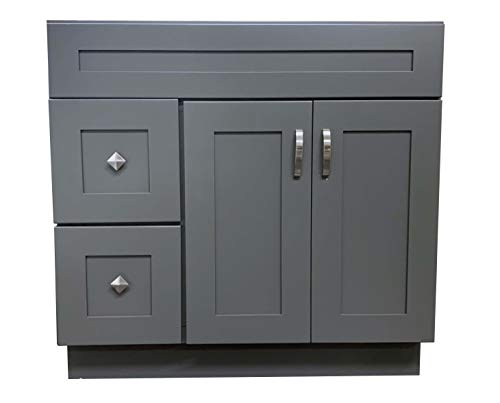
Grey Shaker Cabinet 36" W x 21" D x 34.5" H
Deeper Vanities (22 to 24 Inches) for More Storage
While shallow vanities work great for tight spaces, deeper models at 22 to 24 inches instead of the standard 21 offer significantly more storage possibilities.
Deeper vanities at 22 to 24 inches offer significantly more storage than standard 21-inch models, especially in larger bathrooms.
When I upgraded to a deeper vanity, I gained room for full-extension drawers, extra counter space, and storage that feels functional rather than cramped. This depth is deliberate; manufacturers design deeper vanities to maximize usable interior space.
The practical considerations include plumbing and door clearance, which require careful planning. However, the additional storage and increased spaciousness justify the extra effort.
For custom builds or larger bathroom redesigns, deeper vanities provide both the aesthetic appeal and functionality that homeowners seek. The extra depth measurably improves how a bathroom operates on a daily basis.

FITS STANDARD 16.65"–22" KITCHEN DRAWERS — The most-ordered size in our bamboo divider collection, sized specifically for standard American kitchen drawer depths. Whether your drawer holds spatulas and tongs, baking tools, or a cluttered junk collection — four dividers create instant custom zones without any tools. Measure interior depth front-to-back: Effective spring tension range: 16.6" to 21" (tension weakens significantly beyond 21").

SMOOTH ROUND MIRROR: The black mirror features an smooth round design that adds a soft aesthetic to the space. Make your whole room stand out. The dimensions of this round bathroom mirror are 22 inch, perfect size for you to get a clear view.
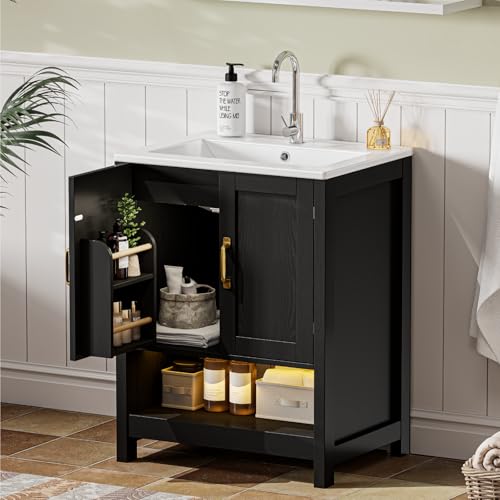
Sleek Bathroom Vanity Design: The ELEVACHIC 24" bathroom cabinet complements any style of bathroom. It features crisp black wood panels with gold handles and hinges for a simple, modern aesthetic. The doors with organizer saves interior space and provide more storage space for you.
Building Code Clearances: Space You Actually Need
How much space do you actually need in front of your vanity? I learned this lesson the hard way when I ignored clearance requirements in my bathroom renovation.
Building codes aren’t just suggestions; they’re safety rules I now respect. Here’s what you need:
- 21 inches minimum clearance in front of your vanity depth for comfortable movement
- Door swing space that doesn’t get blocked by the vanity or other fixtures
- Obstruction-free zones where you can actually open drawers without hitting walls
Whether I’m installing a standard 21-inch vanity or considering deeper 22–24-inch options, I always measure twice. That front clearance gives me elbow room to operate doors, drawers, and just breathe while getting ready. Skipping this step creates daily frustration you’ll notice immediately during basic bathroom routines.

【Sleek & Space-Saving Design】This vanity is ideal for small bathrooms without sacrificing style. Its minimalist yet sophisticated look blends seamlessly with various décor themes, from contemporary to classic.

Specifications: Color: White; Materials: Ceramic Basin, MDF,Metal Hardware; Assembled Dimensions: 24.5″ L × 18.5″ W × 34″ H; Maximum WeightCapacity: Ceramic Basin: 66 lb; Shelf: 66 lb; Drawer: 44 lb

Classic White Vanity: Featuring a clean white finish with matte black handles, this vanity presents a classic look that coordinates with any bath decors. Adjustable legs ensure stable placement on uneven floors. Crafted from FSC-Certified long-lasting engineered wood, it achieves a harmonious balance of aesthetics and durability.
Vanity Depth and Design Style: Modern, Traditional, and Luxury
Standard depth hovers around 21 inches across most brands, accommodating full-extension drawers. Double vanities maintain this typical depth while widening overall width.
Depth selection should align with your style preference and bathroom size rather than current trends.

Modern Bathroom Vessel Sink - Best Sleek European inspired modern contemporary classic design, arc beautiful, elegant and generous. Our 19"x15" white vessel sinks rectangle are widely used in home bathroom, restaurant, Office building, school, indoor or outdoor
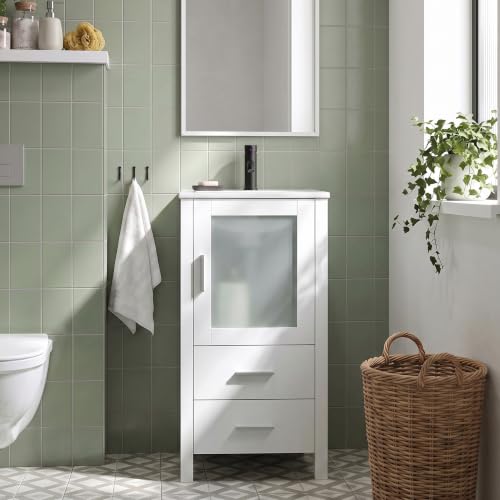
16x16 Deep Bathroom Vanity for Small Spaces: Measuring 15.75” L x 15.75” W x 33.46” H, this 16x16 compact bathroom vanity features a slim, space-efficient structure with no bulky occupancy. It is perfectly sized for small apartments, dorm rooms, and RV bathrooms, fully meeting daily bathroom grooming and storage needs while saving floor space.

【Stylish Designed Round Bathroom Sink】Best Sleek European inspired modern contemporary classic design, arc beautiful, elegant and generous, excellent technology and fashion aesthetic harmony