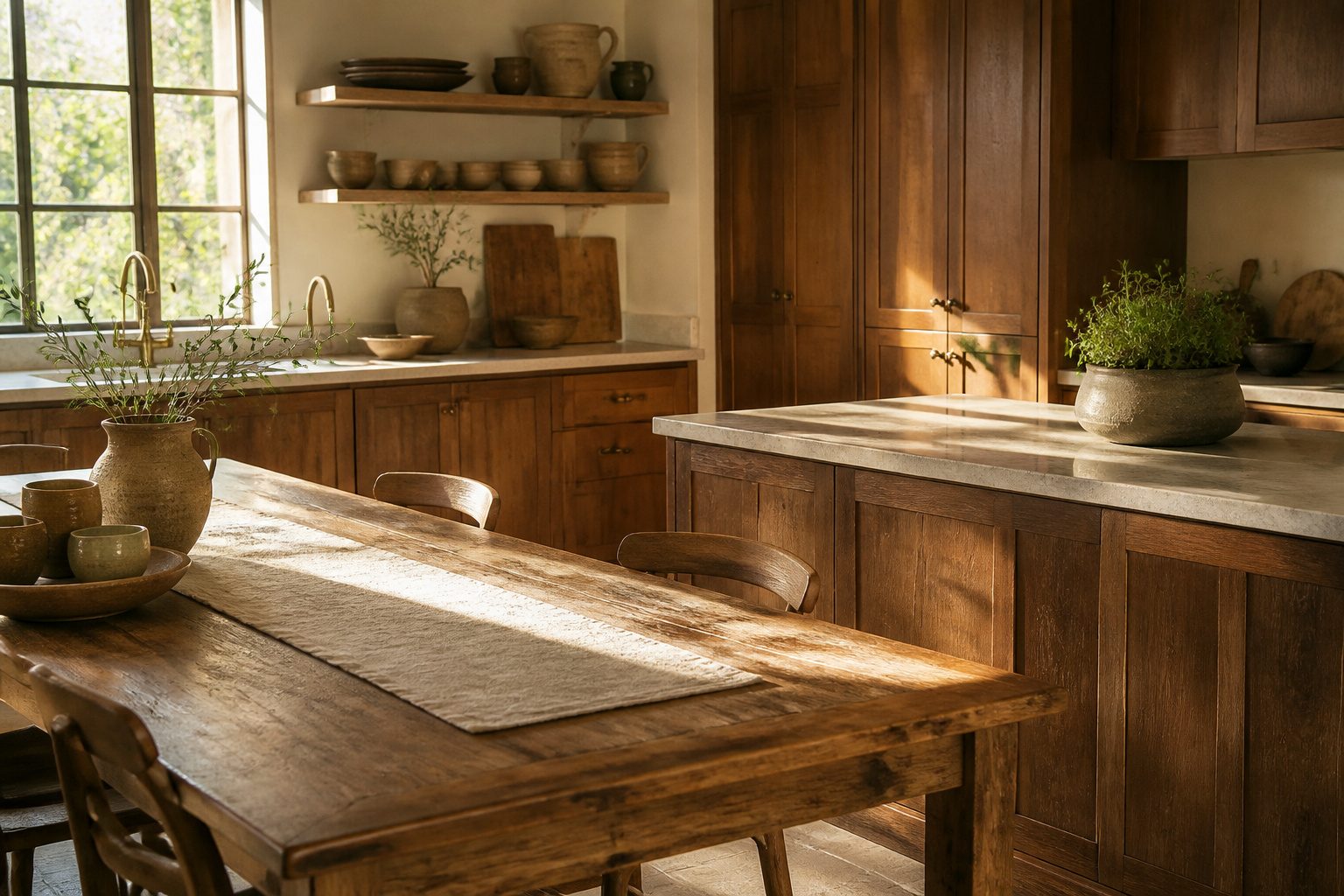
Kitchen furniture material is the single decision that determines whether your cabinets survive a decade or a half-century.
Solid hardwood lasts 50 years or more with proper sealing, yet that same material cracks at the seams in humid climates where engineered plywood, with its 72-hour moisture resistance, stays flat and holds screws tight.
Cost and placement trip people up: what works on a visible door frame often fails inside a sink base, and the materials that shrug off water rarely carry the warmth of real grain.
Solid Wood
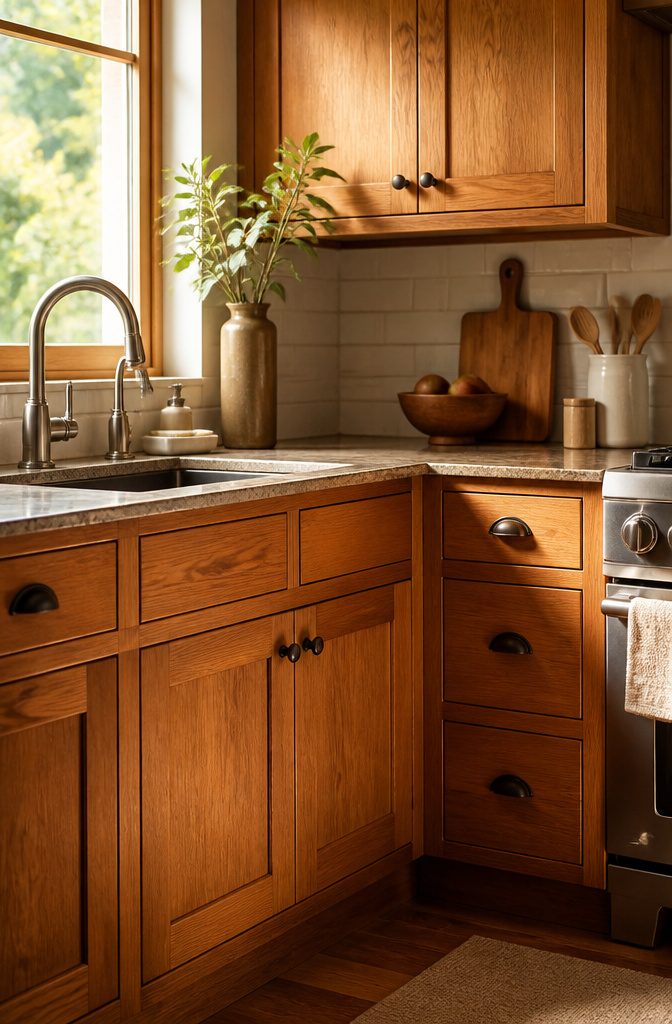
Solid wood carries the highest price tag among common kitchen furniture materials, and the cost buys something real: hardwood cabinets last 50 years or more with proper care.
Oak, maple, cherry, walnut, and hickory each bring distinct grain patterns and warm tones that read as premium because they are. The material sands and refinishes repeatedly, so a dated stain or a scratch does not mean replacement.
That lifespan comes with work. Periodic sealing and careful cleaning are non-negotiable, and wood expands and contracts with humidity in ways that can cup, crack, or split wide panels at the seams.
In kitchens with big humidity swings, engineered woods sometimes outperform solid wood precisely because they are engineered to stay put.
Solid wood belongs on the parts you see: face frames, door frames, drawer fronts. For the flat panels behind them, a matching veneered plywood gives the look without the seasonal risk.

MEASUREMENTS: Measurements are EXACT. This replacement raised panel kitchen cabinet door measures 15.5-inches Wide, 29-inches high, and 3/4-inches thick

Claim Your Boho Vibes: Part of the ELLAN Collection, this sideboard combines a woven rattan look, rounded corners, and slim pulls for a cozy, relaxed boho feel. Pair it with matching storage benches and shoe cabinets to create a unified, inviting space
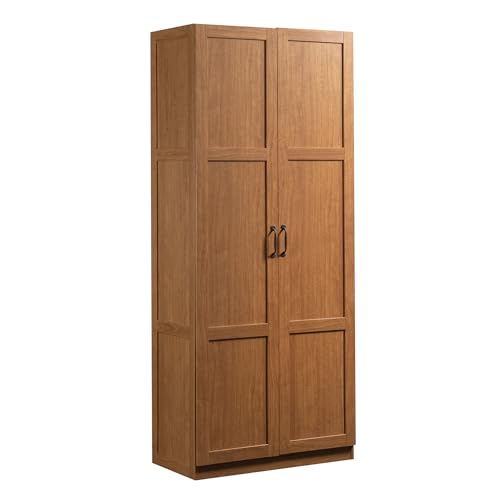
SOLVE YOUR STORAGE DILEMMA – This versatile storage cabinet is perfect for your home, providing a stylish solution for all your organizational needs
Plywood
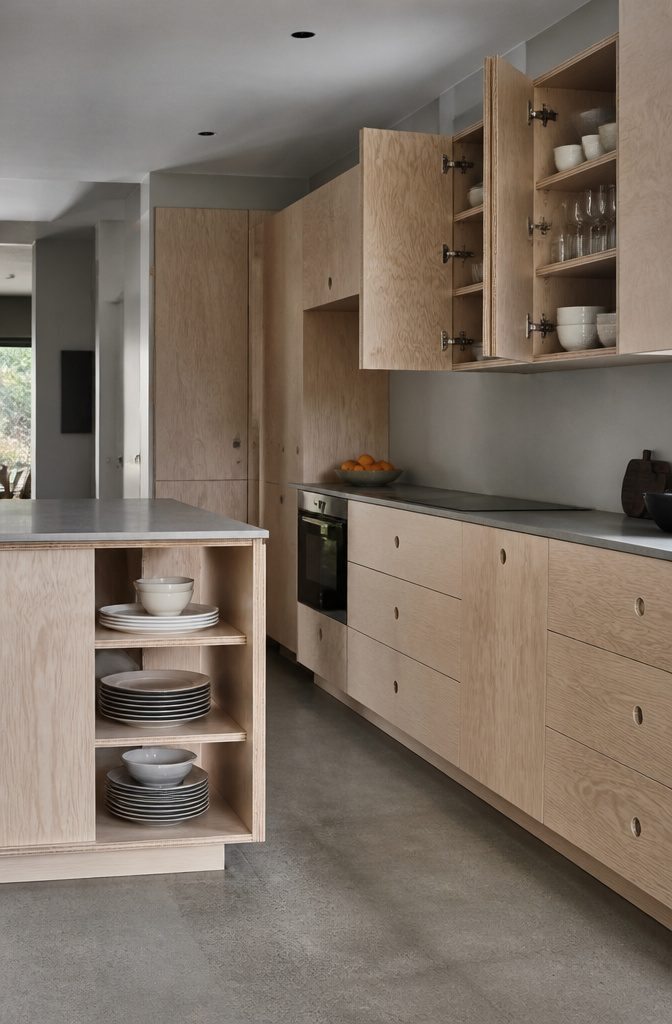
Plywood earns its reputation as the practical durability choice for kitchen furniture by handling moisture in ways solid wood simply cannot.
Its layered construction, thin wood veneers bonded with adhesive in alternating grain directions, creates dimensional stability that resists warping and expansion when humidity swings.
That cross-grain build is what gives plywood its 72-hour moisture resistance claim, a standard that outperforms both solid wood and MDF in damp areas like sink base cabinets.
The material sits at a mid-range cost, which makes sense once you understand where plywood belongs and where it does not.
Cabinet boxes benefit most from its strength and screw-holding power; fasteners grip those layered plies with a security particleboard cannot match.
Doors and drawer fronts, however, are a different calculation. The layered edge shows unless faced with veneer, and the weight adds up across a full kitchen run.
I pencil plywood in for structural components first, then decide whether the budget stretches to solid wood for visible surfaces or if a quality veneer face suffices.

【What You Get】 – 19" deep replacement kitchen drawer box made of durable plywood, designed for cabinets with 19–21" drawer slide depth. Ships unassembled with pre-cut panels and pre-drilled holes for fast setup. Screws included. Assembly typically takes about 5 minutes.


Medium-Density Fiberboard
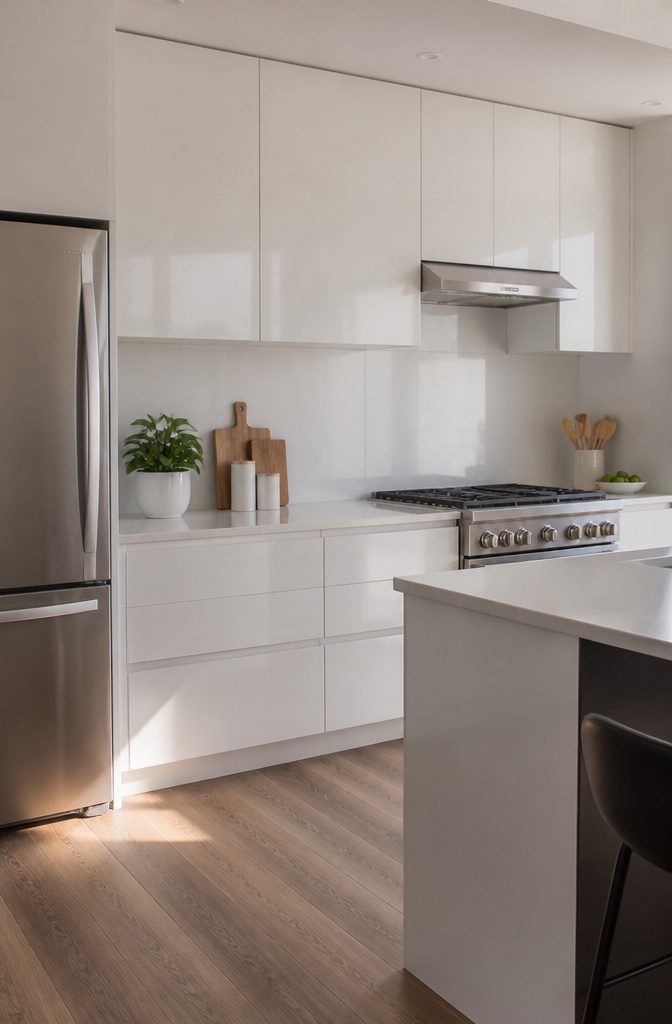
Medium-density fiberboard is wood fibers and resin compressed under high pressure into dense, uniform panels with no grain. That smoothness makes it the best kitchen furniture material for painted cabinets, because paint goes on glass-smooth with zero grain telegraphing through.
High-end painted cabinets often use an MDF center panel even inside a solid-wood door frame for exactly this reason.
The downside is moisture.
Water that reaches the core causes permanent swelling, so edges must be sealed and the material should stay out of standing-water zones. It also doesn’t hold screws as well as plywood in structural roles.
Pricing stays budget-friendly, which keeps MDF in the conversation for first-home owners and renters doing a kitchen refresh themselves.
I think it is the right call for painted doors and panels in low-humidity kitchens or areas well away from the sink. For wet zones or structural cabinet boxes, plywood wins.

Provides ample space for morning preparations. Enhanced resistance to cracking, warping and moisture.

Soft Close Hardware - Avoid the wear and tear of the hinges and enjoy a quiet and gentle closing every time with our soft close hardware.

Kitchen Sink Base Cabinet SB48: Measures 34-1/2-inches H by 48-inches W and features 2 doors
Particleboard
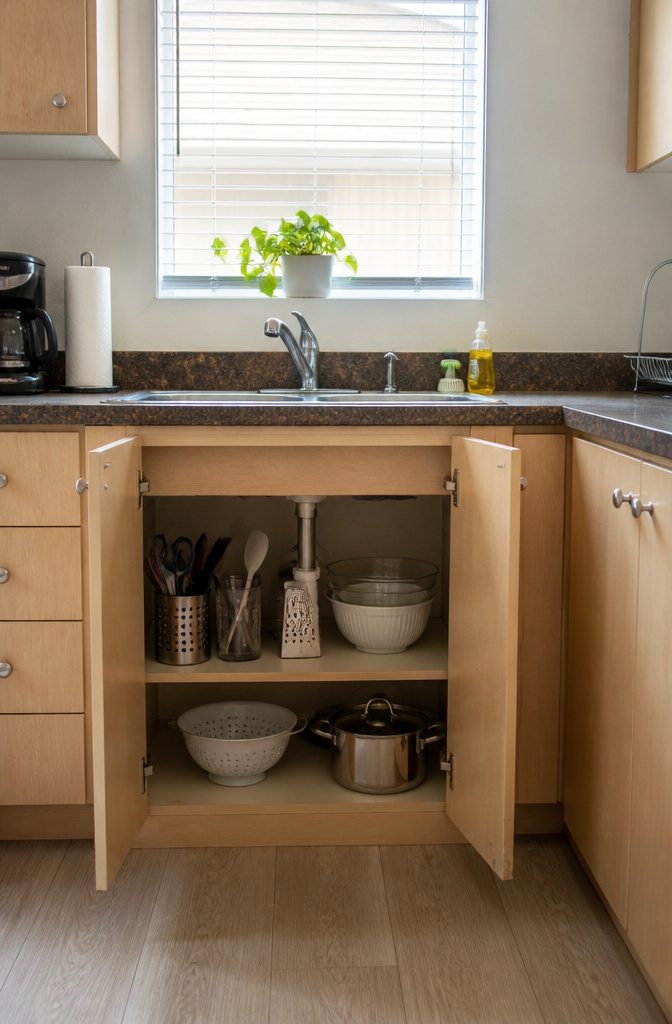
Particleboard is wood chips and sawdust bound with resin, the cheapest core material you will find in kitchen cabinetry.
Most stock cabinets and many semi-custom lines use it for the box, usually covered with laminate or melamine to give it a surface you can wipe clean.
In dry conditions it stays flat and stable, which is why it ends up in so many budget kitchens.
The weakness is water, and it is a fatal one.
Once moisture reaches the core, particleboard swells, crumbles, and does not recover. It also holds screws poorly, so hinges and drawer slides loosen over years of use.
A slow leak under the sink or years of humidity can destroy the box, which is why I skip it for primary bathrooms or anywhere with daily water exposure.
For a rental kitchen, a flip, or a laundry room, particleboard makes sense. It is lightweight, inexpensive, and fine in spaces where you are not building for the long haul.
Most DIY renovators I have worked with upgrade past it once they understand the trade-off: you save money now, but you are buying the shortest lifespan of any cabinet option on the market.

DURABLE & EFFORTLESS CLEANING: Built to Last with Premium MDF & Smooth Painted Finish, offering a Water-Resistant Surface that Wipes Clean in Seconds. Spend Less Time Cleaning, More Time Enjoying Your Organized Space.

Full-Length Mirror Jewelry Armoire: This standing jewelry armoire with full-length mirror allows you to dress up beautifully every day, serving as an excellent addition to the bedroom with its stylish design

[Huge Storage Capacity] Boasting 2 large cabinets, a big slide-out drawer, and 6 door shelves, this spacious pantry fits everything from your food and dinnerware to kitchen appliances, tidying up wherever you set it
High-Density Fiberboard
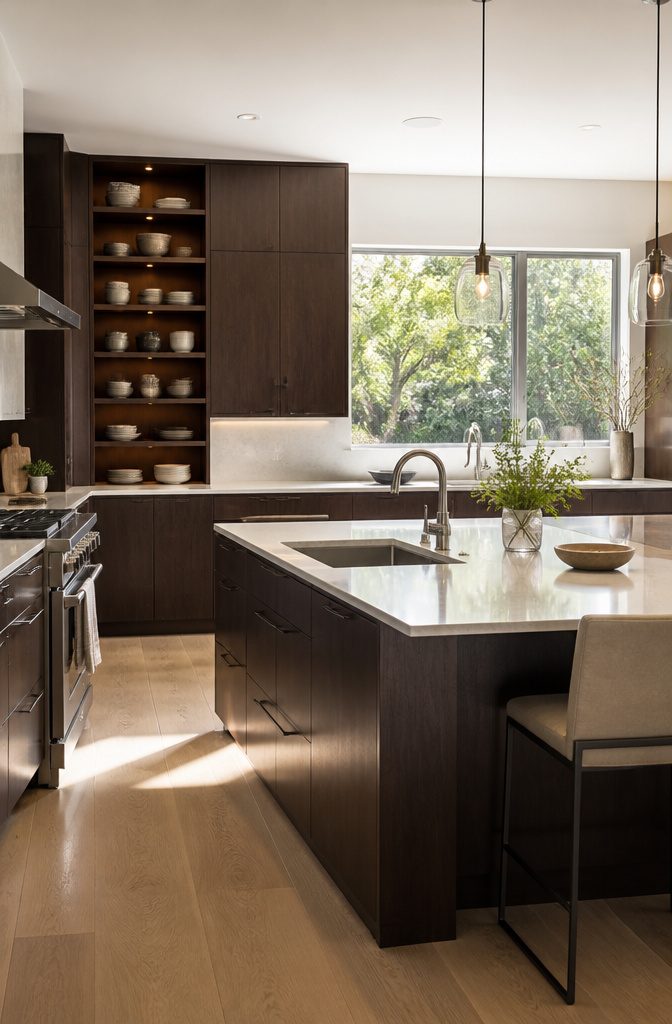
High-density fiberboard sits a step above MDF in density, hardness, and moisture resistance, and that step costs more.
In a kitchen where humidity climbs and spills happen, HDF handles water far better than standard MDF, which makes it worth considering for cabinet doors or any surface near the sink or dishwasher.
Some sources name it more durable than both MDF and plywood, even though it shows up less often in typical kitchen builds.
If the budget is tight, a practical split runs MDF for the cabinet carcasses and HDF for the shutters, getting the moisture protection where it matters without paying for it everywhere.

MAXIMIZE YOUR STORAGE SPACE – This versatile storage cabinet features four adjustable shelves, allowing you to customize your organization for everything from craft supplies to kitchen essentials
MEASUREMENTS: Measurements are EXACT. This replacement raised panel kitchen cabinet door measures 24-inches Wide, 12-inches high, and 3/4-inches thick
MEASUREMENTS: Measurements are EXACT. This replacement raised panel kitchen cabinet door measures 14.75-inches Wide, 22.5-inches high, and 3/4-inches thick
Laminate
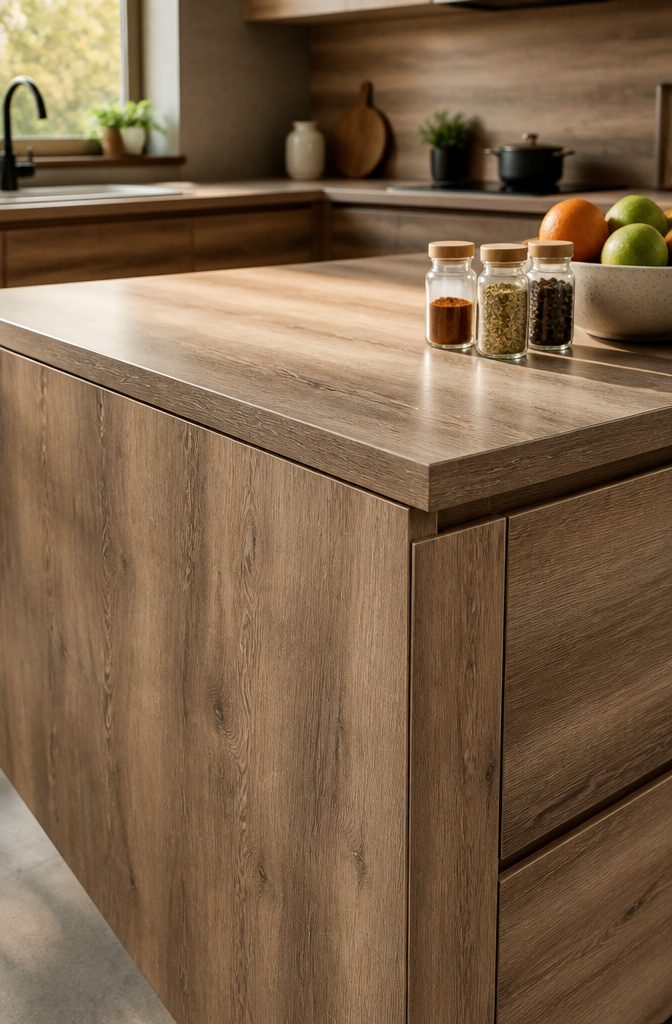
Laminate is built in layers: printed paper soaked in resin gets fused to a substrate, usually particleboard or MDF, under high heat and pressure.
The result is a surface that resists scratches and wipes clean with almost no effort, which makes it one of the most practical choices for a busy kitchen.
Modern printing has narrowed the gap with real wood; you can find convincing grain patterns and solid colors that read as finished rather than cheap.
The cost savings over wood are real, and for a rental or a first home where the budget tops out in the low-to-moderate range, the edge banding is where laminate either holds up or fails.
Those sealed edges are the only barrier keeping moisture from creeping into the core. Once water gets in, or if the surface chips deeply enough to expose the substrate, the damage is permanent.
You cannot sand and refinish laminate the way you can wood. Fix a laminate surface and you are really swapping in a new piece; the look never carries the warmth of real wood or stone.
It is a trade-off I would take for a high-traffic household that needs the kitchen to stay presentable with minimal upkeep, but not for a space where I wanted the cabinets to anchor the room’s character.
【What You Get】 – 19" deep replacement kitchen drawer box made of durable plywood, designed for cabinets with 19–21" drawer slide depth. Ships unassembled with pre-cut panels and pre-drilled holes for fast setup. Screws included. Assembly typically takes about 5 minutes.


【What You Get】 – 19" deep replacement kitchen drawer box made of durable plywood, designed for cabinets with 19–21" drawer slide depth. Ships unassembled with pre-cut panels and pre-drilled holes for fast setup. Screws included. Assembly typically takes about 5 minutes.
Thermofoil
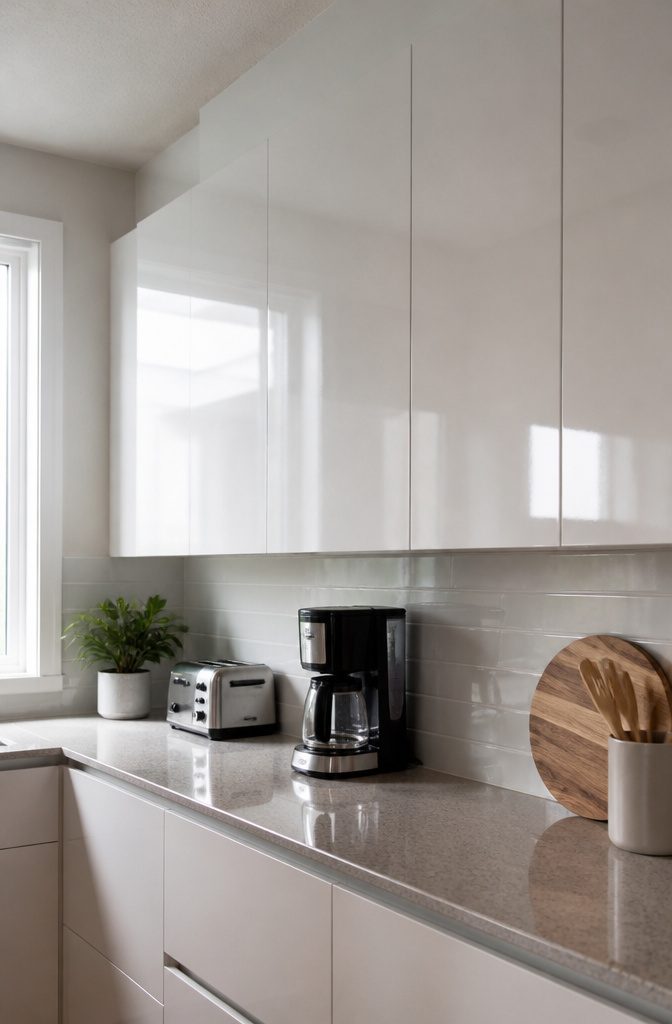
Thermofoil is a vinyl film heat-pressed over an MDF core, and the result is a completely seamless surface with no joints to trap grease or crumbs.
That smoothness, plus its low cost, makes it a practical pick for rental refreshes, laundry rooms, and secondary kitchens where you want easy cleanup without a major investment.
Heat is the weak spot.
Thermofoil can peel or delaminate when it sits too close to ovens or dishwashers, and once the vinyl lifts, the whole door has to be replaced. It cannot be repaired or refinished.
I steer away from it for primary kitchens in favor of laminate, which is built differently: standard laminate bonds a thin decorative layer to the surface, leaving edges that need finishing, but those edges also mean localized damage can sometimes be addressed without swapping the whole component.
Thermofoil wins on seamless looks and wipe-down convenience; laminate wins on repairability and tolerance for everyday kitchen conditions.

HIGH QUALITY MATERIALS: The main manufacturing material for our kitchen sink base cabinets is birch wood, ensuring that the base cabinets are long lasting and durable. It is paired with lightweight plywood, which is resistant to cracking, bending and moisture.

MEASURE BEFORE YOU BUY: 39.3" W x 19.7" D x 35.4" H This is a full-size utility sink cabinet, not a compact bar or bathroom unit. It is 39.3 inches wide, 19.7 inches deep and 35.4 inches tall and weighs about 86 pounds, so check the wall, the doorway and the plumbing run before ordering.
Stainless Steel
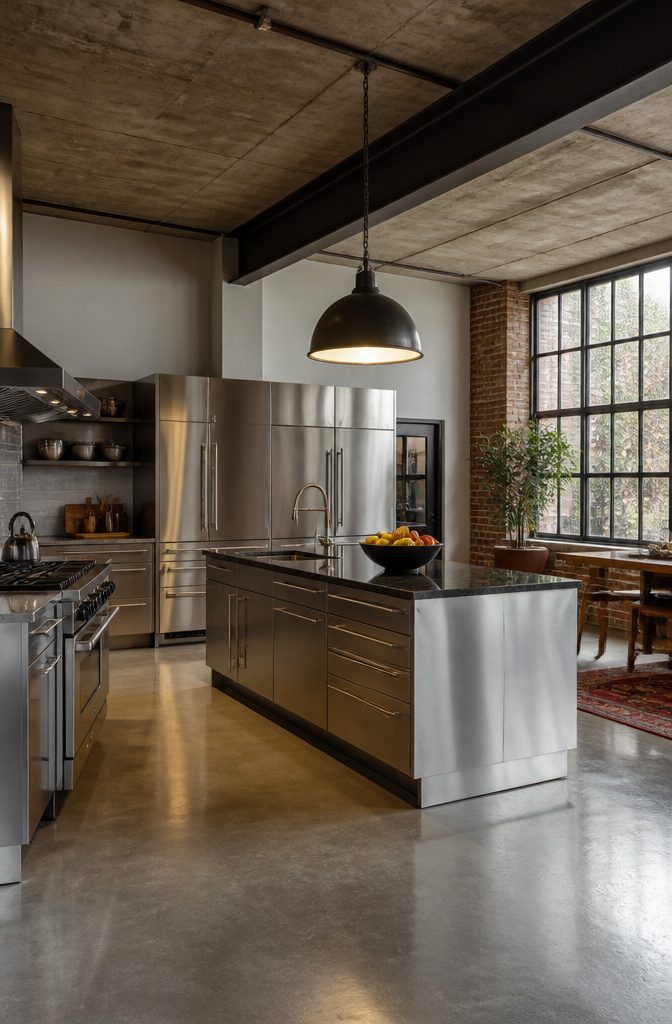
Stainless steel cabinets carry the DNA of commercial kitchens into residential spaces, and that lineage matters for how they perform and what they cost.
The material resists moisture, heat, and bacteria, which is why restaurants adopted it decades ago. In a home kitchen, those same properties translate to decades of service, but the aesthetic is strictly modern industrial.
The reflective finish brightens a room, yet the same surface collects fingerprints as a real, ongoing task. Daily wiping is not optional if you want the clean look you paid for.
The cost sits at premium positioning, comparable to solid wood or above.
That price buys genuine durability and a metallic aesthetic that alternatives cannot mimic, but it also buys a material that dents rather than chips and develops a patina over time.
Where this choice makes sense is a contemporary kitchen that commits to the look. Where it fights the architecture is a traditional home with warm trim, paneled doors, or rustic details.
The clash is not subtle. Stainless steel reads as cold in a residential context unless the surrounding design deliberately echoes its industrial roots.
For renters or first-home owners working within a few hundred to a thousand dollars, the budget typically steers toward materials that forgive both fingerprints and mismatched eras.

Elegant white bow design, versatile home style: classic white finish paired with exquisite bow decoration, simple and atmospheric shape, suitable for various bedroom and dressing area decoration styles, both storage and space aesthetics, adding a refined atmosphere.

[Ample & Smarter Storage] Multipurpose Bathroom Storage Cabinet Maximize your space with this premium tall storage cabinet. Featuring an upper enclosed cabinet with unique 3-tier built-in door storage racks, a smooth middle Storage Compartment storage, and a spacious lower floor cabinet, it effortlessly organizes towels, toiletries, and daily necessities while keeping your bathroom clutter-free.

[1] Smart Corner Solution ► Maximize Your Space Designed to fit perfectly in tight corners, this freestanding storage cabinet transforms unused areas into valuable storage. Ideal for small bathrooms, apartments, or any room where space is at a premium, it helps you declutter without a bulky footprint. Say goodbye to wasted space and hello to smart organization.
Glass
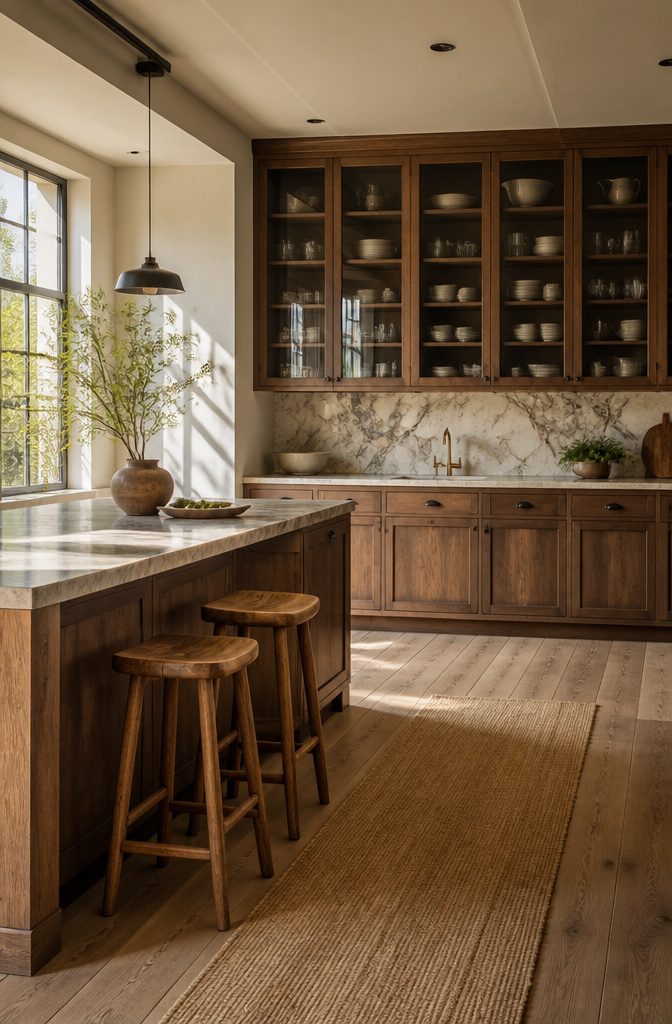
Glass cabinets earn their place almost entirely in upper rows, where they catch and push daylight deeper into a kitchen that might otherwise read as a cave after 3 p.m.
The visual expansion is real, but the trade is just as real: fingerprints and cooking residue show up fast, and the wipe-downs are weekly at minimum, not seasonal.
In practice, you are looking at framed panels, not sheets of glass standing alone.
Wood or metal borders carry the structural load and set the style, while the glass itself stays a partial insert, which is why cost swings so widely.
The framing material often matters more to the final price than the glass does.
Privacy enters the conversation only if you care what sits behind the door. Most homeowners treat these as display cases for everyday dishware or a few decorative pieces, not for the full clutter of a working kitchen.
Frosted or textured options exist if you want to hide mismatching plates, though they cut the light benefit that justifies the choice in the first place.

Measurements are exact. Please ensure that you measure your existing cabinet doors. Refer to our video above on the proper way to measure cabinet doors

Rustic Elegance: Adorned with intricately carved doors, a weathered texture, and antique metal handles, this entryway cabinet showcases a warm rustic finish. These elements come together to seamlessly infuse artistic charm and French country style.

CONQUER CLUTTER WITH STYLE – The Sauder HomePlus Base Pantry Cabinet features a spacious hidden area behind framed panel doors, perfect for organizing kitchen essentials and enhancing your home storage solutions
Melamine
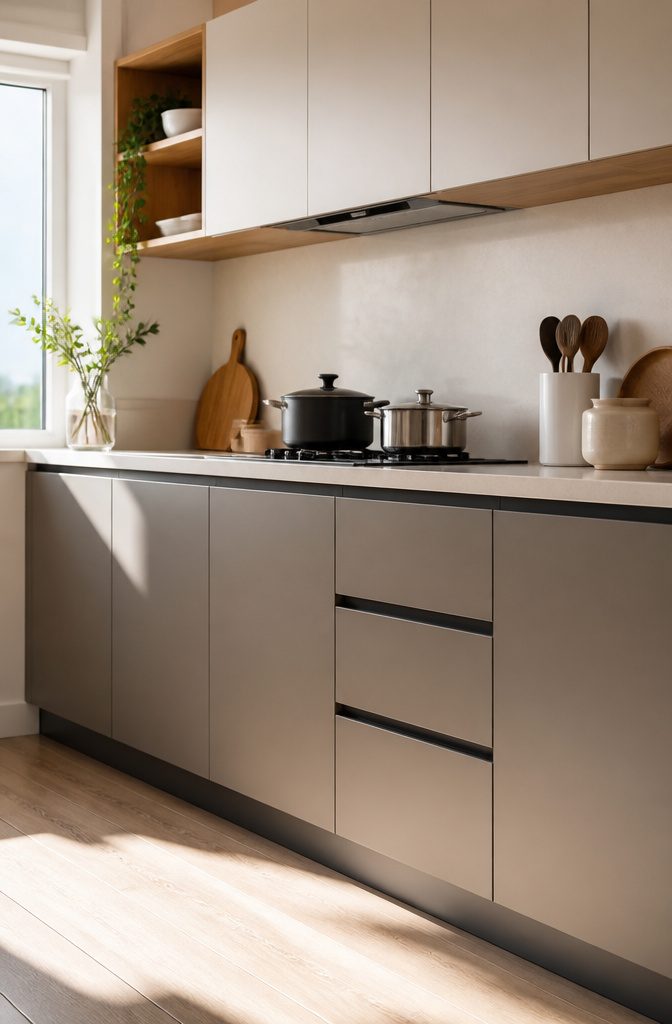
Melamine starts as resin-impregnated paper bonded under heat and pressure to particleboard or MDF. The surface is chip-resistant and color-consistent in a way that outperforms basic laminate, which matters when you’re matching panels across a whole kitchen run.
The budget positioning is straightforward: low to moderate cost, value for money, and widely available in stock cabinet lines.
The weakness is moisture at any exposed edge. Once water reaches the particleboard or MDF core, that core swells and crumbles, and the damage does not recover.
I keep melamine away from sink bases and dishwasher-adjacent cabinets for exactly this reason. It also holds screws poorly, so hinges and drawer slides can loosen over years of use.
European-style flat-panel cabinets use melamine extensively because the material suits clean, unadorned doors without the profile complexity that demands more expensive substrates.
For a rental or a flip where the kitchen stays dry and the timeline is short, it performs fine.
For a primary home kitchen with heavy daily use, I’d rather spend the difference on plywood boxes and save the melamine for interior closet systems where water is not a risk.

【What You Get】 – 19" deep replacement kitchen drawer box made of durable plywood, designed for cabinets with 19–21" drawer slide depth. Ships unassembled with pre-cut panels and pre-drilled holes for fast setup. Screws included. Assembly typically takes about 5 minutes.
【What You Get】 – 19" deep replacement kitchen drawer box made of durable plywood, designed for cabinets with 19–21" drawer slide depth. Ships unassembled with pre-cut panels and pre-drilled holes for fast setup. Screws included. Assembly typically takes about 5 minutes.
【What You Get】 – 19" deep replacement kitchen drawer box made of durable plywood, designed for cabinets with 19–21" drawer slide depth. Ships unassembled with pre-cut panels and pre-drilled holes for fast setup. Screws included. Assembly typically takes about 5 minutes.
Acrylic
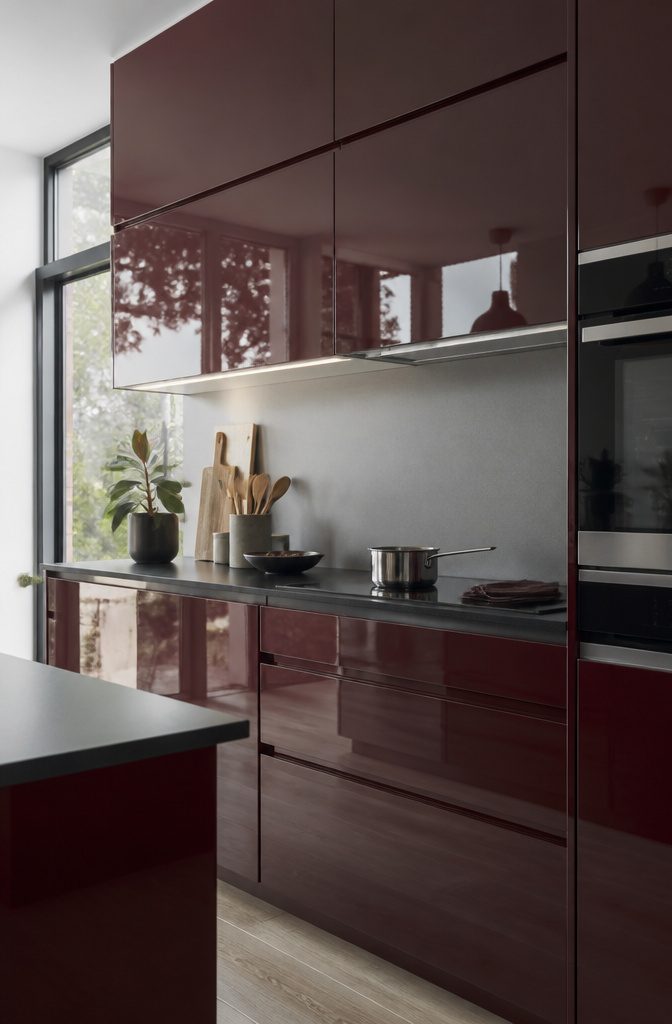
High-gloss acrylic surfaces give contemporary kitchens their signature mirror-like depth, the kind of finish that makes cabinet fronts read as almost liquid under lighting.
The material is typically heat-molded onto an MDF core, which lets manufacturers achieve that seamless, handleless look common to modern European kitchens.
Color stays true over time, and the reflective surface bounces light around a room in ways matte finishes simply cannot.
The gloss itself brings the compromise. Acrylic scratches more easily than its appearance suggests, and every fingerprint shows.
I would not spec this for a household that cooks hard daily or keeps a dog with claws in the kitchen. The finish rewards a specific aesthetic priority over brute durability.
Cost runs comparable to high-gloss lacquer, placing acrylic in the premium tier. Between the two, lacquer can achieve a more genuinely mirror-like appearance, while acrylic reads slightly cloudier to the eye.
For renters or first-time owners working on a few hundred to a thousand dollars, the budget usually pushes toward laminate or thermofoil instead. Acrylic earns its place when the kitchen is meant to impress, not to absorb heavy daily abuse.
PVC
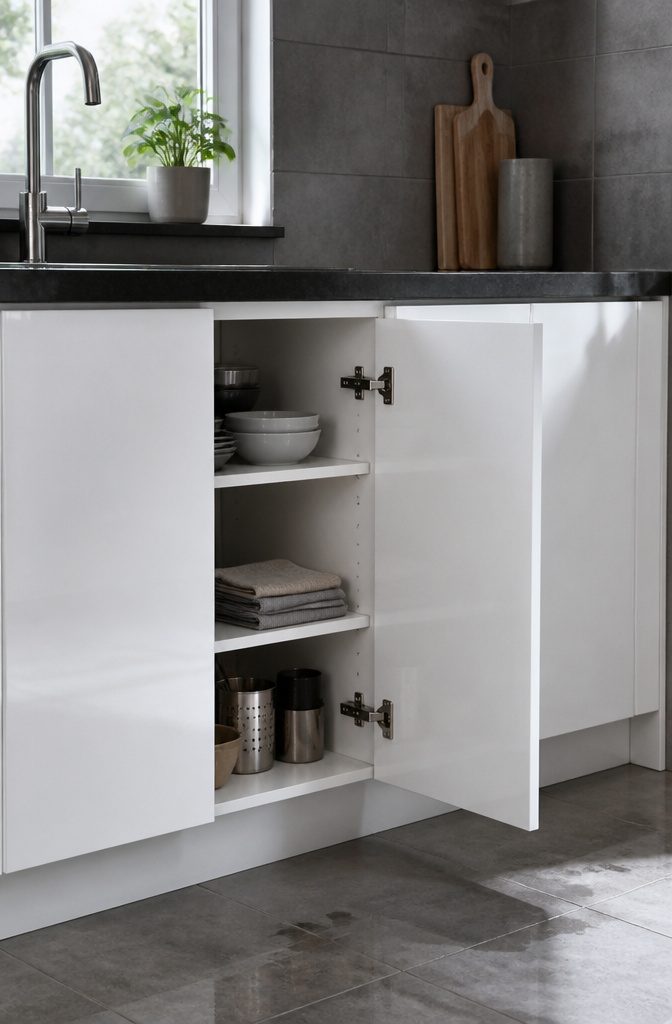
PVC cabinets are built from polyvinyl chloride sheets laminated onto MDF or particleboard, which gives them a fully waterproof surface that wipes clean with nothing more than a damp cloth.
That construction reads as plastic, and it looks like plastic too, smooth and slightly synthetic in a way that rarely fools anyone into thinking it’s painted wood.
The aesthetic tradeoff is real, but so is the practical win.
In a utility room, an outdoor kitchen, or any space where humidity stays high year-round, PVC outlasts materials that swell, warp, or grow mold the first time a pipe leaks.
Termites won’t touch it, and UV exposure is the main weakness, since prolonged sun can yellow or discolor the surface over time.
Cost stays low, which is why PVC still shows up in rental units and secondary spaces where function matters more than first impressions. What keeps it out of most main kitchen showcases is exactly that plastic look.
Homeowners spending their own money on a kitchen they live with every day usually want the warmth of wood grain or the crisp edge of painted MDF, even if it means more maintenance.
PVC is the choice I point to when someone needs durability without the design budget, or when the space itself is working harder than it is welcoming.
Bamboo
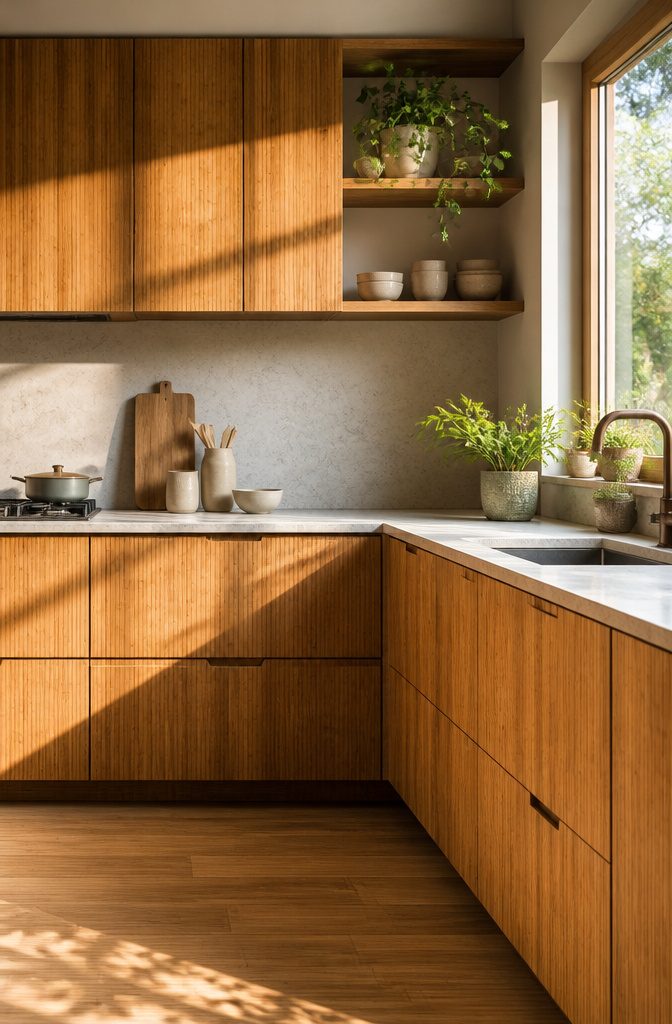
Bamboo is technically a grass, not a wood, and that distinction matters for how it performs in a kitchen.
It grows fast enough that harvesting it every three to five years leaves the root system intact, which is why it ranks among the more genuinely renewable materials for cabinetry.
The linear grain pattern reads modern and pairs naturally with Asian-influenced or minimalist kitchens, though the aesthetic is specific enough that it can feel out of place in a traditional setting.
Structurally, bamboo resists warping better than many conventional hardwoods, and its tensile strength runs high.
Cabinets built from it need proper sealing to handle kitchen humidity and the occasional splash, but the base material holds up. Finding it and paying for it are the real hurdles.
Bamboo plywood exists for box construction, yet full bamboo slab options remain harder to source than oak or maple, and prices swing wider depending on where you live and whether your supplier stocks it domestically or imports it.
For an environmentally motivated renovation where the look fits the rest of the house, bamboo earns its place; for a quick replacement job with tight deadlines, the hunt for reliable supply can eat up the time you saved.
Wood Veneer
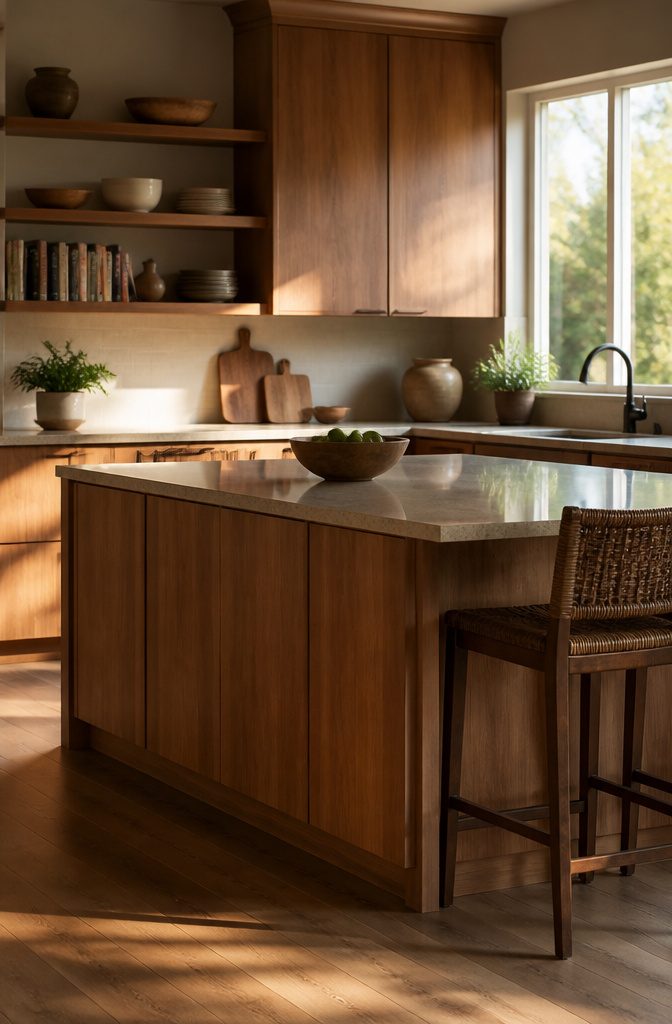
Wood veneer is a thin slice of real wood bonded to a stable engineered core, usually MDF or particleboard, and it gives you the grain and warmth of solid lumber at a moderate cost.
The construction matters more than most buyers realize. The veneer layer is real wood, not printed, so the surface takes stain and finish like genuine material, but the substrate underneath limits where it performs well.
The vulnerability shows up at edges and corners. Veneer can delaminate, chip, or wear through in high-traffic spots where hands grab daily, and oily fingers leave stains that are hard to lift once they set in.
Moisture is another problem if the seal fails, since the MDF or particleboard core swells quickly and the veneer face has no strength to resist it.
Where veneer wins is on large, flat panels where solid wood would crack or warp with seasonal humidity swings. Cabinet doors, end panels, and visible sides of islands all stay stable under that thin wood skin.
For a traditional kitchen look on a mid-range budget, it is the practical compromise, but I would not spec it for base cabinets in a busy household or anywhere near a sink without an excellent seal.
Aluminum
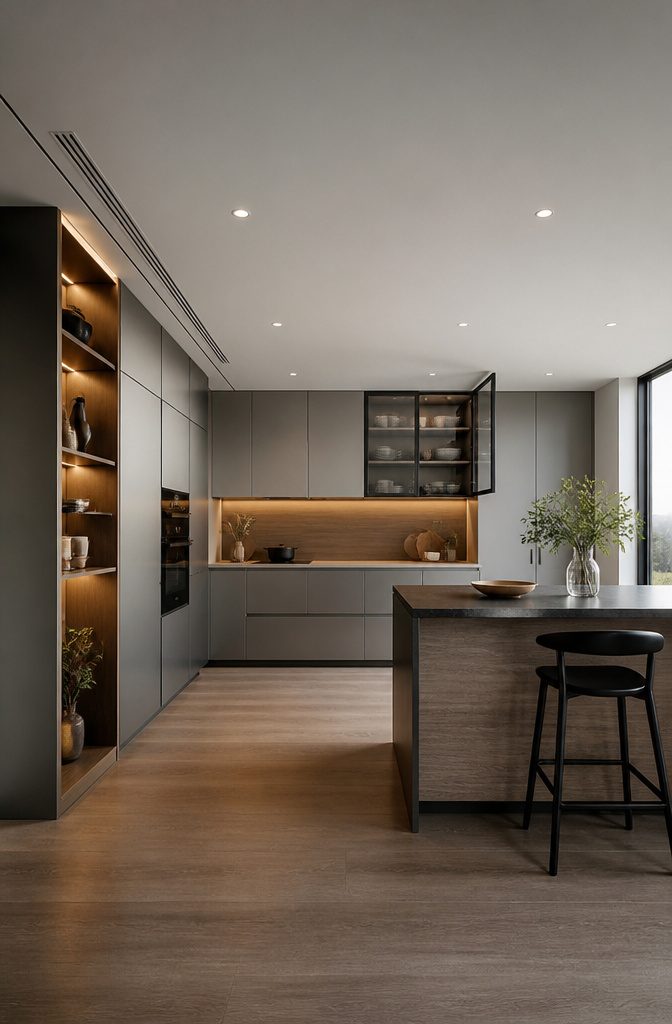
Aluminum brings two things to a kitchen that almost nothing else does at the same time: it weighs less than steel and will not rust.
That combination makes it the material I point to when someone is building an outdoor kitchen or wants a frame system that holds infill panels without sagging over time.
The cabinets read as modern, sometimes aggressively so, and they pair naturally with glass panels for a look that sits firmly in contemporary territory.
The trade-offs are real and specific. Aluminum dents more easily than steel, and it amplifies sound.
In a busy kitchen, closing a cabinet door can ring out unless you add padding or liners to dampen the metallic vibration. I also notice the thermal properties in daily use.
Aluminum conducts heat and cold fast, which means the surface temperature of the cabinet shifts with the room more than wood or laminate does. In an unheated outdoor setup, that is worth planning around.
Recyclability is a genuine advantage here. Aluminum can be recycled repeatedly without degrading, which matters to homeowners weighing the full lifespan of their choices.
Costs run high, in line with other metal cabinetry, so this is not the route for a tight budget refresh. For a sleek urban kitchen or an outdoor setup where rust resistance is non-negotiable, aluminum earns its place.
Where it falls short is anywhere that takes hard knocks from pots and pans or anywhere the noise of a working kitchen needs softening.
What Humidity Does to Each Choice
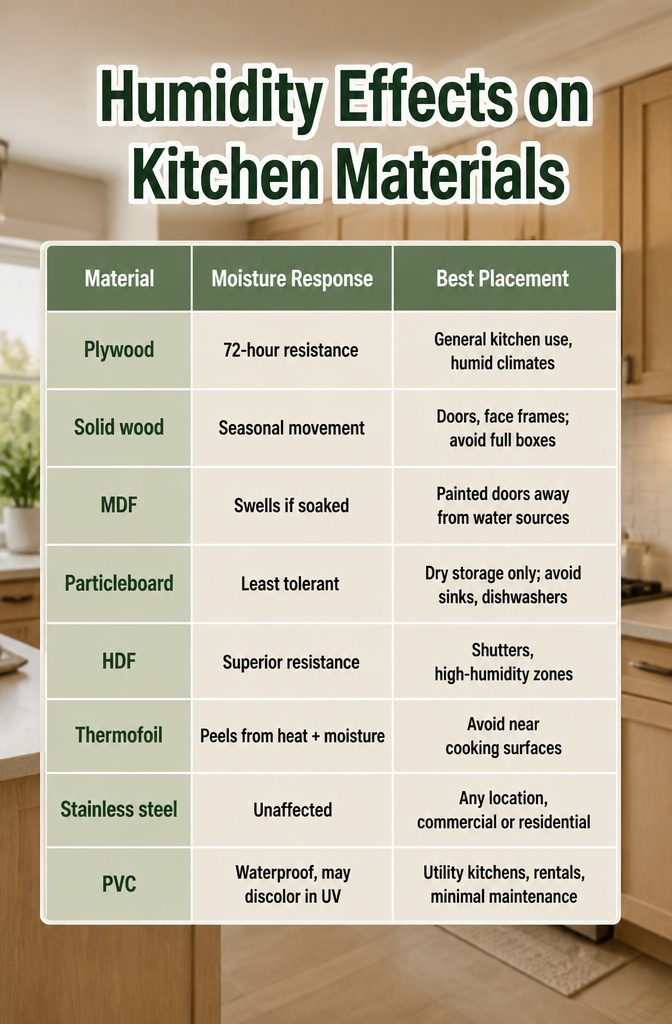
Humidity separates cabinet materials into two camps pretty fast.
Plywood holds up for about 72 hours of direct moisture exposure before it starts to degrade, which is why it gets specified for kitchen boxes in places like Charlotte where average humidity sits above 70%.
Solid wood moves seasonally, expanding and contracting enough to crack paint or misalign doors if the finish isn’t maintained.
MDF resists cracking but swells the moment water gets past the surface, and particleboard is the first to fail near dishwashers and sinks.
HDF outperforms both, which is why some builders put HDF shutters on MDF carcasses for a cost compromise that still handles moisture.
| Material | Moisture Response | Best Placement |
|---|---|---|
| Plywood | 72-hour resistance | General kitchen use, humid climates |
| Solid wood | Seasonal movement | Doors, face frames; avoid full boxes |
| MDF | Swells if soaked | Painted doors away from water sources |
| Particleboard | Least tolerant | Dry storage only; avoid sinks, dishwashers |
| HDF | Superior resistance | Shutters, high-humidity zones |
| Thermofoil | Peels from heat + moisture | Avoid near cooking surfaces |
| Stainless steel | Unaffected | Any location, commercial or residential |
| PVC | Waterproof, may discolor in UV | Utility kitchens, rentals, minimal maintenance |
For Gulf Coast kitchens or any setup with plumbing against the cabinet box, stainless steel and PVC stay indifferent to the air, while thermofoil’s vinyl layer is the one to peel when steam and heat hit it together.
I would put the budget toward plywood or HDF anywhere water actually lands, and treat particleboard as false economy if the dishwasher is within splash range.
Refinishing and Repainting by Material
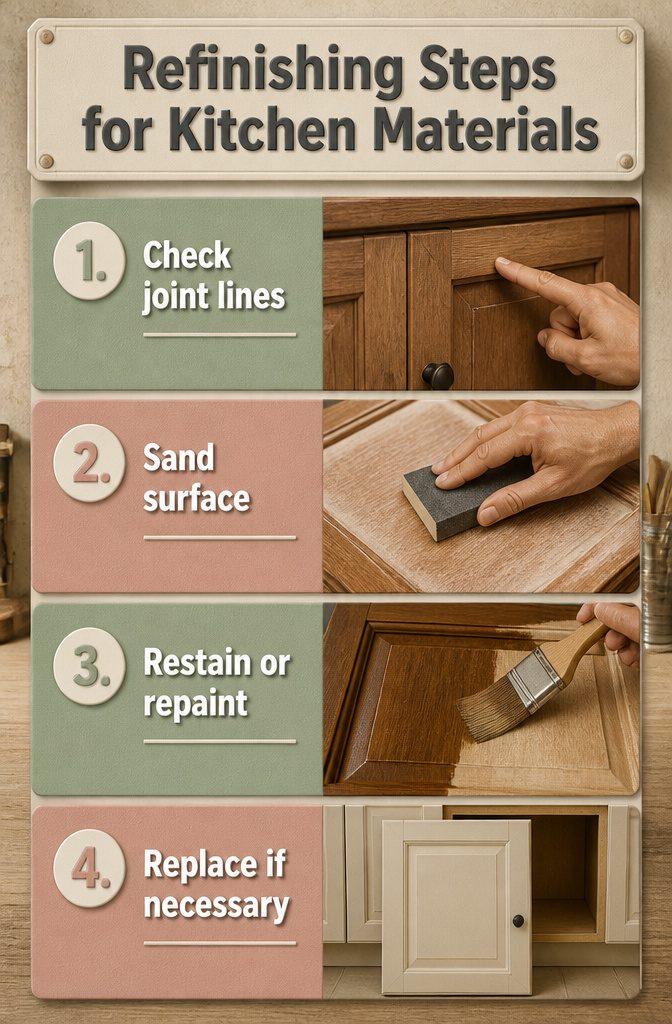
Solid wood cabinets can be sanded and restained multiple times over 50-plus years of service, which makes them the clear candidate when you want a new color without a new kitchen.
I always check the joint lines first: if the panels are cracked or the finish has worn through to raw wood in spots, the sanding stage will take longer, but the material itself stays workable.
MDF takes paint well and stays smooth, giving that clean, contemporary look, yet it is still a composite.
Sand through the surface and you expose fibers that never take stain evenly. Repainting is the only path, and even then, the edges soften with each round.
Laminate and thermofoil are different cases entirely. High-pressure laminate and the vinyl-wrapped MDF of thermofoil both create a sealed surface with no grain to work back to.
Once that layer peels, heats, or discolors, replacement is the only real option. The same applies to thermofoil’s heat-sensitive seams.
Stainless steel can show dents and develop a patina over time, but professional refinishing exists for cabinets that have lost their original brushed finish.
The cost runs high because of the material’s durability and aesthetic appeal, so I only recommend it when the cabinet boxes themselves are still sound.
Refacing beats replacement when the boxes are solid but the doors are shot.
With wood frames, you keep the bones and swap the skins. With laminate or thermofoil, once the surface fails, the whole unit usually goes.
Sustainable Options Worth Considering
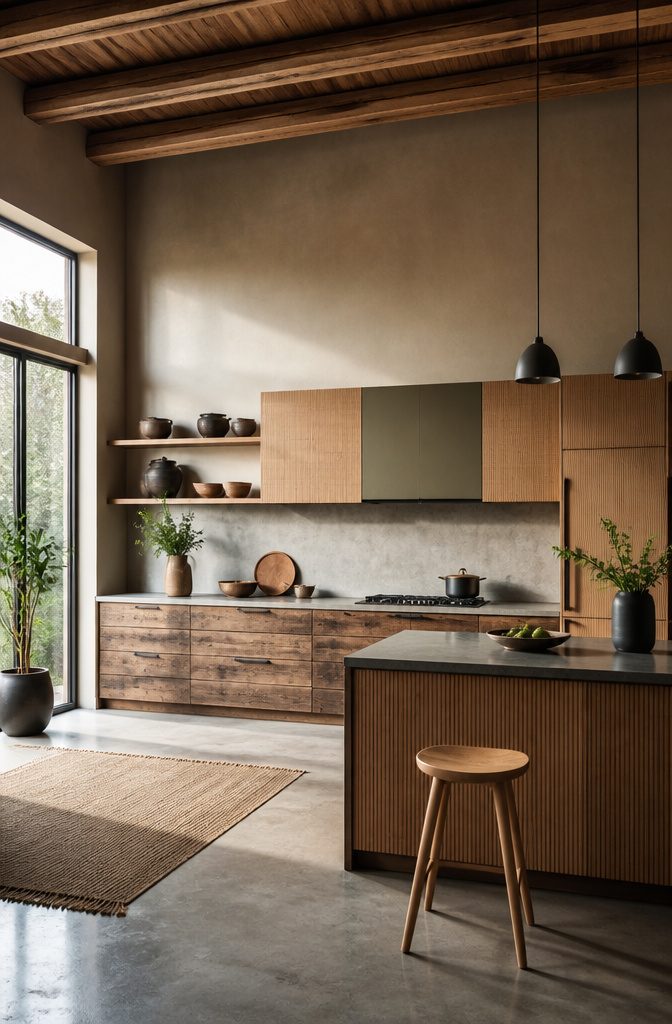
Bamboo and reclaimed wood get the attention, but the finish and adhesive matter as much as the raw material when you are actually lowering a cabinet’s impact.
Bamboo grows fast and resists warping, which makes it structurally practical for kitchen use, not just a feel-good label.
Reclaimed wood delivers character you cannot replicate, with aged knots and patina from salvaged barns or old factories, though it needs sealing against moisture.
FSC-certified solid hardwood is the third option worth naming; the certification tracks responsible forestry, not manufacturing chemistry.
Where I see greenwashing is in brands that lead with "natural" or "eco" while using standard solvent-based finishes and urea-formaldehyde adhesives.
A bamboo cabinet with a high-VOC sealant shifts the pollution from forest to factory floor, and then into your kitchen air.
The lower-impact choice is specific: rapidly renewable or salvaged substrate plus water-based sealants and low-VOC finishes. Without both halves, you are paying for a story, not a result.
Budget Ranges That Match Real Projects
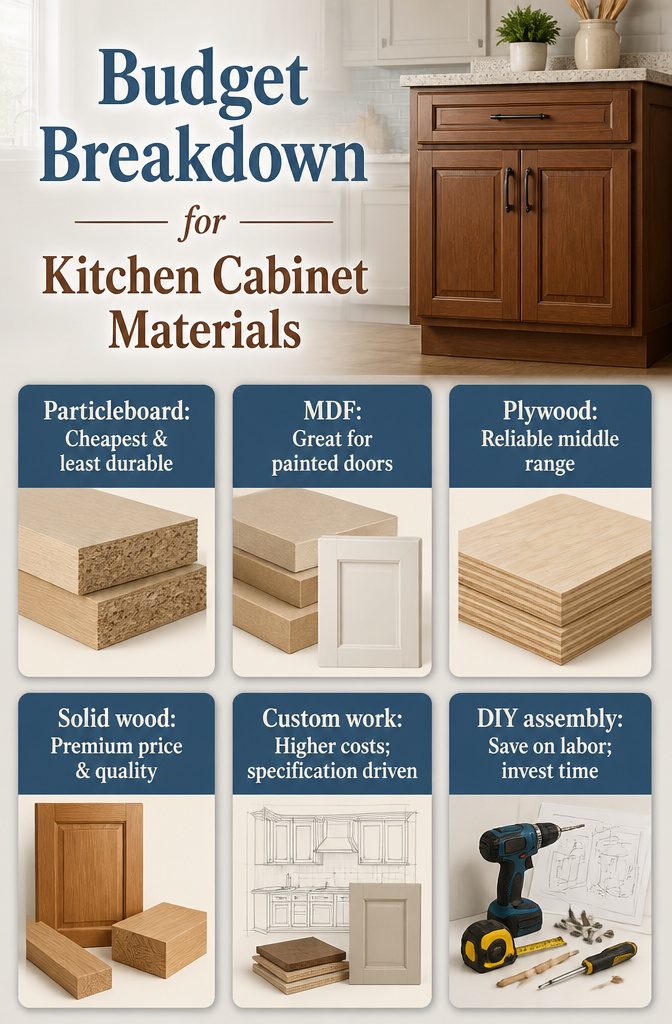
Particleboard sits at the bottom of the cost ladder because it is literally sawdust and wood chips pressed together with adhesive. That composition makes it lightweight and cheap, but also the first to swell or sag near sinks and dishwashers.
Covering it with laminate or melamine buys some protection, though in my view that just delays the problem rather than solving it.
Melamine and laminate finishes climb one rung up by adding a harder surface skin. The core underneath still matters, and the same particleboard weakness applies unless you are looking at laminate-faced plywood, which crosses into mid-range territory.
The real budget win is knowing where particleboard can survive: low-traffic kitchens, temporary setups, or base cabinets far from water sources.
MDF and plywood occupy the practical middle where most weekend projects land. MDF takes paint beautifully, no grain to telegraph through, which is why it dominates painted door orders.
But it swells irreversibly if water gets past the finish. Plywood holds screws better and resists moisture across its layers, so it is my default for cabinet boxes even when I use MDF for the doors.
The gap between them narrows or widens based on door style complexity and whether you are paying for assembly.
Solid wood and stainless steel command premium prices for different reasons.
Wood moves with humidity, so it is rarely used for full boxes anymore; you are paying for doors, face frames, and the labor to join them properly. Stainless steel is the premium choice for utility, not warmth.
Acrylic and fully custom work sit above all of these, but the custom label matters less than the specification. A custom shop building with particleboard is still building with particleboard.
Door style, finish quality, hardware selection, and installation labor drive cost within every tier. Flat slab doors cost less than routed profiles.
Factory-applied finishes outlast site-applied ones. And DIY assembly can shift a project from premium to mid-range by stripping out the labor line that often equals materials on the invoice.
What you save in cash you spend in hours, tools, and the patience to accept small alignment flaws a pro would not leave behind.
Frequently Asked Questions
What is the best material for kitchen cabinets?
The best material depends on budget, climate, and usage.
Plywood boxes with solid-wood door frames are the strongest all-around choice: plywood resists moisture for 72 hours and holds screws securely, while solid wood doors last 50 years or more and can be refinished repeatedly.
MDF works well for painted doors in dry kitchens, but swells if water reaches the core.
Can kitchen cabinet materials be refinished or repainted?
Yes, but the process varies sharply by material. Solid wood can be sanded and restained multiple times over decades.
MDF accepts paint smoothly but cannot be stained; sand through the surface and the fibers show. Laminate and thermofoil cannot be refinished at all, once the sealed surface peels or discolors, replacement is the only option.
Are there specific considerations for selecting kitchen cabinet materials in humid environments?
Humidity separates materials into two camps. Plywood handles about 72 hours of direct moisture exposure before degrading, making it the standard for humid climates like Charlotte.
Solid wood expands and contracts seasonally, risking cracked paint and misaligned doors. MDF resists cracking but swells instantly if water breaches the surface, while particleboard fails fastest near sinks and dishwashers.
What are the maintenance requirements for different kitchen cabinet materials?
Solid wood needs periodic sealing and careful cleaning to prevent seasonal movement.
MDF and HDF wipe clean with a soft damp cloth. Stainless steel requires daily wiping to manage fingerprints.
Laminate and thermofoil need only simple cleaning, though thermofoil can peel from heat exposure near ovens. PVC handles a damp cloth alone, making it the lowest-maintenance option.