

I’ve learned that keeping fountain water clean boils down to three non-negotiables: run your pump 24/7, skim debris weekly, and use distilled water instead of tap. Algae thrives in stagnant, sunlit water loaded with nutrients, so I keep mine circulating constantly. This practice has made a significant difference. I also check my water level daily, avoid bleach, and inspect my pump monthly for cracks or wear. These habits will keep your water crystal clear instead of murky green. Additional steps can further protect your fountain against common problems.
Why Fountain Water Turns Green
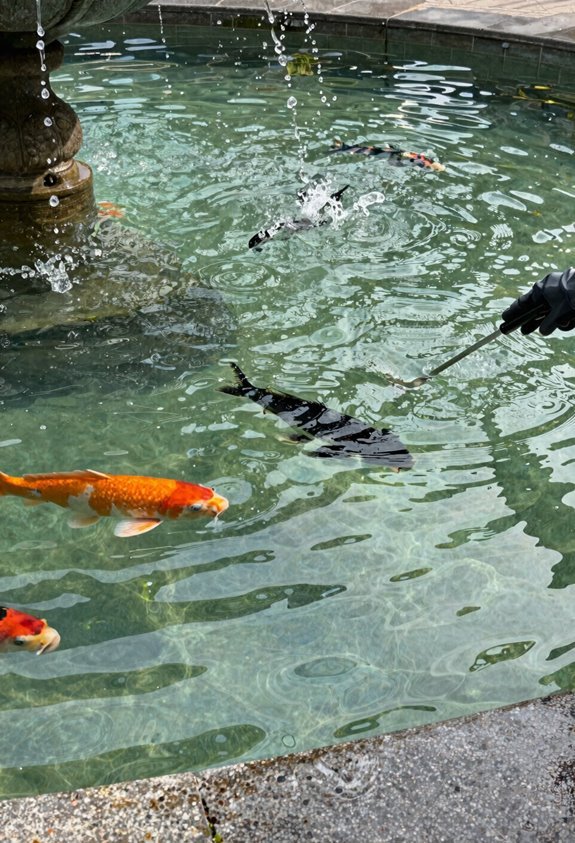
Ever noticed your fountain’s water shifting from crystal clear to murky green? That green tint comes from algae growth, which thrives when conditions are just right. Fountains provide the perfect environment for this.
Algae needs two things to multiply: sunlight and nutrients. Pollen, dust, and fallen leaves provide food, while light provides energy. Poor water circulation and stagnant conditions accelerate the problem significantly.
The culprits fueling algae:
- Direct sunlight exposure
- Nutrient-rich debris accumulation
- Poor water circulation
- Inadequate filtration
Understanding why algae grows is essential to prevention. Recognizing these triggers allows you to stop green growth before it damages your fountain’s appearance.
How Often to Clean Your Fountain
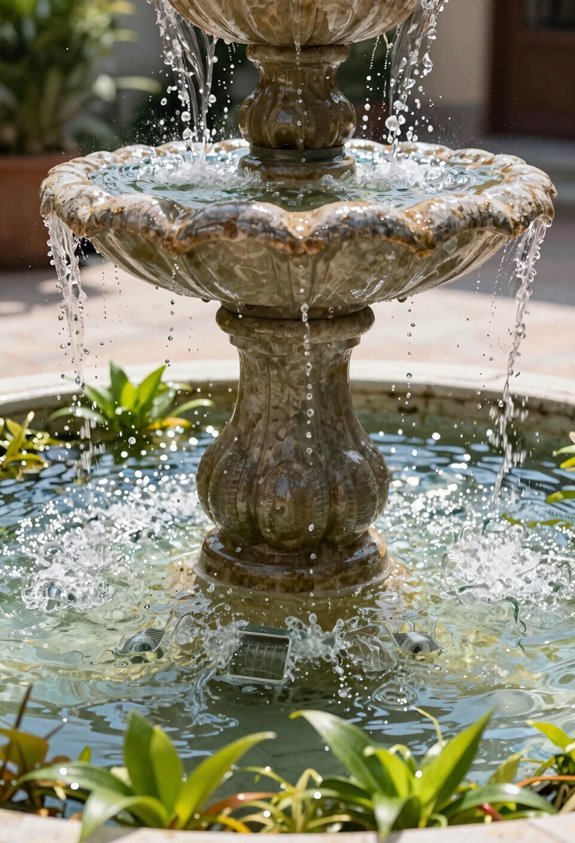
How often should you actually clean your fountain? The frequency depends on several factors. A smaller, sunny fountain needs attention every few weeks, while a shaded one can go several months between cleanings. Regular checks of water clarity and debris levels help determine your specific cleaning schedule.
Fountain cleaning frequency depends on size, sunlight, and debris—smaller sunny fountains need attention every few weeks, while shaded ones can wait several months.
These intervals work best:
- Skimming debris: Every few days keeps flow strong
- Basin draining and cleaning: Every few months or as needed
- Pump checks: Monthly inspections catch problems early
Hard water creates mineral deposits that require more frequent cleaning. Fountain cleaners become necessary when mineral buildup accelerates. Monitoring your water condition and adjusting your routine accordingly keeps your pump functioning properly and maintains crystal clear water.
How to Clean Your Fountain (Step-by-Step)

I’ve learned the hard way that you can’t just plunge into cleaning your fountain while it’s running. First, power down the fountain completely and drain all the water. This gives you safe access to the basin and prevents any electrical mishaps. Then scrub away all that gunk and rinse thoroughly so your fountain looks fresh and runs smoothly again.
Power Down and Drain
Why do I always forget this essential first step? Before I touch anything, I need to:
- Turn off the fountain’s power completely
- Unplug the pump to prevent electrical shocks and water spray hazards
- Drain the water from the basin safely
- Remove loose debris with a net or my hands to reduce organics
Once I’ve unplugged everything, I pull out the pump for access and clean its exterior with an old toothbrush or cloth. This initial setup protects me from dangerous surprises while I work.
If I have very hard water, I’ll notice calcium buildup faster, requiring more frequent cleaning to maintain proper flow. Taking these precautions prevents equipment damage and ensures safe maintenance.
Scrub and Rinse Thoroughly
Removing Debris First
Before scrubbing, use a net to remove any leaves, dirt, or buildup floating around. This step saves significant time later because you won’t be pushing gunk around during scrubbing.
The Scrubbing
Use a mild cleaning solution, nothing harsh that will damage the pump. Scrub the basin thoroughly with a soft brush, paying attention to corners where algae loves hiding.
Rinsing Everything
Once all the buildup is removed, rinse the entire basin with fresh water until the water runs completely clear. Don’t skip this step because leftover cleaner affects water quality.
Keep Your Pump Submerged and Running
I’ve learned the hard way that keeping my pump submerged and running smoothly is essential for a healthy fountain. Proper water level management, continuous operation, and correct pump submersion make all the difference. When I first started maintaining my fountain, I didn’t realize how quickly a low water level could damage my pump or how much better it runs when it stays consistently submerged. Let me show you exactly what I do to keep everything flowing perfectly and avoid the shutdowns that used to frustrate me.
Proper Water Level Management
How many times have I walked past my fountain only to find the water level dropping faster than I expected?
Maintaining the right water level is crucial for keeping my fountain healthy and running smoothly. Here’s what I do:
- Keep water covering the pump completely to prevent overheating and air intake
- Maintain levels about two inches below the edge to avoid overflow and splashing
- Check daily, especially after hot days, since evaporation happens quickly
- Consider auto-fill units to handle top-offs automatically
I used to ignore these details, but my pump started straining when water dropped too low. Now I’m vigilant about checking levels regularly. It’s easier than dealing with a broken pump. When I see signs of strain, I immediately top up the water and everything runs smoothly again.
Continuous Operation Benefits
Running my fountain continuously might sound like a waste of electricity, but it’s actually one of the smartest moves I’ve made for fountain maintenance.
Why I Keep Mine Running
When I run my pump 24/7, my water quality improves dramatically. Constant circulation prevents stagnation, which means algae won’t settle in and turn my fountain into a green mess. The steady water movement keeps debris suspended rather than sinking to the bottom, making my filtration system significantly more effective.
The Pump Advantage
Continuous operation actually extends my pump’s life. Instead of stressing it with constant on/off cycling, steady running ensures proper lubrication and cooling. My pump stays healthier longer.
One Important Catch
I didn’t have an auto-fill system initially. Without one, evaporation still happens, and running 24/7 risked burning out my pump from dry running. An auto-fill system is essential to prevent equipment damage from water loss.
Pump Submersion Essentials
The most expensive mistake I made early on was letting my pump run dry. I learned through experience that keeping your pump submerged is essential for fountain health.
Why Submersion Matters
When I neglected water levels, my pump overheated and burned out within weeks. Key maintenance requirements include:
- Prevent overheating by ensuring complete water coverage around the pump
- Maintain consistent flow through proper submersion depth
- Avoid air pockets that disrupt circulation and strain components
- Extend pump lifespan significantly with continuous submersion
I now check my fountain daily, topping off water as needed. Evaporation happens faster than expected, especially in warmer months. I set phone reminders to inspect levels every few days. This simple habit prevents fountain breakdowns and ensures reliable, beautiful operation.
Remove Debris From the Basin Weekly
I lower the water level, grab my net, and scoop out accumulated junk from the basin’s bottom and sides. Using gloved hands works too if I’m patient. This simple habit prevents blockages that would cost serious maintenance expenses later.
Why It Matters:
Clearing debris stops algae growth by removing the organic fuel it craves. My fountain runs smoother, looks better, and needs less downstream work when I stay consistent. Fifteen minutes weekly prevents hours of troubleshooting later.
Replace Fountain Water Every Few Months
How often should you drain and refill your fountain? Water changes are essential for keeping your fountain healthy and clear. Most fountain owners replace the water a couple of times yearly, though the frequency should be adjusted based on specific conditions.
Water changes provide several key benefits:
Water changes reduce mineral buildup, lower algae growth, reset pH levels, and fix persistent issues like haze and odors.
- Reduces mineral buildup that treatments can’t fix
- Lowers algae growth and improves clarity
- Resets pH and mineral levels when additives have been used
- Fixes persistent issues like haze, odors, and pump problems
The ideal replacement schedule is every few months to more often, depending on debris, weather, and water quality. When your fountain appears murky or develops an odor, it’s time to drain and refill. Fresh water directly improves fountain performance and appearance.
Maintain Proper Water Levels
Why do so many fountain owners ignore water levels until their pump starts making that awful grinding noise? I learned this the hard way and want to help you avoid the same problems.
I keep my fountain’s water about two inches below the edge. This sweet spot prevents overflow and pump burnout. I check levels regularly, especially after hot days when evaporation occurs. Auto-fill units have proven effective for maintaining stability and protecting my pump from overheating.
| Check Frequency | Best Time | Action |
|---|---|---|
| Daily | Morning | Verify coverage over pump |
| After hot days | Evening | Top off if needed |
| Weekly | Any time | Monitor for leaks |
I monitor water levels during cleaning too, refilling after removing debris to keep circulation consistent. Avoiding overfilling prevents mineral buildup.
Clean Mineral Deposits From Surfaces and Pump
When’s the last time you actually looked inside your fountain pump?
Mineral deposits sneak up on you. Hard water especially wreaks havoc on fountain performance, so developing a regular cleaning routine keeps everything running smoothly.
My cleaning approach:
- Drain the water completely, then scrub surfaces with a soft brush or old toothbrush
- Apply diluted white vinegar (1 cup per 10 gallons) to dissolve stubborn calcium buildup
- Disconnect power and remove the pump to clean the impeller and internal components
- Rinse thoroughly before refilling to prevent residue
Avoid harsh cleaners and concentrated bleach. They’re overkill and leave residue that causes more problems. Regular maintenance takes minutes but saves hours of frustration. If you’ve got hard water, clean more frequently to maintain proper water flow.
Prevent Algae With Natural Treatments
Fighting algae doesn’t require harsh chemicals that might hurt your fish or plants. Instead, rely on gentler methods like barley straw extract, vinegar, and beneficial bacteria to keep your fountain water crystal clear.
You can tackle algae growth from multiple angles: using barley straw to naturally slow algae without any chemicals, adding vinegar to balance pH and cut down on mineral buildup that feeds algae, and introducing beneficial bacteria that work like tiny cleanup crews in your water. Each of these approaches offers distinct advantages for your fountain setup.
Barley Straw Extract Benefits
This natural solution releases tannins that inhibit algae growth without harsh chemicals.
- Slow, ongoing protection that keeps working as water conditions change
- Liquid application that’s simple to use alongside your filtration system
- Periodic reapplication needed to maintain effectiveness throughout seasons
- Safe for beneficial bacteria when you monitor dosage carefully
Chemical treatments caused constant concern about harming an outdoor fountain’s ecosystem. Barley straw extract eliminates this worry. Water movement and regular filtration work together with it effectively. By monitoring water clarity closely and avoiding overdosing, fountain conditions improve noticeably.
Vinegar pH Balancing Method
How to stop obsessing over harsh chemicals in your fountain: white vinegar works as an effective maintenance solution.
My Simple Formula:
I use about 1 cup of vinegar per 10 gallons of water. No complicated mixing or safety gear required.
What I’ve Noticed:
The vinegar dissolves minor mineral deposits that make fountains look grimy. The smell vanishes quickly after treatment, so you won’t be stuck with a pungent odor.
My Process:
I drain completely, apply the vinegar solution, let it sit, then thoroughly rinse before refilling. This prevents leftover acidity from affecting plants and fish.
Many fountain owners have switched from harsh chemicals to vinegar. This approach maintains natural pH balance while reducing chemical exposure and maintenance stress.
Beneficial Bacteria Applications
When I ditched the algaecide bottle and tried beneficial bacteria instead, fountain maintenance became significantly simpler.
Beneficial bacteria work by breaking down organic matter, the substance algae feeds on. By dosing regularly with these products, I starve algae at its source rather than fighting it chemically.
What changed in my routine:
- Reduced nutrient buildup that algae loves
- Safer for everything in and around my fountain (fish, plants, pets)
- Less sludge accumulating at the bottom
- Fewer algaecide treatments needed throughout the season
I pair my beneficial bacteria with my filtration system. Combined with occasional mechanical cleaning, I maintain crystal-clear water without harsh chemicals constantly.
Use Distilled Water for Better Results
Why does my fountain turn cloudy after just a week? The answer is mineral buildup. When I switched to distilled water, everything changed.
The Distilled Water Difference
Tap water contains minerals, calcium, magnesium, and others, that accumulate in fountains, creating cloudiness and algae growth. Distilled water eliminates this problem entirely.
My Results
Since switching, I’ve noticed:
- Clearer water lasting longer
- Fewer cleaning sessions needed
- Less mineral deposits on surfaces
Getting Started
If distilled water isn’t available, I use wildlife-safe water-care products instead. For outdoor fountains, I’m extra cautious about product safety for surrounding plants and animals.
I monitor my water quality regularly and adjust my maintenance routine accordingly. This simple change transformed my fountain experience by reducing maintenance time and keeping water clear for extended periods.
Position Your Fountain in Shade
- Slows algae growth by reducing the sunlight energy algae needs
- Stabilizes water temperature, keeping conditions consistent for better quality
- Lowers evaporation rates, so you won’t need to refill water as frequently
- Extends cleaning intervals, meaning less frequent maintenance work
Water stays cleaner longer in shaded locations. If a shaded spot isn’t available, consider installing a UV filtration system instead. It will compensate for the missing shade and reduce maintenance frustration.
Run Your Pump Continuously for Clarity
I’ve learned that running my fountain’s pump continuously is one of the best moves I can make for keeping the water crystal clear and healthy. When I keep that pump going, I’m preventing stagnation, which is where algae and bacteria thrive. I’m also giving my pump an easier time by avoiding all those on-off cycles that wear it down faster. The key is maintaining consistent water circulation, which means less debris settling at the bottom and a cleaner fountain overall.
Prevent Stagnation and Buildup
- Continuous operation reduces algae growth and stops debris from settling into problem areas
- Frequent on/off cycling creates stagnant pockets where harmful bacteria thrive
- Consistent filtration and oxygenation occur naturally when the pump runs without interruption
- Mineral deposits won’t clog pump components when water keeps moving steadily
I keep my pump submerged and monitor water levels closely; no gaps in circulation are acceptable. When I eliminated the on/off cycling pattern, my fountain improved noticeably. The water stayed clearer, healthier, and buildup became a non-issue. Continuous running is effective maintenance.
Extend Pump Lifespan Efficiently
Now that you’ve got stagnation under control with steady water movement, let’s talk about what continuous operation does for your pump itself. Running your pump constantly reduces wear compared to frequent on-off cycling. Each time a pump starts and stops, it stresses the motor more than keeping it running smoothly. However, this requires an auto-fill system to prevent evaporation from draining your fountain completely. Without one, you risk dry-running damage that costs significantly more than electricity expenses. With an auto-fill maintaining stable water levels, you can run your pump 24/7 while ensuring it stays healthy longer and keeps water crystal clear. An auto-fill system is the most cost-effective investment for pump longevity.
Maintain Consistent Water Circulation
Why does my fountain water turn green and cloudy so fast? Stagnant water is algae’s best friend.
Running my pump continuously keeps water moving constantly, and this prevents algae growth immediately. Consistent water circulation prevents those nasty stagnant pockets where algae loves to grow.
Here’s my approach:
- I run my pump steady without stopping and starting, since frequent cycling creates dead zones
- Continuous operation improves filtration efficiency dramatically
- Moving water slows algae growth significantly
- I maintain steady flow with a properly sized, quality pump
I made mistakes stopping my pump thinking it’d save energy, but I only created cloudier water. Now I keep circulation going strong. If you’ve got auto-fill installed, you can run 24/7 without depleting your water supply. Without it, limit marathon sessions to prevent water loss.
Avoid Harsh Chemicals and Bleach
When I first started maintaining my fountain, I grabbed the strongest cleaner in my cabinet, thinking that bleach would blast away algae and grime faster than anything else. I quickly learned that harsh chemicals damage pumps and corrode fountain structures, so I switched strategies.
| Cleaner Type | Effect on Pump | Best For |
|---|---|---|
| Concentrated bleach | Corrosive damage | Avoid entirely |
| Harsh chemicals | Accelerated wear | Never use running |
| White vinegar | Safe, gentle | Regular maintenance |
| Mild soap solution | Minimal impact | Weekly cleaning |
| Distilled water | No harm | Daily circulation |
I now use gentler approaches. White vinegar balances pH and reduces mineral buildup without harming wildlife. If bleach is absolutely necessary, I drain completely, rinse thoroughly, and refill after total removal. This approach prevents corrosion and extends your fountain’s functional lifespan.
Inspect Mechanical Parts and Pump Health Monthly
How often do you peek at what’s keeping your fountain running? I used to ignore my pump until it started making weird noises. That’s when I learned water pump maintenance isn’t optional; it’s essential.
Here’s what I check monthly:
- Pump, hoses, and power cord for cracks, wear, and loose connections
- Operation sounds and impeller buildup that reduces water flow
- Submersion and priming to prevent air leaks causing cavitation
- Exterior cleanliness using soft brushes to remove mineral deposits
I record everything I find, then schedule repairs immediately. Catching problems early saves you from frustrating downtime. Your fountain depends on this routine, and it’s easier than replacing a broken pump.
Check Hoses and Power Cords for Wear
One thing I’ve learned is that a fountain’s hoses and power cord are critical components for keeping everything running smoothly.
I inspect my hoses monthly for cracks, bulges, or wear that could cause leaks and power loss. I also check my power cord for cuts, fraying, or exposed wires to prevent electrical hazards.
| What to Check | Why It Matters | How Often |
|---|---|---|
| Hose damage | Prevents leaks affecting water quality | Monthly |
| Power cord cuts | Avoids electrical hazards | Monthly |
| Connection corrosion | Ensures secure, safe operation | Monthly |
I verify my plug connections are secure and moisture-free, then test the pump for unusual noises or reduced flow. Catching problems early maintains fountain safety and performance.