A grill station can be a rolling cart with locking wheels or a dual-grill setup with a TV mount and powder-coated aluminum frame that eats your whole budget and half the patio.
The right choice comes down to how often you actually cook outside, because the fanciest station is wasted on someone who grills twice a summer.
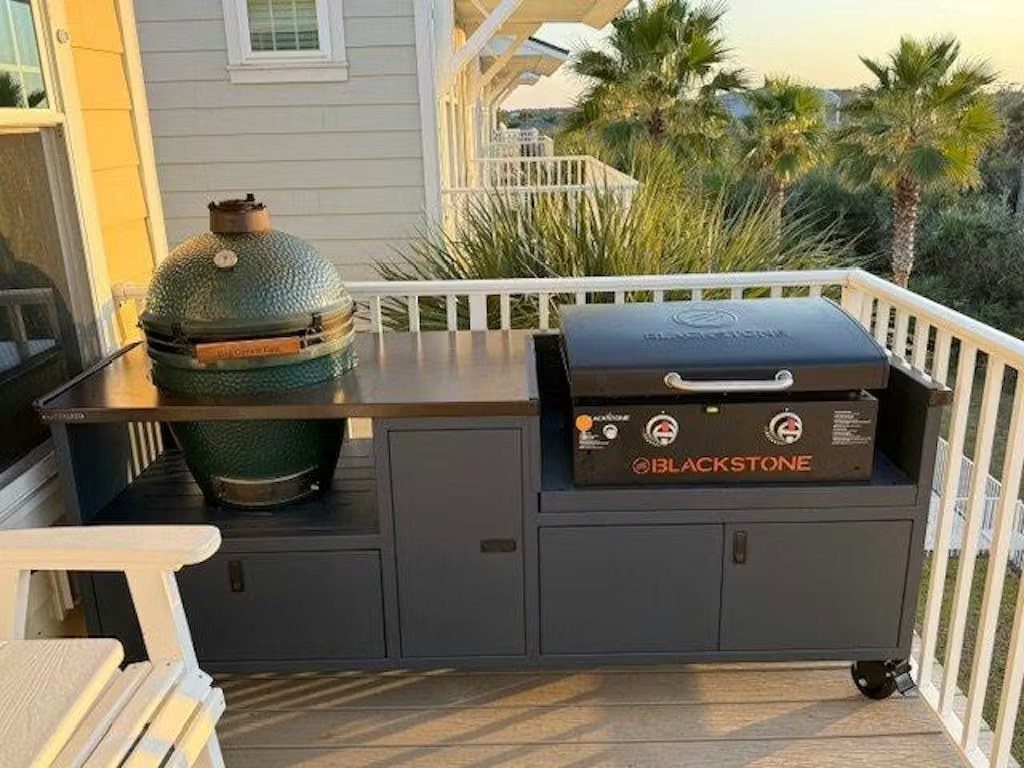
I keep coming back to the detail about the kamado: its ceramic shell radiates downward and will blister standard cabinet doors if you enclose it.
1. Grill Cart
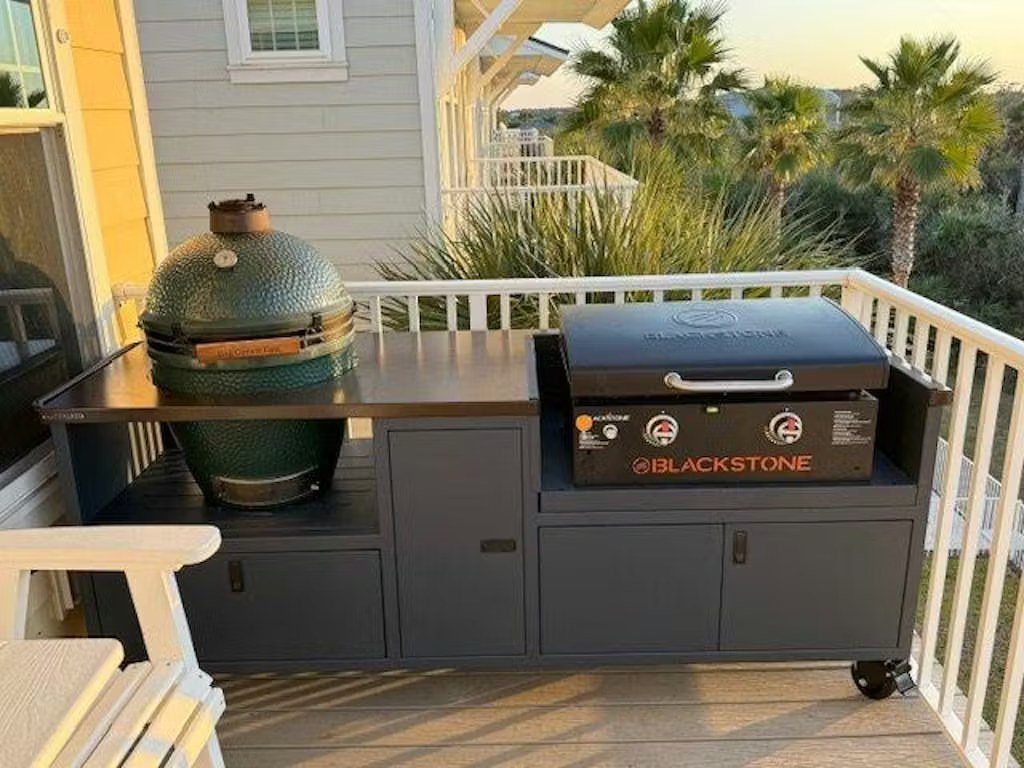
A good grill cart earns its wheels. A cart that handles both a kamado and a griddle keeps your options open on fuel type, and casters let you roll it off the deck when a storm rolls in.
For anyone working with a rental or a small patio, mobility is the feature that protects your investment. You are not pouring a slab or running gas lines.
Build the frame from steel or pressure-treated lumber rated for exterior use, size the shelves to your 2 cookers, and add a lower rack for charcoal or propane. Locking wheels are non-negotiable on anything this tall.
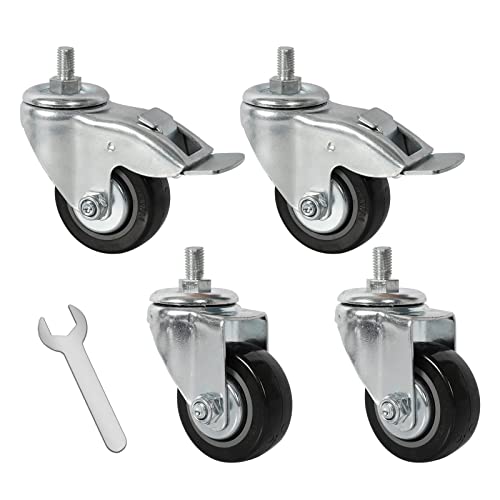
SCREW STEM SPECIFICATION➤4 PCS 3in swivel casters, stem diameter 3/8", stem length 4/5", and kamado joe series I & series II original casters to maintain the same level, noiseless casters can be replaced at will one of them, do not worry about tilting the cart.

Universal Compatibility - This grill cart is expertly designed to fit Big Green Egg, Big Joe and other large grills seamlessly, offering a sturdy and reliable foundation for all your outdoor cooking escapades. Whether you're hosting a backyard barbecue or a camping trip, our grill station serves as your trusted companion, ensuring stable support and enhancing your culinary adventures with ease

【Compatible with Most Egg Grills Under 17″】 Designed for Mini Max, Small/Medium Big Green Eggs, Kamado Joe Jr., and similar-sized kamado grills. Please check your grill’s width before ordering.
2. Grill Station with Storage
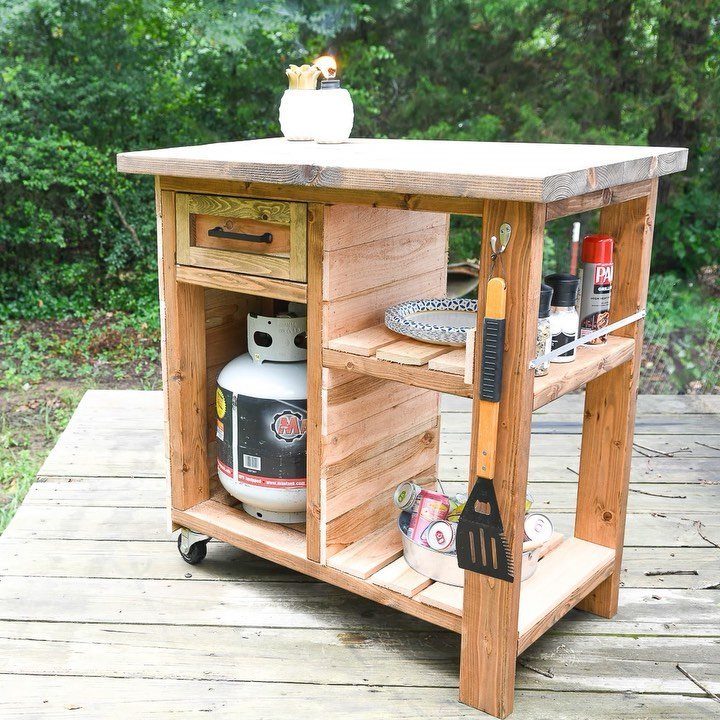
Storage changes how often you actually cook outside. When the tools, the oil, and the tray you forgot last time all have a spot, grilling stops being a hunt through the garage.
A station with a drawer hiding the propane tank and hooks keeping spatulas at hand solves 2 storage problems at once.
I would build the carcass from cedar or a good exterior plywood with edge banding, then seal every surface that faces up. The wheels matter here too; even a full storage unit should move for cleaning or re-staining.
Keep the shelf spacing flexible. A tall paper-towel holder and a short spice rack do not belong on the same fixed tier.

Flexible 3-Level Storage: Two height-adjustable shelves create organized zones for cookware, serveware, seasonings, cleaning supplies, and other outdoor kitchen essentials; a practical outdoor kitchen cabinet setup for everyday grilling

Mobile Prep Space by Your Grill: A 304 stainless steel top adds workspace beside the grill, while the rolling cabinet keeps prep and serving supplies close at hand; a practical outdoor kitchen cabinet setup for everyday grilling

3-Tier Kitchen Drawers: Overall Size: 15"W x 25.4"H x 19"D. Cutout Size: 13"W x 23.6"H x 19.3"D. Our kitchen drawer is simple to assemble and provides spacious storage space for you to keep everything organized. You will have a clean and neat kitchen.
3. Stone Veneer Grill Station
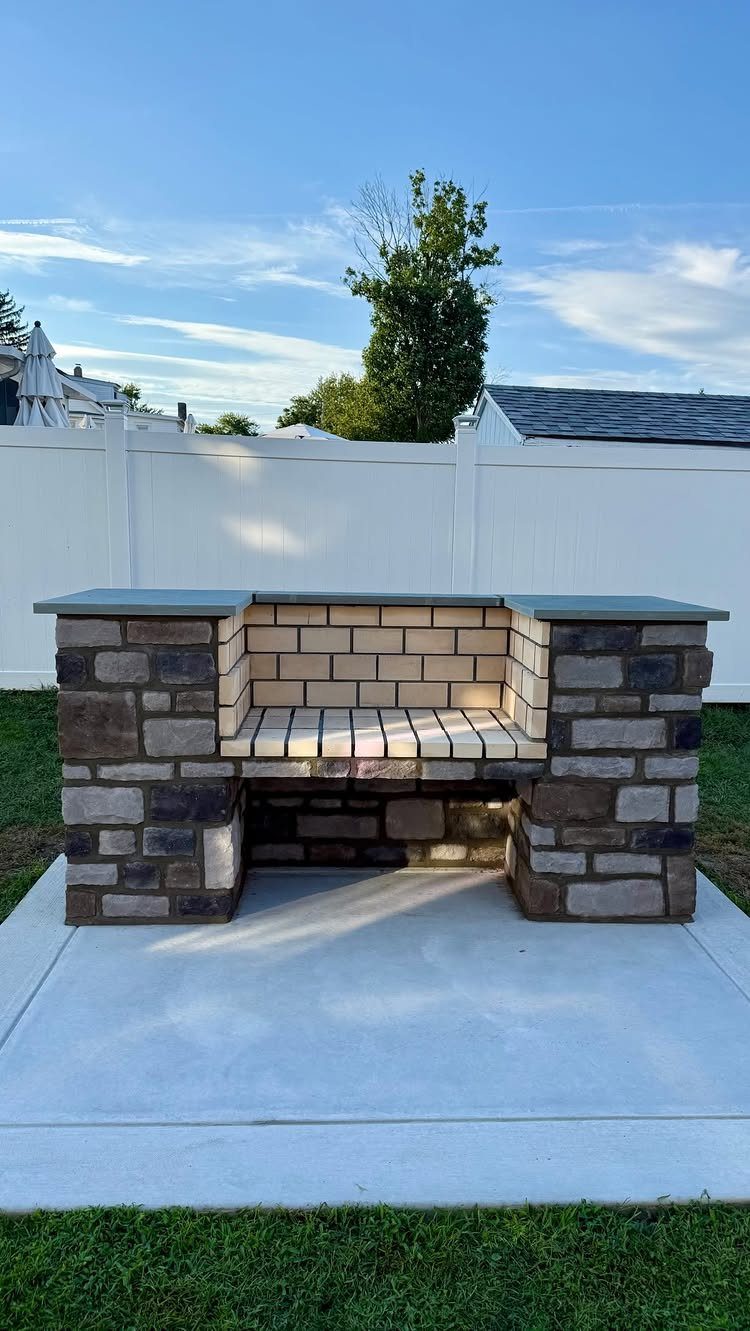
Stone veneer gives you the weight and look of masonry without the footing a full stone wall demands. That matters on an existing patio where you are not trying to regrade half the yard.
A steel or concrete block frame skinned in manufactured stone and topped with a poured or precast counter gives you a finished look from the ground up.
I have seen veneer fail when it sits directly on wood that breathes and shifts; use a cement board backer and a moisture barrier behind it.
The concrete counter will outlast tile here, and the thermal mass helps on windy days. Budget two weekends: one for the structure, one for the stone and grout.

🏡 Stable & Portable Outdoor Kitchen Cabinet: Designed for intelligent mobility, this outdoor kitchen storage cabinet features 2 locking casters and 2 fixed wheels, plus adjustable support legs to stay stable on uneven ground, gravel, or slopes. Move it easily across your patio or yard. The smooth-gliding drawer with quiet ball rollers and sleek hidden handles ensures effortless use, while the waterproof build keeps it looking great for every outdoor gathering.

Stainless Steel Tabletop: This Outdoor Grill Table features a rust-resistant, stain-resistant stainless steel top that’s easy to clean. Perfect for food prep, it provides a durable and low-maintenance workspace for grilling and cooking outdoors

HIDE AWAY: Easily hide and store propane tank in your custom outdoor kitchen
4. Outdoor Kitchen with Sink
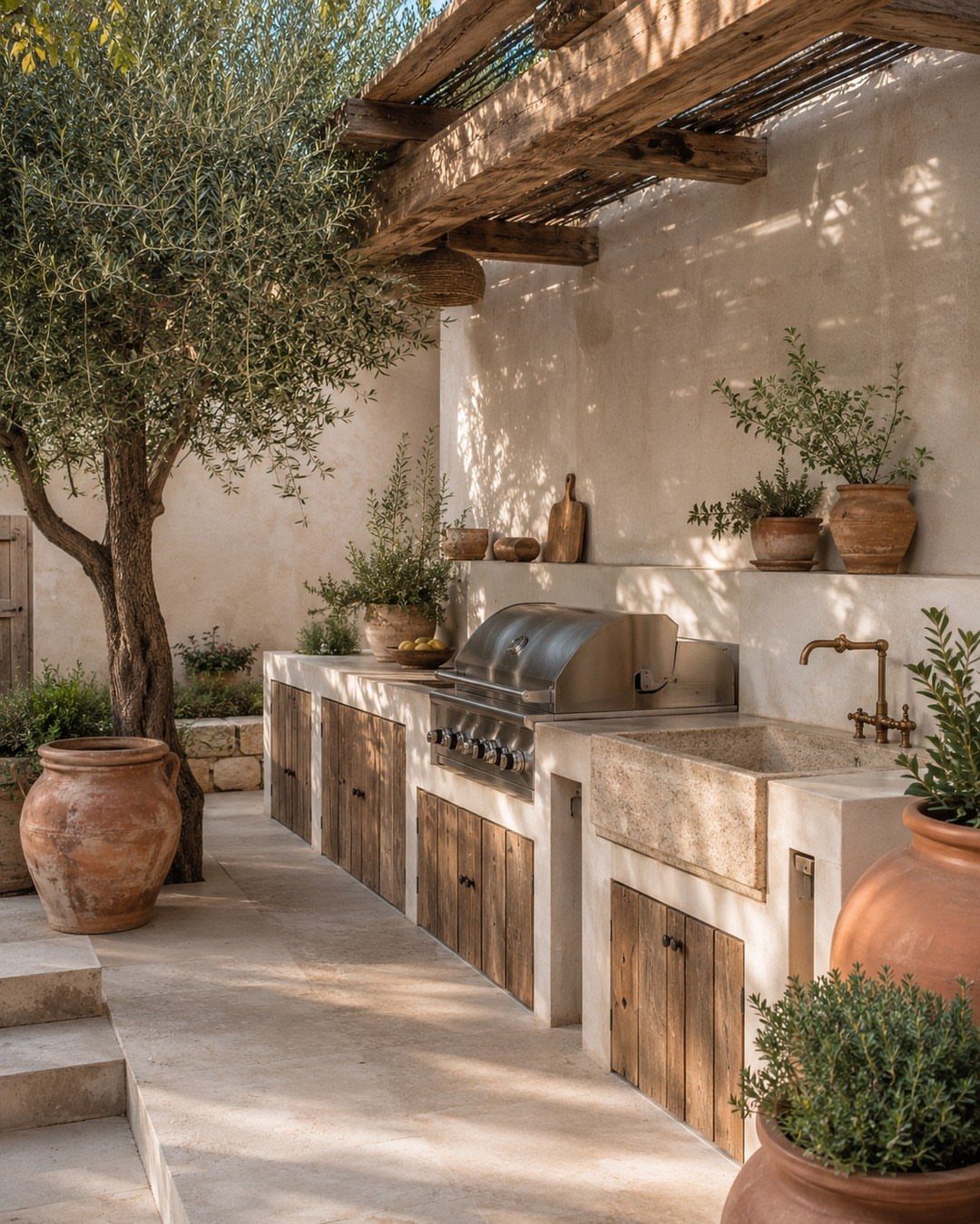
A sink in an outdoor kitchen sounds like a luxury until you have carried a greasy sheet pan through your living room one time.
Running plumbing through wooden cabinets under a pergola gives you a sink that works year-round if you add frost protection in cold climates. I would insulate the lines and add a shutoff inside the house for winter.
The stone basin is a smart choice; stainless shows every water spot and toothpaste-sized grill scraper dent. A plaster wall behind keeps grease from staining permanent siding.
If your yard slopes away from the house, a simple gravity drain to a dry well works without a pump. If not, you are in sump territory and the cost jumps.

PREMIUM CAST IRON GRILL: This VIVOHOME rectangular grill is made of heavy-duty cast iron, which withstands high temperatures, ensures even heat distribution for flawless searing every time; Ultra-durable material resists warping, rust, and cracking for years of reliable use; It creates perfect char marks while locking in natural flavors, ideal for steaks, burgers, and smoked meats

Modular Hybrid Cooking Setup: Versatile design allows use as a flat-top grill or stove with two independent high-pressure burners, accommodating any cookware, from stock pots to woks, for ultimate flexibility in your cooking experience.

274 square inches of cooking space, holds approximately 12 burgers
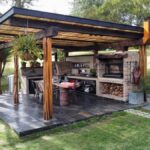
5. Grill Shed
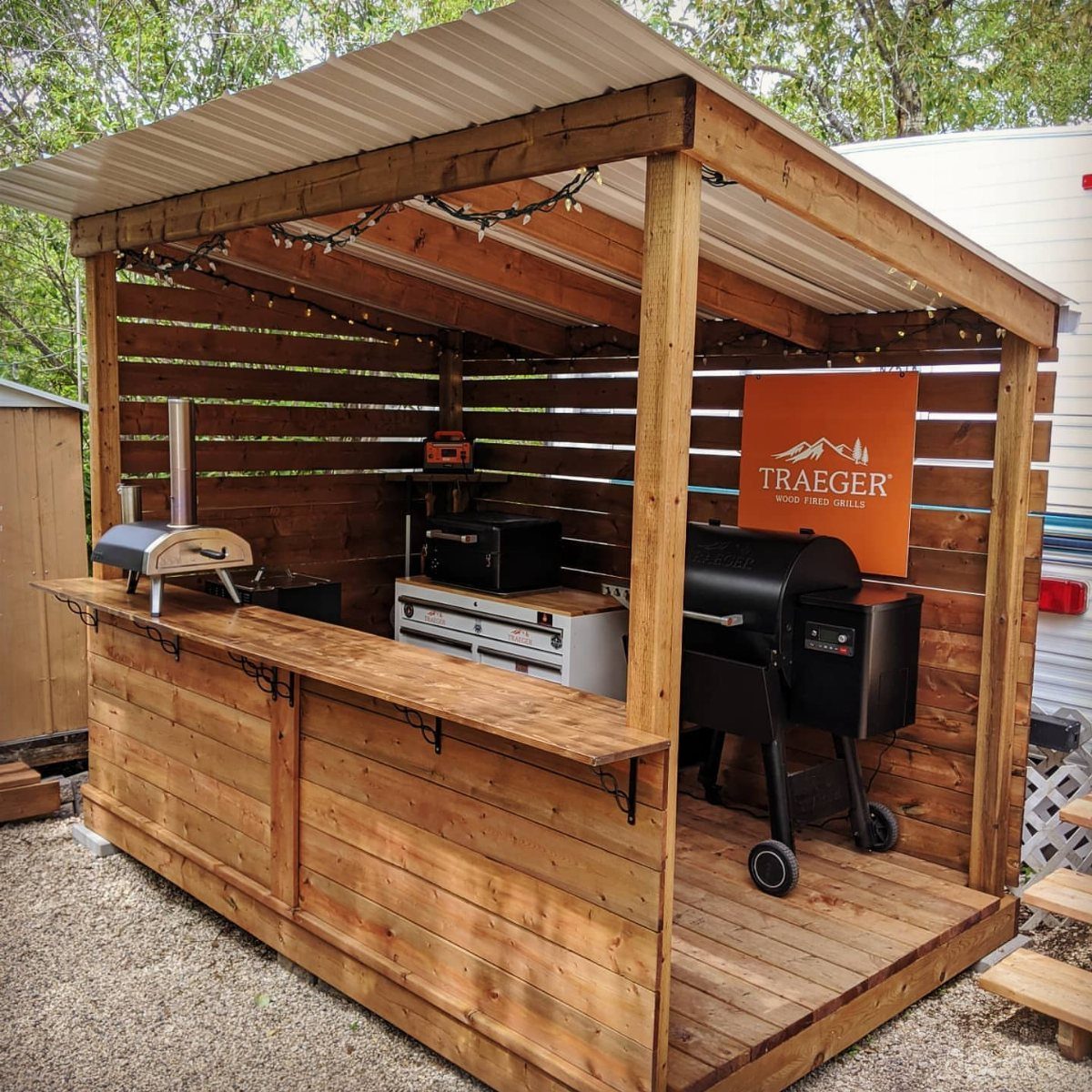
A shed around your grill solves problems no cover can. Rain blows sideways.
Mice nest in pellet hoppers. The neighbor’s cat walks across your grates.
This one houses a Traeger and a smoker with counter space between them, all under a metal roof that will outlast asphalt shingles by a decade.
I would add a vent high on the back wall; enclosed spaces trap humidity and creosote smell.
A gravel floor drains and levels easier than concrete, though it means you are standing on loose stone. Access takes more effort with a shed-style station: you are walking into a small building, not reaching from the lawn.
For anyone in a wet climate or burning pellets that turn to mush at the first drop of rain, the shed pays for itself in ruined fuel you never buy.

【Easy Installation, Leak-Proof Sealing】One-click secure connection! Our flexible sink drain hose features built-in compression washers at both ends, ensuring a watertight seal without the need for pipe tape. Simply screw it into a standard 1.5-inch drain opening—no leaks, no mess!

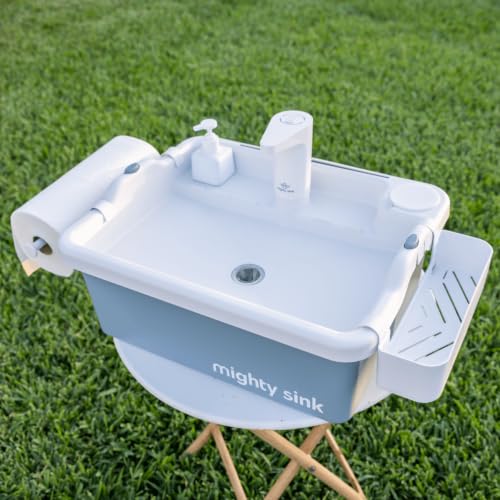
NO PLUMBING, READY IN MINUTES — Fill, wash in place, and drain into the built-in used-water basin. Holds 2 gal clean + 2 gal used water. Great for camping, RVs & van life, kids’ handwashing, remodels and outdoor vendors.
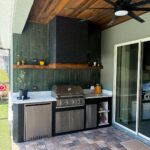
6. Covered Grill Station
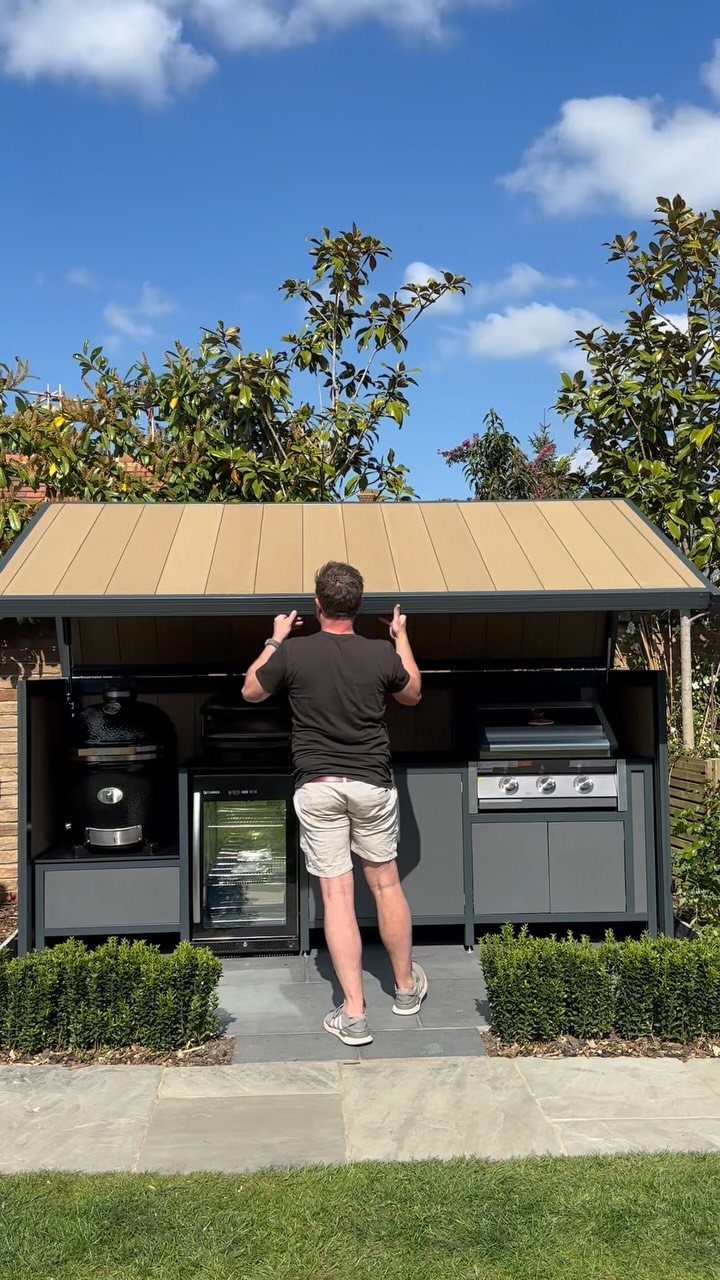
A roof over your grill station buys you cooking days that weather would cancel. This one covers a full run of appliances, not just the grill, which tells me the owner cooks out often enough to justify the structure.
The tan roof and grey cabinets read modern without fighting a typical suburban backyard.
I would build the frame from aluminum or powder-coated steel; wood posts look warmer but need resealing often in full sun. Leave 3 sides open.
A full enclosure traps smoke and turns the space into an oven for the cook. Most people underplan fridge placement; it needs shade from the roof and air gap from the grill’s radiant heat.
If your budget forces a choice, the roof comes before the appliances. An expensive grill under open sky rusts faster than a mid-range grill under cover.

【Easy to Move Your Grill】Rolling carts are designed to elevate your grill to a comfortable cooking height while also being easy to move; small children can easily move it, so make sure the rollers are locked even on a flat surface superior!

**HIGH LOAD CAPACITY** = Each 3 inch caster wheel can support up to 120kg/264lb, making them ideal for heavy-duty use in various applications like cargo carts and toolboxes.

SAFETY BRAKE➤This caster set includes 2 safety brake wheels 2 universal wheels, and also comes with 8 nuts with two wrenches. When this brake is depressed, the wheels are locked in place, holding the equipment firmly in place. Locking casters are designed to make it safer in use.
7. Trailer Mounted Smoker Station
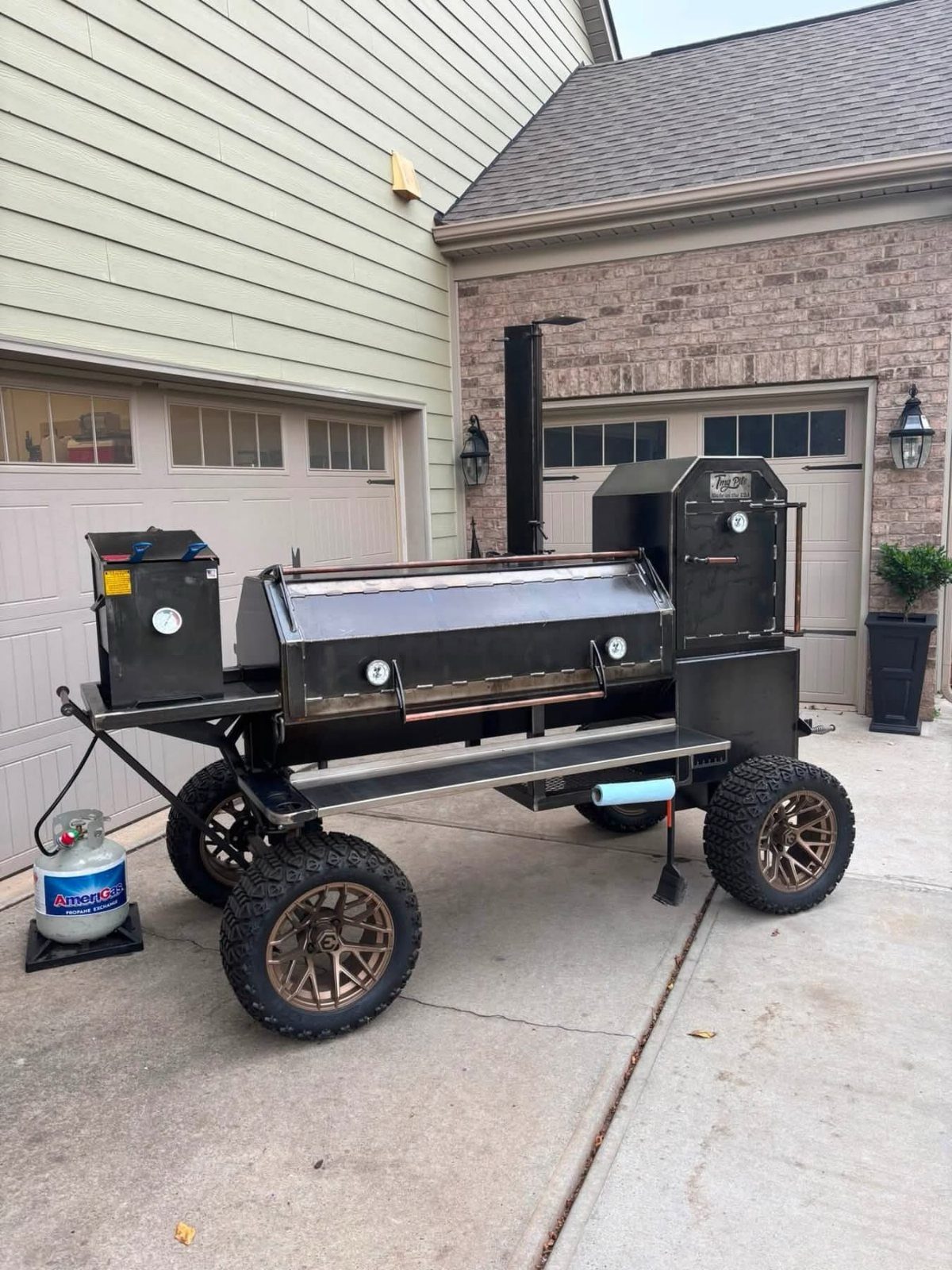
A smoker on a trailer is not a backyard fixture; it is a rig you can tow to a competition, a campground, or your brother’s house when he is hosting the whole family.
The trailer frame carries the weight so your patio does not have to. Build or buy one with a solid axle, electric brakes if you are crossing state lines, and a tongue jack that handles the loaded weight.
The propane tank needs a bracket that meets DOT standards for transport, not just a bungee cord.
Storage is minimal on most trailer builds, so plan a front box for tools and foil. This setup suits anyone who cooks for crowds in different places and has a truck with a hitch rated for the load.

Premium Stainless Steel: Brushed stainless steel handles outdoor heat and moisture while resisting rust, stains, and daily wear; the smooth surface wipes clean with ease; a practical outdoor kitchen cabinet setup for everyday grilling

【Durable Construction】30''W x 10''H in large size, made of heavy-duty 304 stainless steel, designed to resist corrosion, rust, and harsh weather conditions, ensuring durability and withstand the harsh tests of outdoor use.Please note:To ensure proper fit after installation, deduct 0.79in from the high and width dimensions provided.

⭐【High-Quality Materials】This BBQ outdoor kitchen trash drawer is made of solid 304 stainless steel construction that makes our trash drawer more hardness, anti-rust and anti-scratch. It can be wiped well with no marks or smudges left, one piece frame construction for durability and not easily deformed.
8. Wood Slat Grill Station
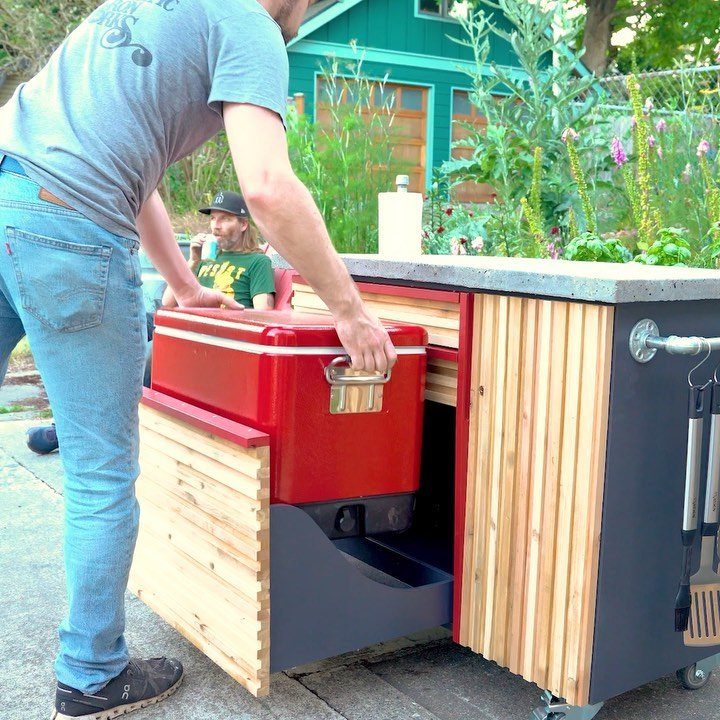
Vertical wood slats give a grill station the look of outdoor furniture rather than built-in cabinetry, and the gaps let air move through so the wood seasons evenly.
Cedar or mahogany slats spaced half an inch apart resist cupping better than a solid panel in full sun.
The concrete counter needs a steel or fiberglass mesh pour to handle thermal shock from a hot pan; standard bag mix cracks in under a year without it.
The pull-out cooler compartment shown is a smart touch, though I would line it with a plastic tub rather than letting ice sit against wood.
Reapply an exterior oil every spring. The slat look costs more in labor than materials, so budget your time, not just lumber.

Dedicated Propane Tank Area: This ROVSUN grill cart features a separate propane tank storage compartment designed to keep fuel safely out of sight. No more unsightly tanks cluttering your patio or creating tripping hazards. The dedicated space makes refills quick and easy while maintaining a clean, organized outdoor cooking environment.

All-in-One Outdoor Kitchen Solution: Transform your patio into a functional outdoor kitchen with this multi-functional BBQ cart. It features a stainless steel prep table, seasoning rack, and dedicated gas tank storage - everything you need to cook and entertain outdoors

Premium Solid Cedar Construction - Crafted from 100% solid cedar wood with a weather-resistant water-based paint finish, this grill prep table offers natural rot resistance and durability for outdoor use. The adjustable feet provide effective moisture protection, preventing warping or damage from wet ground, ensuring long-lasting performance in patio environments
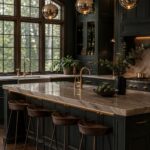
9. Dual Grill Cooking Station
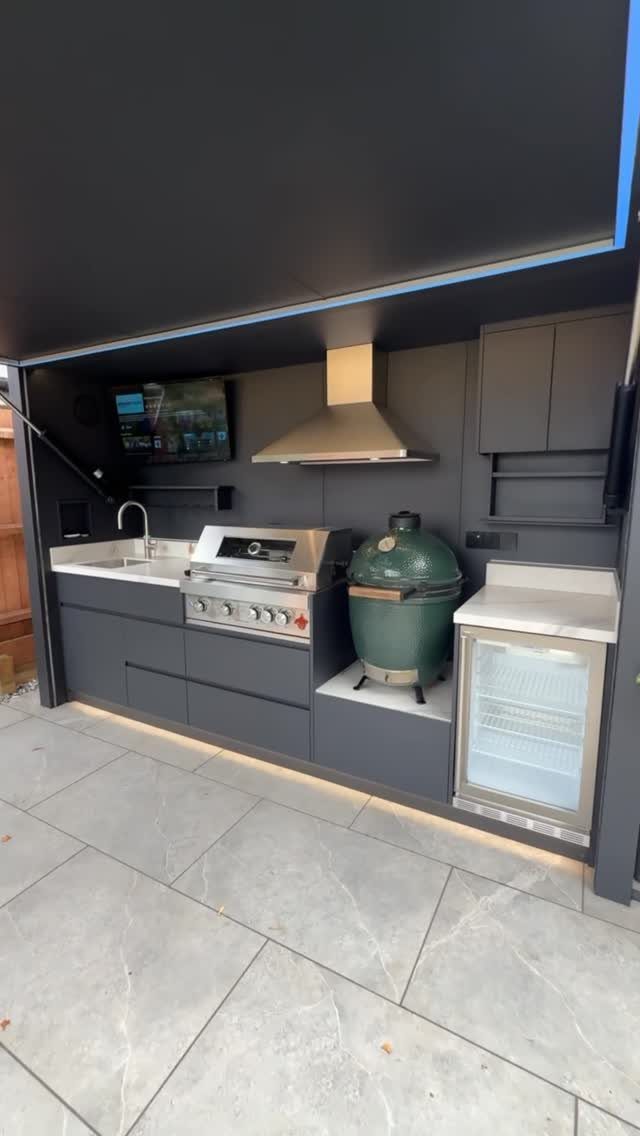
Two grills in one station let you sear over gas while the kamado holds low-and-slow smoke for hours, which means one cook can handle both jobs without swapping fuel mid-party.
Dark cabinetry in a powder-coated aluminum frame keeps the modern look without the heat-soak problem of dark paint on wood.
The kamado needs a vented cabinet or open shelf; its ceramic shell radiates downward and will blister standard cabinet doors. Place the gas grill closer to the sink and fridge, since that is where the quick-cook traffic runs.
A TV under the roof is a nice touch for football Saturdays, but mount it on a full-motion arm so it tucks against the ceiling when smoke drifts.
This setup demands the most space and budget on the list, and it pays off only if you cook out twice a week or more.

PREMIUM STONE & MARBLE FINISH — Stacked-stone veneer wraps the front and sides, while a substantial 40 mm marble countertop creates generous prep space and a refined focal point for patios, poolside areas and backyard entertaining.

ARCHITECTURAL STACKED-STONE & 40MM MARBLE COUNTERTOP : Wrapped in genuine natural culture stone cladding on front and sides, accented with an ultra-thick 40 mm solid polished marble counter, Engineer, ext, corecoal a permanent built-in resort aesthetic without expensive masonry labor.
Choosing the Right Grill
The fuel you pick shapes every other decision in your station.
Charcoal takes time and attention; the smoky flavor is real, but so is the wait for coals and the ash cleanup after. I point first-timers toward gas for weeknight burgers and quick dinners, because consistency beats authenticity on a Tuesday.
A hybrid grill covers both only if you actually use both. I have seen buyers pay the premium for a hybrid grill, then run gas almost every time because charcoal felt like an event they stopped planning.
Budget matters less than honesty about your habits.
A mid-range gas grill used most nights of the week outperforms a high-end kamado that intimidates you into storage. Match the grill to your pace, then build the station around it.

Durable NSF Stainless Steel: Made of SUS201 stainless steel with brushed finish, rustproof, scratch-resistant, corrosion-resistant, easy to clean, durable, and NSF certified for food security

【Are you still using cheap sink in your yard?】 Why don't you try this utility sink!This portable sink is made of stainless steel material. The sleek appearance also make the stainless steel sink easy to maintain and clean in your daily life.The high strength stainless steel material also makes the sink more sturdy and corrosion resistant.This has to be the best utility sink for outdoor use!

Spacious Sink Basin. The utility sink basin 29.5x17.3x7.8 in and is designed to hold up to 17 gallons of water, providing ample space for all your washing needs. Whether you're cleaning large pots and pans or filling buckets, this generously sized basin ensures you can handle various tasks with ease.
Designing Your Layout
Grill placement is the detail that turns a station into a workflow or an obstacle course. I put the cook surface downwind of the main seating area, so smoke trails away from guests without trapping the cook against a wall.
Clearance from siding or deck railings is the first thing I check; more space is better where the yard allows.
Prep space should sit between the grill and the house, not beyond it. You want the shortest path from fridge to counter to flame, with the cutting board in that lane.
A deeper counter handles a platter and tongs comfortably; a shallow one feels generous until you are juggling corn and a thermometer at the same time.
Storage belongs where you reach it without crossing the hot zone. Drawers behind the cook are wasted; drawers beside it get used.
If your layout forces a choice, protect prep space and shrink storage. You can carry charcoal from the garage; you cannot carve a brisket on your knee.
Maintaining Your Grill Station
Clean the grates after every cook, not the whole body.
A wire brush on hot grates takes thirty seconds and saves the deep scrub. Empty ash from charcoal units once the coals are fully cold; wet ash corrodes steel faster than raw heat.
A cover helps only if the grill is dry when it goes on.
Trapping moisture accelerates rust more than rain does. Check the drip pan monthly; full pans attract insects and flare back onto the burners.
For gas lines, soapy water on connections bubbles where propane leaks. I do this at season start and after every tank change.
Charcoal stores in a sealed metal bin, not the bag it came in.
Humidity can degrade charcoal over time, and paper bags draw rodents. A lower shelf needs the bin raised on a paver or scrap plywood so ground moisture does not wick through.