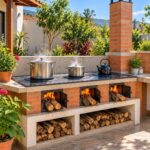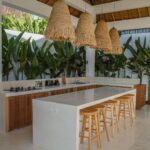

A backyard bar can mean a painted wood cart on casters or a stone-clad kitchen bar with a built-in grill, 2 screens, and a roof structure overhead.
How permanent your situation allows shapes the choice: renters and hosts who move the party around need portability, while homeowners with patio concrete to build on can bury conduit and run a water line to a Vevor ice maker.
What separates the workable ideas from the fantasy ones is knowing which tradeoffs are fixed, like the counter space a pizza oven box consumes, and which are optional, like whether that oven burns wood or runs gas-assisted.
1. Bar Stools
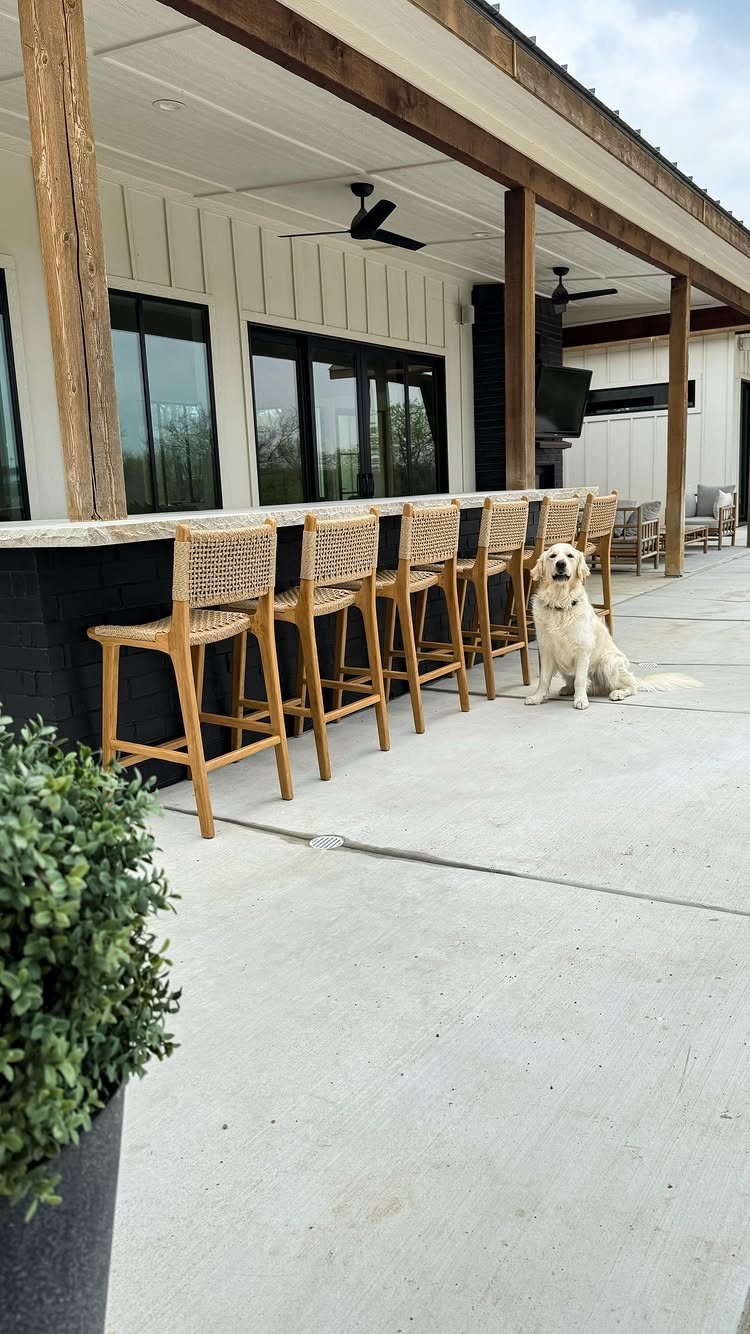
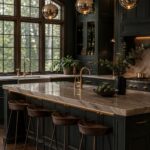
Woven seats in synthetic fiber handle rain, sunscreen, and the occasional golden retriever without swelling or mildewing. Outdoor bar seating fails at the seat first, so the material choice beats the stool style every time.
I look for wide weave patterns with some give; they breathe better than solid slats in July heat and dry faster after a storm.
Synthetic fiber lets these stools stay out year-round in most climates, not dragged to a shed each fall. For a covered porch like this one, that ease is the main win.

【UPGRADED COMFORT】Outdoor barstools bar height set of 4 are ergonomic design with slightly-slanted backrest and extra wide seat, curved high backrest support, matches the human backline entirely, built-in footrest construced with sturdy square foot tube tightly wrapped woven wicker add more comfort to your feet, ensuring you feel relax adequately while seating, enjoying comfort and relaxed patio life, it is an excellent choice for matching our bar table ASIN B0CV3MG3K4

【Featured details】:The built-in footrest and wider armrest offer a comfortable place to rest your feet and arms. The height of the chair suit for overlooking far away.

SMOOTH 360 DEGREE SWIVEL: Our outdoor counter height bar stools are equipped with sturdy metal swivels that allow you to safely and comfortably swivel and easily engage in fun and conversation around you
2. Outdoor Kitchen Bar with Built-In Grill
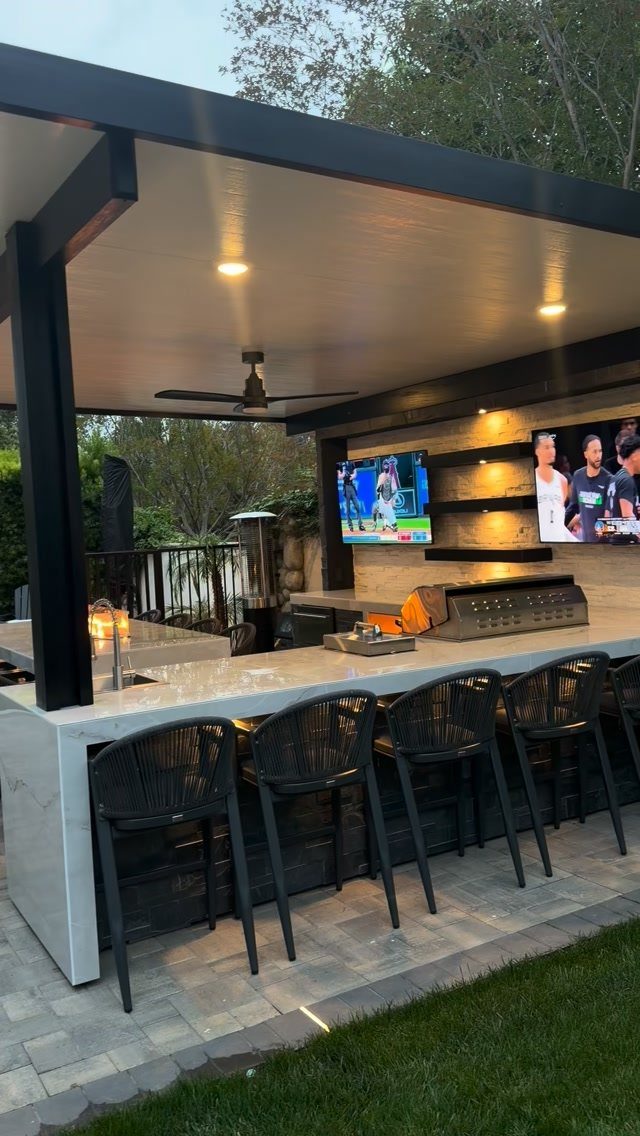
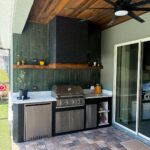
A built-in grill at bar height lets the cook face guests instead of turning away to flip burgers.
Stone or stucco surrounding the grill box anchors the whole bar and gives you somewhere to run electrical for those TVs. Porcelain or compact laminate performs the same as marble-look stone and handles hot trays better than natural stone.
Two screens sounds excessive until you realize one carries the game and the other stays on music or a fireplace loop. Run conduit during construction; retrofitting outdoor-rated outlets behind stone is not a weekend job.

Flexible 3-Level Storage: Two height-adjustable shelves create organized zones for cookware, serveware, seasonings, cleaning supplies, and other outdoor kitchen essentials; a practical outdoor kitchen cabinet setup for everyday grilling

Mobile Prep Space by Your Grill: A 304 stainless steel top adds workspace beside the grill, while the rolling cabinet keeps prep and serving supplies close at hand; a practical outdoor kitchen cabinet setup for everyday grilling

Flexible Storage Zones: Three drawers keep grilling essentials sorted, while the spacious side cabinet accommodates a propane cylinder, trash bin or bulky supplies; a practical outdoor kitchen cabinet setup for everyday grilling
3. L-Shaped Bar
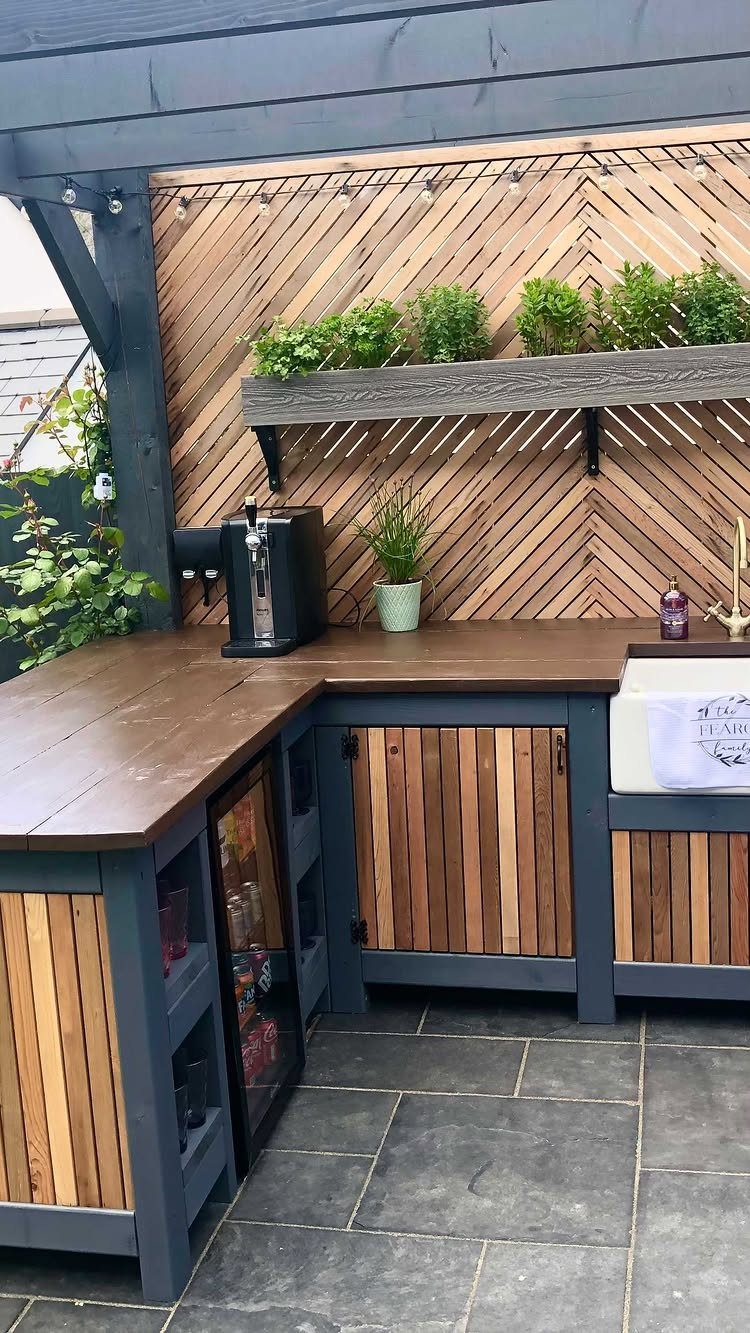
An L-shaped run gives you the most seats per linear foot of any outdoor bar shape, and the return leg is where I usually put the practical stuff: cooler drawers, trash pullout, maybe that towel hook with the family name.
The diagonal wood wall behind this one does more than look good; it breaks up the boxy outline that makes so many backyard bars seem like a shed got repurposed.
I prefer the short leg of the L for prep and the long leg for seating, but flip that if your crowd tends to gather behind the cook.
Either way, leave 42 inches minimum inside the corner for two people to work without colliding.

MODERN L-SHAPED BAR UNIT: Experience the uniqueness of the L-shaped bar cabinet, meticulously designed to optimize space while providing a comprehensive corner bar solution. Sporting a sophisticated black finish, clean lines, and top-notch design, it imparts a touch of modern elegance to your home. This makes it the perfect space for entertaining your guests

360° ROTATING COUNTERTOP FOR FLEXIBLE LAYOUTS: Rotate the movable countertop clockwise or counterclockwise to create the setup that fits your space. Keep it compact for everyday storage, turn it 90° for an L-shaped workstation or home bar beside a sofa or wall, or rotate it 180° to create a longer work surface for meal prep, serving, dining, and entertaining

Arc-Shaped Bar Table: Featuring an intricate arc-shaped design with delicate vertical slats, the mini bar for home beautifully combines aesthetics with functionality, creating an inviting atmosphere that blends seamlessly into modern or rustic settings
4. Covered Bar
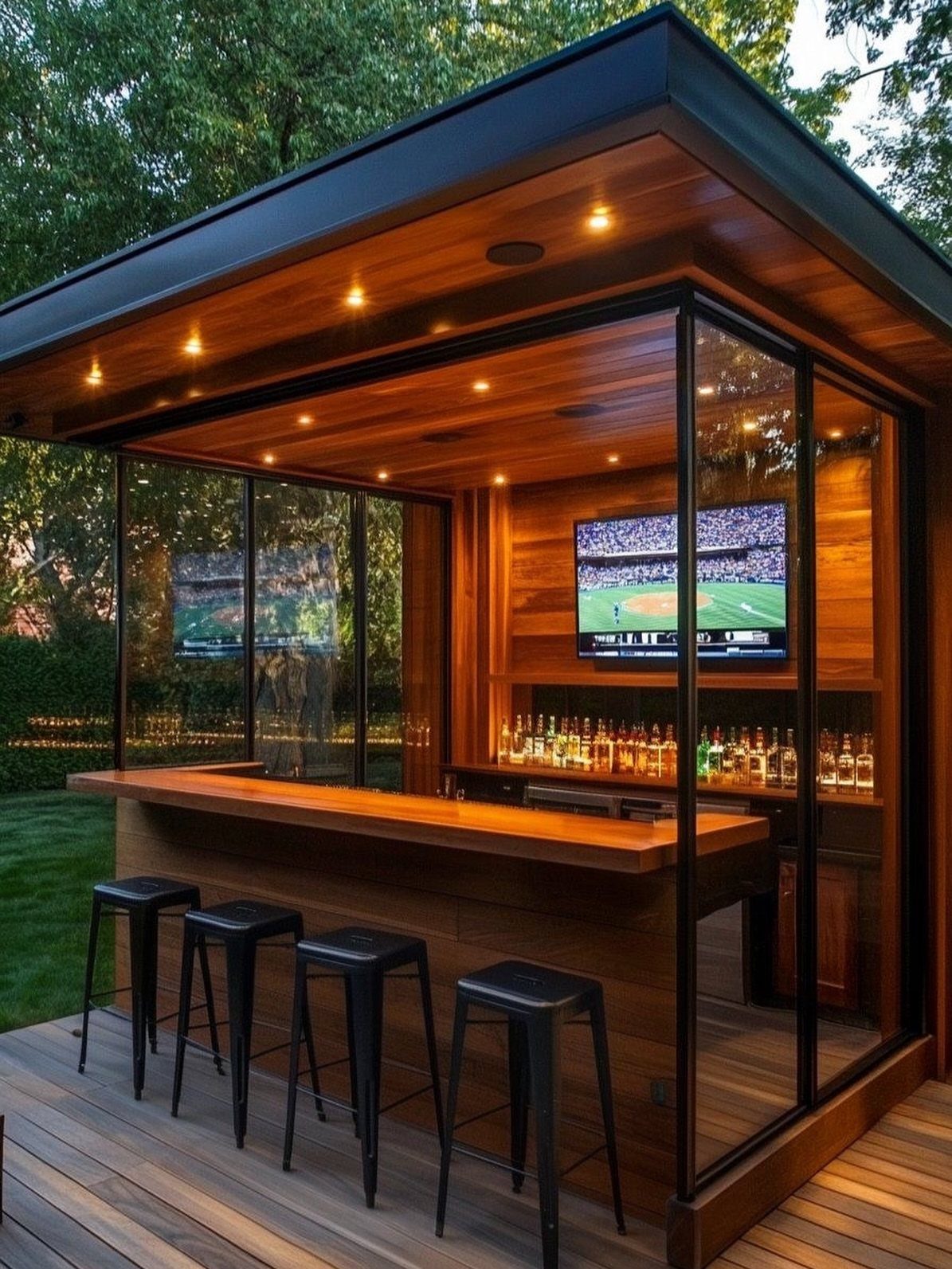
A real roof over your bar extends the season by months in most of the country, not just from rain but from the sun that drives people inside by early afternoon in July.
This glass-walled version is more enclosed than I usually recommend; I like 3 open sides for airflow and the social feel of a bar, not a room.
Recessed lighting in the ceiling is worth the electrical work, though, because it lets the space function after dark without relying on string lights alone.

✔ Superior UPF50+ & All-Weather Protection – Crafted from high-density 160g PA-coated polyester fabric, this lean-to awning blocks harmful UV rays to keep your space cool. The water-repellent treatment resists light rain and dries quickly, ensuring your outdoor moments are never ruined by unexpected drizzles.

2 parcels will shipped of the gazebo,which may arrive at different times. Rest assured, we will promptly follow up on this matter.

Top - notch Durability:Our Cedar Entertainment Bar Center has you covered. It combines high quality cedar wood, naturally resistant to moisture and warping, with a galvanized steel hardtop roof that's rust-proof. It endures all seasons, from summer heat to winter snow.
5. Tiki Bar
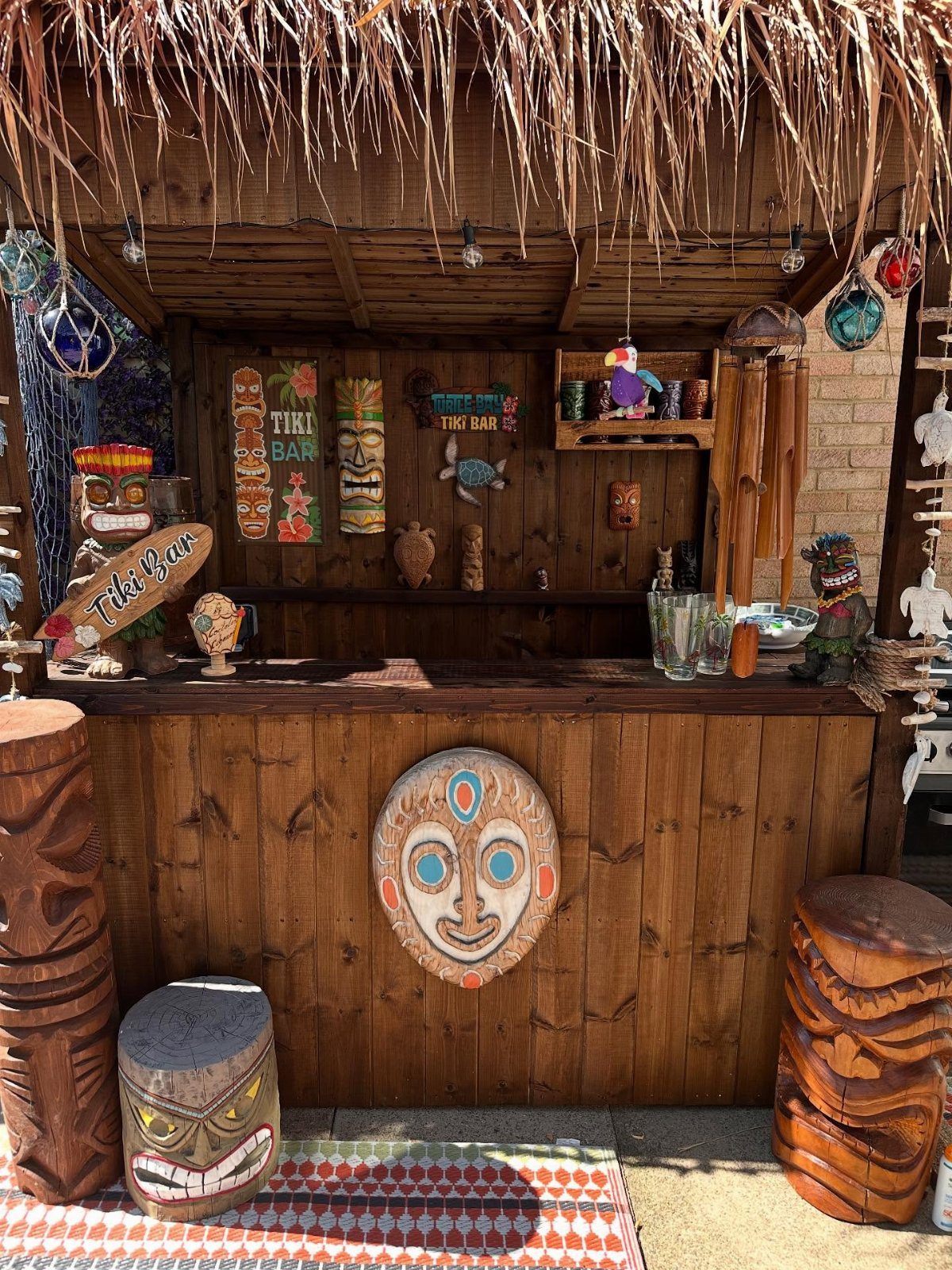
A thatched roof over a backyard bar commits to the bit fully, and I respect that. The carved masks and signage are easy to add later; the roof structure is what you have to get right from the start.
Real thatch is beautiful in dry climates, but synthetic palm panels from a marine supplier handle humidity and need no re-thatching. I have seen good tiki bars built from modified pergola kits with the panels screwed to 1×2 purlins.
The tropical decorations are where you stop spending money; thrifted glass floats, a few carved pieces, and overproof rum in a plain bottle do more than any catalog kit.

A Grill Master's Dream: Enjoy seamless outdoor cooking with a durable stainless-steel top, perfect for prepping and serving your BBQ favorites

All-in-One Outdoor Kitchen Solution: Transform your patio into a functional outdoor kitchen with this multi-functional BBQ cart. It features a stainless steel prep table, seasoning rack, and dedicated gas tank storage - everything you need to cook and entertain outdoors

【Durable Tabletop】 This outdoor grill cart features a premium stainless steel tabletop. That is sturdy and durable with excellent load-bearing capacity.The stainless steel tabletop is not only heat-resistant and deformation-proof, but also easy to clean, maintaining its attractive appearance over time
6. Outdoor Sink
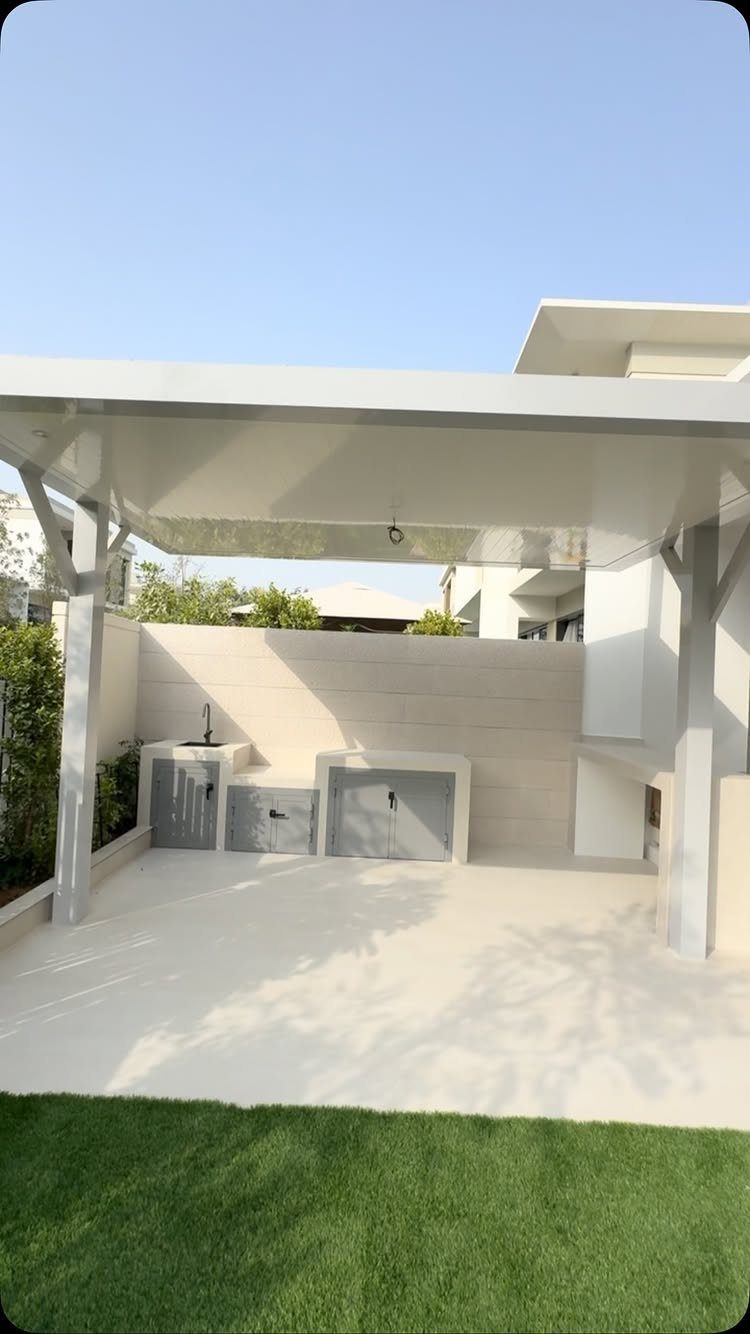
An outdoor sink changes how you use the whole bar, because it moves hand washing, rinsing tools, and filling ice buckets from the kitchen inside to the party outside.
I spec cold water only for most backyard setups; a hot line adds cost and rarely gets used enough to justify the plumbing.
Grey cabinets like these are usually aluminum or marine-grade polymer, both of which survive freeze-thaw cycles better than anything with a wood core.
The small basin here is the right size; large kitchen sinks in outdoor bars tend to become standing water problems.
Run the drain to a dry well or direct it away from the foundation; tying into house sewer lines is often code-prohibited without a permit.

The milton Bar Stool will bring style and convenience to your outdoor space

【UPGRADED COMFORT】Outdoor bar stools set of 2 are ergonomic design with slightly-slanted backrest and extra wide seat, curved high backrest support, matches the human backline entirely, built-in footrest construced with sturdy square foot tube tightly wrapped woven wicker add more comfort to your feet, ensuring you feel relax adequately while seating, enjoying comfort and relaxed patio life, it is an excellent choice for matching our bar table ASIN B0CV3MG3K4

Experience Comfort & Ergonomics: Designed with a curved ergonomic backrest and high armrests, these outdoor bar stools provide superior spine support for long-term lounging. The integrated footrest allows you to find the perfect sitting position, making these patio barstools ideal for sipping morning coffee or enjoying evening cocktails by the pool
7. String Lights for Bar Area
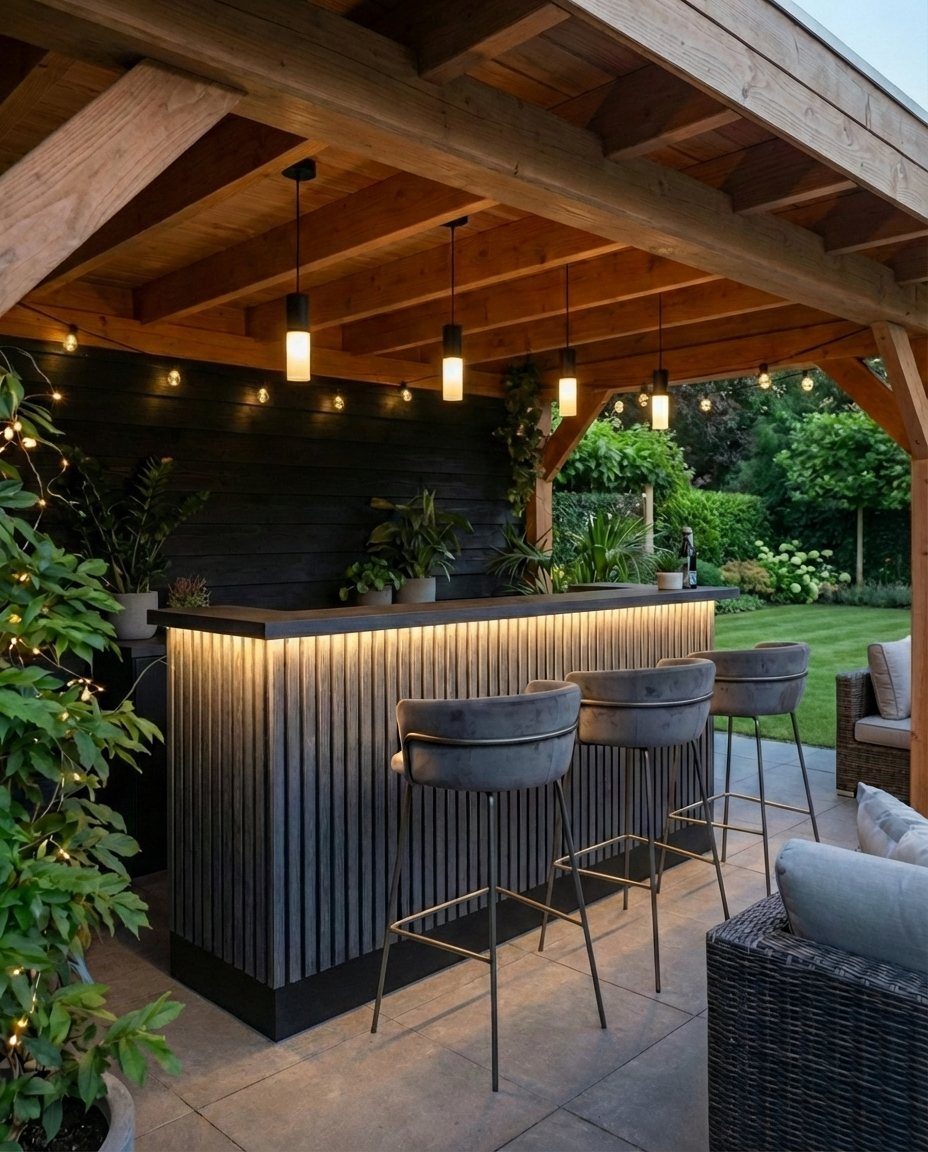
String lights under a pergola do what overhead fixtures cannot: they push light down at angles that catch faces and bottles instead of flattening everything from above.
I hang the main run in two V-patterns from the outer beams so the center stays open for air and conversation.
The glow on the counter in this setup comes from LED strip cove lighting, hidden behind the front rail; it is cheap to add and runs off the same low-voltage transformer as the pendants.
Skip the solar sets unless your pergola gets full afternoon sun; plug-in strands on a smart dimmer give you control that actually works.

Drawers Plus Cabinet Storage: Two drawers organize frequently used grilling tools and cookware, while the spacious side cabinet holds larger outdoor essentials; a practical outdoor kitchen cabinet setup for everyday grilling

All-in-One Organized Storage: Three drawers sort BBQ tools, cookware and seasonings, while the separate pull-out cabinet keeps waste contained and the cooking area uncluttered; a practical outdoor kitchen cabinet setup for everyday grilling

【Compatibility With】The bull 32 inch grill cover fits for 30 inch Bull Outdoor Products Angus, Outlaw, and Lonestar Select built-in grill heads along with most other 30 inch grill heads. Also Perfect Fits Bull outdoor product 45005 grill, Bull Lonestar select model 87048. Dimension: 32.7"L x 26"W x 11.8"H. Please confirm size before order, Avoid affecting your shopping experience.
8. Outdoor Bar Cart
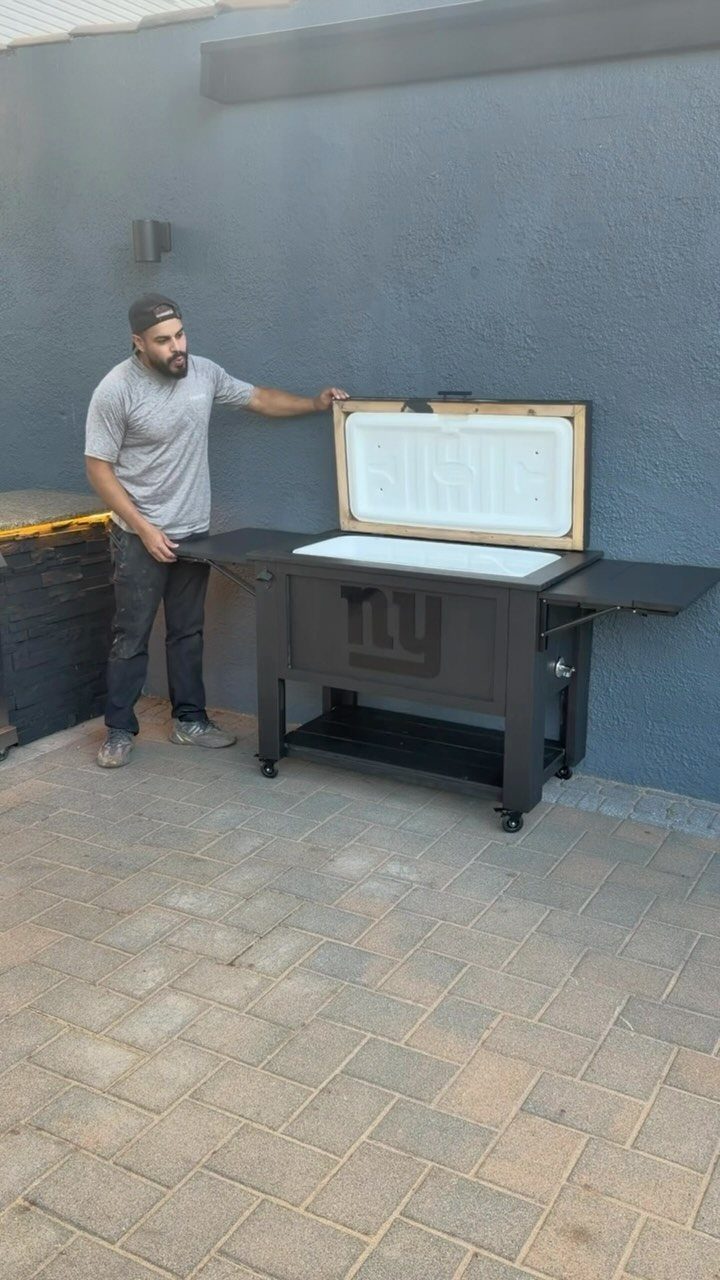
A cart on casters suits renters and anyone whose party moves around the yard from week to week.
The black frame and cooler box here are powder-coated steel, which handles weather better than the wicker-trend carts that start shedding in year two.
I would want a locking caster on at least 2 wheels; a loaded cart on a slight grade becomes a runaway fast. The cooler liner should lift out for cleaning, or you are looking at mold science by August.
For a real bar feel, add a cutting board top that overhangs on one side; that is your guest’s drink ledge, and a restaurant supply will have it for cheap.

3-MODULE L-SHAPED ISLAND: One matching 3-piece set — corner cabinet, open storage cabinet, and fridge & trash can station — joins together into a full L-shaped outdoor kitchen.

【Cheers, On The Bar Table】Get the party started with this modern bar table! With rustic brown and matte black tones for a classic sleek look, this L-shaped home bar rounds off your kitchen, dining room, or living room with a cozy, pub-like vibe. Whether you like a drink with friends or hosting social occasions, this liquor bar is sure to delight.

Charming Farmhouse Style: Featuring a classic farmhouse style with two-tone finish and grooved panel detailing, this corner bar cabinet blends seamlessly into any setting- whether acting as a stylish dining room or living room bar, a cozy basement bar, an indoor bar for home entertaining, or even an outdoor bar for semi-covered patio gatherings.
9. Outdoor Bar with Pizza Oven
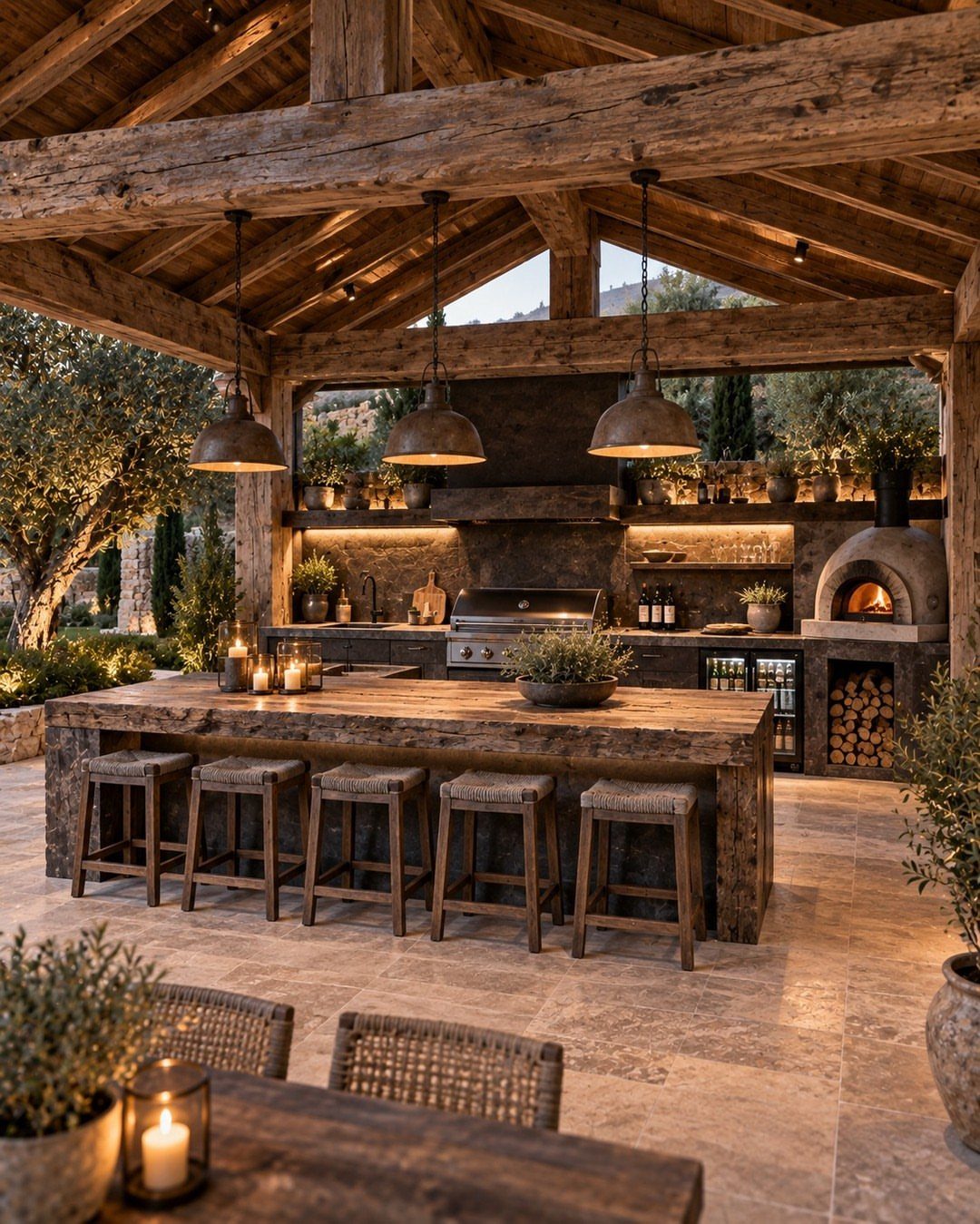
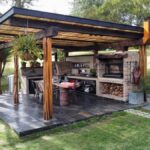
A pizza oven built into the bar turns the cook into the host instead of someone who disappears to the grill.
The stone surround in this pavilion setup is thermal mass; it holds heat for hours after the fire drops, so second and third pizzas bake more evenly than the first.
Wood-fired flavor is the draw, though gas-assisted ovens win on weeknight ease when you want the pizza without the fire-tending time.
The tradeoff is space: the oven box eats 30 inches of counter you will not get back, and the base needs concrete or block, not wood, for the heat load.
Place it at bar height, not ground level; bending into a hot oven mouth is a bad arrangement.
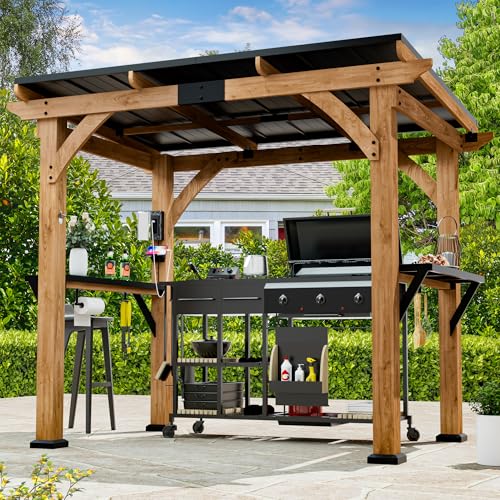
[Premium Cedar Wood Materials] This wood grill gazebo is crafted from FSC Certified premium cedar, ensuring sustainably sourced, high-quality wood for your outdoor bar setup. The frame of this hardtop gazebo is reinforced with powder-coated steel bolts and brackets, offering long-lasting durability and resistance to rust. Whether used as a grill gazebo or outdoor bar, this wood gazebo combines natural beauty with rugged performance.
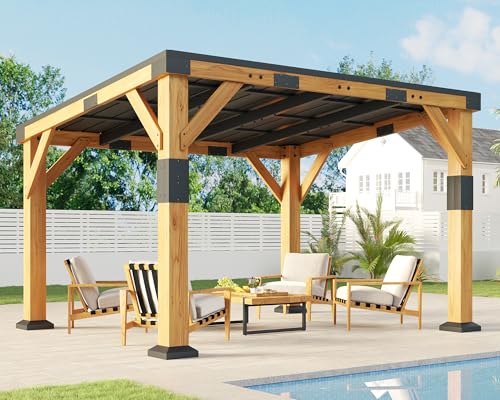
Elegant Sloped Roof for Better Drainage: The sloped roof design of this gazebo ensures efficient drainage, keeping the structure dry and safe in rainy or snowy seasons, while also adding a sleek, modern look that complements any home or outdoor structure

【Upgraded Roof & UV Protection】This hardtop gazebo features a reinforced galvanized steel roof that blocks 100% of UV rays, friendly for UV-sensitive users. The durable metal gazebo structure supports up to 77 lbs/㎡, handling heavy snow loads of 6 inches effortlessly.
10. Modern Slatted Bar with Ice Maker
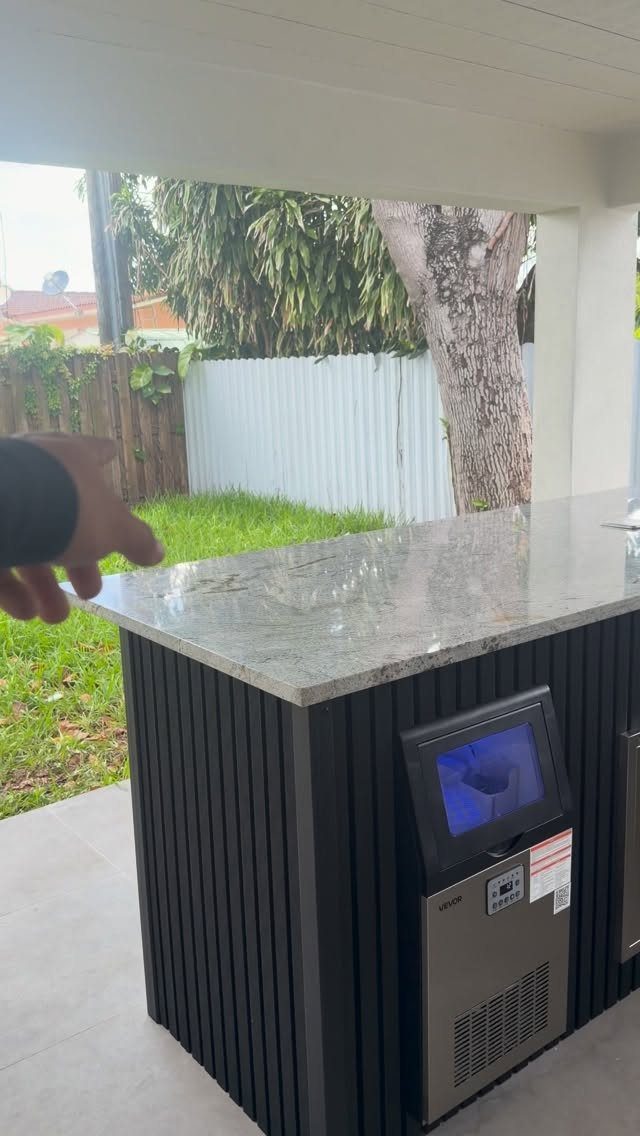
Black slats with a white stone counter is a specific look that reads more custom than it costs, because the slats hide a plain frame and the stone-look surface is usually quartz composite, not granite.
The ice maker built into the base is the practical win here; a Vevor unit like this one draws from a water line and drops nuggets or cubes straight into a bin, no bagged ice runs.
I would spec a drain pump model unless your patio has a gravity floor drain, which most do not. The slats need to be exterior-grade composite or finished hardwood; painted pine will check and gray within 2 seasons.

Seamless Installation Experience: This outdoor grill table comes with clear instructions, helpful guides, and a detailed manual, making setup a breeze. Our tech team is also available for remote support to ensure everything goes smoothly from start to finish
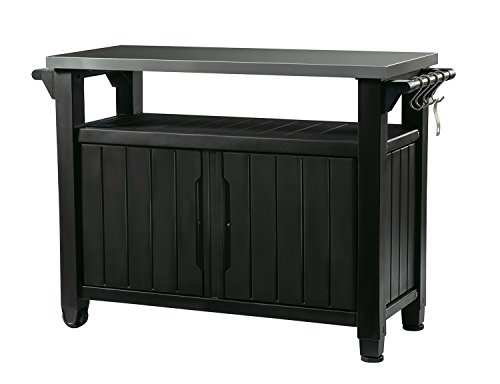
DIMENSIONS: Exterior: 52. 7 in. W x 20. 5 in. D x 35. 5 in. H / Interior: 40. 9 in. W x 16. 3 in. D x 18. 5 in. H
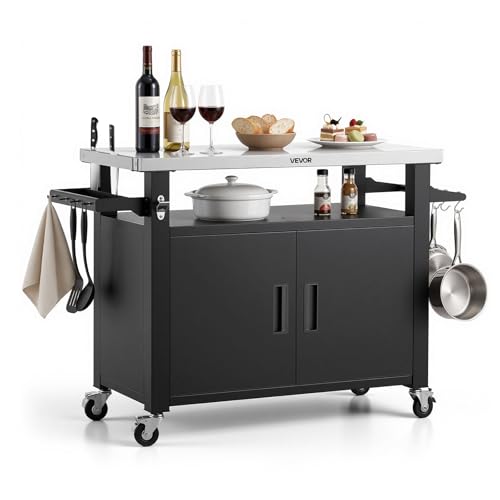
Premium Stainless Steel Tabletop: Made of high-quality stainless steel tabletop, this outdoor grill cart features a stable, non-wobbling structure supporting up to 88.2 lbs / 40 kg, while the surface is easy to clean and rust-proof
11. Grain Silo Outdoor Bar
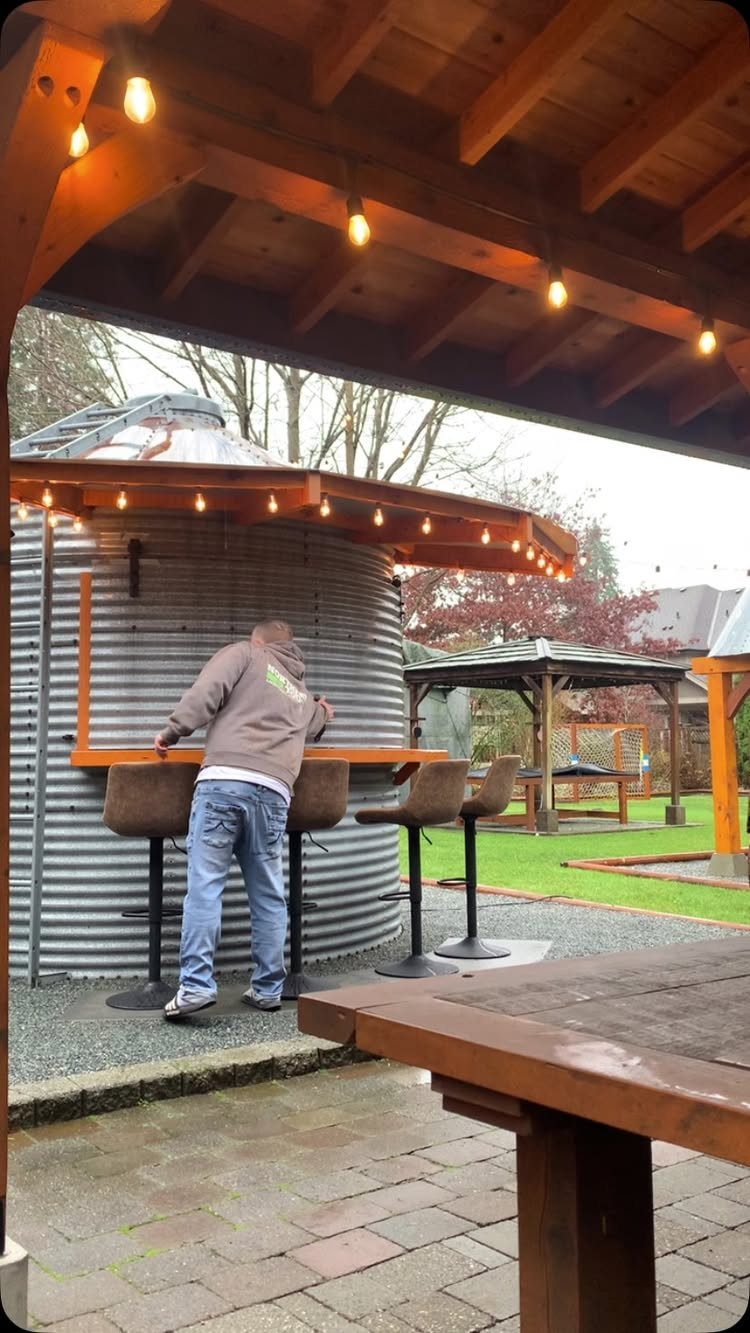
A grain silo is structural already; the corrugation gives you rigidity and a story in one piece. The wood counter wraps the curve with wedge-shaped segments, cut on a taper so the grain runs continuous around the arc.
Farm salvage grain silos give you serious bar perimeter if you use half the circle, and the curved wall becomes the conversation piece.
The metal needs a roofed structure over it, or the interior becomes a drum that amplifies rain to conversation-killing levels. A gazebo nearby handles seating, as here; the silo itself is too narrow for guests inside.
12. Faux Hedge Bar Counter
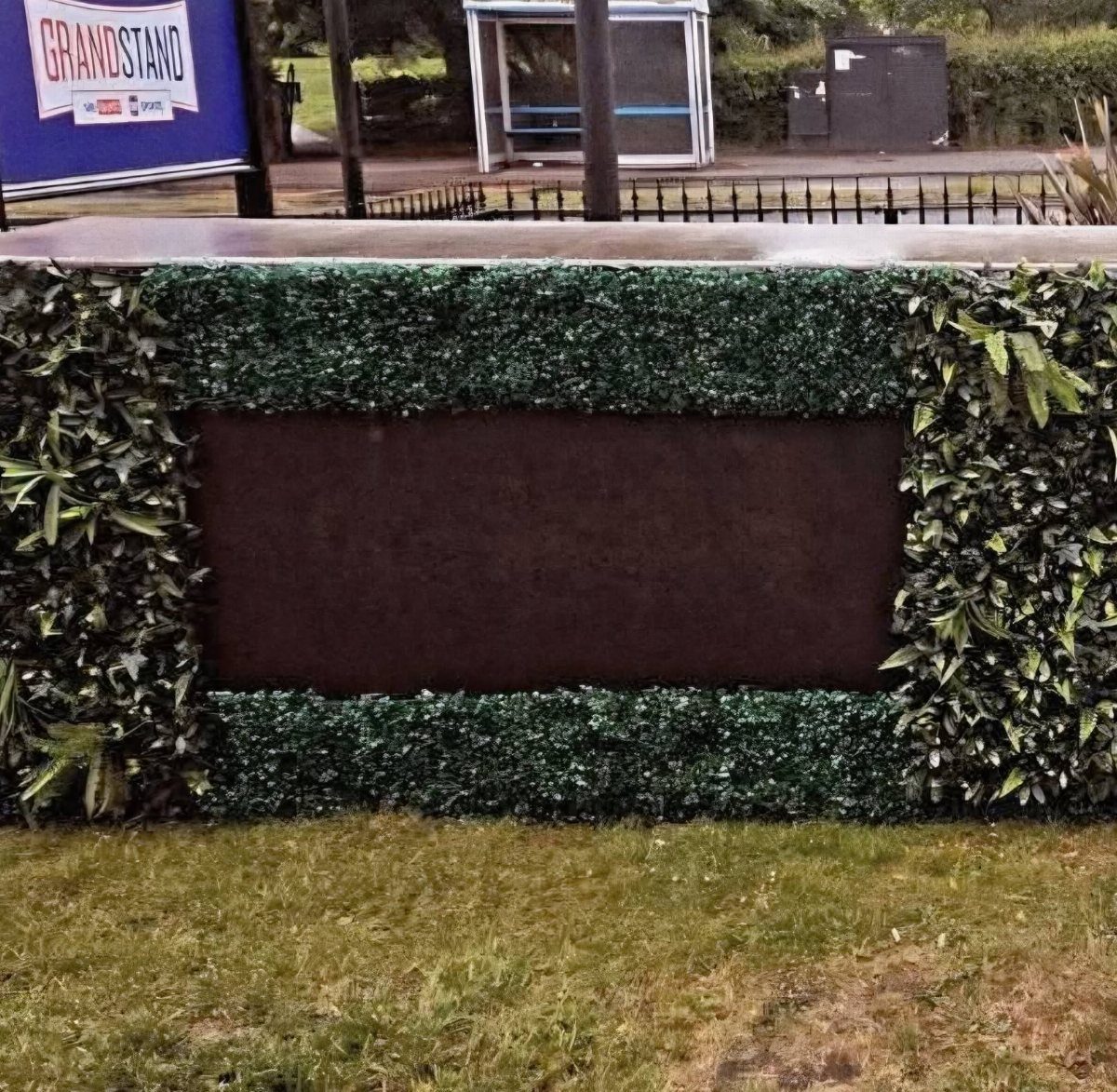
Faux hedge panels on a bar front give you greenery without the irrigation, drainage, and replaced-dead-hedge problem that kills most outdoor plantings.
The artificial boxwood or ivy is UV-stabilized polyethylene, clipped to a grid that zip-ties to the frame, with a wood or composite panel set into the center for the actual serving surface.
I would build the bar carcass in pressure-treated plywood, then skin the front with the panels and trim the edges in stained cedar so it does not read as a box with turf glued on.
The brown center panel here breaks up the green and gives you a place for signage or a mounted bottle opener. These panels fade in full sun after a few years; budget for replacement, not maintenance.
13. Framed Wooden Outdoor Bar
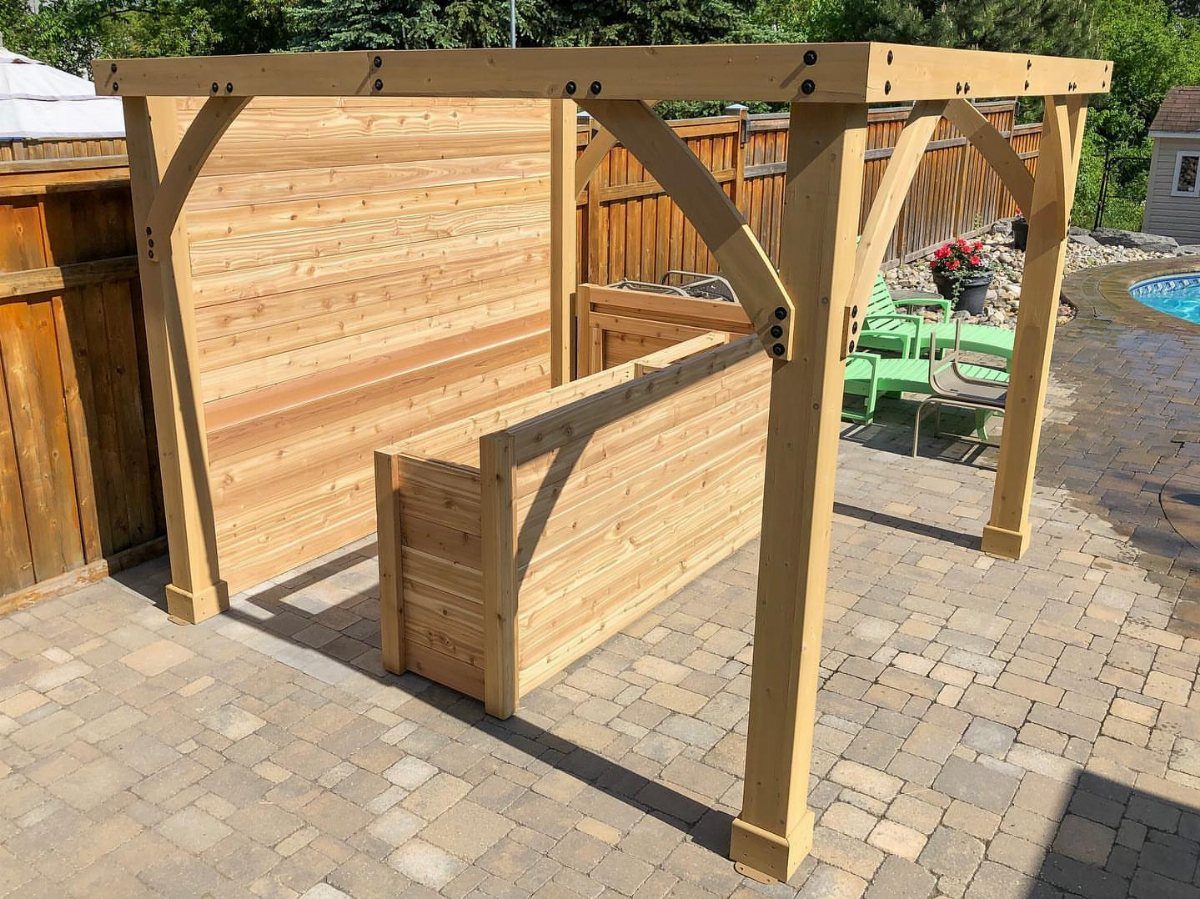
A framed back wall gives this bar its room-like presence without enclosing it on all sides. The vertical posts and horizontal rails create natural zones: bottles and tools on the back counter, drinks passed across the front.
Cedar or cypress holds up to splashes and humidity better than pine, which rots at the base in 2 seasons if the footing drains poorly.
Stone pavers underneath, as here, solve that by shedding water fast. I would stain rather than paint the frame; maintenance is a single coat every few years instead of scraping and starting over.
14. Painted Wood Patio Bar
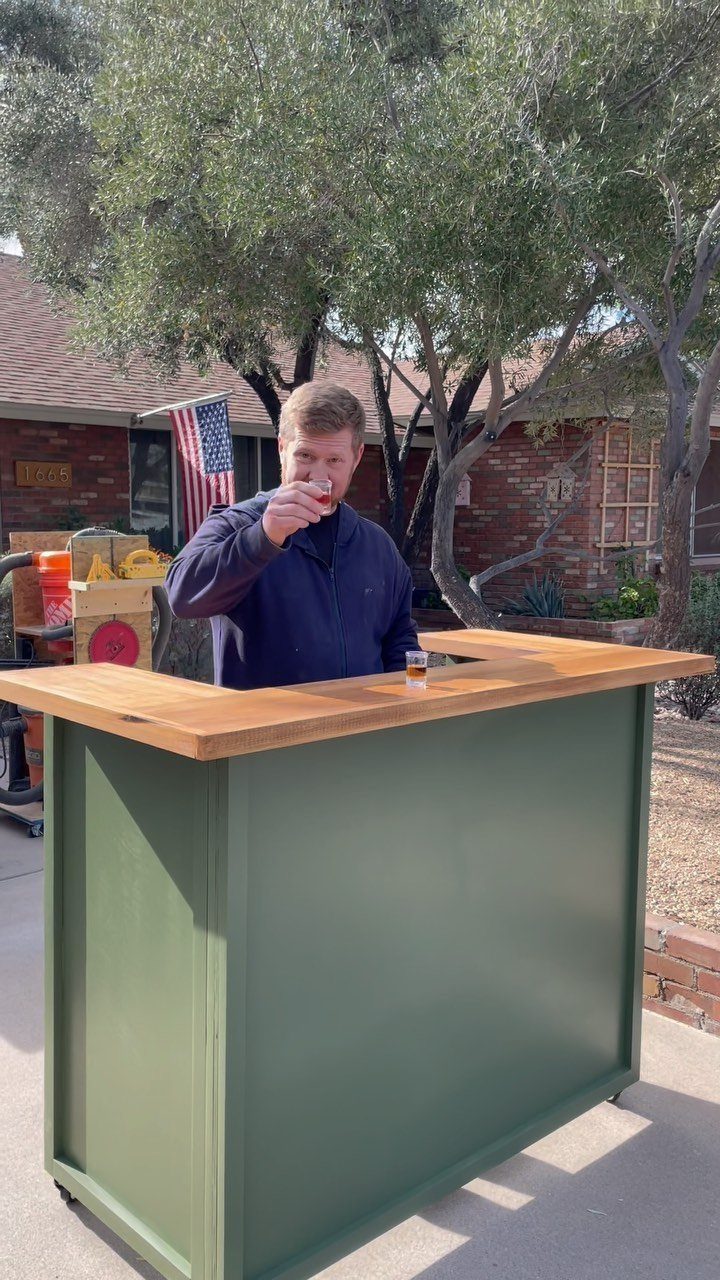
Green paint on the base with a natural wood top is a two-tone formula that hides dirt on the lower half while showing off the grain where people actually set their drinks.
Exterior acrylic latex over primer on pressure-treated lumber holds up longer than oil paint on a bar that sits in full sun; oil paint looks richer but chalks and cracks faster, so I use it only on pieces that get afternoon shade or get repainted often.
The natural top needs marine varnish or spar urethane, reapplied annually, or it grays and cups.
A concrete patio like this one is the right foundation; wood bars on grass or dirt sink and warp as the ground shifts beneath them.
Considerations for Building
Durable material choice starts with knowing what fails first.
Dimension planning is where most DIY builds go wrong.
Utility rough-in during construction saves serious labor later. A drain pump on your ice maker saves you from needing a gravity floor drain that most patios lack.
Benefits of Outdoor Bar
An outdoor bar changes who is present at your own gathering. Bar seating gives people a place to settle, eat, and drink while you work, so the kitchen does not isolate the host.
The practical benefit is fewer trips inside. An ice maker drawing from a water line ends the bagged ice run entirely.
The social layout matters as much as the equipment. I want the bar to feel like an outdoor living room, not a place that only serves drinks.
Adding a modern outdoor bar to your home is a fantastic way to enhance your outdoor living experience. An inviting backyard bar creates a dedicated area for entertaining friends and family, making your outdoor gatherings moments to remember.
DIY vs Professional Installation
DIY is possible, but this project demands more skill than most backyard builds. You need to execute finished carpentry, run electrical conduit to outdoor-rated outlets, and possibly rough in plumbing with proper drainage.
A frame that is not level throws off every countertop cut, and electrical buried behind stone costs serious money to fix later.
Professional installation buys speed, code compliance, and warranty coverage. A contractor handles the permit questions that trip up homeowners, especially on sewer tie-ins for sinks and gas lines for assisted pizza ovens.
The cost difference is substantial, but so is the risk of rebuilding a bar that fails in 2 seasons because the footing drained poorly or the heat load cracked the base.
My advice: handle the design and finish selections yourself, where personal taste drives every choice, then hire out structure, utilities, and anything involving gas or 240-volt service.
If you do build, accept the simpler forms. A framed back wall or painted wood base is within reach of a careful DIYer; a full outdoor kitchen bar with built-in grill, stone surround, and 2 screens is not.