I’ve learned that runner rugs aren’t one-size-fits-all. They come in standard widths (2–3 feet) and lengths (6–14 feet), but your hallway’s unique dimensions matter most. Measure your space, subtract 10–15 cm from all sides for that polished border look, and grab a single long runner to avoid annoying seams. For stairs, calculate one stair’s rise plus tread, multiply by total stairs, then aim for 27–31 inches wide. Secure everything with rug pads so nothing bunches up. Proper sizing improves both the appearance and functionality of your home.
Do Runner Rugs Have Standard Sizes?
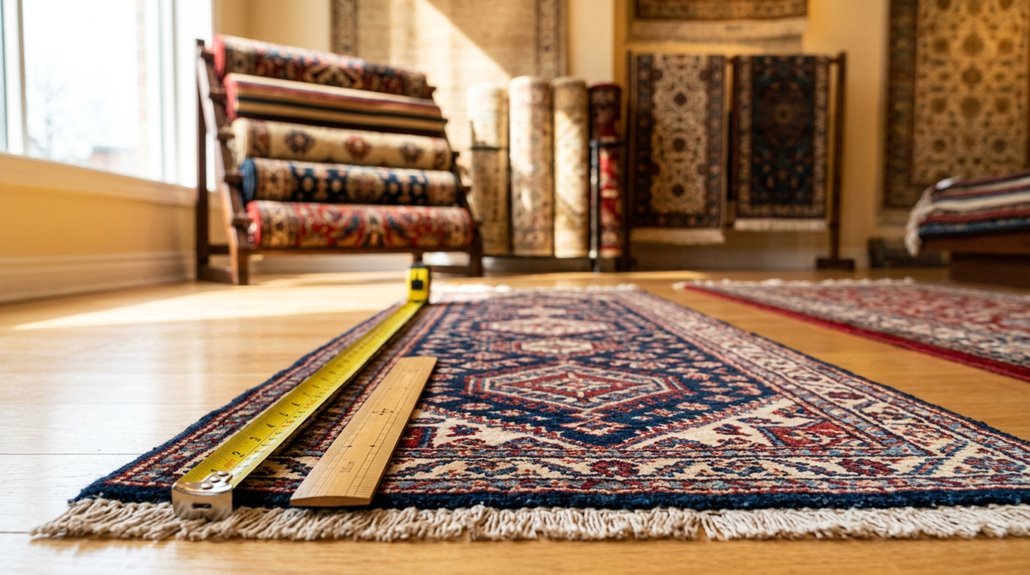
What excited me most was learning about length options. I could choose lengths from 180 cm to 420 cm and beyond; practically any measurement I needed. For stair runner width, I found similar flexibility.
I also learned that I should measure width carefully and leave 10–15 cm of exposed floor on all sides. This spacing made my hallways feel intentional and balanced. The benefit of custom lengths is that I could order rugs tailored perfectly to my space without compromising on fit.
How to Measure Your Runner Rug: Width, Length, and Placement Rules
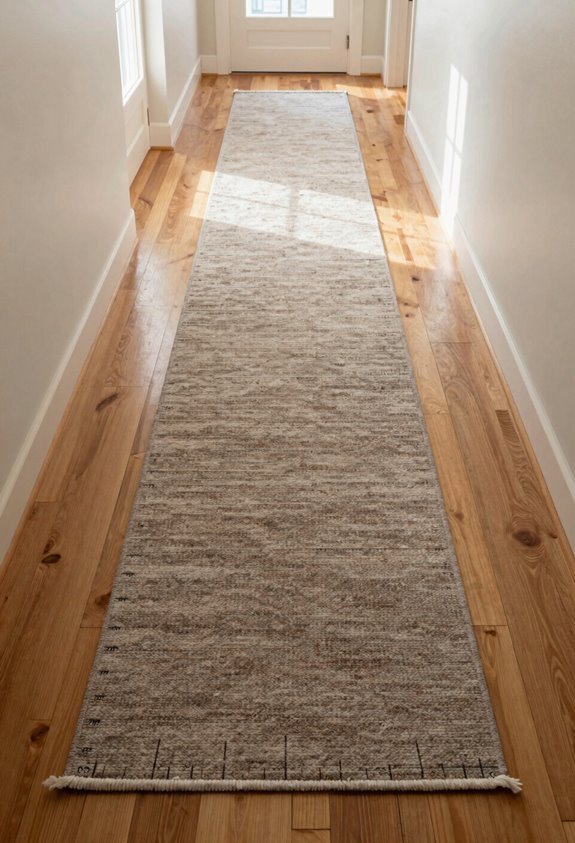
How do you measure a space that’s oddly shaped or cramped? I’ve worked through this challenge many times with only a tape measure.
Measuring oddly shaped spaces takes practice, but a tape measure and the right technique are all you need.
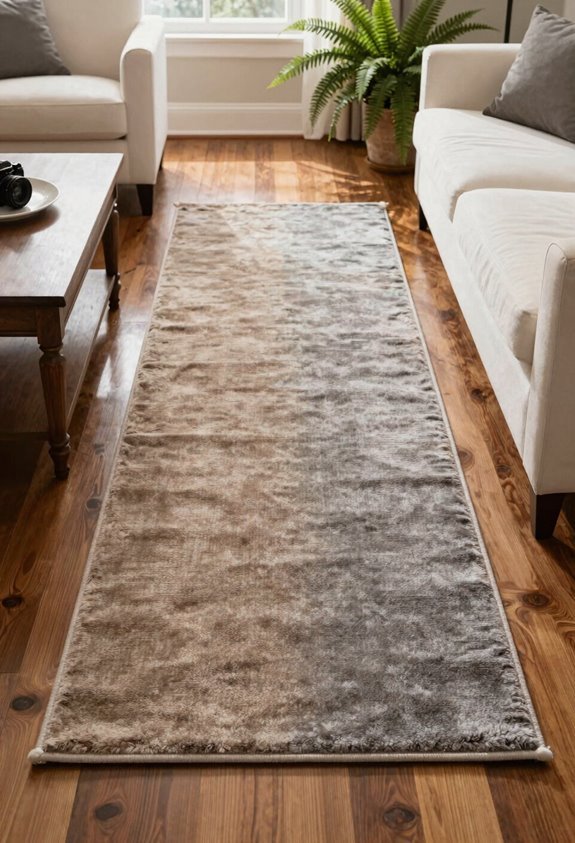
For hallway runners, measure the width and length, then subtract 10–15 cm from all sides for that polished border look. Leave 4–8 inches of exposed floor on each side to maintain visual balance.
For stairs, measure one stair’s riser plus tread, add 1–2 cm, multiply by the stair count, then add extra length for the top.
Placement rules matter: ensure your runner ends before doorways and transitions. Secure everything with a rug pad to prevent slipping in high-traffic areas.
Runner Sizes for Hallways
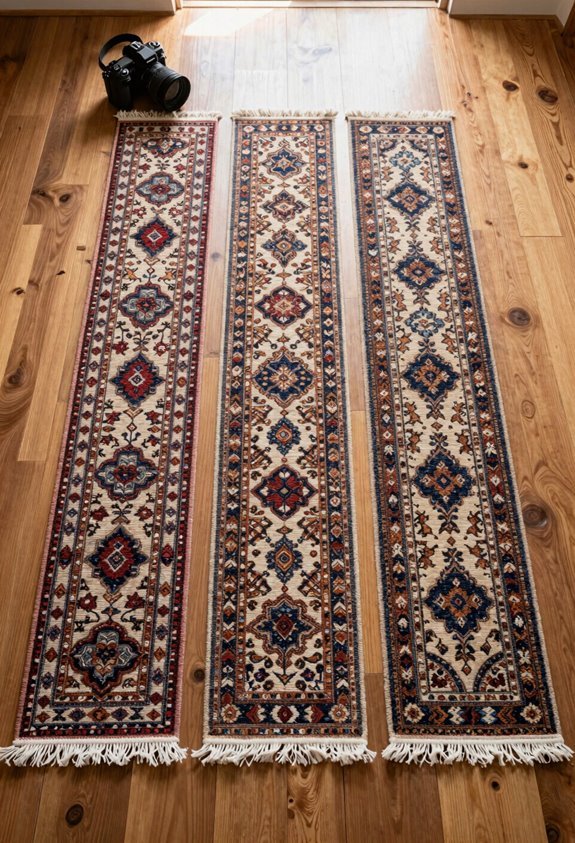
Finding Your Perfect Fit
Hallway runner width typically ranges from 2 to 3 feet, depending on your space. For length, aim for 6 to 14 feet to match standard hallways. Subtract 10 to 15 centimeters from your hallway dimensions to create a comfortable rug border on all sides.
Seam Strategy
Prevent seams by using a single long runner whenever possible. When that’s not feasible, choose two shorter runners that match in style and color.
My Floor Spacing Rule
Maintain roughly 5 inches of floor show margin around your runner’s edges. This detail creates a polished, professional appearance in hallways.
How to Size a Staircase Runner
Sizing a staircase runner is simpler than it first appears.
Sizing a staircase runner is simpler than it first appears—follow these key measurements and steps.
To find your baseline stair runner measurement, measure one stair’s riser and tread, add them together, then add an extra inch. Next, count your total stairs and multiply that number by your baseline. For example, if each stair measured 19 inches and you had 10 stairs, calculate 190 inches, then add another 19 inches for total runner length, which equals 209 inches total.
Width matters too. Most staircase runners range from 27 to 31 inches wide, fitting nicely on stairs that are 36 to 40 inches wide.
Finally, decide your end termination: should your runner stop at the top step or continue onto the landing. That choice will adjust your final measurement.
Kitchen Runner Sizes and Custom Options
I never forget my rug pad placement. It keeps appliance doors and thresholds clear. This approach changes my kitchen’s functionality completely.
Secure Your Runner: Pads and Placement
Once you’ve picked the perfect kitchen runner size, keeping it in place becomes your next mission. I’ve watched runners bunch up against refrigerator doors repeatedly, which is why proper securing matters.
Securing your rug runner properly makes all the difference, especially in high-traffic areas. Here’s what I recommend:
- Rug pads – Use these under hallway runners and kitchen mats to prevent movement while adding plushness and reducing noise.
- Secure placement – Ensure lightweight runners stay put on stairs and busy zones where slipping happens easily.
- Rug tape – Apply this simpler alternative when pads aren’t feasible, though removal takes extra effort later.
When sizing rug pads, keep them slightly smaller than your runner rug sizes so they don’t extend to the fringe. Combined with careful vacuuming using brush attachments, this approach keeps runners looking fresh and safely anchored.