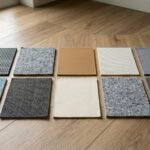
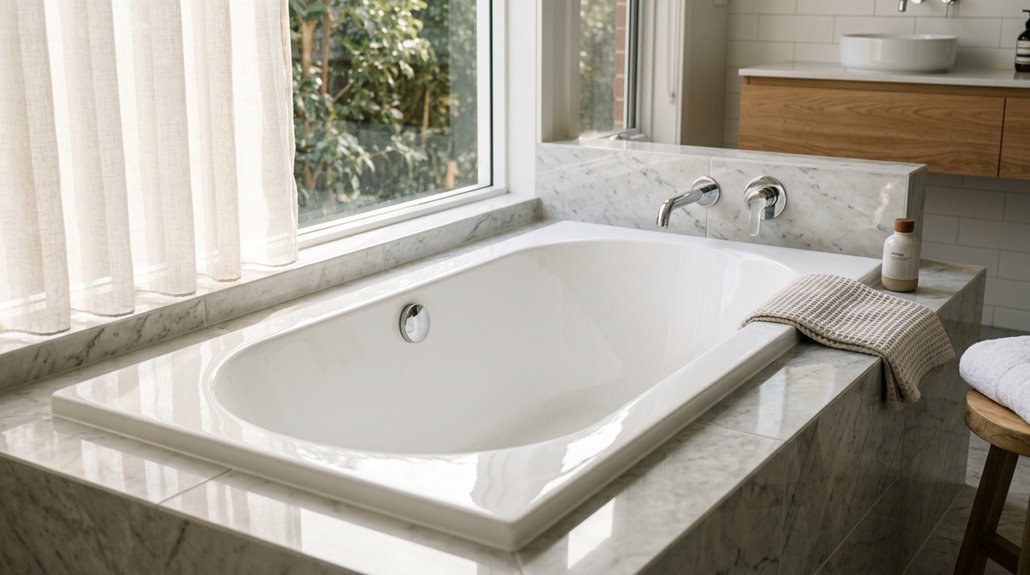
I’ve found that drop-in tubs offer homeowners the sweet spot between affordability and customization. They’re not as pricey as freestanding models, yet more stylish than basic built-ins. You get that luxe spa feel by choosing your surround materials (stone, tile, wood), and they fit snugly against walls to save space.
Sure, the high deck creates mobility challenges, and repairs get messy if leaks happen under the frame, but most budgets land around $4,500–$6,500 installed. Understanding the waterproofing, plumbing tricks, and material options is what separates stunning bathrooms from costly mistakes.
What Is a Drop-In Bathtub?
What Is a Drop-In Bathtub?
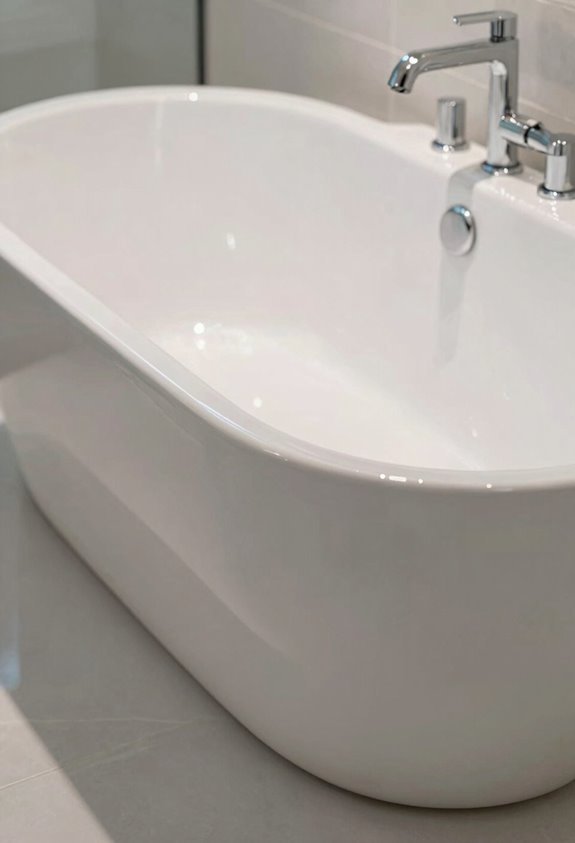
Drop-in tubs are bathtubs that sit inside a pre-built frame or enclosure. The tub’s rim rests on top of the surrounding deck, while the actual basin drops down inside. This design combines the best features of different tub styles.
The enclosure can be made from natural stone, wood, or tile to match your bathroom aesthetic. You install them against walls, much like alcove tubs, which saves bathroom space. Drop-in tubs are typically deeper than freestanding options, making them ideal for long, relaxing soaks.

Complete Waterproof System: Replace outdated tub walls with a 100% waterproof, grout-free PVC panel system covering up to 96 sq ft. Kit includes two 4x8 ft side panels with 6-inch adjustable folding edges, one 4x8 ft back panel, and two 8 ft J-channel trims.
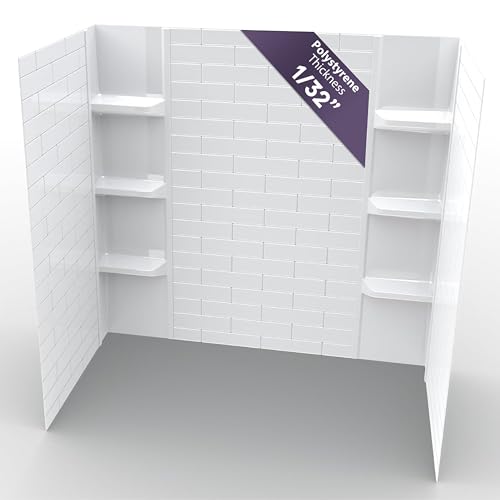
ELEVATED LOOK FOR YOUR BATH: Featuring a textured multilayer polystyrene wall construction, our tub surround panels & shelf units add depth & dimension to your bathroom, creating a stylish look. The go-to for a quick and easy renovation!

✅ [What's included]: 1 × 60” L × 32” W × 17” H Soaking Alcove Bathtub (Left Drain) and 1 × 4-Piece Wall Panel Kit -note that the bathtub does not include drain and overflow kits, which need to be purchased separately according to personal preferences.
How Drop-In Tubs Compare to Built-In and Freestanding Options
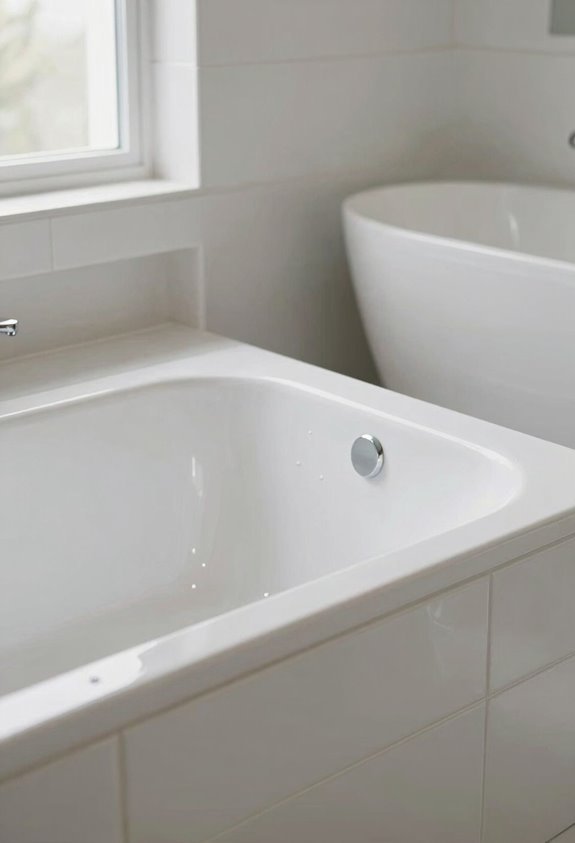
So, which tub style actually works best for your bathroom?
Drop-in tubs strike a sweet spot between affordability and style. Unlike built-ins, they let you customize the surrounding deck with natural stone, wood, or tile, turning your tub into a design statement. Freestanding tubs look stunning as focal points, but they demand more cleaning effort and floor space.
Benefits of drop-in tubs:
- They fit snugly against walls or corners, optimizing your layout
- The visible rim becomes a functional deck for storing soaps and products
- Installation is easier than freestanding options
- You get dramatic aesthetics without freestanding’s weight concerns
Built-ins remain the cheapest option. Drop-in tubs, however, offer the best balance of budget, customization, and visual impact for most bathrooms.
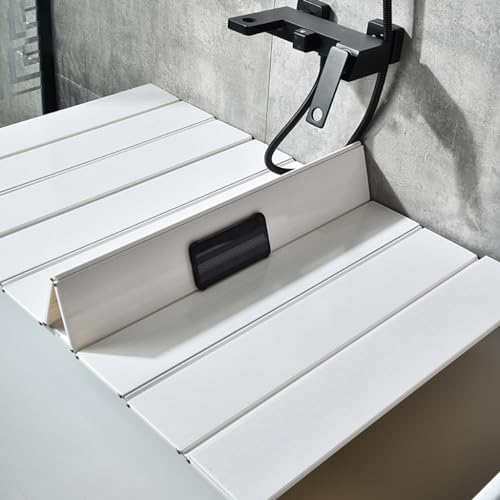
【Firm Splicing】The bathtub cover is made of high quality PVC waterproof material stainless steel screws, folding is not easy to damage,the thickness of each piece of about 6MM/12MM or so, the splicing at the use of high-strength materials are not easy to deformation damage, screws using 304 stainless steel bathroom special screws, more stable, more assured.

【KEEP YOUR BATH WARM & CLEAN】 This PVC folding bathtub cover helps retain water temperature for longer, letting you relax in a hot bath after a long day. It also shields your tub from dust and pet hair, reducing cleaning time and helping maintain a pristine soaking experience.

【Keep Water Warm】With a large size (62.99*31.50*0.26 inches), it can fully cover your bathtub to keep the water inside the bath warm. You can relieve your fatigue all day long by taking a hot bath.
Key Advantages: Why Homeowners Choose Drop-In Tubs
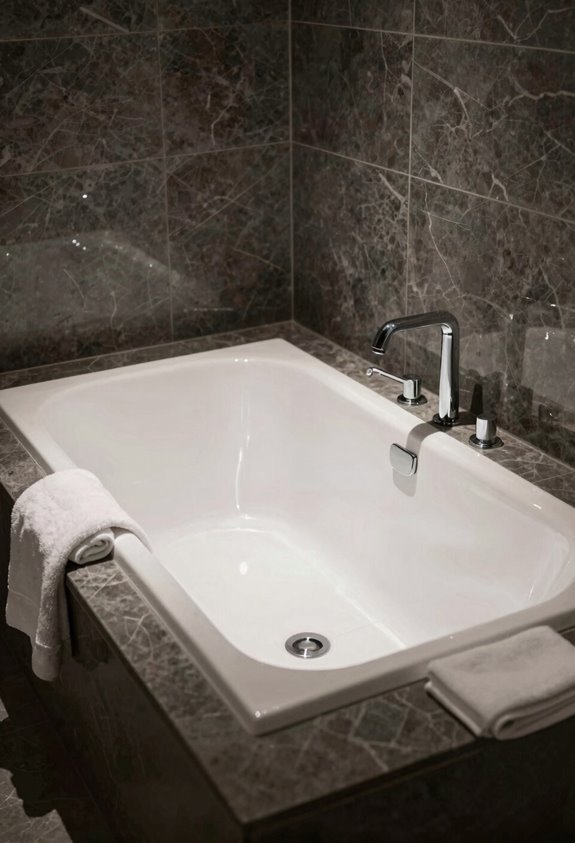
Why do homeowners choose drop-in tubs in virtually every high-end bathroom renovation? They offer serious flexibility. You can customize the surround with natural stone, wood, or tile to match your vision. The framed enclosure makes cleaning simpler, and they maximize space by fitting snugly against walls or corners.
| Feature | Benefit | Why It Matters |
|---|---|---|
| Built-in deck | Extra storage | Keeps soaps organized |
| Customizable surround | Spa-like aesthetic | Creates a premium feel |
| Framed enclosure | Top-access cleaning | Simpler maintenance |
Personalization is a key advantage. You control everything: location, shape, and size. This level of customization results in a thoughtfully designed bathroom that reflects your specific preferences and needs.
✅ [What's included]: 1 × 60” L × 32” W × 17” H Soaking Alcove Bathtub (Left Drain) and 1 × 4-Piece Wall Panel Kit -note that the bathtub does not include drain and overflow kits, which need to be purchased separately according to personal preferences.
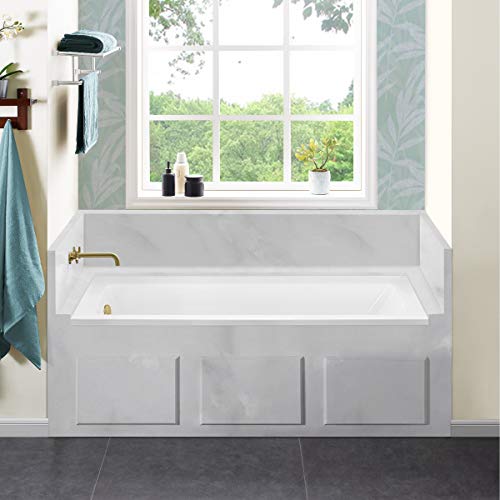
Integrated Tile Flange: Preventing water leakage.

【Deep Soaking Comfort】With an ergonomic interior and generous depth, this acrylic soaking tub provides full-body immersion for ultimate relaxation. Enjoy a spa-like soak at home—perfect for unwinding after work, relieving muscle tension, or giving kids a fun and safe place to bathe. The smooth surface feels warm to the touch, enhancing comfort every time you use it.
Real Drawbacks: Accessibility, Cost, and Maintenance Trade-Offs
I’ve learned the hard way that drop-in tubs come with some serious trade-offs. They’ll cost you $4,500–$6,500 total for the tub plus installation. They can make it tough for anyone with mobility issues to climb in and out. When something goes wrong with the plumbing underneath, you’re stuck because that deck basically locks everything away from easy access. The high rim and surrounding frame look sleek, but they’re not just about style; they’re also barriers that can turn a simple leak repair into a major headache and a bigger bill. If you’ve got family members who struggle with balance or strength, or if you’re thinking long-term about aging in place, these drawbacks might outweigh the fancy appearance.

UNIVERSAL DROP-IN FIT FOR FREESTANDING TUBS – Designed to fit 1-1/2" male, female, or threaded tub drains, making installation easy across most freestanding bathtub models.

Durable Construction: Made from high-quality PVC plastic and rubber for long-lasting use in bath drain replacements

【Compatible With】 : Freestanding Tub Drain Rough-in Kit is suitable for all freestanding bathtubs, floor bathtubs and island bathtubs, stable installation on wood, cement, tile and concrete.
High Installation Expenses
When I first looked into drop-in tubs, I got sticker shock. The installation costs alone ran me $4,000 to $5,500, and that’s before I even bought the tub itself ($500–$1,000). I hadn’t anticipated needing a framed deck, waterproofing, and precise finishing work.
What pushed my budget higher:
- Custom jets or shapes added another $1,000+
- Floor reinforcement for the tub’s weight
- Professional labor for intricate deck work
I wasn’t just paying for the tub. I was paying for an entire structural project. The framing, sealing, and finishing demanded skilled contractors, which meant higher labor costs. Looking back, I should have budgeted more aggressively upfront instead of discovering surprises mid-installation.
Mobility and Entry Challenges
Drop-in tubs seemed perfect until I realized the mobility nightmare they create:
- High deck surrounds make entering and exiting difficult for anyone with limited mobility
- Stepped edges require careful balance and coordination
- No grab bar space on the surrounding frame complicates safety installations
- Tight clearances restrict wheelchair accessibility entirely
The beautiful framed deck becomes a barrier. If you’re aging in place or have mobility concerns, drop-in tubs create significant problems. The surrounding enclosure that looks elegant actually restricts bathroom access and independence. When you’re trying to stay safe at home, accessibility outweighs aesthetics.
Plumbing Repair Complexity
What happens when your drop-in tub starts leaking under that fancy deck? It becomes a costly problem.
The Hidden Problem
Drop-in tubs conceal plumbing behind walls and decking. When leaks happen, you cannot access the area underneath like you could with freestanding models. A plumber must tear into the surrounding deck, which means invasive repairs and unexpected costs.
Real Costs Add Up
Here’s what to expect:
- Labor-intensive leak detection
- Potential deck damage during repairs
- Concealed pipes make troubleshooting difficult
Why This Matters
Accessing plumbing for maintenance or component replacement becomes complicated. An initial $4,000–$5,500 installation cost often proves cheaper than subsequent repair expenses. Understanding this plumbing repair complexity before choosing a drop-in design can save thousands in future costs.
Is a Drop-In Tub Right for Your Bathroom?
Consider these key factors:
- Budget Reality – Installation costs run significantly higher than other options
- Space Requirements – You need adequate framing and deck surround space
- Mobility Needs – The surrounding deck creates climbing challenges for some users
- Maintenance Commitment – Waterproofing and plumbing access demand careful planning
Drop-in tubs deliver stunning aesthetics and customization that create a luxurious bathroom environment. They are best suited for homeowners who have the budget, space, and long-term vision to support this choice.

Versatile Access Panel: Provides access to plumbing, electrical, Internet, TV, security, sprinkler, and HVAC systems. This access panel also conceals wires, valves, and wall or ceiling openings
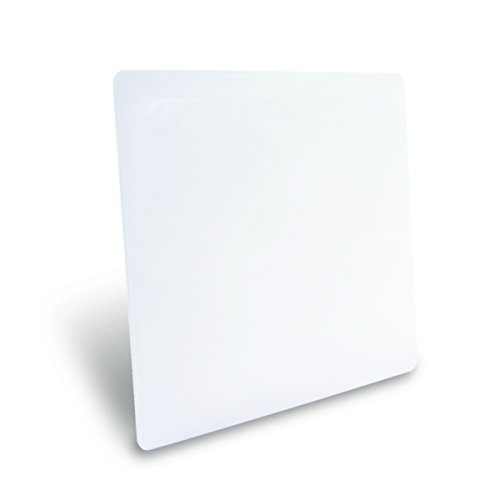
PROVIDES EASY ACCESS: Access panel pops in and out of position with no visible clamps or screws to allow easy access to plumbing, wiring, cables, and other electrical components

Easy to Use: This plastic access door is designed to provide easy access to walls and ceilings. The high impact Styrene plastic with UV Stabilized for outdoor use.
Drop-In Tub Materials: Acrylic, Cast Iron, and Stone Options
Picking the right material for your drop-in tub shapes your whole bathroom experience. Each option—acrylic, cast iron, and stone—brings its own strengths and considerations to the table. When renovating a bathroom, acrylic offers budget-friendly flexibility with numerous color choices, cast iron provides durability that lasts for decades, and stone delivers a luxury aesthetic with a higher price tag. Let me walk you through what makes each material tick, so you can determine which one fits your needs, your budget, and your lifestyle best.

✅ [What's included]: 1 × 60” L × 32” W × 17” H Soaking Alcove Bathtub (Right Drain) and 1 × 4-Piece Wall Panel Kit -note that the bathtub does not include drain and overflow kits, which need to be purchased separately according to personal preferences.
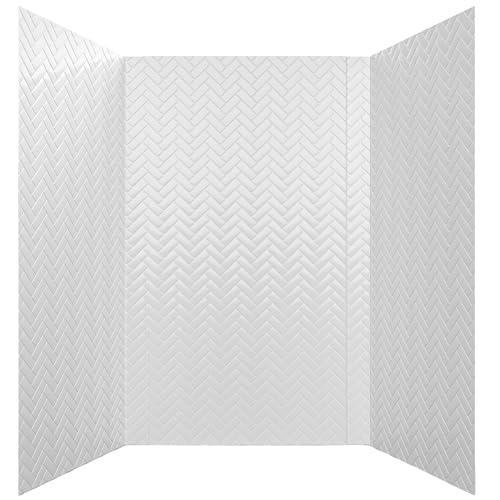
100% Grout-Free & Watertight System: Eliminate the hassle of grout maintenance forever. Made from robust, non-porous PVC, this surround is naturally water resistant, providing a seamless, wipe-clean surface that guarantees a watertight seal when installed correctly.

100% Grout-Free & Watertight System: Eliminate the hassle of grout maintenance forever. Made from robust, non-porous PVC, this surround is naturally water resistant, providing a seamless, wipe-clean surface that guarantees a watertight seal when installed correctly.
Acrylic Tub Benefits
Why do so many homeowners choose acrylic for their drop-in tubs? Acrylic delivers genuine value without breaking the bank or your back during installation.
Here’s what makes acrylic tubs effective:
- Lightweight and affordable – Installation’s easier, and your project costs less overall
- Smooth, stain-resistant surface – Cleaning is simple, and scratches can be fixed with gel-coat
- Heat retention – Bathwater stays warm longer than you’d expect
- Customizable designs – They match seamlessly with virtually any bathroom style
Acrylic does wear over time. That’s why reinforced versions with fiberglass or resin-gypsum backing are worth the investment. They’re sturdier and last considerably longer. For most budgets, acrylic tubs remain the go-to recommendation.
Cast Iron Durability
While acrylic tubs offer budget-friendly convenience, cast iron takes a completely different approach. Cast iron is built to outlast most homeowners. Cast iron durability stems from its exceptional heat retention and resistance to cracking. The enamel-coated exterior creates a hard, glossy surface that resists scratching; however, it needs occasional polishing.
What makes cast iron durability stand out:
| Feature | Cast Iron |
|---|---|
| Heat Retention | Excellent, prolonged warmth |
| Crack Resistance | Superior to acrylic |
| Surface Durability | Hard enamel coating |
| Installation Complexity | Challenging, requires reinforcement |
| Lifespan | Decades with proper care |
The real trade-off is weight. Cast iron installations require structural reinforcement and careful planning because the material is significantly heavier than alternatives. You’re investing in longevity rather than convenience. Cast iron demands respect during installation, but the payoff is a permanent, reliable bathtub that will serve for decades.
Stone Material Elegance
If you’re dreaming of a bathroom that feels like a luxury spa rather than a basic utility space, stone drop-in tubs might be exactly what you’re after.
Stone tubs deliver something special that other materials simply can’t match. Here’s what makes them stand out:
- Unique veining patterns that make each tub one-of-a-kind
- Luxurious tactile feel you’ll appreciate touching every morning
- Natural textures that contrast beautifully with tile or wood surrounds
- Premium aesthetics that instantly elevate your entire bathroom
Stone composites like granite and marble provide that high-end look many homeowners seek. While they cost more than acrylic, the durability and elegance justify the investment. They’ll transform your bathroom into the sanctuary you deserve. You’ll notice the visual and tactile difference in your daily routine.
Measuring Your Bathroom: Space Requirements and Layout
How much space do you actually have, and does it match what your drop-in tub needs? Measuring accurately before committing to your bathroom layout is essential.
What I measured:
- Rim height and bottom height of my tub
- Framed deck dimensions
- Distance from walls to drain location
Your bathroom layout determines everything. I positioned my drop-in tub against existing walls to maximize surrounding space. You’ll need a level, dry floor that supports the filled tub’s weight. My original spot had soft spots requiring reinforcement.
Mark your subfloor where the drain aligns with your tub’s opening. Getting this right prevents expensive replumbing mistakes. Proper space planning directly impacts installation costs and functionality.

SOAKING BATHTUB - Non-jetted deep soaking bathtub that’s easy to install. No need to run electrical wiring.

RESTORATIVE SOAKING EXPERIENCE: Embrace the time-honored ritual of soaking with our JACUZZI SIGNATURE Bathtub; designed to harness the therapeutic benefits of hot water, it aids in increasing circulation and fostering the body’s natural mechanisms for relaxation and healing.

Easy to clean High-Gloss Acrylic surface for a brighter shine and better wear resistance.
The Installation Process: What to Expect From Start to Finish
So you’ve measured your space, picked your tub, and you’re ready to actually install the thing. The installation process requires attention to detail and careful planning.
Here’s what to expect:
- Frame the surround and waterproof everything thoroughly
- Cut a precise drain opening in your deck
- Set a 2-inch mortar bed underneath
- Seal the rim with silicone caulk after fastening
Next, handle plumbing by installing the P-trap, connecting waste lines, and venting within 5 feet of the trap. The critical steps are measuring rim height accurately and ensuring everything is level before dropping in your tub. Rushing through these measurements will create problems down the line, so take the necessary time to get them right.

Acrylic construction with fiberglass and resin reinforcement, three wall alcove installation with tile flange and integral tub apron | Drain kit is not included
Integrated Tile Flange: Preventing water leakage.

SLEEK BUILT-IN BATHTUB: Modern built-in tub made from durable acrylic and fiberglass. Recessed design ensures stable installation and resists cracking, chipping, and damage from salts and oils.
Waterproofing Your Drop-In Tub: Deck Construction Essentials
The Foundation Matters
Start with a solid, level subfloor and appropriate framing. Install a two-inch mortar bed using the manufacturer’s recommended base material. This creates the water-resistant foundation required for proper tub installation.
A solid, level subfloor with a two-inch mortar bed creates the water-resistant foundation essential for proper tub installation.
Sealing the Deal
Waterproofing effectiveness depends on proper caulking application. Apply silicone caulk along the rim where the tub meets the deck. This watertight connection prevents water from seeping into hidden spaces, which can cause structural damage and plumbing failure.
Finished Look
Keep the rim exposed for cleaning ease while concealing the surround completely. This approach protects interior plumbing and maintains proper system functionality.
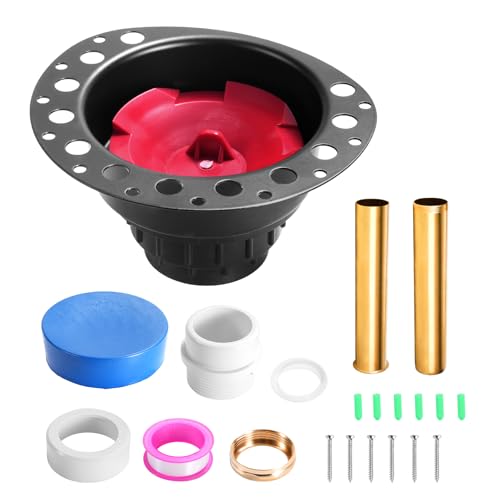
【Compatible With】 : Our Freestanding Tub Drain Kit is suitable for all freestanding bathtubs, floor bathtubs and island bathtubs, stable installation on wood, cement, tile and concrete.

【Package Include】: ABS Pipe, ABS Adapter, Drop-in tub drain ABS Plate, Brass Tailpiece (fit for 1-1/2" threaded bathtub drains), Top Brass Nut, Overflow Gasket, Lubricant, Test/Dustproof Plug and Installation Instruction.

Compatibility –Our RP46074 cartridge assembly replacement for Monitor rough-in valves (R10000, R1100, R1800, R2200, etc.) and most single-handle 13/14 series tub/shower faucets Kit. (Excludes 1300/1400 series)
Plumbing and Access: Why Repairs Get Expensive
While a properly waterproofed deck keeps water out, it also creates a hidden world of plumbing tucked away behind walls and under tile. Plumbing access on drop-in tubs is genuinely challenging for these reasons:
- Hidden connections require removing or dismantling enclosures to reach drains and P-traps
- Tile damage happens during repairs when you’re digging through finished surrounds
- Slow leaks hide inside enclosed exteriors, causing structural damage before you notice
- Complete resets mean regrading and resealing entire deck systems
When leaks strike, labor-intensive work destroys your carefully finished bathroom. The cost of emergency repairs often exceeds the cost of preventive maintenance by thousands of dollars. Regular maintenance prevents these expensive problems from developing in the first place.

Durable&Colorfast:Reinforced hinged plumbing access panel for drywall is made of high impact polystyrene plastic.Not easy to corrode,fade or out of shape.

Designed to conveniently hide wires, cables, plumbing and pumps

Durable&Colorfast:Reinforced hinged plumbing access panel for drywall is made of high impact polystyrene plastic.Not easy to corrode,fade or out of shape.
Personalizing Your Drop-In: Deck Materials, Storage, and Design
Making a drop-in tub truly yours requires choosing deck materials like natural stone or ceramic, adding smart storage spots along the edges for bath products, and matching everything to your bathroom’s style. Consider how high you want that deck, what materials can withstand splashing and moisture without staining, and whether you prefer a luxe stone look or something warmer like wood. With thoughtful planning around these three areas, you can create a tub space that functions well and complements your bathroom’s design.
Deck Material Selection Options
How do you want your drop-in tub’s surrounding deck to look and feel? Choosing the right deck materials transforms your bathroom into a personal spa retreat. Here are your main deck material options:
- Natural stone – Durable and luxurious, though pricey
- Wood – Warm and inviting, yet requires regular sealing
- Tile – Easy-cleaning and versatile with endless designs
- Composite materials – Low-maintenance and waterproof alternatives
Material choice directly impacts maintenance. Stone and tile demand less upkeep than wood, which needs periodic refinishing. Whatever you select, ensure it’s waterproofed and sloped for drainage. Your deck material should coordinate with your tub’s finish to create a seamless, spa-like atmosphere.
Built-In Storage Solutions
Where do you stash all your bath bombs and loofahs when you’re actually trying to relax in the tub?
Drop-in tubs solve this problem effectively. The integrated deck surrounding your tub becomes prime real estate for storage. The enclosure hides plumbing while creating hidden compartments for soaps and products.
Smart Storage Options:
- Recessed shelving in corners
- Under-deck cabinets
- Built-in niches along walls
- Specialized bins that match your deck material
Position your most-used items within arm’s reach to keep clutter minimal. Stone or tile decks accommodate heavier bottles, while composite materials work well for lighter accessories. When everything is within reach but hidden from view, you can focus on relaxation instead of scrambling for supplies.
Design Customization and Aesthetics
Beyond tucking away your bath essentials, the area surrounding your drop-in tub becomes your canvas for creating a bathroom that reflects your personal style. Personalizing your space transforms it from basic to distinctive.
Consider these design elements:
- Material choices – natural stone, wood, or tile surrounds
- Tub shape and size – matching your bathroom’s dimensions perfectly
- Deck finishes – coordinating with wall coverings and fixtures
- Storage integration – keeping soaps organized and accessible
Drop-in models allow you to hide exterior plumbing while achieving a luxurious, spa-like aesthetic. When you coordinate your surround materials with your wall tiles, the design cohesion creates a functional and visually unified bathroom space.
What Does a Drop-In Tub Cost? Budget Planning Guide
When I first started researching drop-in tubs for my own bathroom renovation, the price tag surprised me. I discovered that a complete installation requires a budget between $4,000 and $5,500. The tub itself costs only $500 to $1,000. The real costs come from finishing materials, waterproofing, deck work, and labor; these hidden expenses accumulate quickly.
Upgrades like jets or fancy shapes push the budget higher. Brand names matter; I chose a reliable option despite the premium price. Custom sizes and finishes require personalized fabrication, which increases complexity and costs.
My breakdown:
- Base tub: $500–$1,000
- Installation labor: significant portion
- Finishing materials: varies greatly
- Surrounding work: deck, waterproofing, enclosure
Tour showrooms and obtain multiple quotes before deciding. This approach helps you understand pricing variations and select options that match your budget and requirements.