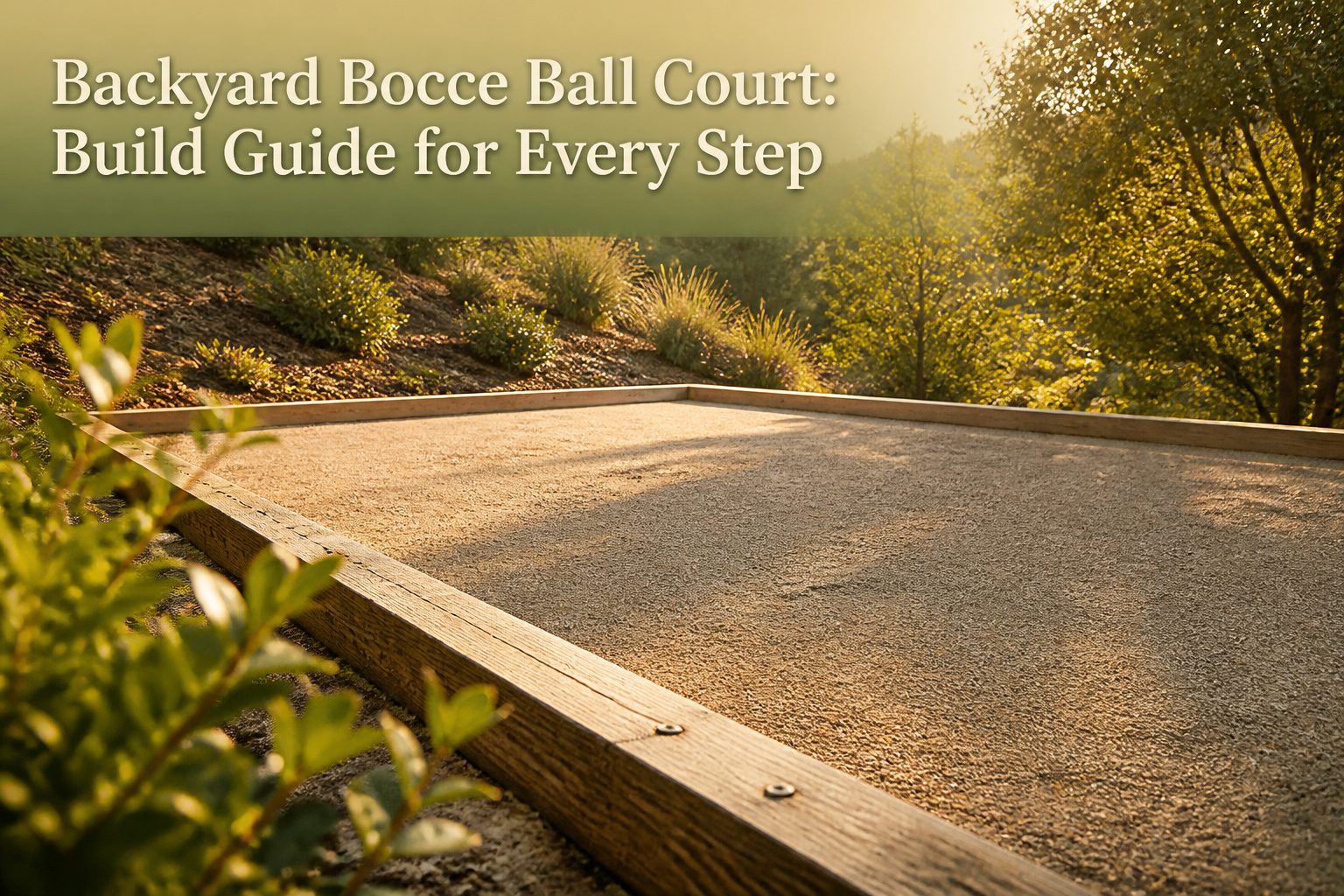
A bocce ball court backyard build is a framed, layered playing surface that brings the Italian lawn game home.
Most yards cannot fit the regulation 86 by 13 foot court the United States Bocce Federation specifies, so every decision from size to surface material hinges on what your actual ground allows.
I have built these at 60 feet, at 40 feet, and with every top layer from crushed oyster shells to synthetic turf, and the difference between a court that gets used and one that sits abandoned comes down to grading for drainage before a single board goes in.
Planning the Court Size and Location
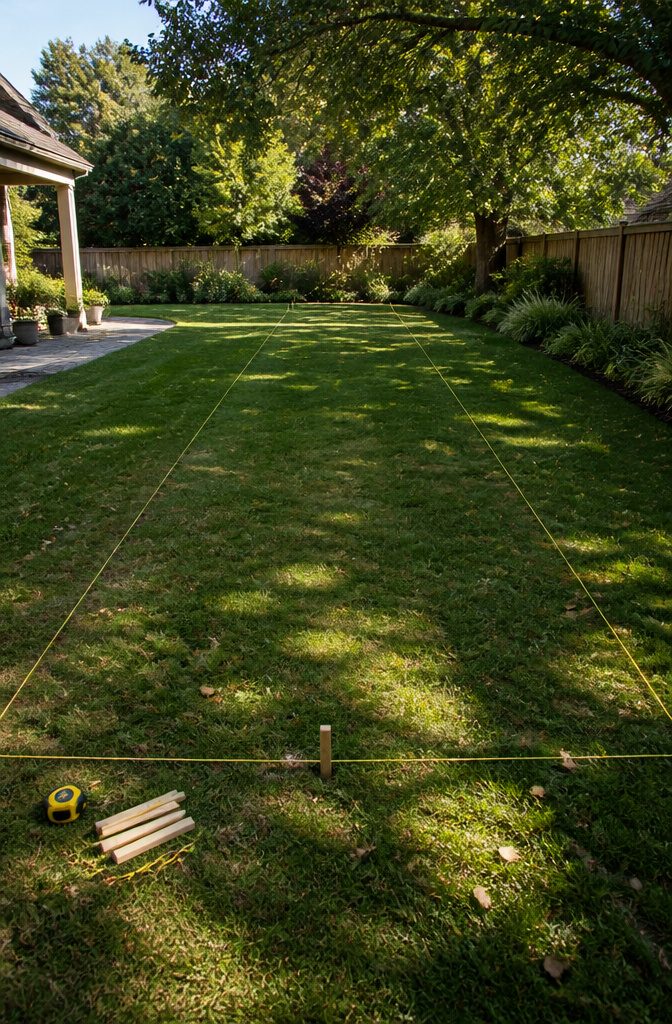
An official bocce ball court measures 86.92 feet long by 13.12 feet wide, which is what the United States Bocce Federation specifies for regulation play. Most backyards will not accommodate that footprint comfortably, and I would not try to force it.
A 12 by 60 foot court plays well for casual games, and a 10 by 40 foot version still works if your space is tighter; you lose some running room on the roll, but the game stays intact.
Site selection matters as much as size. Level ground is non-negotiable, since even a slight slope sends balls drifting off line and makes the whole court feel unfair.
If your yard has any grade, plan for grading work, whether that means renting equipment or budgeting for a crew to handle it.
Sun exposure is the next thing I watch: a court that bakes in afternoon light becomes unpleasant quickly, so partial shade or a spot that catches morning light and afternoon cover tends to get used more.
Proximity to the house wins over a far corner every time. A court you pass on the way to the grill gets played; one behind the garage does not.
Drainage sits underneath all of this. The spot that puddles after rain is the spot that will ruin your surface layer, so I look for natural runoff patterns and avoid any depression in the yard.
"The most typical bocce ball court is a clay bocce ball court. This is the easiest to build and most cost effective."
That shapes your location thinking too, since clay courts need the same drainage attention as any other, and the surface material choice comes after you have found ground that will stay playable.

Full Court Setup: this portable bocce court web boundary set includes 2 x 60ft, 2 x 12ft sidelines and 4 marker flags, 10 ground stakes, and a carry bag for a standard 12 x 60 ft court size, plus one 10ft yellow foul line; Each line comes with a winder for tidy storage; This product contains small parts and poses a choking hazard; This product is suitable for adults aged 14 and above

PREMIUM RESIN CONSTRUCTION: Crafted from high-grade resin for long lasting durability; The 90 mm diameter balls weigh approximately 1 lb 10 oz each, closer to regulation bocce than lightweight sets that are nothing like real bocce

Full-size bocce balls measure 100mm each
Clearing and Leveling the Site
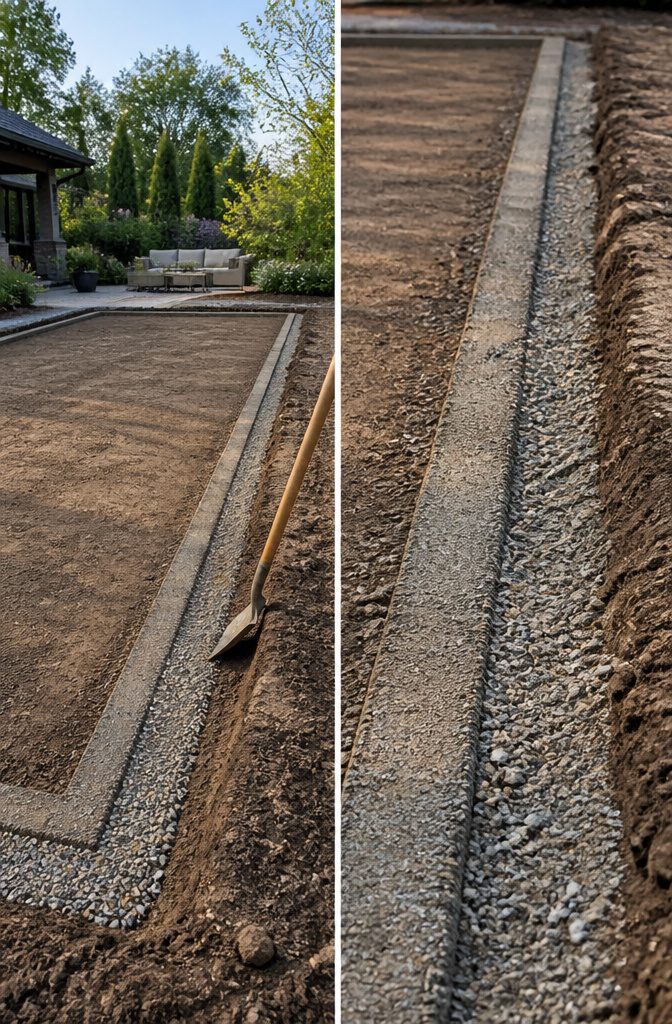
Grass and roots have to come out completely, or they will decay and leave soft spots under the court later.
I dig down 4–6 inches for a framed court with a layered base, which gives enough room for the border, compacted gravel, and playing surface.
If the soil is sandy and easy to work, going closer to 4 inches keeps the court slightly above grade, which helps it drain instead of becoming a bocce puddle after rain.
Grading matters more than perfect flatness. I slope the finished surface slightly away from any house, garage, or fence so water does not pool against the structure.
The low side of the court should be the one farthest from buildings, with just enough pitch that rainfall runs off the playing surface rather than soaking in.
Rocks and debris need to come out too; they will puncture or shift the base layers over time.
For a site that is already sloped, I excavate more on the high side and less on the low side to reach that gentle drainage angle without creating a sunken pit in the yard.

Dual Function Design: the versatile bocce court rake not only features a smooth straight edge for leveling, but also soil loosening teeth for ideal ground conditioning, aiding in extending the lifespan of your court


BuyBocceBalls is a family owned business, located in Northern California. Thank you for your business!
Installing the Drainage Layer
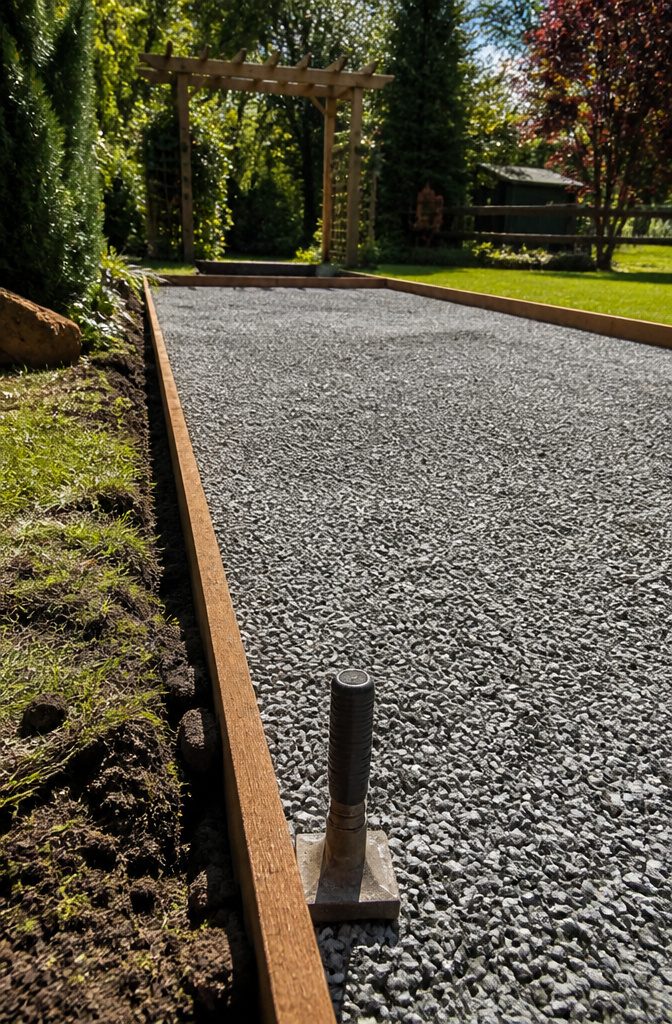
The drainage layer is what keeps your court playable after a heavy rain. I spread 2–3 inches of crushed stone or gravel evenly across the excavated area, then run a plate compactor over it until the surface is firm and level.
A hand tamper works if you are building a smaller court and do not mind the extra time, but the machine rental pays for itself on anything longer than thirty feet.
The stone size matters. Three-quarter-inch crushed stone is the standard I see used most often; it locks together under pressure and leaves enough void space for water to move through.
Compacting eliminates the air pockets that would let the layer shift later, and it creates the stable base everything above it depends on.
Sources disagree on whether to lay landscape fabric above or below the drainage gravel, and both approaches have defenders.
Some instructions call for a slight slope from the center to the sides to direct runoff; others level the drainage layer and let the finished surface handle shedding water.
I level the stone and trust the court’s own crown to move water, because an uneven drainage base telegraphs through every layer you put on top of it.

COMPOSITION: Premium crushed oyster shells specially processed for bocce ball court construction, providing an ideal playing surface

BuyBocceBalls is a family owned business, located in Northern California. Thank you for your business!

Premium Blend: This product is a blend of oyster shell and gold fines, perfect for bocce ball courts.
Building the Wooden Border
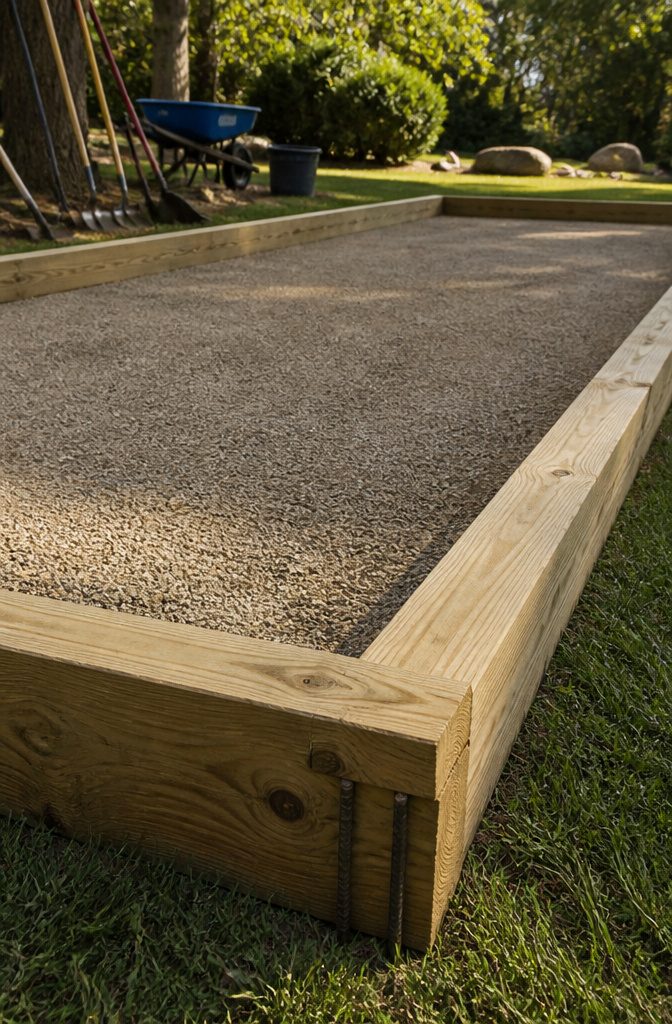
Pressure-treated 4×4 lumber is the right choice for the frame because it resists decay and insect damage without costing what larger 6×6 timbers do.
The boards sit along your marked perimeter, flush with the ground or just slightly above the finished playing surface, and they do three jobs at once: containing the surface material, keeping the court’s shape, and giving players a clear edge to call balls in or out.
I anchor the border in one of two ways. Rebar driven through pre-drilled holes keeps the frame locked in place even after years of freeze-thaw cycles and the occasional bumped hip.
Long exterior screws work too, though in my experience they loosen more over time unless you check them each spring.
For a court longer than about 30 feet, stagger the joints where boards meet so no weak point lines up across the frame. That single detail is what stops the border from bowing or separating at the corners.
Adding the Base and Surface Layers
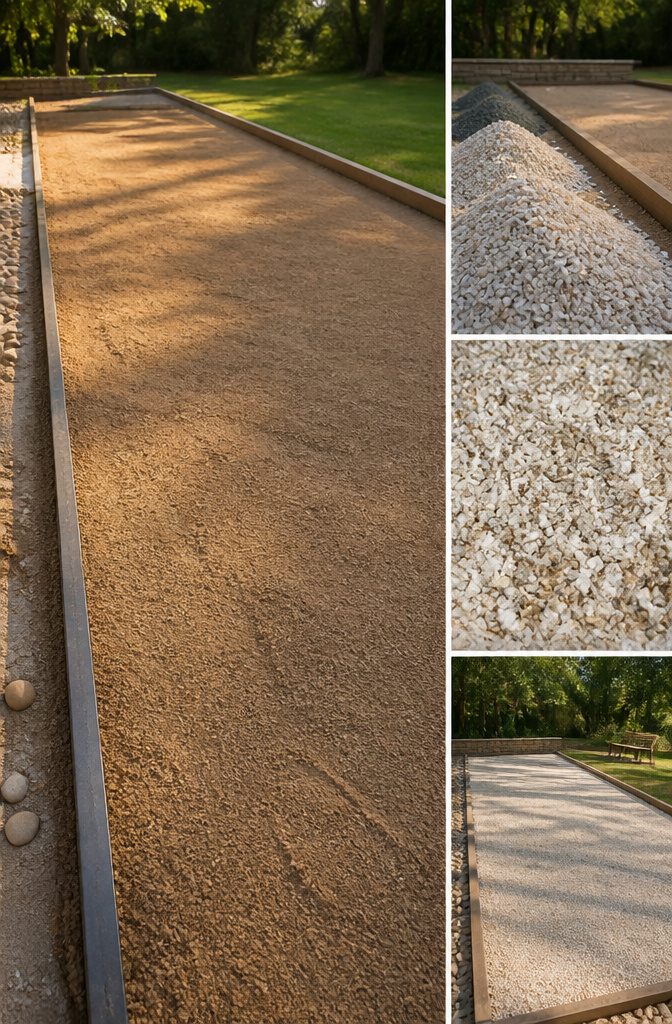
A 3–4 inch base of decomposed granite sets up every layer above it. Spread it across the full court area and compact it hard with a tamper or roller.
Skimping here is what leads to dips and swales a season later, so I check surface level in a grid pattern while I work, not just once at the end.
The top layer is where your choice really matters.
Crushed oyster shells give the smoothest, most predictable roll and read as the traditional surface, but they need refreshing over time. Sand is softer and cheaper upfront, yet it shifts under play and can hold moisture.
Synthetic turf eliminates almost all upkeep and still drains well, though the ball behaves differently on fibers than on stone. Decomposed granite works as a surface too, stable enough for casual games without the premium of shells.
I land on 1–2 inches of final material, whatever you chose, screeded flat and compacted again. The surface you pick decides how the balls roll and how often you’ll be out there with a rake or replacement load.

NEVER MISS A GAME – Keep a spare pallino on hand to ensure the fun never stops—perfect for replacing lost or worn-out target balls.

PERFECT FOR THE WHOLE FAMILY: Add this easy-to-learn game to your outdoor collection

PREMIUM COMPOSITE CONSTRUCTION: Crafted from high-grade composite plastic for long lasting durability; The 90 mm diameter balls weigh approximately 15 oz each, closer to regulation bocce than lightweight sets that are nothing like real bocce
End Boards, Scenery, and Final Touches
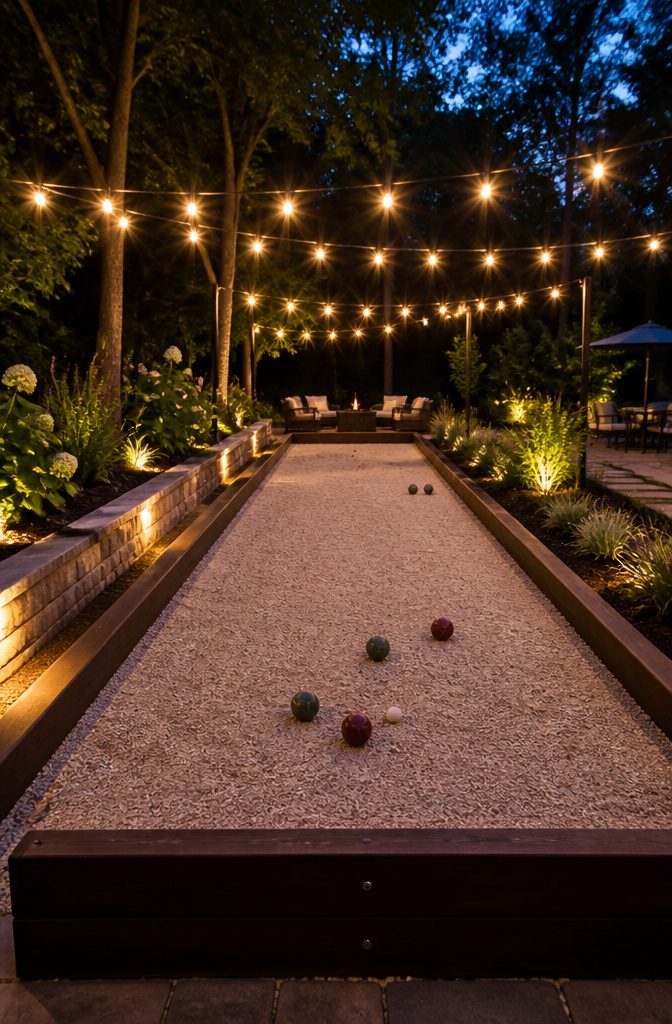
End boards are what separate a court that works from one that chases balls into the flower beds every other frame.
Pressure-treated lumber set across the shorter ends and secured to the side borders stops the roll and absorbs impact without sending anything ricocheting.
Secure them directly into the side frame, not just the surface layer, or the whole board shifts after a rainy week.
From there the evening additions are what you would expect on a weekend budget. String lights overhead, maybe a simple plywood scoreboard with chalk paint, and landscaping that frames the rectangle without creeping onto it.
Rocks or low-maintenance plants along the perimeter do the job; decorative edging keeps the border visible and the mowing simple.
A storage cabinet for balls and measuring tools is useful if you have the scrap wood, but it is the first thing I would skip if the lumber run is already tight.
Before anyone throws the pallino, walk the surface for loose material or soft spots that settled after the last layer went down.
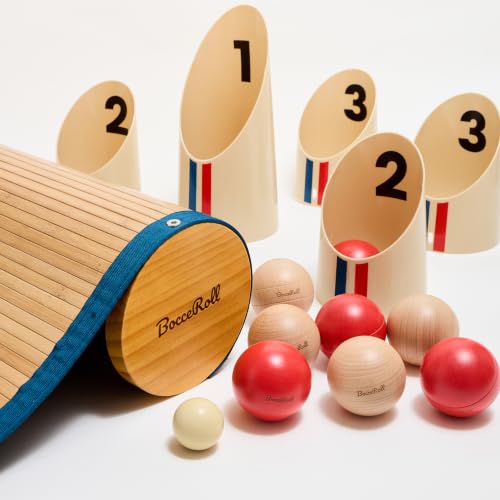
REVOLUTIONARY YARD GAME AS SEEN ON SHARK TANK: Get ready for the ultimate BocceRoll experience! This isn’t your average backyard game, it’s an exciting fusion of bocce, cornhole, and arcade-style fun that wowed the Shark Tank investors. Roll, aim, and score your way to unforgettable outdoor competition with this innovative, portable game built for endless family fun anywhere!

BOCCE BALL GAME SET - This classic bocce or petanque game set is great for outdoor yard games and includes 4 green and 4 red bocce balls to represent two teams for tournament-style play or just for hours of ball game fun.

Bocce Balls Bag: Designed for bocce games, this boccie carry bag can hold up to 8 standard bocci balls and other accessories like measuring rope, white pallino. Easily carry the necessary equipment for your bocce game. (Storage bag only, bocce gear NOT included)
Crushed Oyster Shells, Decomposed Granite, Sand, and Turf Compared
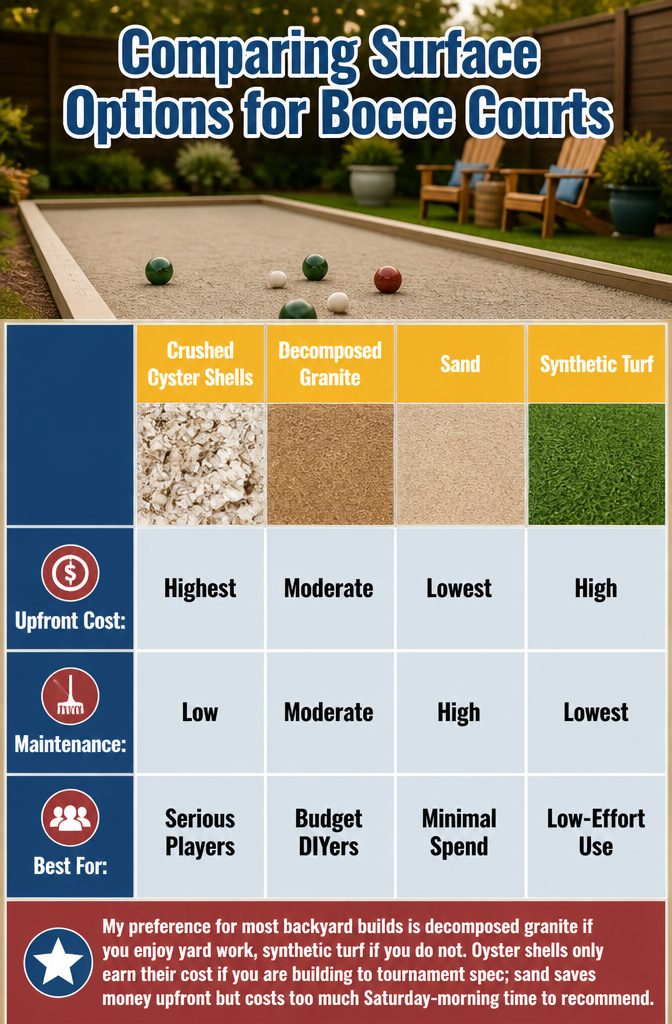
The surface you choose for your bocce ball court backyard project sets how the game plays and how much time you spend maintaining it.
Four options dominate: crushed oyster shells, decomposed granite, sand, and synthetic turf. Each carries a clear tradeoff between upfront cost and ongoing labor.
Crushed oyster shells run the highest price of the four, but they deliver the smoothest, most controlled roll and hold up under heavy use without shifting.
Courts that want a professional feel use them for good reason. Sourcing is the real problem, especially inland, where shipping adds to an already premium material.
Decomposed granite splits the difference.
It costs far less than oyster shells, blends naturally with most yards, and you can find it at any landscaping supplier. The surface will need periodic raking to stay level, and dry days kick up dust.
Sand is the cheapest option to install, though it demands the most attention. Expect to rake and relevel after every few sessions, and keep it dry; wet sand clumps and kills the roll.
Synthetic turf asks for the largest initial investment but repays it in time saved.
No watering, no raking, no dust. In hot climates, the surface can hold heat, which matters for barefoot afternoon games.
| Surface | Upfront Cost | Maintenance | Best For |
|---|---|---|---|
| Crushed oyster shells | Highest | Low | Serious players, authentic feel |
| Decomposed granite | Moderate | Moderate | Budget-conscious DIYers |
| Sand | Lowest | High (frequent raking) | Minimal initial spend |
| Synthetic turf | High | Lowest | Low-effort, long-term use |
My preference for most backyard builds is decomposed granite if you enjoy yard work, synthetic turf if you do not.
Oyster shells only earn their cost if you are building to tournament spec; sand saves money upfront but costs too much Saturday-morning time to recommend.
Court Size Rules for Casual Play
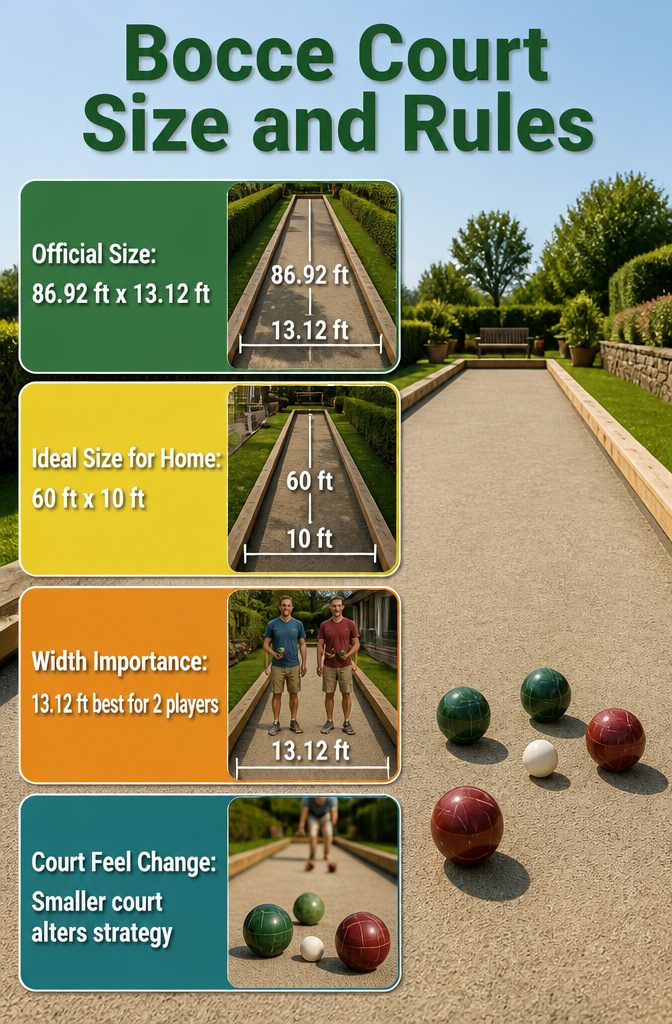
An official bocce ball court measures 86.92 feet long by 13.12 feet wide, the exact standard set by the United States Bocce Federation for any court meant to host regulation play.
That length is what lets a pallino roll true and gives a seasoned player room to arc a ball with real strategy behind it.
In most backyards, though, those dimensions are simply too much to ask. The court eats the lawn whole, and you spend Saturday morning hunting for a level run longer than your house.
I go smaller for nearly every home build I plan. A scaled-down court, somewhere in the 60 by 10 foot range or even tighter, still plays like bocce.
The ball covers the distance faster, so your lead changes from a slow chess match to something snappier. Pointing gets harder because there’s less room to finesse position, and the hitting game, knocking an opponent’s ball out, becomes more decisive.
A smaller court changes the feel, but it does not ruin the game. It is a different game, one that fits a cookout better than a tournament.
The width matters more than people think.
At 13.12 feet, two players can stand side by side without crowding. Shrink that to 10 feet and you are asking everyone to adjust their stance, which is fine for family play but tight when the group grows.

BEND LESS. KEEP PLAYING.: Stay comfortable and enjoy bocce longer with the Boazz Lite Bocce Ball Retriever

OWN BOCCE BALLS? YOU'RE HALFWAY THERE — Add these rings and scoops to your existing bocce set and you're playing a "Hole" new bocce and cornhole inspired beach game.
Lighting for Evening Games
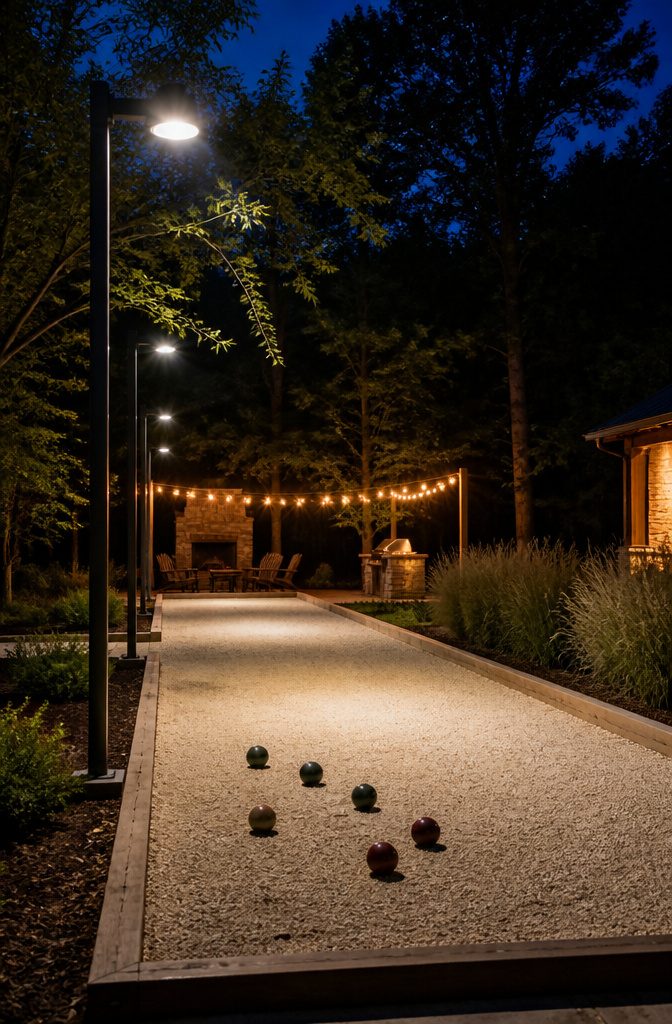
Once the court is built, pole-mounted fixtures are the only reliable way to keep games going past sunset.
LED or metal halide lights on poles deliver even coverage across the full surface, which matters because shadows and hot spots make reading the pallino nearly impossible after dark.
String lights hung above the perimeter work for atmosphere, and in practice their spill provides just enough light to spot the small target ball, though you will not get the consistency serious play demands.
I would skip solar path lights entirely. They line walkways nicely, but the output is too dim for tracking a pallino or judging where a ball rolled.
In-ground recessed fixtures keep the look clean and eliminate tripping hazards, yet they are harder to retrofit on an existing court and typically cost more than a basic pole setup.
For a weekend build on a real budget, a couple of directional LED floods on existing posts, aimed to overlap across the court, gives you the most play for the least money and effort.
Frequently Asked Questions
What size should a bocce ball court be?
An official court measures 86.92 feet long by 13.12 feet wide per United States Bocce Federation standards.
For most backyards, a 12 by 60 foot court plays well for casual games, and a 10 by 40 foot version still works if space is tight. You lose some roll distance with smaller sizes, but the game stays intact.
How do you build a bocce ball court?
The build breaks into six stages: planning size and location, clearing and leveling the site, installing a 2–3 inch crushed stone drainage layer, building a pressure-treated 4×4 wooden border, adding a 3–4 inch compacted decomposed granite base plus 1–2 inches of final surface material, then finishing with end boards and any lighting or landscaping you want.
Each layer gets compacted before the next goes down.
What materials are best for a bocce ball court?
The four common surfaces are crushed oyster shells for the smoothest roll and lowest upkeep, decomposed granite for a middle-ground blend of cost and performance, sand for the cheapest install but highest maintenance, and synthetic turf for the least ongoing labor though a higher upfront price.
Most DIY builders do well with decomposed granite; serious players favor oyster shells.
Can you play bocce ball on the lawn?
Grass play is possible but the ball roll becomes unpredictable.
Bumps, roots, and slope send balls off line, and wet turf kills any consistent speed. A built court with a compacted, level surface exists precisely to remove those variables and make the game fair from frame to frame.