A breakfast nook can cost nothing more than two chairs you already own or run to a built-in bench with drawer storage rated for 100 pounds and a carpenter’s site-measured corner angle.
The deciding factor is whether you can build into the space or need to walk away with your furniture when the lease ends.
That distinction separates the 14 ideas below, from a freestanding corner dining set in light wood to an L-shape leather banquette in full-grain hide that develops patina while surviving daily spills.
1. Built-in Bench
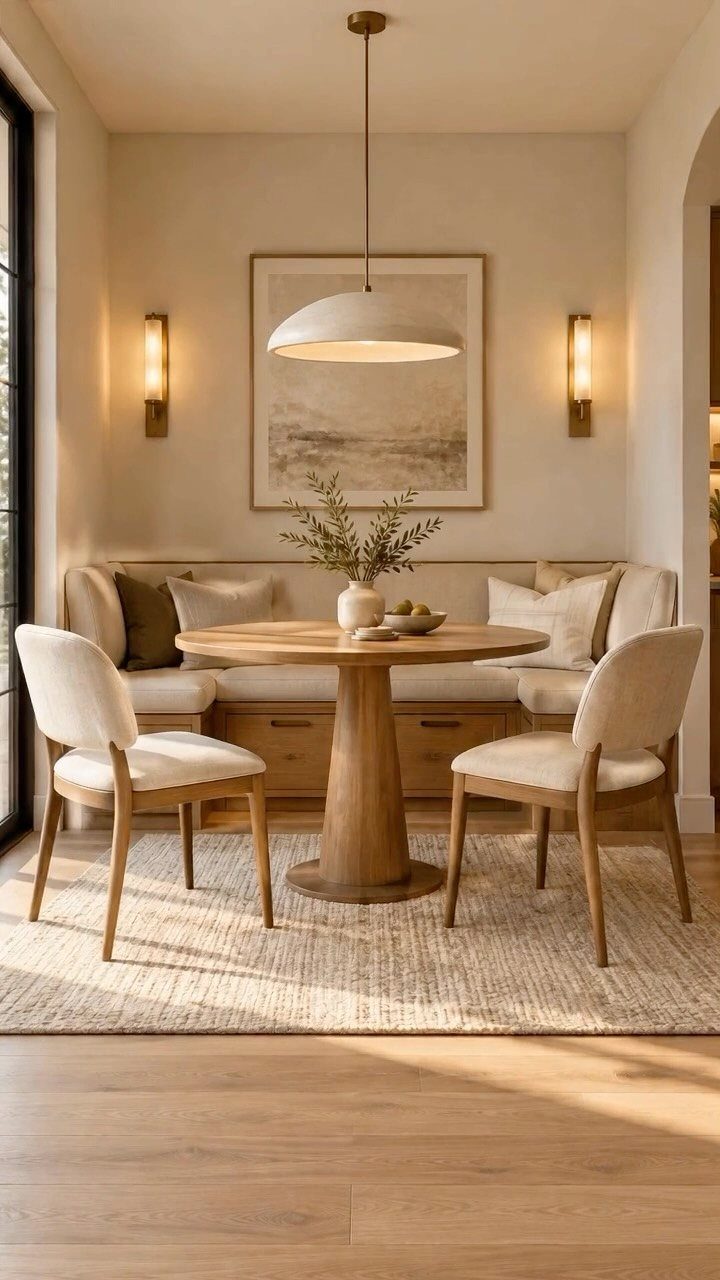
A built-in bench turns dead wall space into seating without stealing floor area from traffic paths. I like it best in narrow kitchens where a freestanding table and chairs would leave barely enough room to walk past.
Upholstered seating over drawer storage is what I would specify in any project where linens, extra dishes, or kids’ art supplies need a home.
Depth matters more than most people guess: you need comfortable sitting depth plus room for drawers behind that, so measure before you commit to the wall.
If the budget is tight, a simple plywood bench with a hinged lid costs less and still hides clutter.

【L-Shape Bench with Cushion】The L-Shaped Storage Bench with Cushion is suitable for corners and small rooms, helping you maximize space utilization. The kitchen bench is equipped with fluted finish. Its eye-catching wave pattern design blends function with style.This stylish addition is perfect for creating inviting and comfortable spaces.

L-Shaped Corner Design for Space Maximization: Designed for corners and tight spaces, this L-shaped storage bench helps you make the most of every inch. Measuring 63" D x 63" W x 17.7" H, it fits perfectly in entryways, mudrooms, or kitchen nooks without taking up extra floor space.(Cushion not included)

L-Shaped Space-Saving Corner Design - This 63" x 63" symmetrical L-shaped bench fits perfectly into any corner, transforming underused wall space into a functional seating and storage area. The two-piece modular construction connects seamlessly at the corner with a flush joint, creating a clean continuous look whether placed in a breakfast nook, entryway, or bay window alcove. Attention: the cushion is not included
2. Contrasting Chairs and Decor
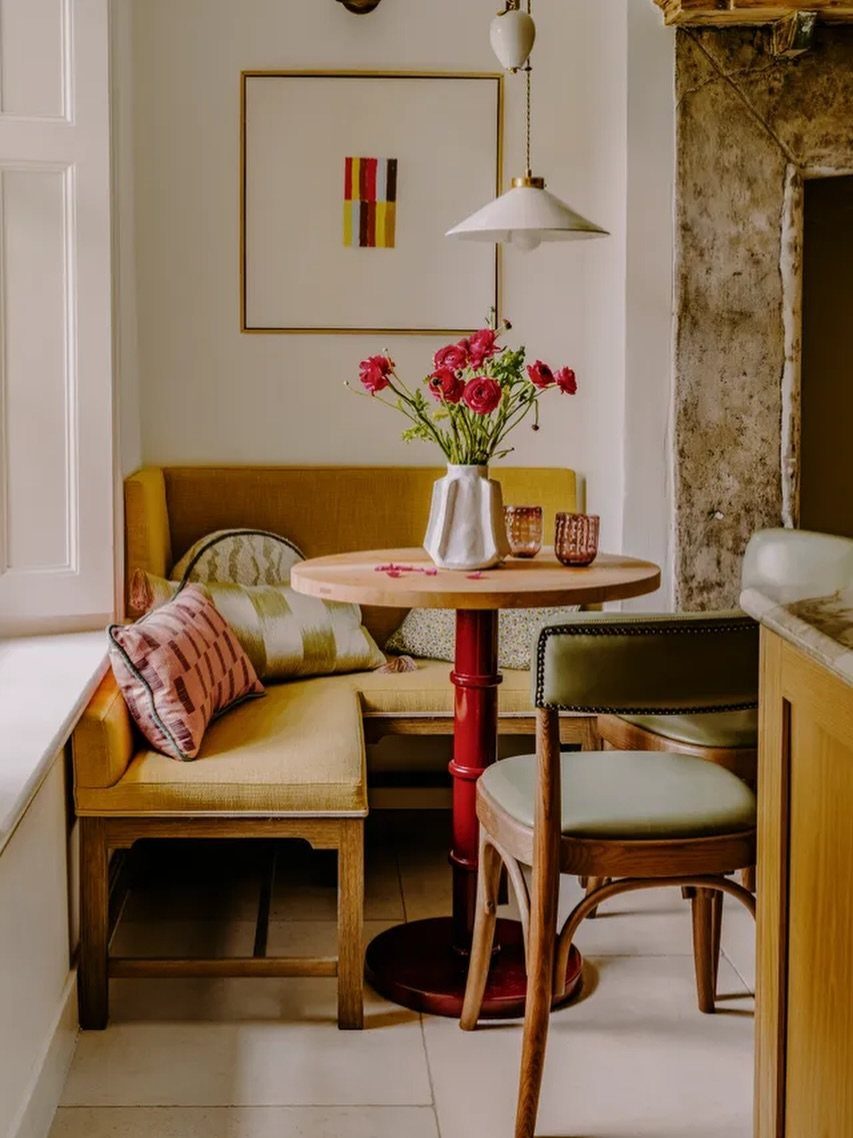
One bold piece is easy to live with; three in different colors, done wrong, looks like a yard sale.
The yellow banquette and green chair share the same saturation, so they argue with each other politely against the round wooden table.
I would start with the largest fixed piece, the banquette, in a color I could stand long-term, then add the smaller items in accents that are easy to swap.
This approach suits renters who can’t change cabinets or flooring but still want a kitchen that feels intentional.
The risk is choosing colors that clash in value instead of hue: a pale yellow against a saturated red will look accidental, not playful.

L Shaped Storage Bench with Cushion: Two 47" benches and a connecting corner seat form a full-size 63" x 63" L shaped banquette, giving you generous seating for family meals and gatherings. Farmhouse-inspired white panels pair with soft grey cushions for a clean, sophisticated look, and the zip-off cushion covers are machine washable.

TURN AN EMPTY CORNER INTO YOUR FAVORITE DINING SPOT — Designed with a 72" L-shaped layout, this breakfast nook table set makes smart use of kitchen and dining room corners without crowding your walkway. A practical way to create a comfortable dining area in apartments, breakfast nooks and smaller homes.

MAKE EVERY CORNER COUNT: Designed for apartments, breakfast nooks and compact kitchens, this 72" corner dining table set fits naturally along the wall to make better use of overlooked space. The L-shaped banquette creates a complete dining area without filling the room with bulky individual chairs.
3. Round Table
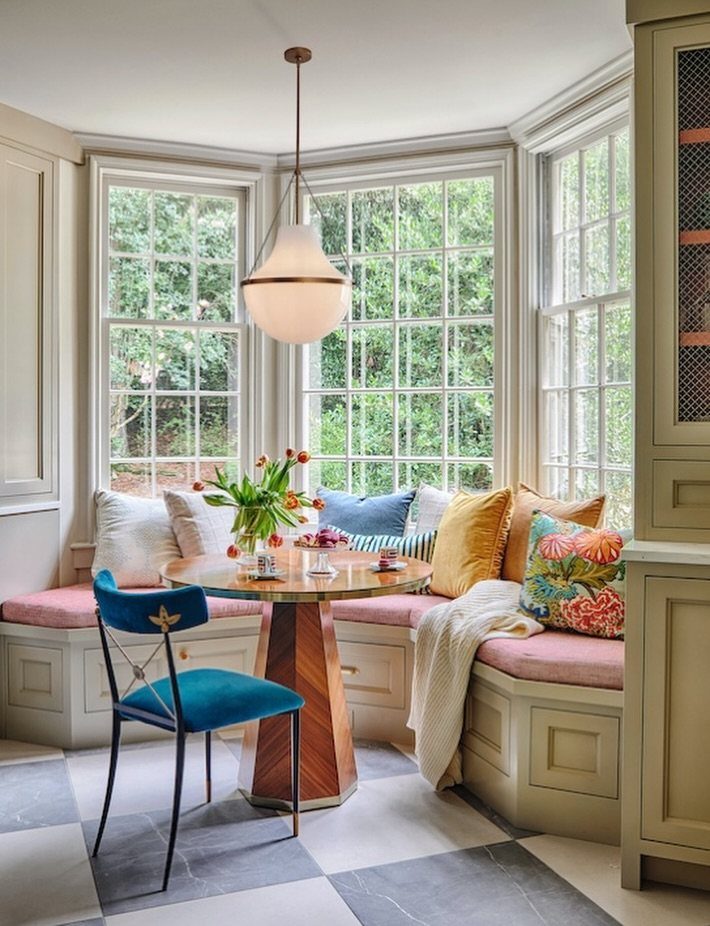
A round table keeps conversation going because nobody sits at a distant head. A pedestal base also frees leg room on all sides, which matters more than people expect in a tight corner.
I specify round when the nook serves as both morning coffee spot and kids’ homework station; no corners to crowd a laptop or a coloring book.
Diameter is the decision: a small table fits two comfortably, while a medium one handles four if the chairs are slim.
Bay window light does more work than the furniture; without that much natural light, I would choose a lighter wood tone or paint the table to keep the nook from feeling heavy.

Versatile Design: Accommodates 4-6 guests perfectly for both family meals and friend gatherings. The 47-inch circular dining table encourages conversation and interaction, turning every meal into a delightful shared experience
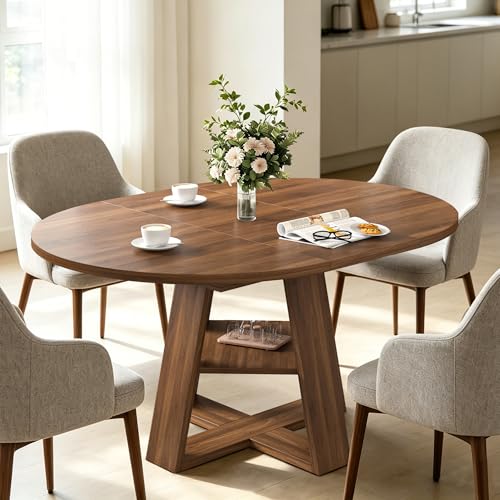
Retractable dining table for 4-8 people: Considering the use in different scenarios, the dining table adopts a retractable design and a smooth and silent rail. By assembling independent extension leaves in the middle of the dining table, it can be quickly and easily expanded from the original 43.3” round dining table to a 59” L x 43.3” W oval dining table. The extension leaves can be stored under the tabletop, making your space more flexible

Space-Saving & Multifunctional Design: This 47" round table features a compact, space-conscious design that maximizes your living area, ideal as a modern dining table for apartments, small dining rooms, or living rooms
4. Under-Bench Drawers
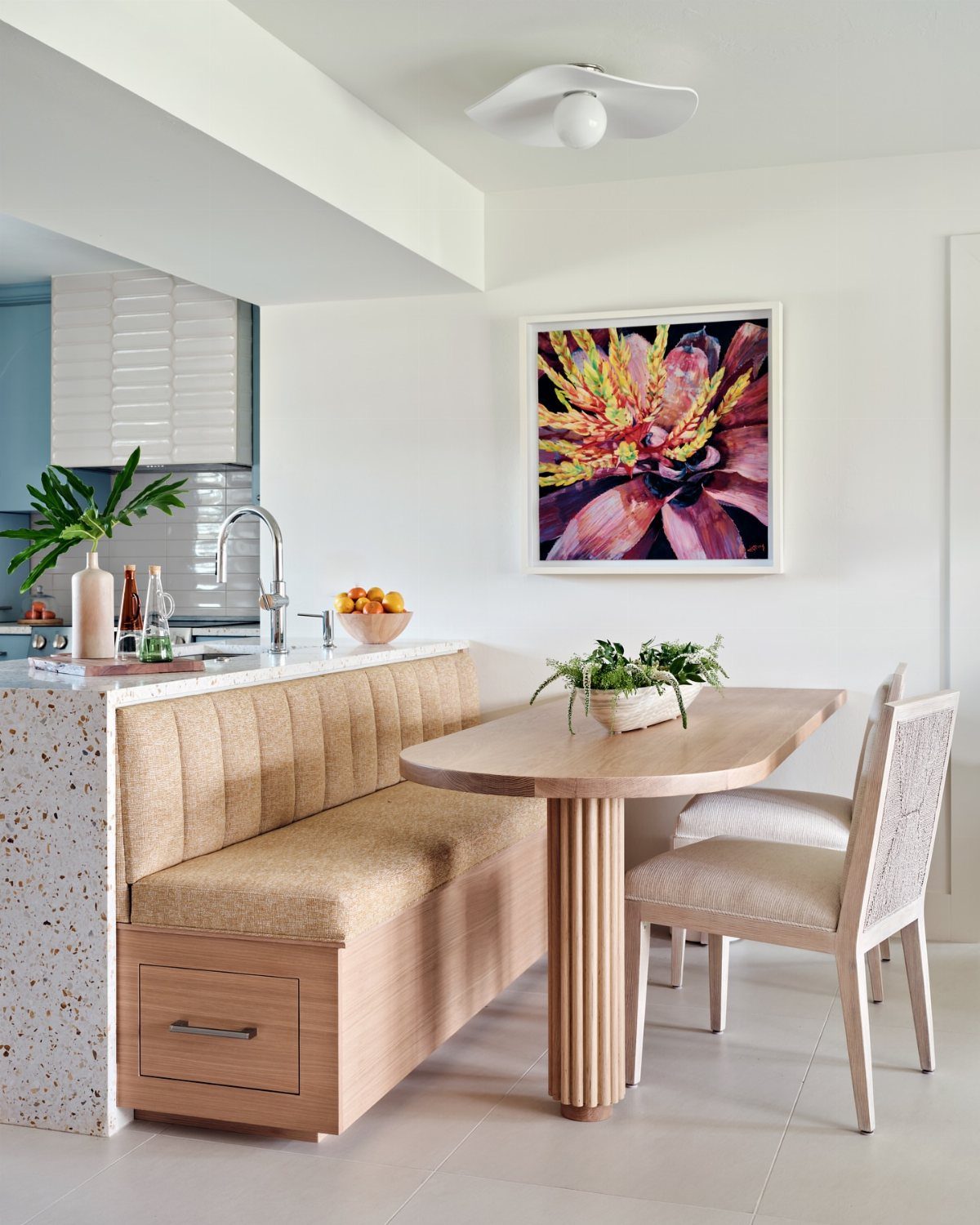
Storage you can reach without lifting a seat cushion gets used; storage that requires contortions becomes a graveyard for items you forgot you owned.
The drawer in this banquette faces the room, so it opens while someone sits above it, a detail I would copy in any household where the nook doubles as a drop zone for mail, chargers, or the dog’s leash.
Construction is straightforward: a false front on a heavy-duty slide, with the bench frame built around it. I specify full-extension slides rated for at least 100 pounds; the cheap ones sag after a year of holding serving dishes.
The tradeoff is leg room: a deep drawer steals 6 to 8 inches of vertical space, so the bench sits higher than a standard seat. Plan for 20 inches from floor to cushion instead of 18.

Spacious Hidden Storage - This breakfast nook bench with storage keeps essentials out of sight yet within reach. Lift any seat to reveal a roomy compartment for tableware, linens, or toys—maximizing your dining space without clutter.

【Cushioned Corner Bench】: Designed to fit perfectly into room corners, this L-shaped storage bench makes excellent use of otherwise unused space in entryways, dining areas, or living rooms. Its rounded, curved edges minimize the risk of injury from bumps, making it safe for children and pets. It features comfortable cushioning with a high-density foam core that offers firm support and resists sagging, ensuring durability for daily use.

Spacious Hidden Storage - This breakfast nook bench with storage keeps essentials out of sight yet within reach. Lift any seat to reveal a roomy compartment for tableware, linens, or toys—maximizing your dining space without clutter.
5. Bay Window Nook
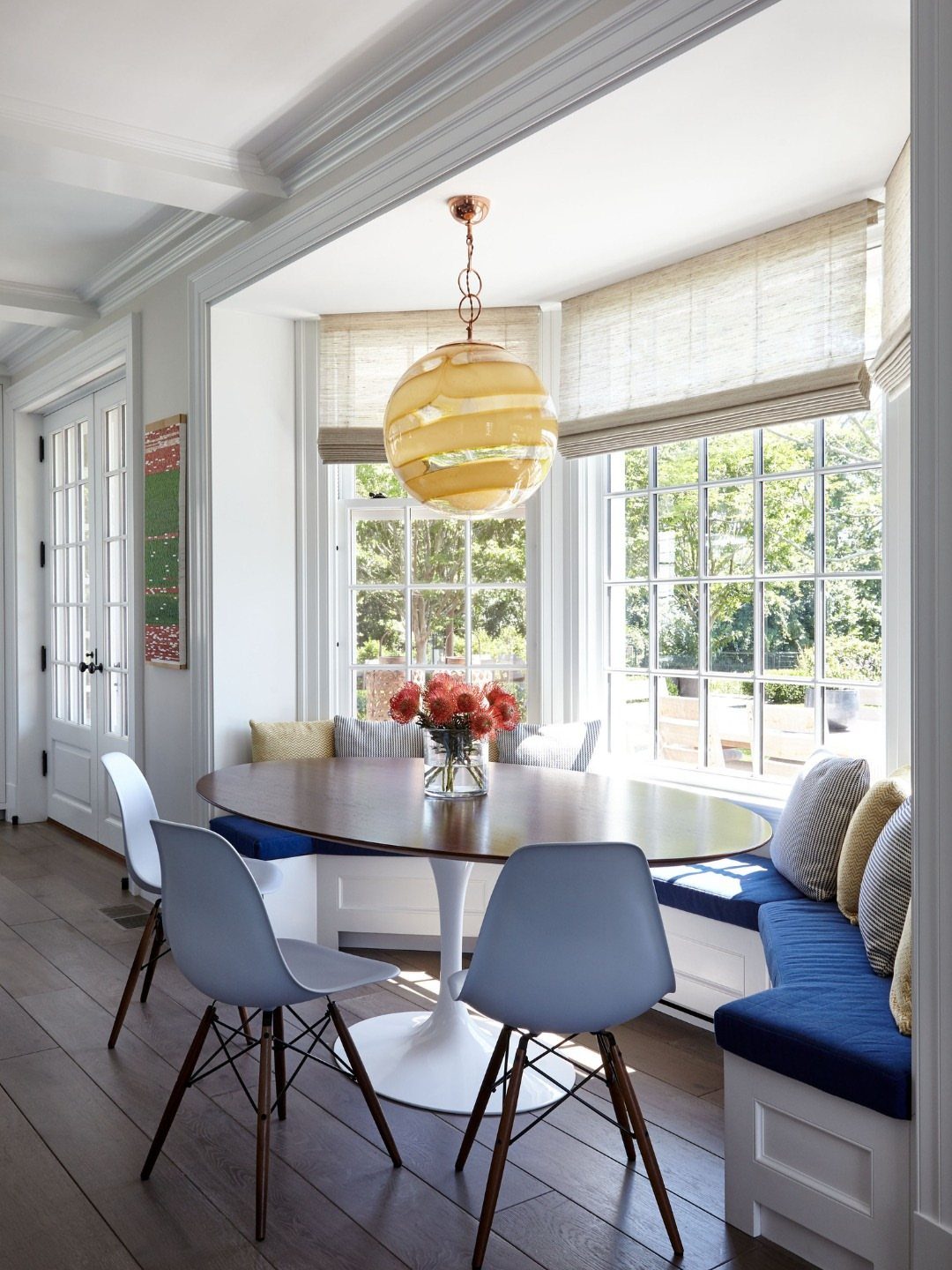
Bay windows were built for this.
Three-sided light makes a nook feel like a room of its own, not an afterthought off the kitchen, and a curved wall behind the banquette gives a sense of shelter that straight walls never quite match.
I would upholster the seat in something that can handle direct sun: solution-dyed acrylic or a dark linen that fades gracefully rather than unevenly.
Bay windows are structural, not a detail you add. This idea suits those who have one, not those shopping for a project.
【Natürliches, extra dickes Hartholz】This indoor solid wood bench is made from high-quality, naturally dried elm wood. The seat is 1.97 inches thick and built strong. Elm wood is tough, with clear natural grain and good corrosion resistance. It is solid and durable.

【5-in-1 Entryway Organization with Bench & Wall Shelf】This hall tree combines a flip-down shoe cabinet, a sturdy shoe bench (supports 220 lbs), coat hooks, a top quick-access shelf, and an added wall ledge shelf. Unlike basic shoe cabinets, our design gives you a comfortable seat and extra display space – everything you need for a tidy doo

✓ PREMIUM SOLID ELM WOOD CONSTRUCTION - Crafted from high-quality solid elm wood, not particle board or composite materials. Features beautiful natural grain patterns and rustic finish that highlights the wood's organic texture, ensuring lasting durability and timeless beauty
6. Corner Nook
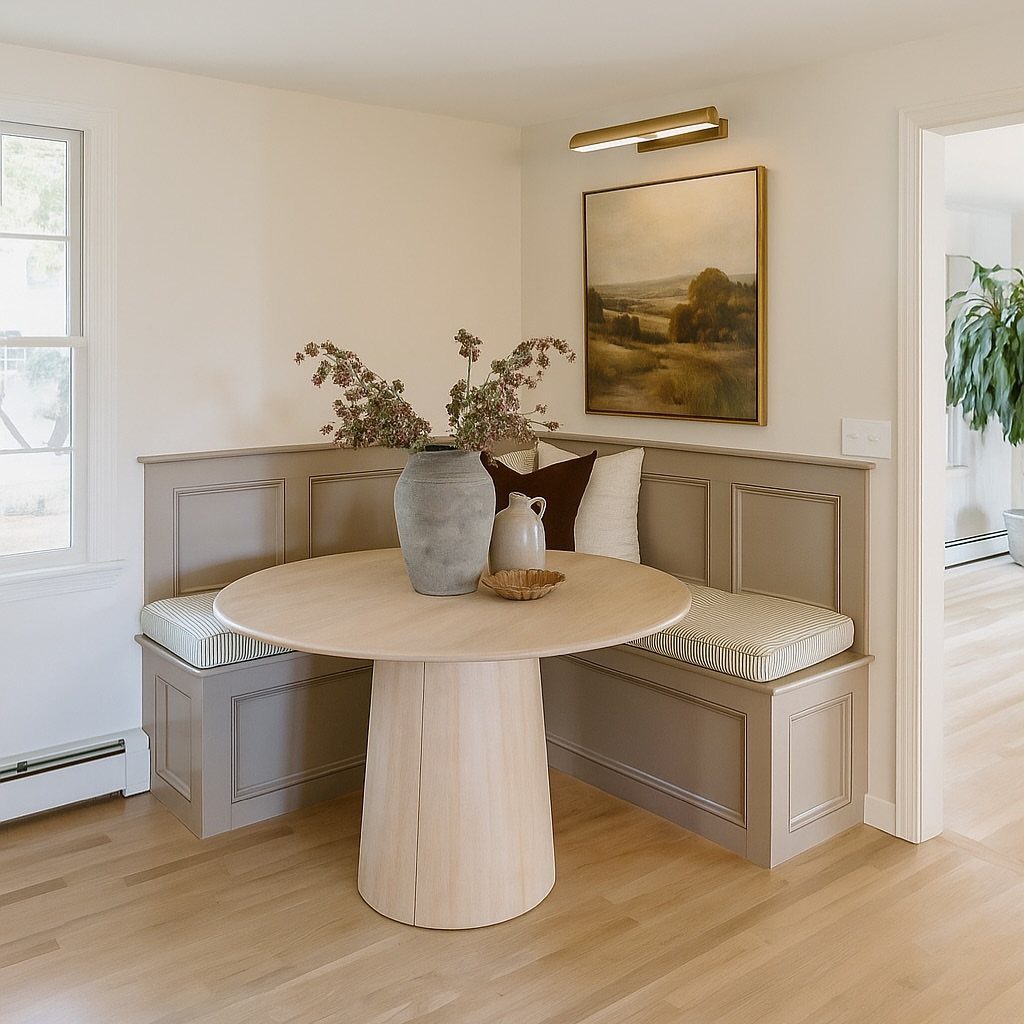
A corner banquette uses walls on two sides, which means only two chairs to buy and no one backed against a passage.
Grey paneling and striped cushions read tailored rather than cute, a balance I aim for when the nook opens to a living area and needs to feel grown-up.
Built-in corner benches work best when the angle matches the room exactly; a bench built to a standard right angle in a corner that is slightly off leaves an annoying gap.
I would have a carpenter site-measure rather than ordering from a plan.

【Space Saving Dining Table】This GarveeHome Dining Table Set for 4 includes a spacious table, 2 cozy chairs, and a 2-seat bench. The chairs and bench can be conveniently stored underneath the table when not in use, maximizing space, making it perfect for small spaces and keeping your home tidy and organized. Perfect kitchen table size for 4 : Table dimensions: 46.5 in L x 27.5 in W x 30.7 in H; chair capacity: 250 LBS; bench capacity: 300 LBS, making it ideal for families or as a versatile working table

【Modern Minimalist Design】With a clean, handle-free look and push-to-open cabinet doors, this corner bench brings sleek style to dining nooks, kitchen corners, or entryways. Its space-conscious L-shaped form fits naturally into any modern home.

[COMFORTABLE PADDED SEATING]Features a 2.4-inch thick high-density foam cushion and upholstered faux leather surface, providing comfortable seating for dining, relaxing, and everyday family use.
7. Modern Farmhouse Breakfast Nook
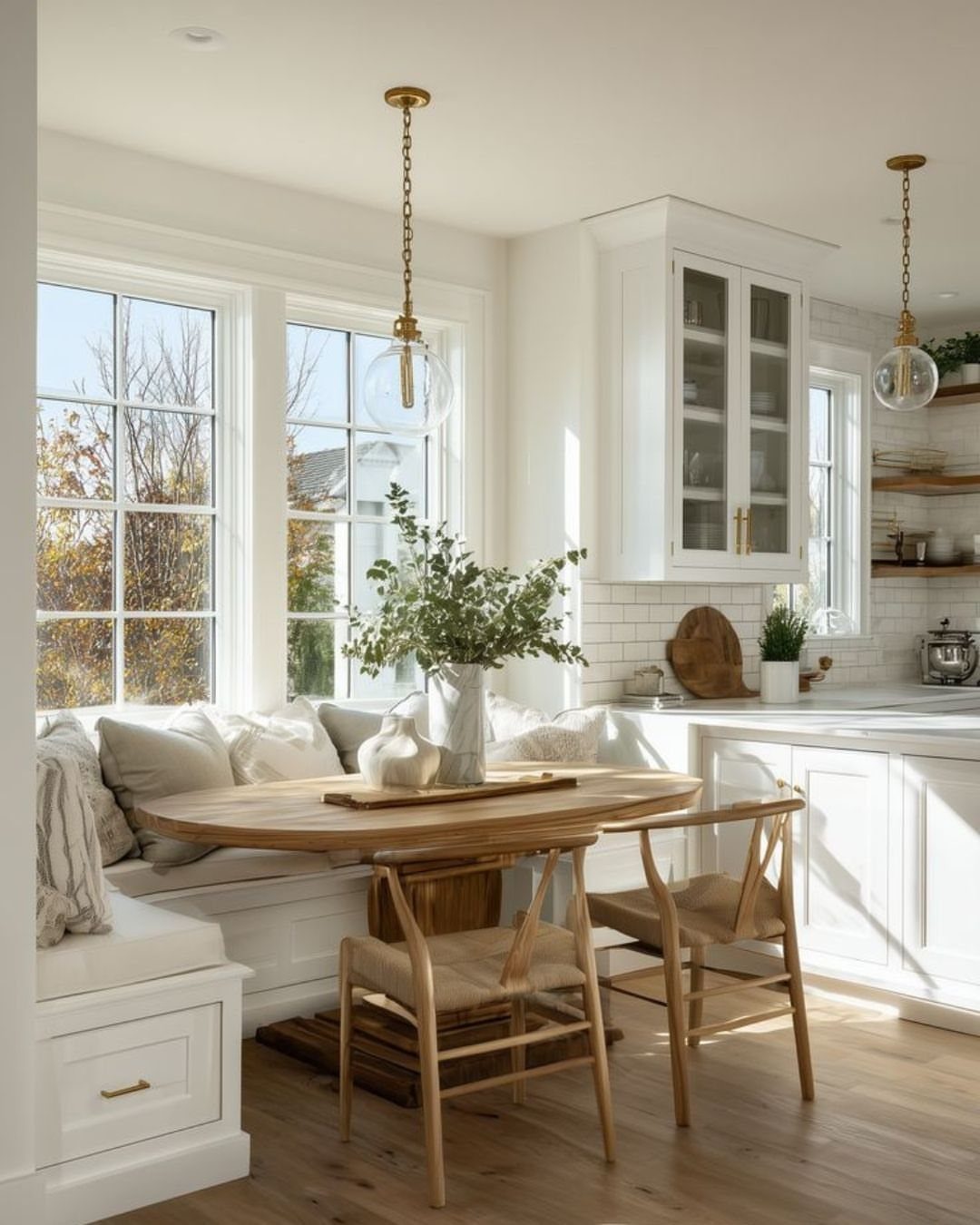
Modern farmhouse lives in the tension between clean and warm. I would choose this balance for a kitchen that opens to a living area, where the nook needs to relate to both spaces without shouting for attention.
The large windows do the heavy lifting on atmosphere; without that much natural light, I would swap the white seating for a soft grey or sage to add depth.

TURN AN EMPTY CORNER INTO YOUR FAVORITE DINING SPOT — Designed with a 72" L-shaped layout, this breakfast nook table set makes smart use of kitchen and dining room corners without crowding your walkway. A practical way to create a comfortable dining area in apartments, breakfast nooks and smaller homes.

Perfectly Tailored Comfort: Get exact dimensions for curved, L-shaped, half-moon, trapezoidal, or extra-long designs—perfect as a bench cushion, window seat cushion, bay window cushion, or piano bench cushion. Precision-cut for unique spaces like breakfast nooks, entryway benches, wicker sofas, and dining seats. Supports both indoor & outdoor use with tailored solutions.

Sturdy Materials: Overall dimensions: 62.99”D x 62.99”W x 18.11”H. Our wooden L shape corner bench with storage is safe and reliable, made with engineered wood for stability and strength
8. Pendant Lights
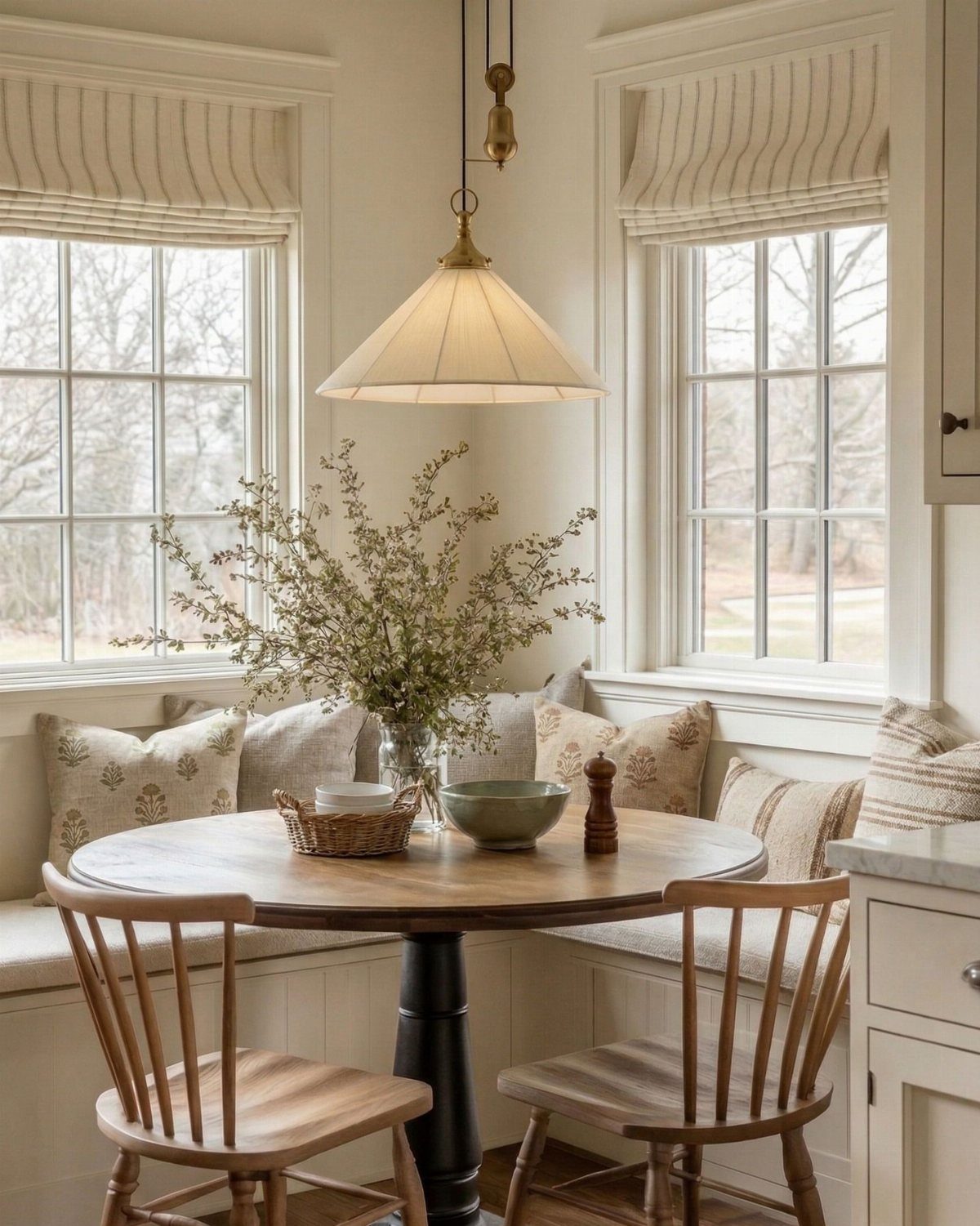
A single pendant over a nook table gives you task light and a center of gravity in one move.
The cone shape here directs light downward without scattering it into eyes across the table, a detail I value more at breakfast than at dinner.
Scale is the decision: the shade should sit low enough to feel intimate, high enough that nobody stands up into it.
In a narrow nook, one fixture beats a cluster; multiple pendants need width to breathe, and width is what most nooks lack.

Versatile Design: This 47-inch round dining table effortlessly accommodates 4-6 diners, making it suitable for both family dinners and entertaining guests. Its circular shape promotes conversation and interaction, making every meal a social event.

CORNER KITCHEN TABLE - Maximize your dining area with a unique triangular shape and softly rounded corners that complement tight layouts and breakfast nooks

Innovative 5-Piece Conversational Setting: Unique round dining table set includes 2 cozy loveseats, a corner connector, and 2 single armchairs—seating 4 people comfortably. The versatile conversational setup is perfect for both dining and lounging, transforming your apartment breakfast nook into a stylish social space.
9. Wall-Mounted Breakfast Bar
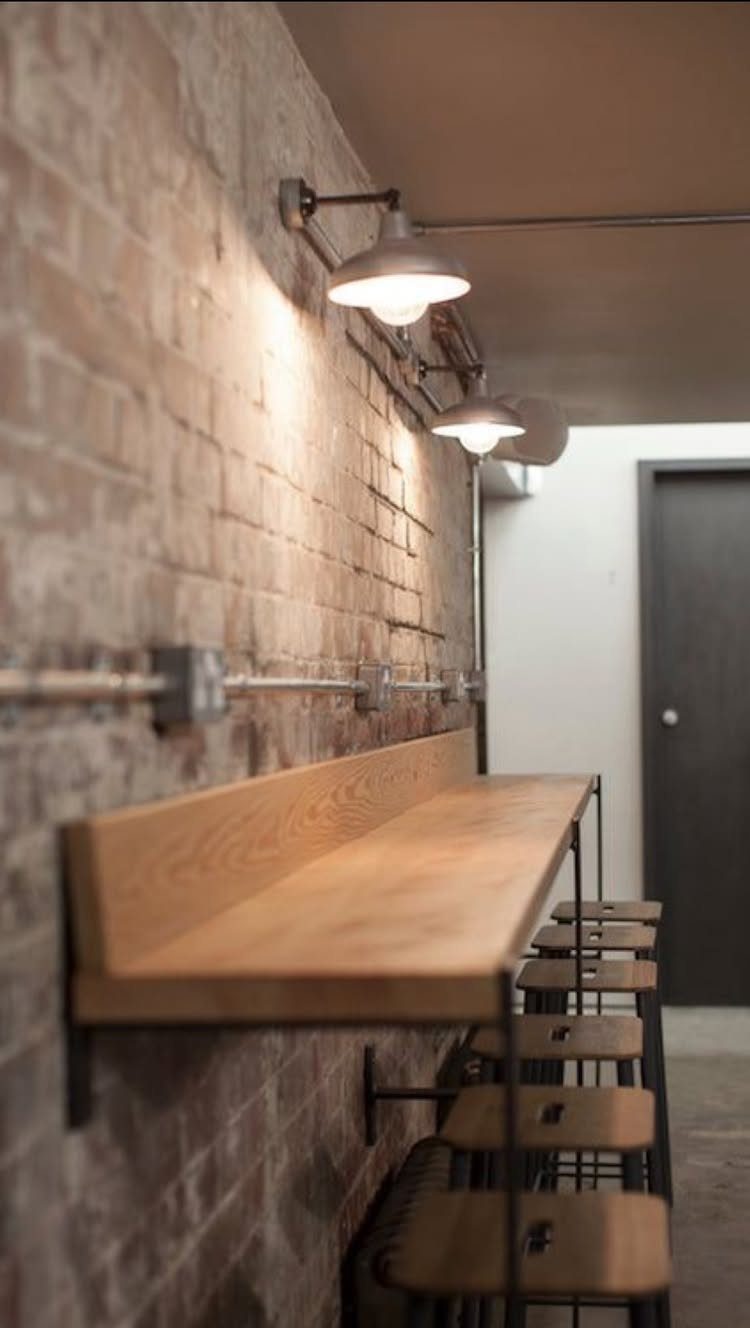
A wall-mounted bar turns a blank stretch into seating without the footprint of a table.
The exposed brick here carries the visual weight so the wood counter can stay simple; in a drywall room, I would add texture with a painted beadboard backing or leave it plain and let the stools do the work.
Backless stools tuck fully underneath, which matters when the passage behind is tight.
The industrial sconces are doing 2 jobs: light for the counter and atmosphere for the wall. If your bar faces a window, skip them and use the natural light.

Premium Comfort & Easy Care - Enjoy cozy dining with breathable, durable polyester upholstery certified by OEKO-TEX Standard 100-safe for everyday family use. The plush, warm texture elevates any kitchen banquette or dining space, while the fully detachable, machine-washable cushion and pillow covers ensure effortless cleanup from everyday spills.

Comfortable & Safe Materials - Cozy Seating: The CHITA breakfast nook bench features plush, removable seat and back cushions. The multi-layered foam sandwich construction of the seat ensures cloud-like softness and lasting support, making it perfect for long, comfortable meals. The breathable materials are OEKO-TEX and CertiPUR-US Certified, ensuring a safe and healthy seating option for your dining nook.

Premium Comfort & Easy Care - Enjoy cozy dining with breathable, durable polyester upholstery certified by OEKO-TEX Standard 100-safe for everyday family use. The plush, warm texture elevates any kitchen banquette or dining space, while the fully detachable, machine-washable cushion and pillow covers ensure effortless cleanup from everyday spills.
10. Leather Banquette Seating
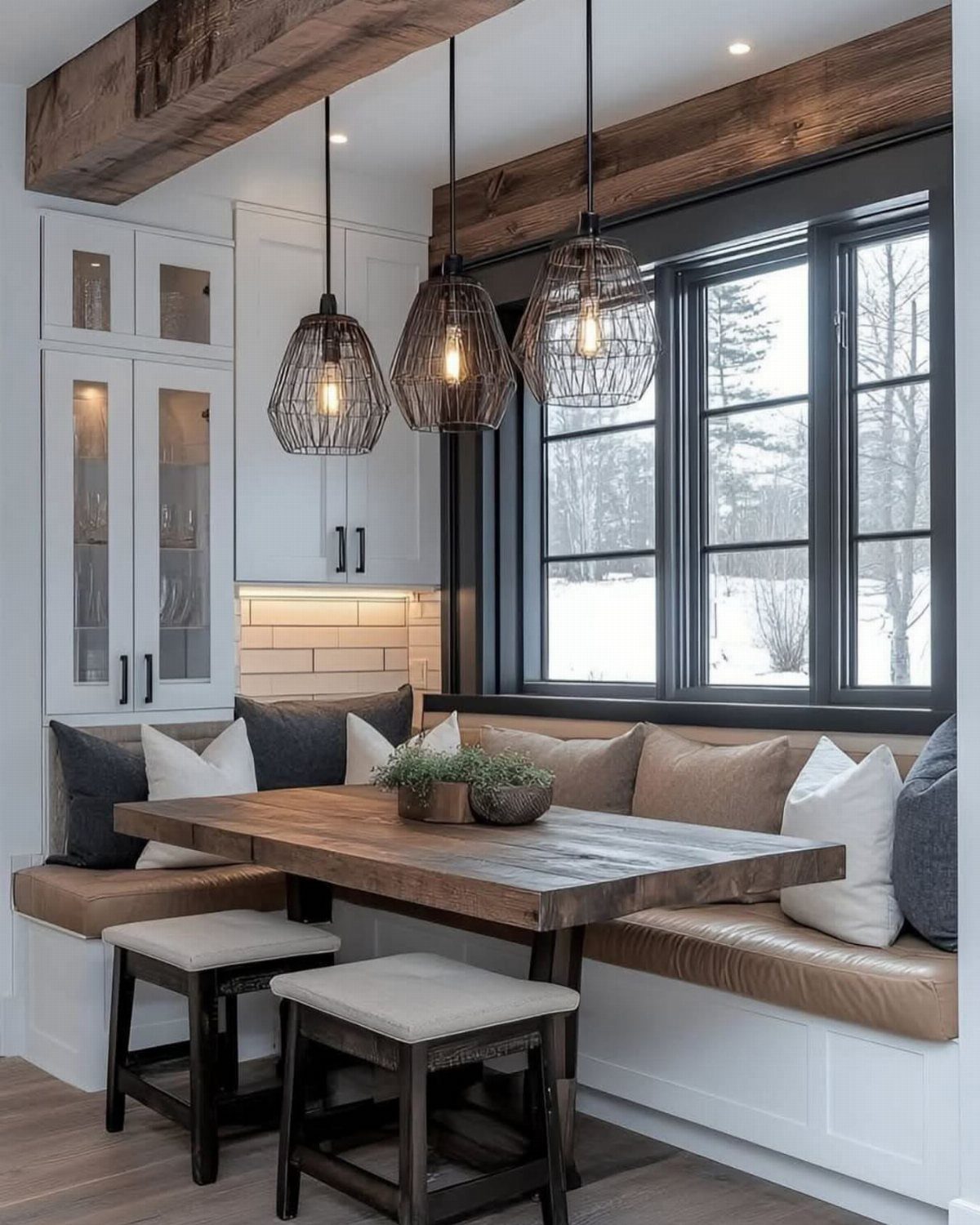
Leather banquette seating ages better than fabric in a kitchen that sees actual use. Spills wipe off, crumbs brush away, and the patina that develops over a few years looks intentional rather than worn out.
An L-shape banquette packs more seating into a corner than 2 chairs would manage, and a brown leather tone warms up black window frames and wire pendants.
I would specify full-grain or top-grain leather; bonded leather cracks at the seams within a couple of years, especially on a seat that takes daily compression. Leather costs more upfront and sits firmer than upholstered cushions.

[Add Seats at the Table] Don’t make your guests eat while standing up just because there are no more chairs! Add this set of 2 table benches to offer additional seats, letting your guests feel welcomed

L-Shape Bench - This storage bench is in L shape, suitable for corners and small rooms to help you maximize space. It adopts vacuum forming craft, presenting elegant patterns on cabinet fronts. Classic 2-tone appearance looks modern and stylish. Backless design make it look like a build-in bench at nook.

Comfortable Soft Padding: The dining bench features soft, high-resilience sponge padding inside, offering a plush yet supportive feel. Whether you’re enjoying a meal or taking a break to change shoes, it provides unparalleled comfort and relief
11. Curved Banquette Seating
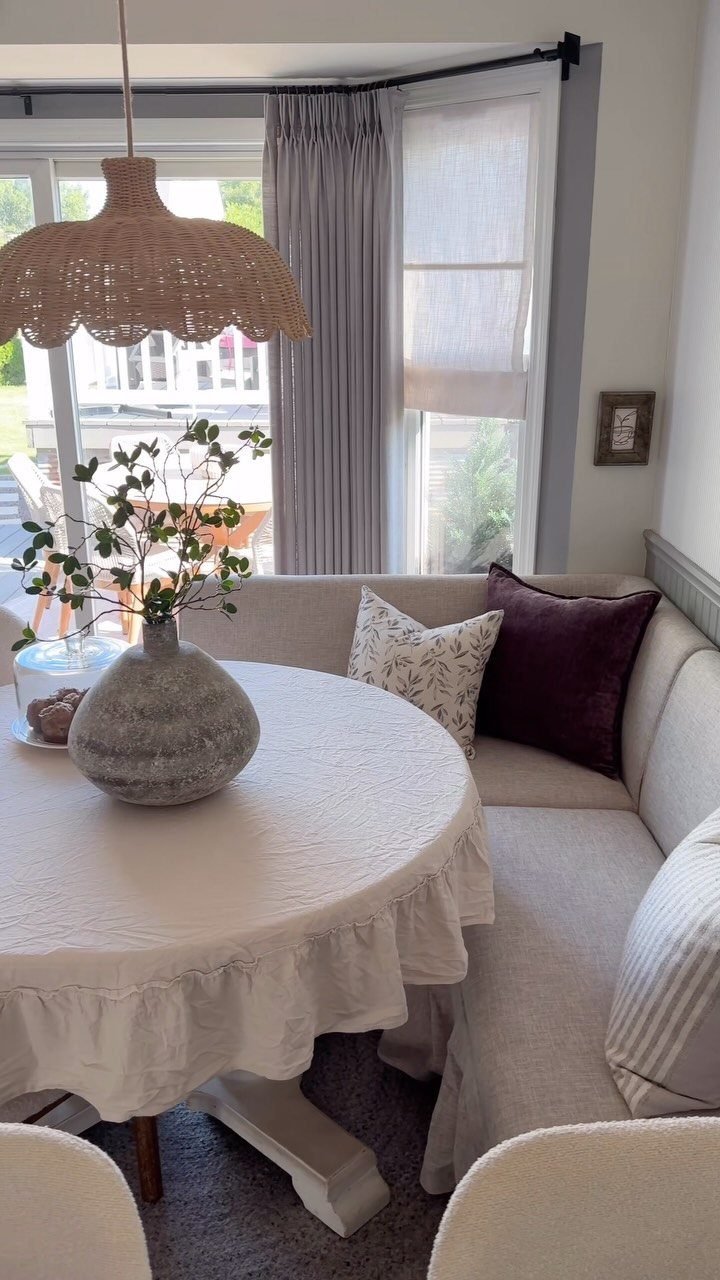
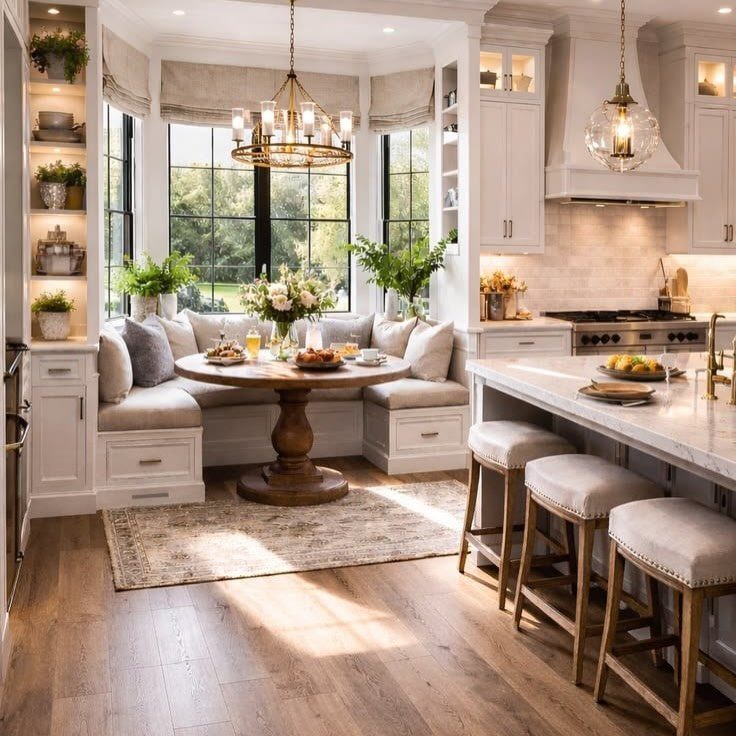
A curved banquette does what straight benches cannot: it hugs a round table without leaving dead corner space where nobody wants to sit.
The upholstery here is light, which works because the window behind it provides enough contrast that the shape reads clearly; against a dark wall, I would choose a tone with more saturation.
The pillows add softness, but I would limit them to two or three; more than that, and the curve becomes a clutter shelf.
Construction is harder than a straight bench: the frame needs a skilled upholsterer or a shop that specializes in rounded seating. The result is worth it in a nook used daily.
12. Plant Shelf Accent Wall
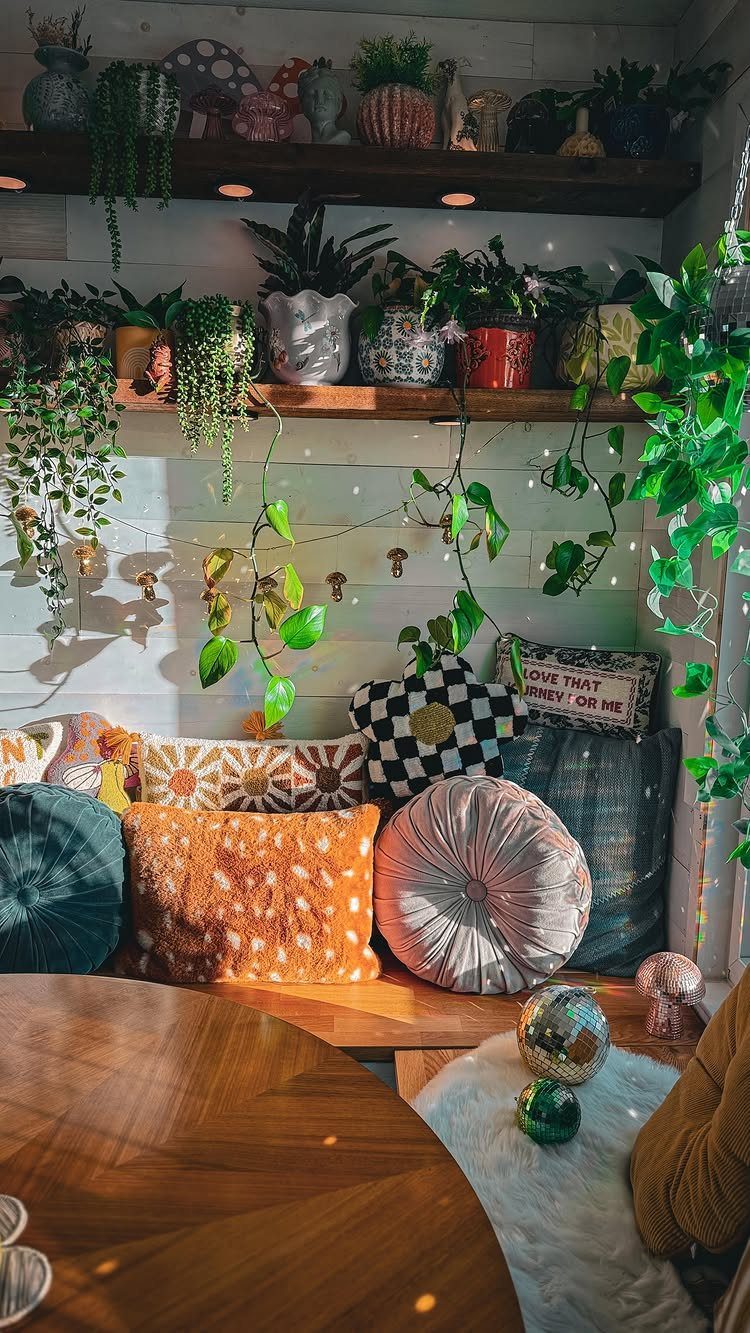
Open shelves above a banquette put plants where they get light and give the eye something alive to rest on.
White paneling gives a neutral stage; plants and pillows supply the color, which means either can change with the season or your mood.
I would choose trailing varieties like pothos or philodendron for the upper shelf, where they soften the edge, and compact ferns or peperomia below, where headroom is tighter.
Watering is the practical catch: use saucers, and skip this idea if the bench is upholstered in something that stains. A pillow with personality, like the one here, keeps the mood from turning too earnest.
13. Freestanding Corner Dining Set
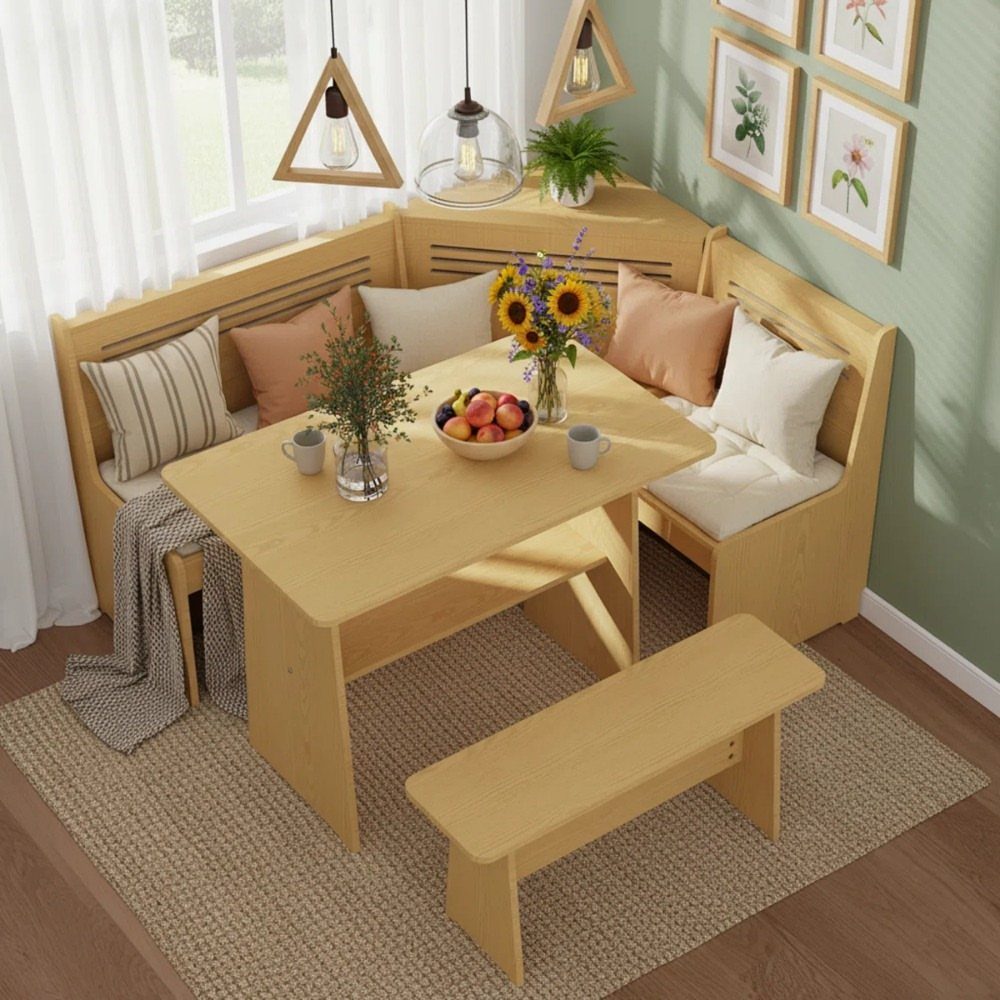
A freestanding corner set moves with you, which matters when the lease ends before the wallpaper does.
Light wood keeps the mood bright against those green walls without fighting them for attention. I would place the bench with its back to the corner and the table close enough that nobody leans into empty space.
The matching finish does the coordinating work so the rest of the room can stay simple. Renters who cannot build in should look here first: 2 pieces, no installation, and the whole setup leaves when you do.
A freestanding corner dining set keeps the room open, but you lose the hidden storage that built-in banquettes hide under hinged seats or drawers.
Everything sits in plain sight, which works fine if you keep the tabletop clear and store dishes nearby.
14. Armchair Seating Nook
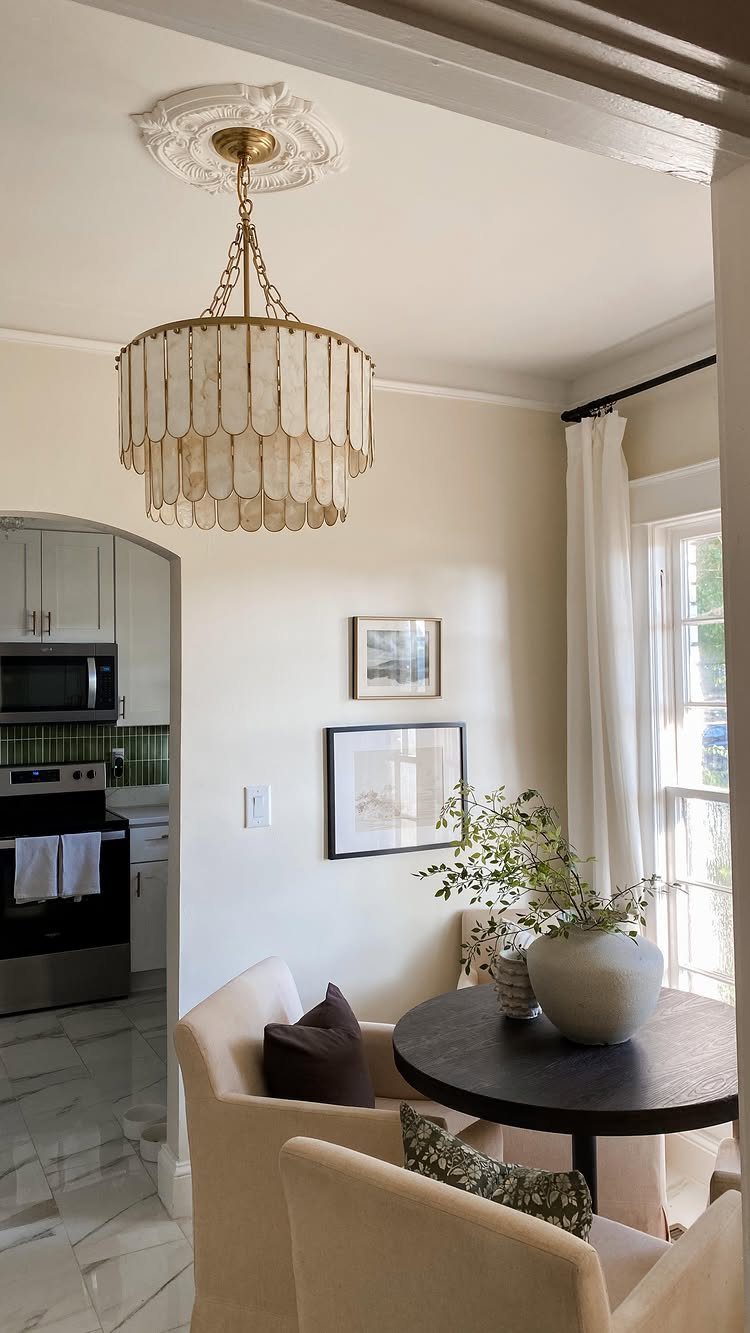
2 armchairs at a small table turn a spare corner into a proper pause in the day, not just a place to eat fast and move on.
Upholstered seats with arms mean you can sit back with coffee and a magazine without perching at the edge. The pedestal base keeps legroom open from all angles, which matters when the chairs are this substantial.
I would keep the table dark and the upholstery light, the way this setup does it; two light pieces and a light table read as one pale blob.
This idea suits couples or empty nesters more than families with small children. The chairs take space, and four of them would crowd most nooks.
Cozy Breakfast Nook Elements
Plush seating is where comfort in a breakfast nook starts, but the cushion fill matters as much as the cover.
I specify high-density foam wrapped in a softer layer; all-foam sits too firm for long mornings, and all-down flattens within a year.
Warm lighting needs a dimmer more than it needs a particular fixture. Pendant lights at full brightness feel like an interrogation at 6 AM; on a dimmer, the same fixture feels like a café you want to linger in.
Decorative pillows and curtains are where I let personality show, with one caution: fabrics near food need to survive a splash of orange juice or coffee.
I avoid silk or dry-clean-only anything within arm’s reach of the table. Machine-washable cotton or a performance fabric with a soft hand gets my vote.
Planning Considerations
Location is the decision that shapes everything else.
A nook placed where the main kitchen path cuts through becomes an obstacle, not a destination; I would rather lose the window view and keep circulation clear than fight traffic every morning. Seating needs are easy to overestimate.
Planning for a crowd every day wastes space that a smaller banquette and 2 chairs would free for storage or simply walking past. The kitchen layout sets the rules.
In a galley kitchen, the nook belongs at the dead end, not the middle. In an L-shaped kitchen, the corner where the 2 legs meet is often the only place a table fits without blocking a cabinet or appliance.
I map the work triangle first, then see where the nook can tuck in without crossing it.
Benefits of a Breakfast Nook
A breakfast nook earns its keep when it becomes the room people choose without thinking. Islands are for standing; nooks are for settling in.
That difference is what makes the space worth building. Family bonding sounds like a selling point, but in practice it means the nook needs to survive real use: crayons, laptops, cereal bowls, and the occasional nap.
The seating should invite lingering, which is why I prefer upholstered benches with backs over hard stools.
Casual space is the key phrase. A nook fails when it tries to be too formal; white slipcovers and fragile accessories signal "look, don’t live."
The homework and board game uses matter because they determine surface durability. A painted table top chips; a wood top with a hardwax oil finish absorbs the abuse and gets better looking for it.
Breakfast nooks come in all shapes and sizes. There are massive 15 foot long breakfast nooks, but most are squeezed into much more compact spaces.