The ideas below run from a free weekend with cinder blocks and pallets to masonry builds that need licensed trades for gas and drainage.
What settles the choice is how permanent your outdoor setup needs to be and whether you already know which grill you reach for every time.
A cinder block stack or pallet station is where I point first-timers who want something intentional in a single day with minimal cost; the HT stamp on those pallets means no chemical treatment, which matters if the wood sits near anything that touches food.
1. DIY Built-In BBQ Grill Station
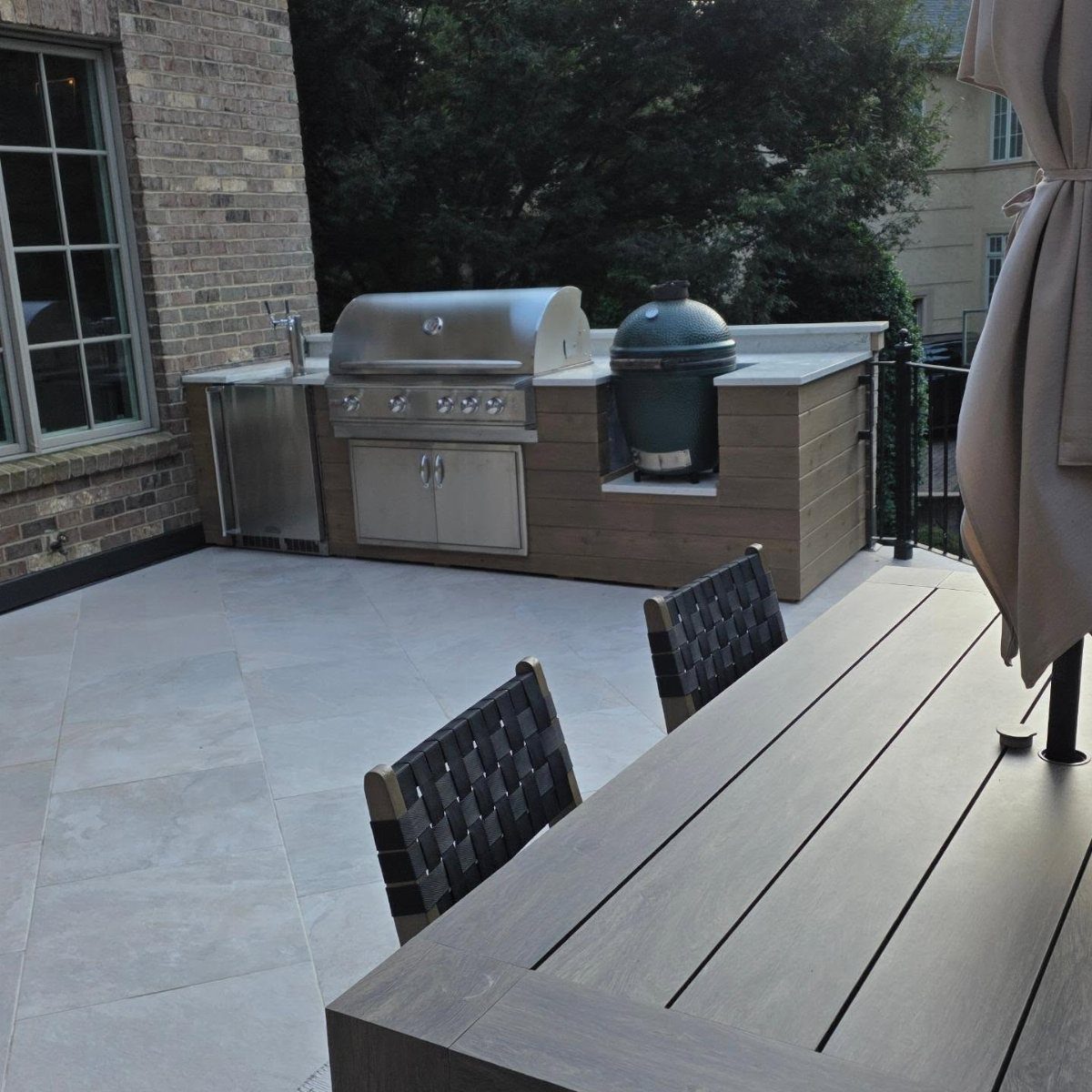
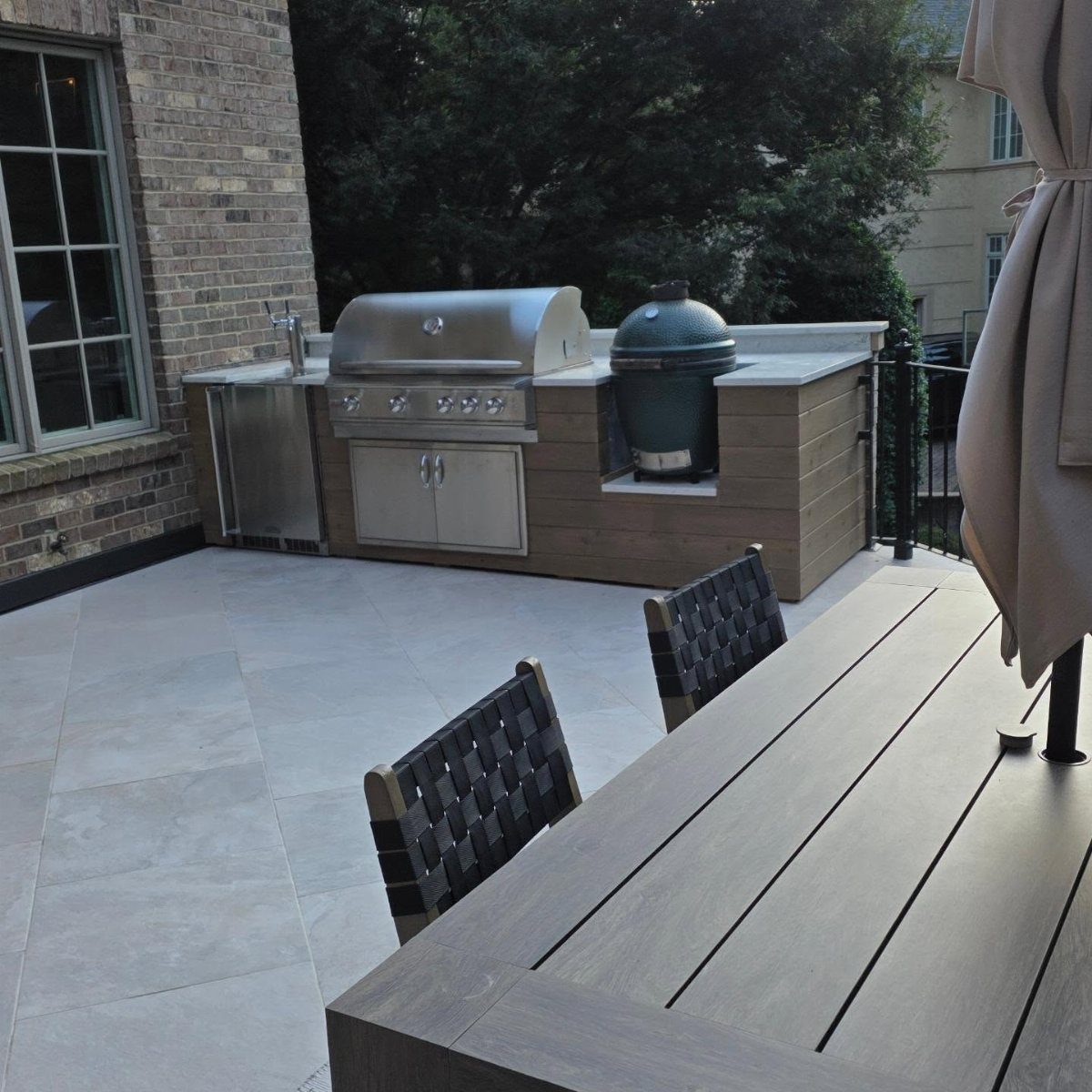
A built-in BBQ grill station anchors the patio as a permanent outdoor kitchen, with both a stainless steel grill and a green kamado-style cooker set into the structure.
This setup suits homeowners who cook outside often enough to justify the labor and cost of something fixed.
Commitment is the hard part: you are building around appliances you already own or ones you choose now, and swapping either later means reworking stone, tile, or stucco.
I would only go this route after living with a portable setup long enough to know which grill I reach for and where I want it relative to prep space and seating.
An awkward, unused corner in your backyard is the perfect location for a cooking station. This one by @mrs_benrich_home includes a wood-burning pizza oven, cabinet storage and a grill.

Premium Stainless Steel Frame For Durability: Designed with a rust-resistant stainless steel frame, this outdoor grill combines exceptional durability with a stylish, modern design. The easy-to-clean surface makes maintenance a breeze

Premium Stainless Steel Frame For Durability: Designed with a rust-resistant stainless steel frame, this outdoor grill combines exceptional durability with a stylish, modern design. The easy-to-clean surface makes maintenance a breeze

Complete Grill Cleaning Set – Includes a manual grill brush and scraper plus cleaning gloves for everyday BBQ cleaning.
2. DIY Grill Cart
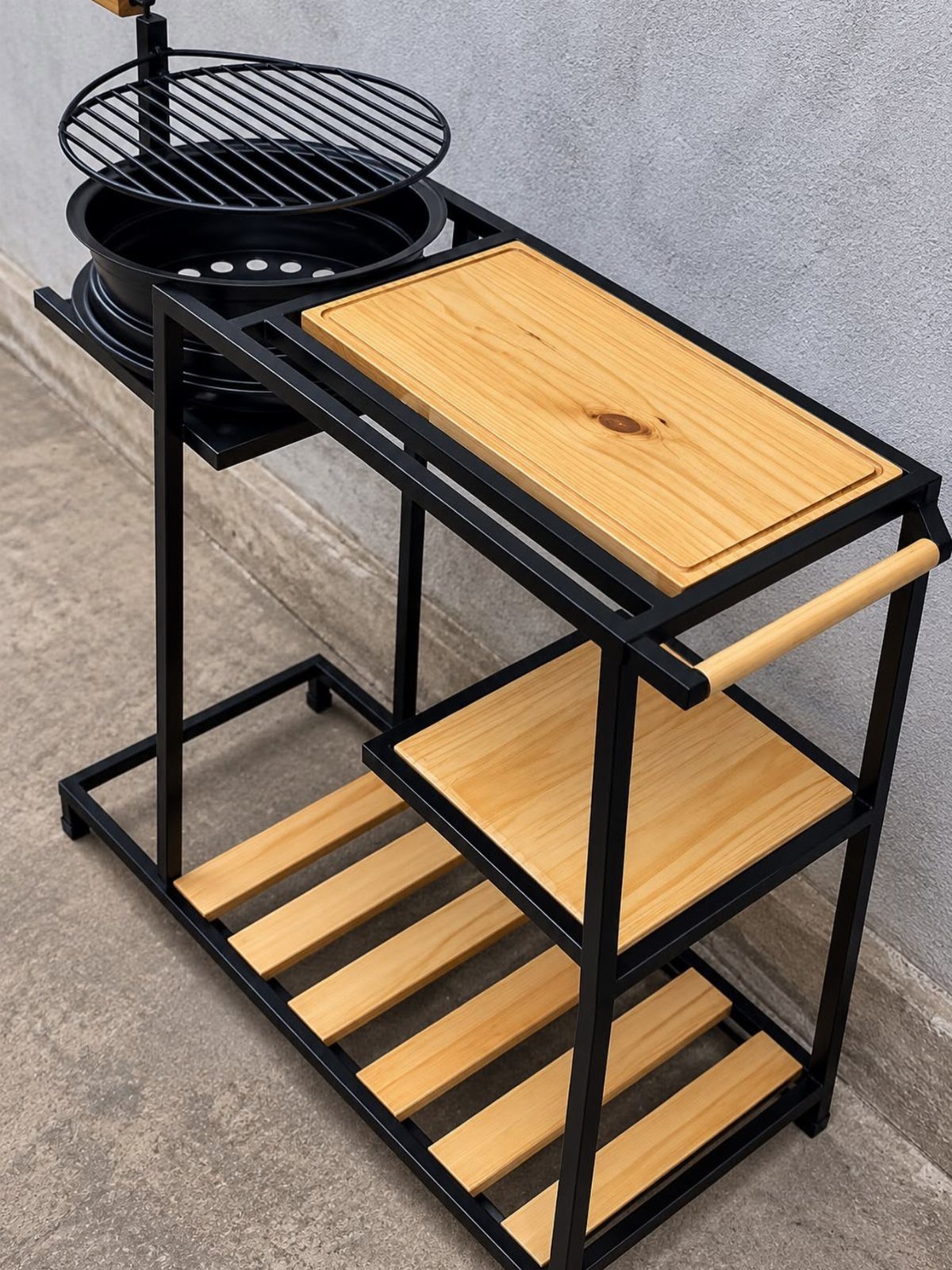
A grill cart on wheels keeps your cooking gear mobile, which matters when patio space doubles as dining space or when the sun shifts and you need shade.
A black metal frame and light wood surfaces give this cart a clean, industrial look that does not fight most outdoor furniture.
For renters or anyone who might move, this is the practical choice.
I look for locking casters, a lower shelf that holds a propane tank or charcoal bin without crowding, and a top surface wide enough for a tray and utensils.
Assembly runs a few hours with basic tools; no concrete pad or permit required.

PACKAGE: Included 4 Swivel Stem Casters (7/16"x1-3/8"), 4 Insert Sleeves.

STANDARD US THREADED STEM SIZE: This set of 4 4-inch locking swivel casters features a 3/8"-16 UNC threaded stem with a 3/8" diameter and 1" length, measured from the stem shoulder to the tip. The 16 TPI thread specification is essential for a compatible fit. Check all dimensions before ordering

Heavy Duty Casters - Premium Materials and Greater Durability: Precision ball double bearings for smooth swiveling and rolling. 3″caster wheels are made from solid polyurethane with strong weight capacity. Each caster can carry 250Lbs.
3. BBQ Island with Pizza Oven
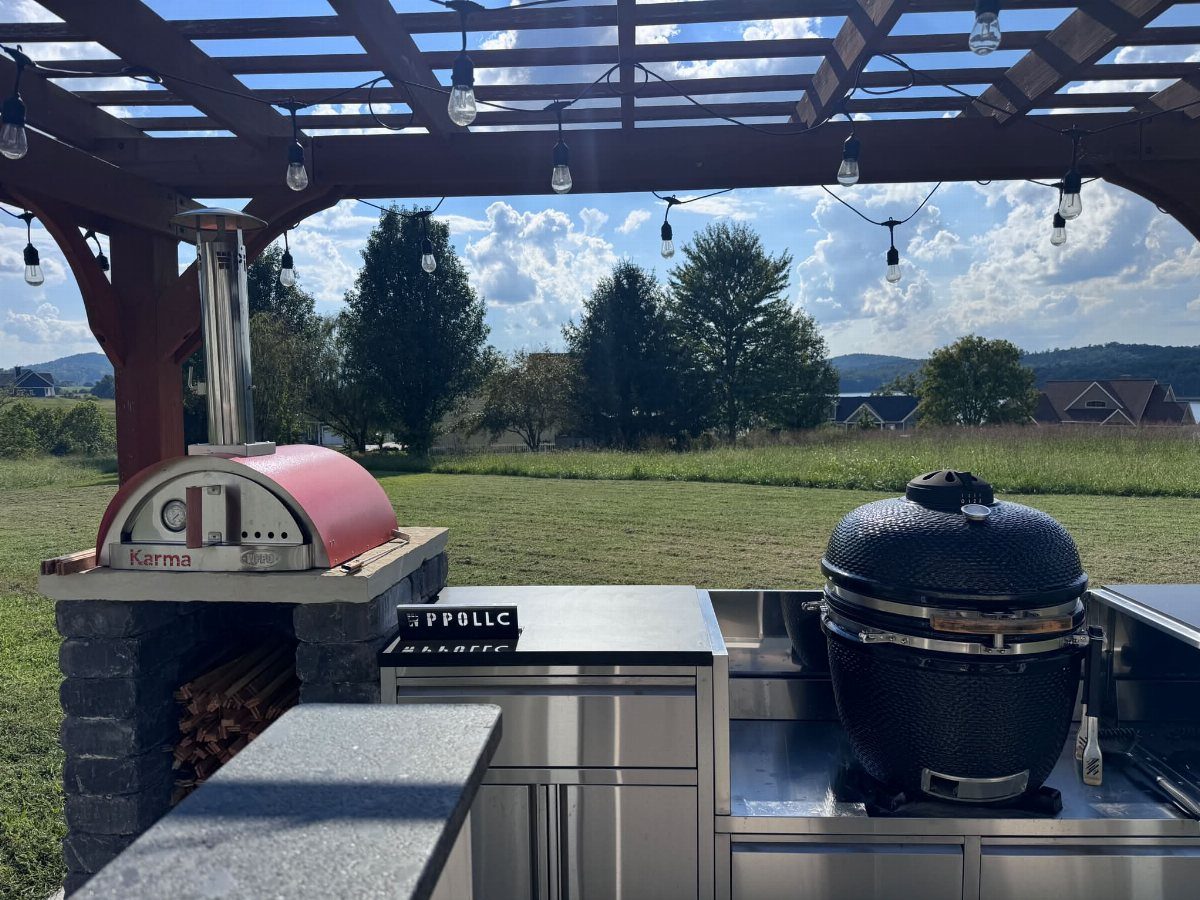
Adding a pizza oven to a BBQ island turns a grilling station into something that handles weeknight dinners and weekend gatherings without the same menu repeating.
The red Karma oven and black kamado grill under this pergola give two distinct heat sources: one for Neapolitan-style pies at 700+ degrees, the other for low-and-slow barbecue.
Footprint and cost are the hard parts.
A pizza oven this size needs clearance on all sides, and the base must support serious weight. I would plan for generous counter depth and a gas line or wood storage integrated into the island.
This is not a starter project, but it is the one I point to when someone already grills often and wants to expand without adding another appliance to the patio.

GRILL CART WITH MULTIFUNCTIONAL STORAGE: Oversized desktop size: 28.4"D x 16.6"W, this outdoor kitchen island has spice caddy, paper towel holder, hook.

3-Tier BBQ Prep Table - The outdoor grill table features 23.62"×15.74" rust-resistant tabletop, dimensions easily accommodate a portable grill, pizza oven, portable gas camping stove, dinnerware and more. The smooth surface design enables easy one-step cleaning & hassle-free daily maintenance.

Large Storage Capacity: Our grill carts include a bottom board with the capacity to hold a gas cylinder. Equipped with 6 convenient S-hooks, towel rack, bottle opener, trash rack, place as many tools as you want on this portable grill cart and become an outdoor prep station.
4. DIY Outdoor Grill Station
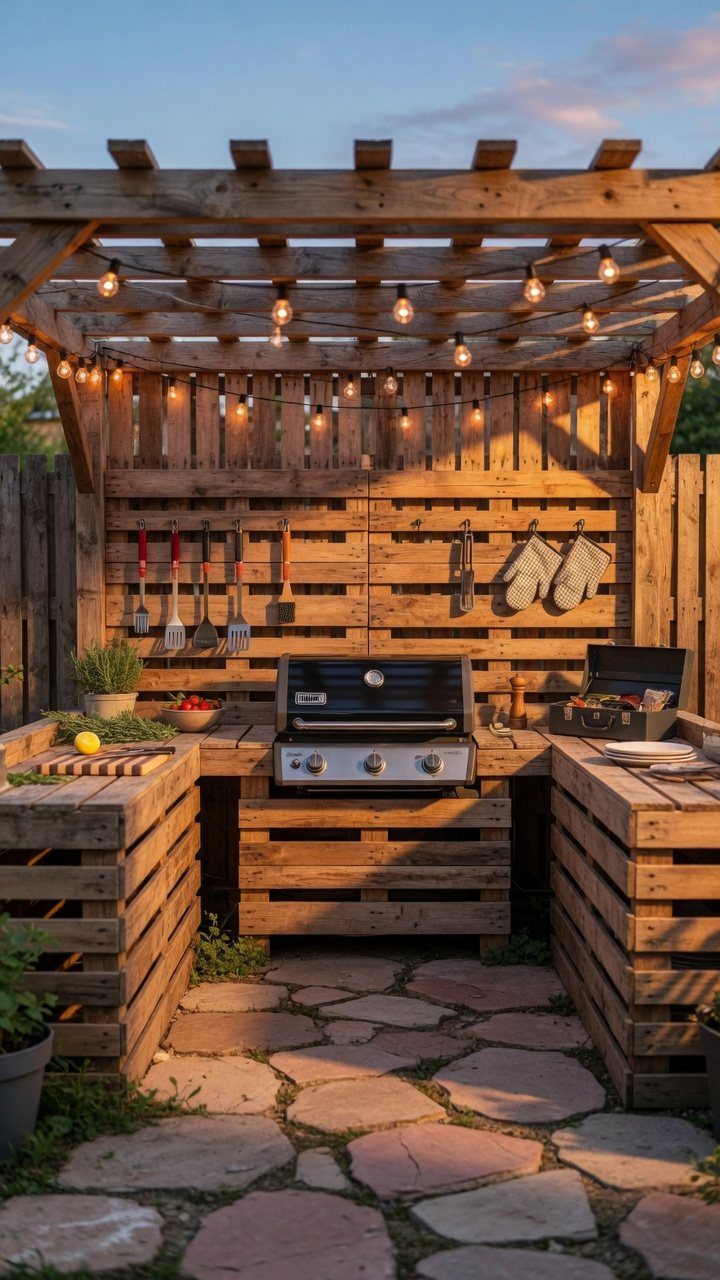
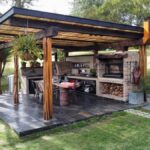
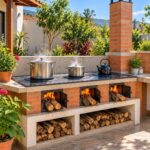
Pallets, screws, and a free weekend built the grill station under this pergola, with string lights hung for evening cooking. Reclaimed wood keeps the cost near zero if you have access to pallets in decent shape.
I like this approach for first-time builders because mistakes are cheap and the rustic look forgives uneven cuts. The step most people skip is checking pallets for the "HT" heat-treatment stamp; chemically treated ones are not safe near food.
Sand thoroughly, seal with exterior-grade finish, and accept that the wood will weather. Minimal hardware and a single weekend get you a functional station that looks deliberate rather than improvised.

VERSATILE KAMADO GRILLING AND SMOKING: Cook across a 200°F to 700°F temperature range to smoke low and slow, roast, bake, grill, or sear over real charcoal for authentic barbecue flavor.

Holds Big Green Egg + One Blackstone Griddle (28" or 36"): This all-in-one outdoor grill station accommodates a Large Big Green Egg and either a 28" or 36" Blackstone griddle—not both at once. A dedicated cooking hub for serious grillers who want it all in one setup

【Professional Grade】Made of 304 stainless steel. Not only can stainless steel elevate your outdoor kitchen game, but it is also a durable, low-maintenance outdoor kitchen option to choose for your outdoor feature.
5. Prefab Grill Island
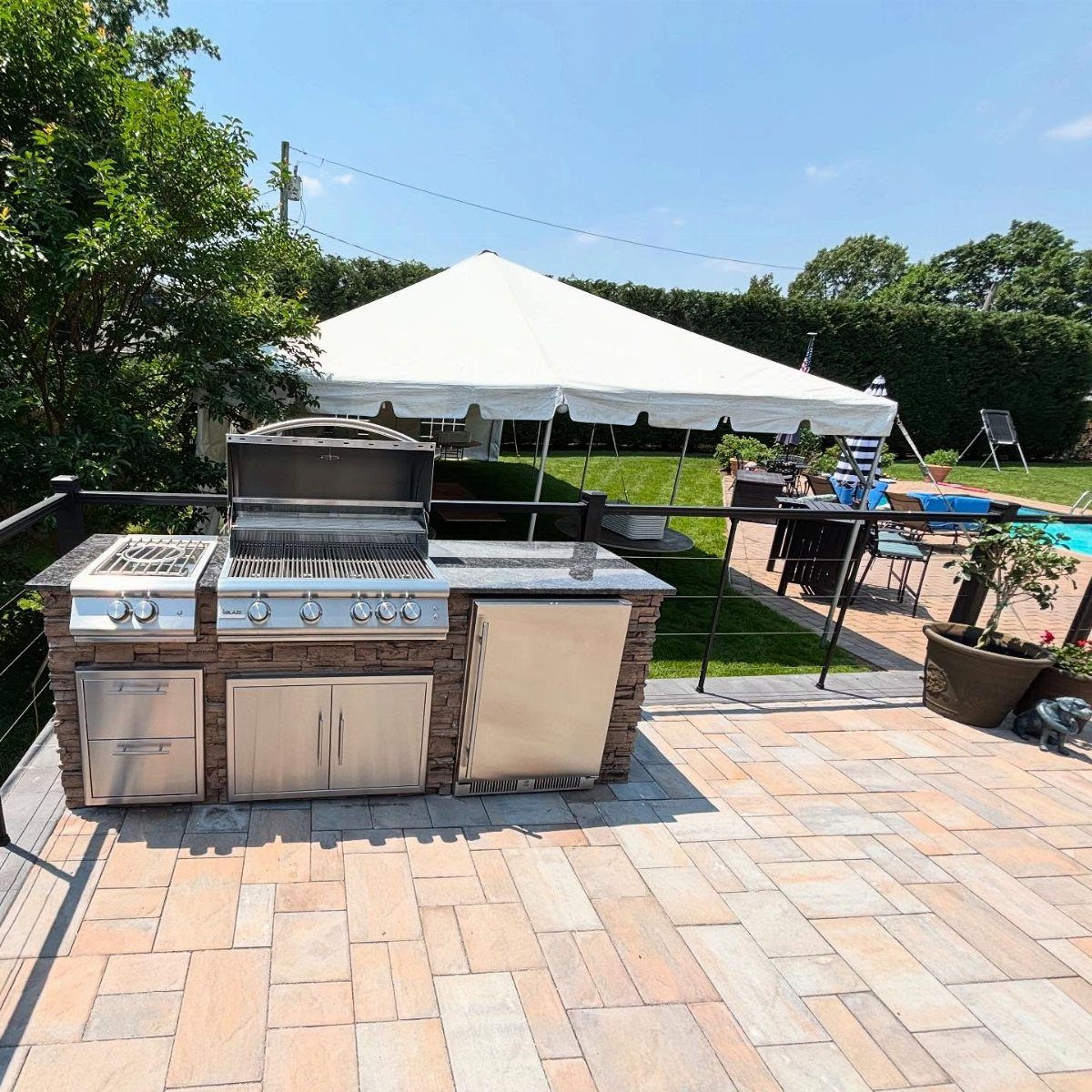
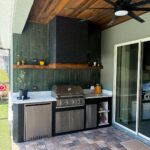
A prefab grill island ships as a finished module, stone siding and stainless steel already assembled, which cuts the build from weeks to a day of placement and utility hookups.
Enclosed storage for tools and a tank is a detail I value more after years of watching grill covers blow away.
The price lands higher than DIY, but you are buying time and a warranty.
I would measure the delivery path carefully; these units are heavy and unforgiving around tight corners. For homeowners who want the built-in look without the masonry skills, this is the compromise I recommend most often.

16" Dual-Fuel Option - Pizzello outdoor pizza oven comes with dual-fuel burners (Propane and wood burners). The dual-burner design lets you switch between the convenience of gas for quick-fix dinners and enjoy the luxurious wood-fired option on long evenings.

【Multi-functional Outdoor Pizza Oven】 Our outdoor oven is much more than a pizza oven, as well as roasting meat, steaks, fish, bread and vegetable dishes and so much more. With the 12" pizza stone, you’ll get that perfect crispy crust on the bottom and around the edges of the pizza.

❤2-in-1 Multi-Fuel Pizza Oven - Enjoy authentic wood-fired taste with the pellet system, or switch effortlessly to BIG HORN 16" gas burner attachments (sold separately) for instant, hassle-free cooking. Reaches up to 1112℉ (600℃), preheats in just 15 minutes to 300℃, and cooks stone-baked pizza in 60–90 seconds (depending on size)
6. Cinder Block Grill Station
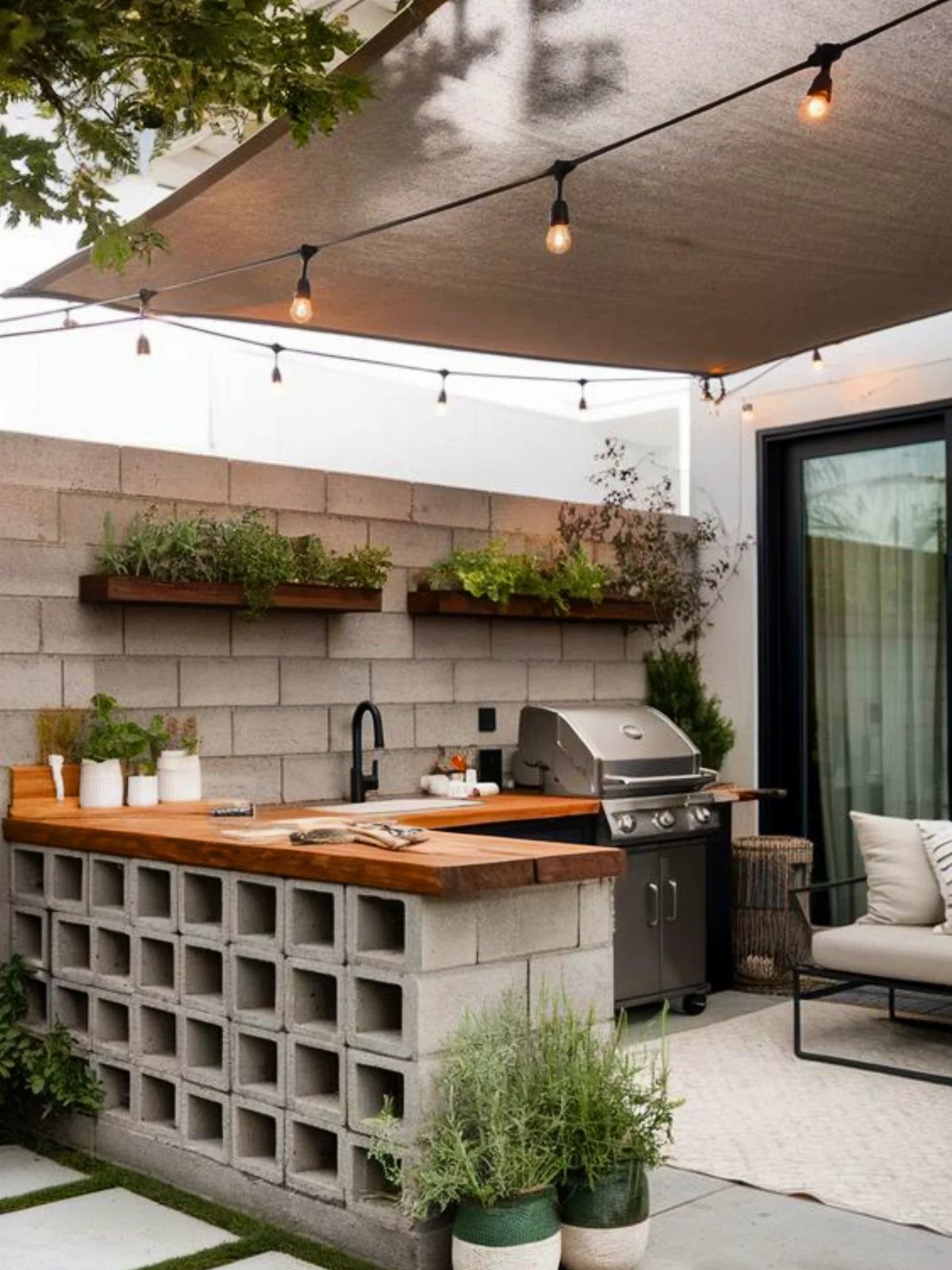
Cinder blocks and a wooden countertop make this grill station the cheapest permanent option that still holds a sink and hanging planters.
The block construction means no cutting or fastening masonry; you stack, level, and fill cores with rebar and concrete for stability.
I have seen this built in a single day with minimal material cost, not counting the grill or sink.
The wooden top needs to be a hardwood like ipe or teak, or at minimum pressure-treated 4x4s sealed on all sides, or it will cup and rot within 2 seasons.
The shade sail overhead is smart; cinder block heats in direct sun and stays hot. For a tight budget and a level slab of concrete already in place, this is the fastest path to something that looks intentional.

The entire built in gas grill is made of 304 stainless steel, with a main body thickness of over 2mm. The elaborately polished corners exude an air of high-end quality.

[Dual Fuel Ready] This 6-burner built in grill head operates on liquid propane (LPG) and features a natural gas convertible design. Easily adapt your fuel supply to match your outdoor kitchen setup using a conversion kit (sold separately)

Mobile Prep Space by Your Grill: A 304 stainless steel top adds workspace beside the grill, while the rolling cabinet keeps prep and serving supplies close at hand; a practical outdoor kitchen cabinet setup for everyday grilling
7. Grill Station with Sink
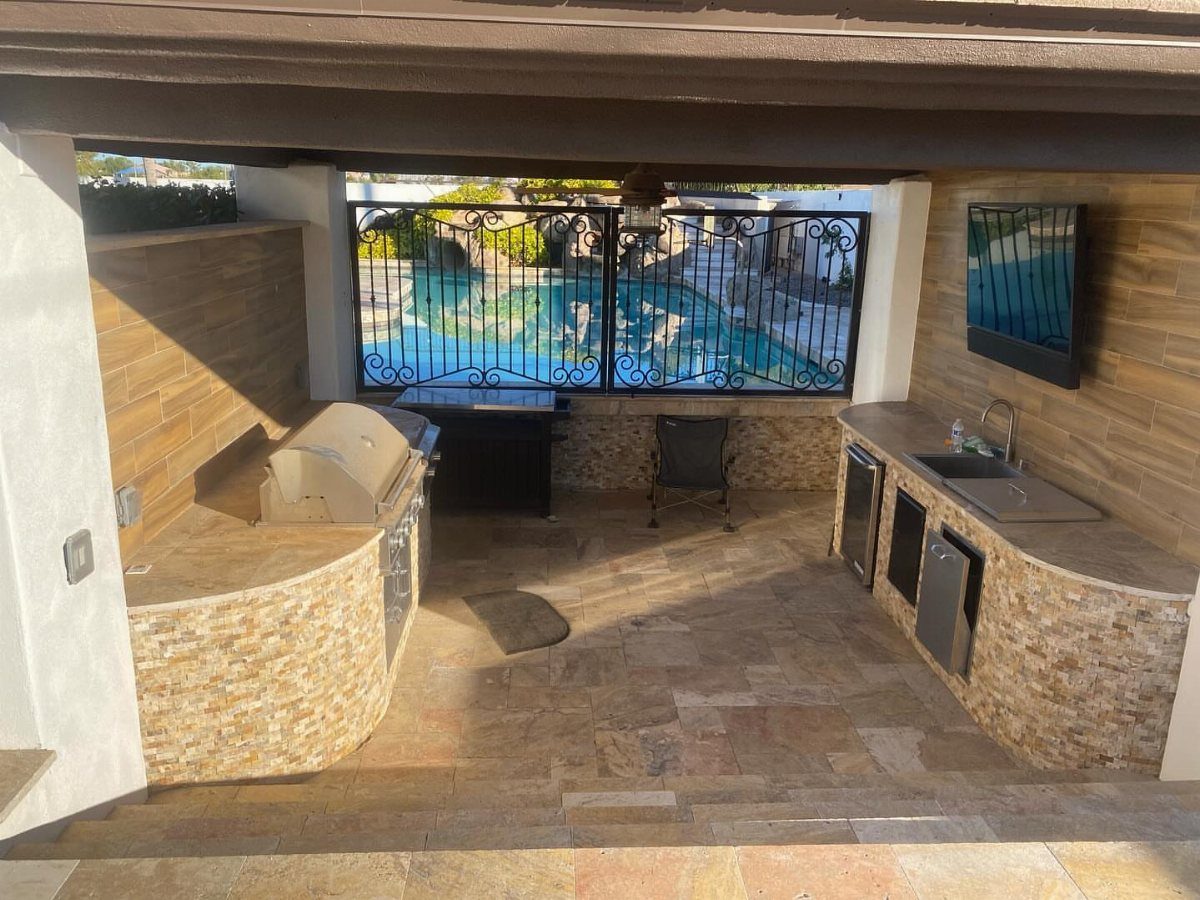
Running water at the grill changes how you cook outside. Rinsing seafood, washing hands between raw meat and vegetables, or filling a pot for corn becomes normal instead of a trip indoors.
Plumbing is the barrier. A cold-water line and a drain to greywater or a dry well are minimum; a small electric heater adds real comfort for not much more.
I would place the sink on the side opposite the grill’s heat, and choose a deep basin in stainless or composite that handles grease.
Stone counters around it give the installed look but cost far less than a full outdoor kitchen build.

Easy to install: Screw swivel casters, caster wheels with brake, set with nuts and wrenches, the upper wave plate is an octagonal wave disc, easy to install. Stem Casters, Casters with No Noise Set of 4 Caster.

[Release your hands and let your grill move! 】We have developed a Kamado Joe Junior Rolling Cart, which is not only designed to raise your Junior grill to a comfortable cooking height, but also easy to move. With it, you no longer need a base with handle, while freeing your hands. You can barbecue as you like.

[Universal Fit: 3/8"-16 x 1"] Standard US 3/8"-16 UNC threaded stem (Diameter 3/8", Length 1"). Perfect replacement for most wire shelving, workbenches, and utility carts. Please measure your stem size before ordering to ensure a 100% fit.
8. Grill Station with Bar
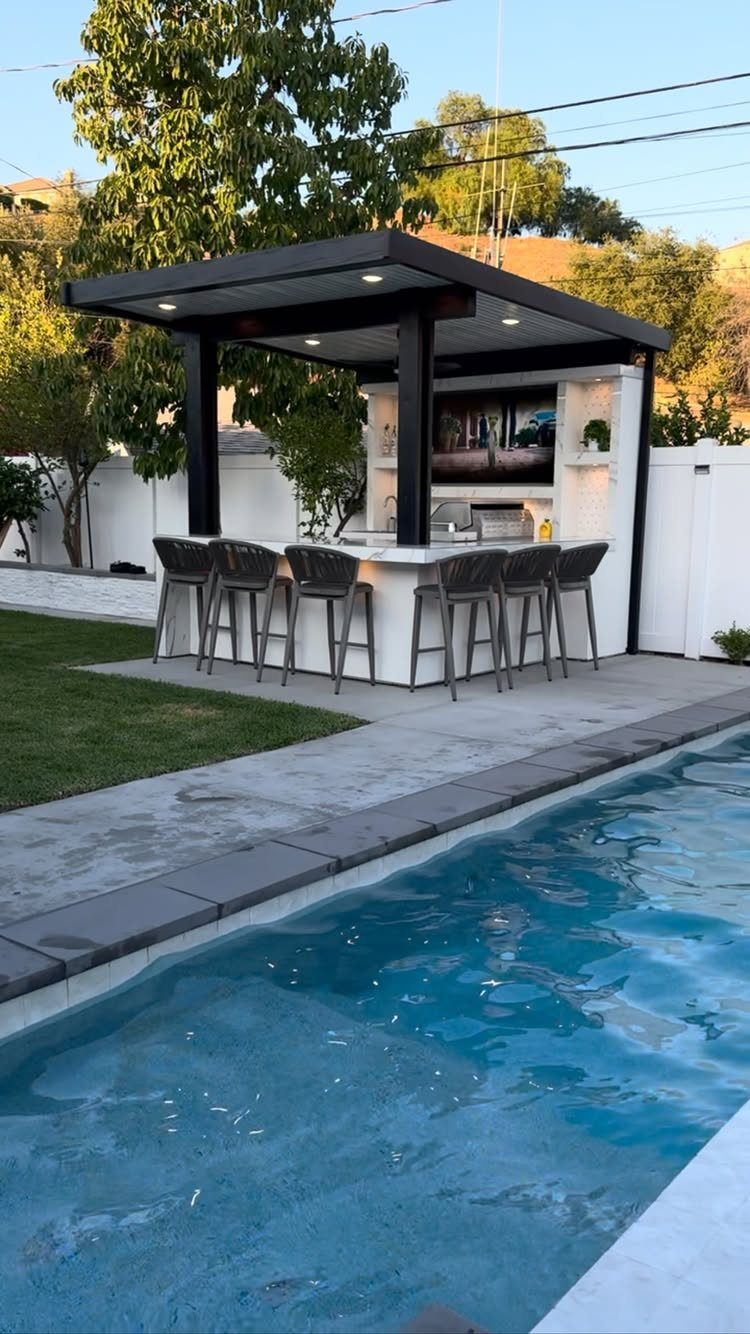
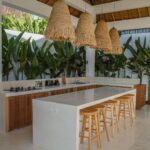
Bar seating at the grill keeps the cook in the conversation instead of facing away from guests. The white counter and grey stools here sit under a black pergola that reads as a defined room without walls.
Counter height is easy to get wrong. Standard standing prep height leaves bar stools with barely any clearance below the counter to the seat, so plan the pair together or the knees won’t fit.
I would build the bar surface deep enough for plates and elbows, and run the overhang far enough that knees fit.
The poolside placement works because the fence blocks wind and splashing; in open yards, I orient the bar back to the house for the same shelter.

【Outdoor Dining Cart】DNKMOR big storage cabinet outdoor dinning cart is made of durable stainless steel. Perfect for placing a pizza oven and accessories, portable grill or griddle; There are 650 S.Q. IN. area ample workplace for outdoor cooking, kitchen or serving.

Heavy-Duty Stainless Steel Construction: Built with heavy-gauge square tube legs and a stainless steel tabletop, this outdoor grill cart delivers rock-solid stability and effortless cleanup—ideal for any outdoor kitchen island or BBQ prep setup

Meticulously crafted from high-quality Stainless Steel and our newly designed Reveal adds a touch of modern elegance to your outdoor space while ensuring exceptional durability
9. Wood Top Charcoal Grill Table
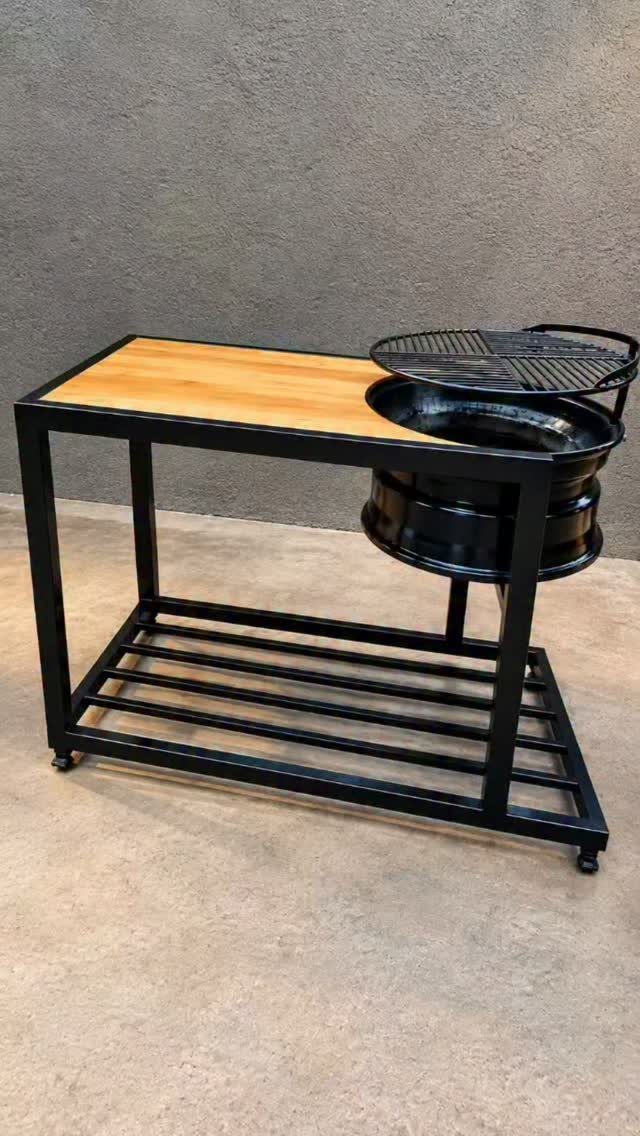
A wood-top charcoal table gives the direct-heat cooking that gas cannot match, with a surface that works for prep when the grill is cold.
The circular opening here centers the fire, and the slatted shelf below stores bags of lump charcoal within reach.
Metal frame construction keeps the weight movable; a couple of people can shift this where the party is.
I would choose a thick hardwood top, oiled regularly, or accept that a thinner board will scorch and cup. The circular grill grate needs to sit flush with the wood or just below it to avoid catching sleeves.
Ash management is the detail most DIY builds skip: a removable pan or a simple hole to a bucket below saves brushing ash across the finished surface every time you cook.
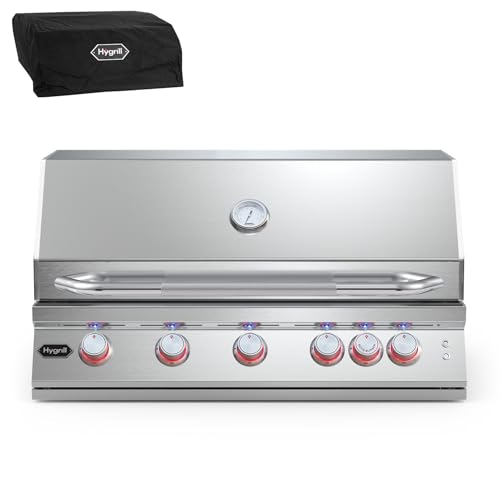
【Professional Grade】Made of 304 stainless steel construction in the body, burners, and grates, ensuring they can resist rust and warping at high temperatures.
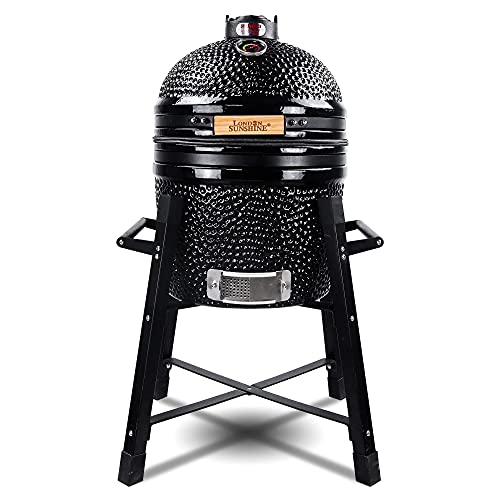
INGENIOUS ENGINEERING – 1” thick and strong ceramic wall, Japanese dome shape design to maximize air flow while minimizing fuel input - 15” Ceramic Body

1. XL Big Green Egg + Blackstone Griddle Station: Designed for serious outdoor cooking, this grill cart fits one XL Big Green Egg and one 28" or 36" Blackstone griddle (not simultaneously). A complete outdoor kitchen prep table built for grilling, smoking, and backyard entertaining.
10. DIY Oil Drum Grill Station
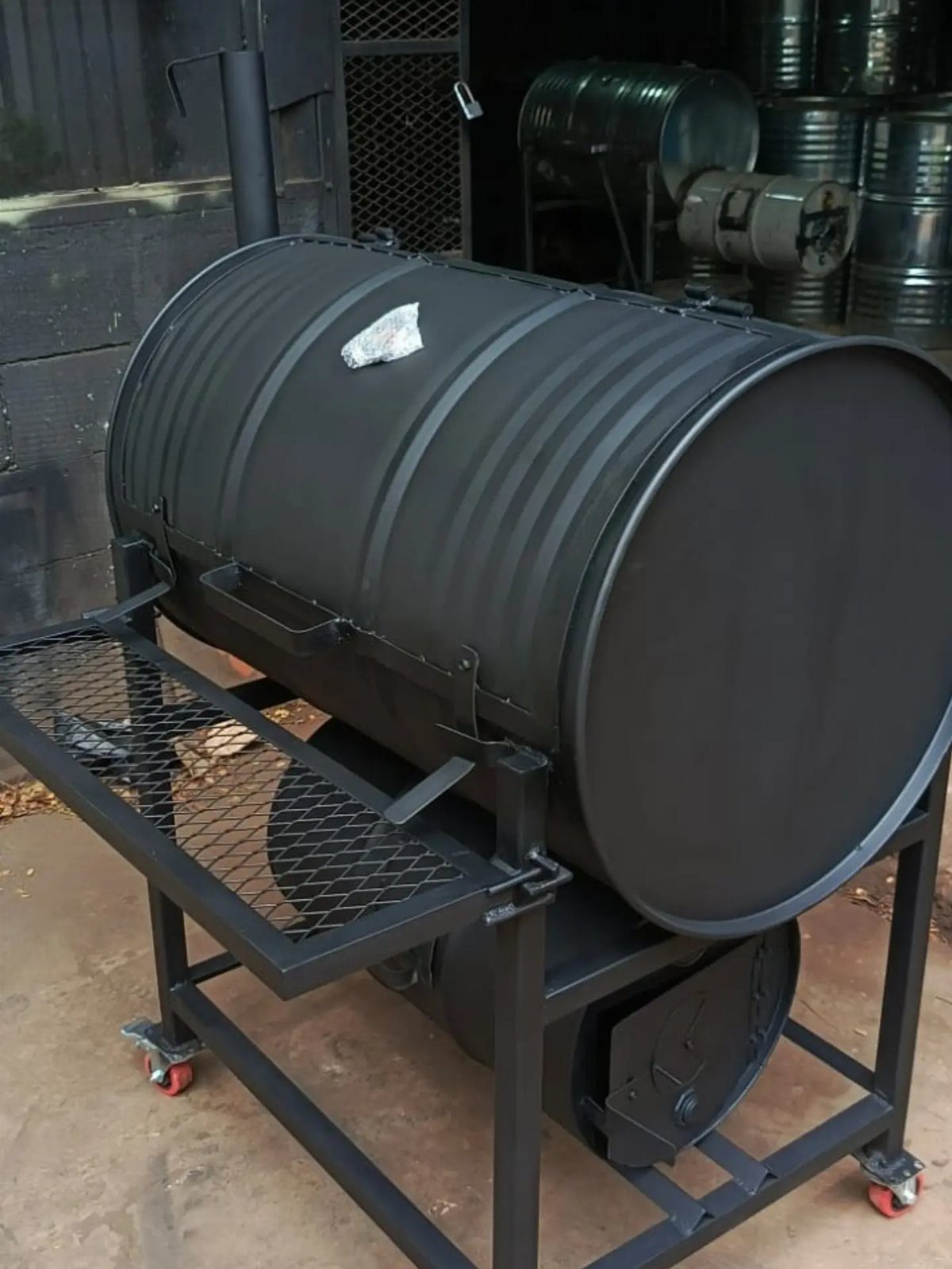
A 55-gallon drum cut and hinged makes a charcoal grill with more cooking area than most store-bought kettles, and the rolling frame lets one person move it.
The mesh side shelf here is simple expanded steel, enough for a platter and tongs.
Finding a food-safe drum is the critical step. I would only use one that held food-grade oil or was new; residue from motor oil or chemicals will not burn clean.
Cut the drum lengthwise for a barrel-style grill with a hinged lid, or across the top for a kettle-style opening. High-heat paint on the exterior keeps rust back for a season or two; the interior just seasons with use.
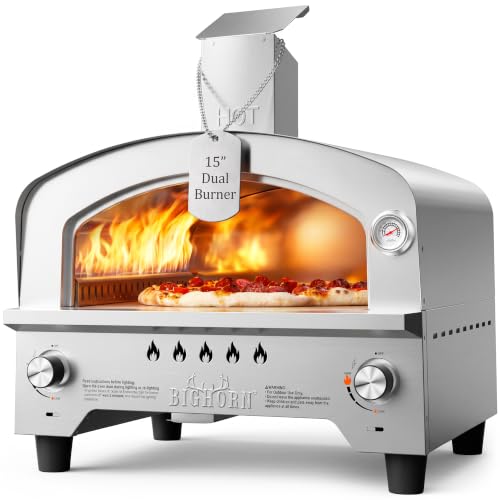
【Dual Side Burner】Powered by dual-side burners (23,000 BTU), this gas pizza oven heats up to 750°F in 10 minutes, reaching up to 1070°F at maximum. The arc-shaped chamber ensures even heat circulation, allowing you to cook perfect pizzas in 60 seconds—no rotation needed

Cover Size : The size of the pizza oven cover is 22x15x11 inches, the outdoor pizza oven grill cover for aidpiza wood pellet pizza oven Please make sure the size you want before purchasing.

Wide Compatibility For Outdoor Cooking: Measures 24.4"W x 38.3"L x 30.9"H and works with selected Ninja Woodfire, Cuisinart, Ooni, Bertello, Blackstone griddles and many countertop pizza ovens
Building Materials and Tools
Wood, concrete, and metal each behave differently outdoors, and the choice shapes what tools you need and how long the build takes.
A circular saw handles most cuts; a drill drives screws or bolts for joinery. I would not skip the sander, even on rustic builds, because splinters near food are a liability no finish fully covers once the grain raises.
Concrete and cinder block need almost no cutting, but leveling is critical.
A drill with masonry bits sets anchors; a level longer than your longest wall run saves rework. Metal framing asks for a grinder or cut-off wheel, plus clamps to hold pieces square before welding or bolting.
Every build benefits from a tape measure used twice and a square checked against itself. Dust masks and eye protection matter more with reclaimed wood, where nail fragments and old finish dust are common.
Skill Levels for Projects
The pallet grill station and cinder block stack are where I send first-time builders.
Pallet work rewards basic saw and drill skills, and the rustic finish hides the learning curve. Cinder block construction is closer to stacking than carpentry; the skill is in leveling, not cutting.
Grill carts and wood-top charcoal tables sit at intermediate level. Metal frames need square corners and accurate drilling, and wood tops that stay flat require understanding of expansion, sealing, and hardware choice.
Built-in stations, BBQ islands with pizza ovens, and any sink with plumbing cross into advanced territory. Gas lines, drain routing, and structural load for masonry or stone belong to licensed trades in most jurisdictions.
I would handle the carpentry myself and hire out utilities every time; the permit and inspection process protects resale and insurance coverage, not just safety.
Prefab islands split the difference: placement and hookup are moderate skill, but the heavy module demands help, not solo effort.
Cost Considerations
The cinder block station runs similarly lean; blocks, a bag of concrete for filling cores, and a hardwood or pressure-treated top keep the total low.
Grill carts and simple wood tables spread across a middle band. Metal stock, casters, and quality hardwood for a top that survives weather add up, but still stay below most prefab options.
Built-in masonry, BBQ islands with pizza ovens, and plumbed sinks with stone counters climb fast.
The appliances alone run to 4 figures, and stone, tile, or stucco facing multiplies it. Prefab islands command a premium for factory assembly and delivery, though they compress the timeline from weeks to a day.
I would decide the budget by how many seasons I plan to stay in the home.
A low-cost build makes sense for renters or anyone testing the layout. Permanent construction pays off only when the location and the cooking habit are both settled.