
A coffee bar table can run from a tray you already own to a fold-down cabinet that swallows the whole setup, and the gap between them is whether you need the station to move or stay put.
Renters who need to take it all with them and owners who finally found their wall each get a different answer from this list.
The piano hinge on that fold-down front is the kind of detail that separates a clean wall from a sagging door once weight and daily use start to tell.
1. Bookshelf Coffee Bar
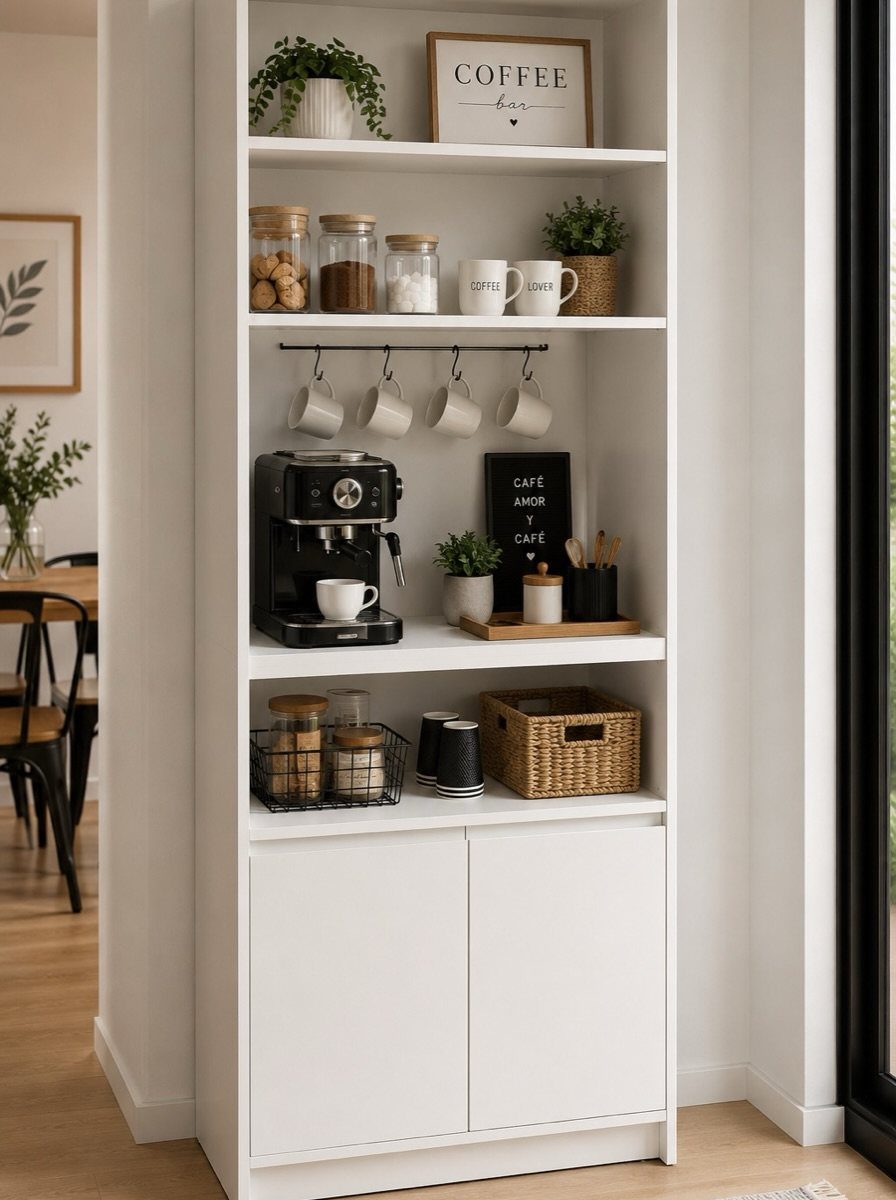
A bookshelf coffee bar works because you probably own the shelf already and the rest is arrangement. Stand the unit against a kitchen wall or in a dining corner where morning traffic is light.
The open cubes let you set the espresso machine at counter height, store beans and filters in baskets below, and line mugs on a top shelf where they read as display.
I like this for renters because nothing mounts to the wall and the whole station moves with you. The risk is clutter: limit yourself to one color of storage container and hang the mugs instead of stacking them.

[Stylish Option Display]: Bar cabinets for home has multiple shelves, coffe bar and storage. The top of the coffee cabinet is the perfect place to place coffee machines and cups. Coffee bar table is easy to open and close to maximize your space

【3-Tier Matcha Organizer】This matcha station features a smart 3-tier design, offering dedicated spaces for your matcha powder tins, whisk & spoons, and cups on the top, keeping your tea ceremony clutter-free and aesthetically pleasing.

Stylish Design Kitchen Countertop Organizer:Coffee organizer station is made of high-quality painted solid paulownia wood with white storage trays on gold metal frame;2-tier shelf organizer fits any coffee bar decor,kitchen counter organizer needs
2. Closet Coffee Bar
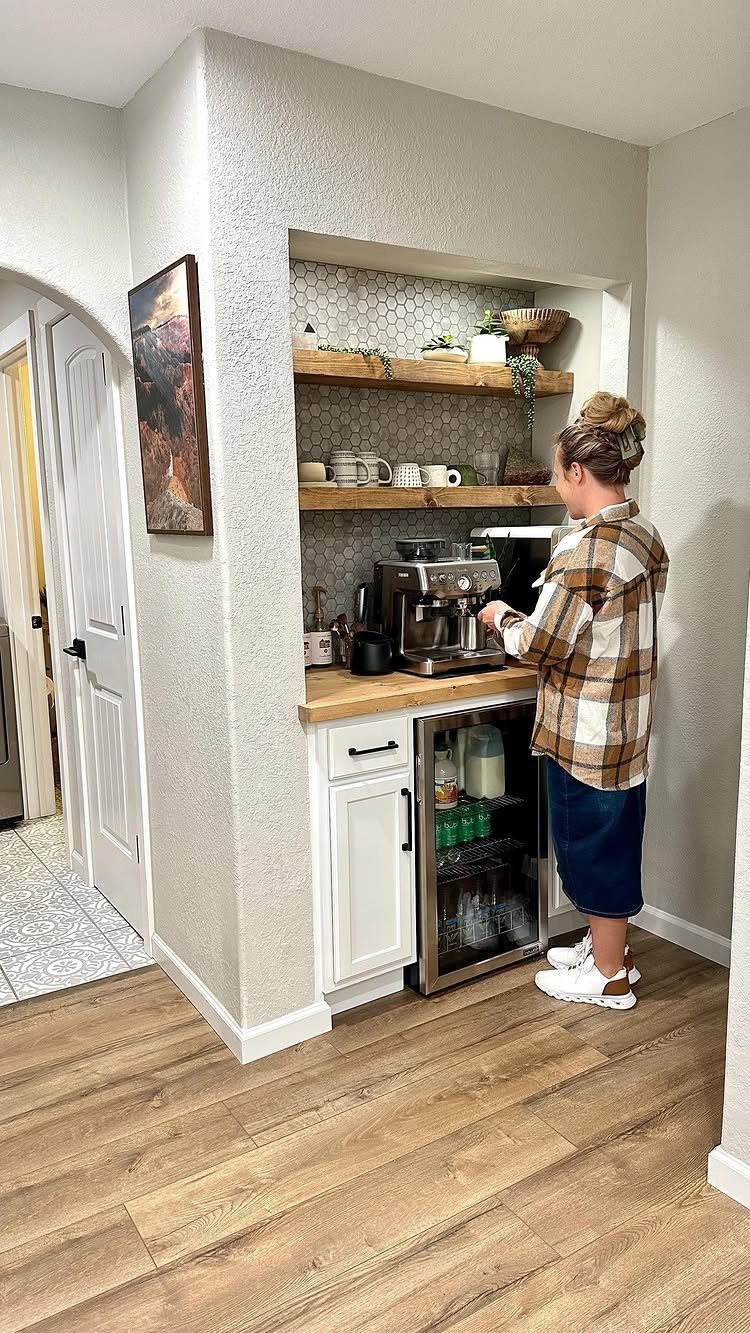
Recessing a coffee station into a closet gains you countertop depth without stealing floor space from the room it opens into.
This works in a hallway linen closet, a bedroom wardrobe you can spare, or that shallow nook beside a fireplace that never held anything right. Wire the interior outlet before you start; extension cords through door jambs fail fast.
I would add a small refrigerator for milk if the closet is deep enough, but skip it in a shallow closet where the door won’t close over the machine.
The finished look depends on matching the surround trim to the room’s baseboards so the bar reads as built-in, not inserted.

💡 Brightly LED Light -- The LED under cabinet lighting kit is composed of 2 x12-inch light bars. Each light bar has 33LEDs and 400 lumens, covering a wide range. The color is best for detailed work and kitchen cooking.

【Compact Size, Plenty Capacity】This 3‑tier coffee bar features a 23.63" × 11.82" work surface, offering ample space for your coffee maker and daily brewing essentials. The two‑door cabinet and open shelves keep coffee beans, K‑Cups, milk, sugar, tea bags, and food containers neatly organized and easy to reach. It's a neat, compact station that tucks into small spaces and keeps everything organized for your daily brew.

High-Quality Material Manufacturing:Crafted from durable stainless steel, this storage hook offers superior resistance to rust and enhanced hardness compared to traditional iron hooks. Its robust construction ensures exceptional load-bearing capacity, making it a reliable choice among kitchen cabinet organizers.
3. Floating Shelf Coffee Bar
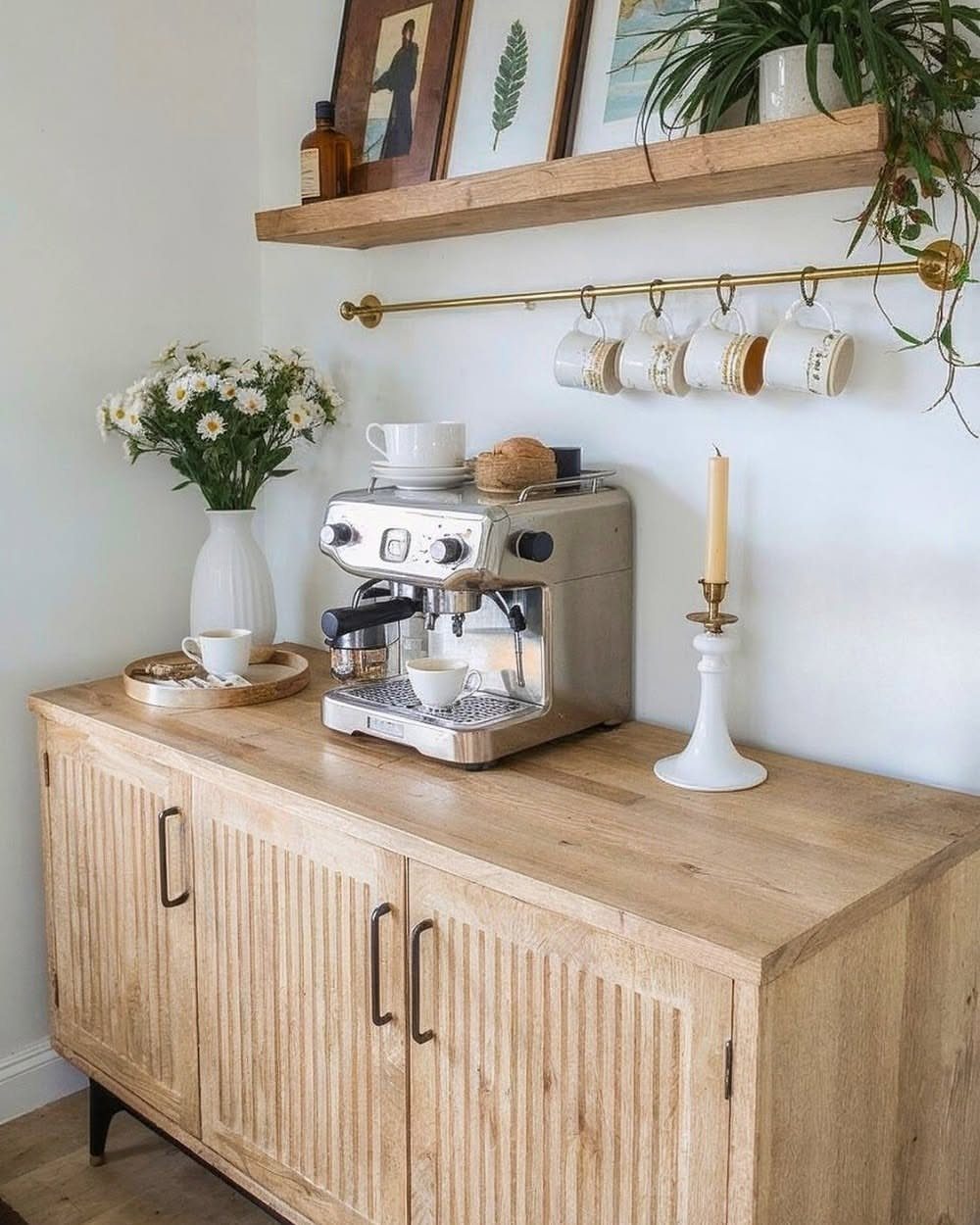
Wall-mounted shelves keep a coffee station off the counter entirely, which matters when your kitchen workspace is barely enough to chop an onion.
I install the floating shelf with enough clearance for a tall carafe and not so high that mugs lift awkwardly.
A brass rail screwed to the shelf front beats hooks in the wall because the rail takes the stress. This setup suits narrow galley kitchens where a cart blocks the route.

Maximize Your Space: 6.7"D x 15.7"W x 1.5"H. 6.7" depth, ideal for books, baskets, toilet paper, or towels. Includes 2 shelves for optimal use of space
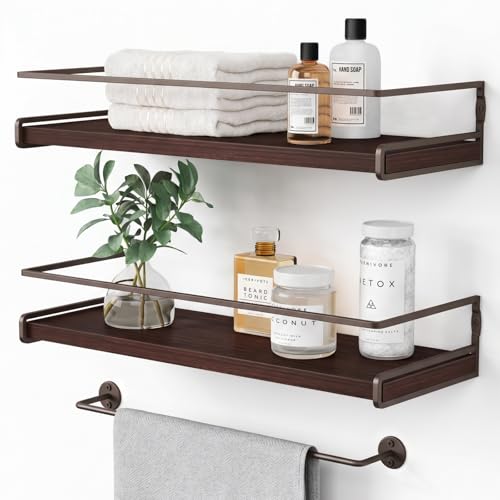
【Premium Material & Protection Design】The floating kitchen shelves are crafted from high-quality painted solid pine wood with a water-resistant finish (Dimensions: 6" D x 15.7" L x 2.6" H). The heavy-duty metal brackets feature protective guard rails to keep items securely in place. These kitchen floating shelves are built to last, supporting up to 20 lbs. on solid drywall or concrete walls.

Organizer and Decor: This coffee mug rack can be use in your coffee nook to hang cups on hooks, placing photos, plants, trophy,decorations, coffee, tea, spice etc. Dimension of 17" L x 6” W x 0.78"H for wood board.
4. Kitchen Hutch Coffee Bar
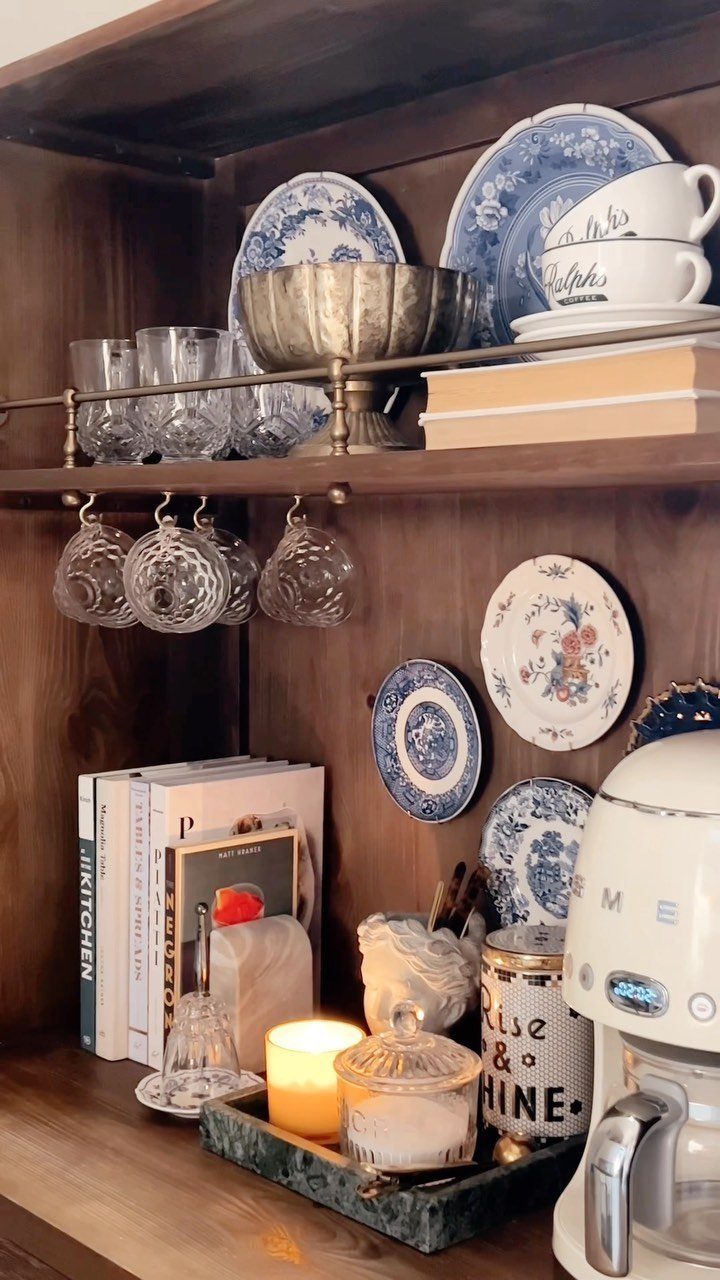
A kitchen hutch gives a coffee bar its own architecture: closed storage below, open display above, and a surface between that acts as counter.
The hutch’s original shelves work for cups and the lower cabinet for bulk supplies, which keeps the daily ritual visible and the backup stock out of sight.
I look for hutches one person can reach across without stepping, narrow enough to feel natural at arm’s length.
This needs a dedicated wall and reads as furniture, not an installation, so the footprint is real. Paint the interior a contrasting color if the wood is dark, or the cups disappear visually.

【Large Capacity Storage】Fatmok bar cabinet with countertop is thoughtfully designed to offer versatile storage solutions. The spacious open countertop, multiple compartments, and a smooth-gliding large drawer provide ample room for kitchen essentials, keeping appliances, pots, and pantry items neatly organized.

LARGE STORAGE SPACE: Knoworld pantry cabinet comes with 8 large compartments, 2 deep drawers to organize small items, 11 wine rack and 2 glass holder to display your favorite bottles. A spacious 55" wide countertop for frequently used appliances. It's the all-in-one kitchen storage cabinet solution.

All-in-One Storage Solution: Conquer kitchen clutter! This versatile large kitchen pantry cabinet features 2 top glass-door cabinet for display, 2 handy DIY pegboard with 12 hooks for utensils,) 4 smooth-glide drawers, and 2 bottom cabinets with adjustable shelves, 2 separate countertops accommodate the simultaneous operation of a microwave and a coffee maker without spatial interference. Effortlessly organize dishes, appliances, pantry staples, snacks, and more.
5. Console Table Coffee Bar
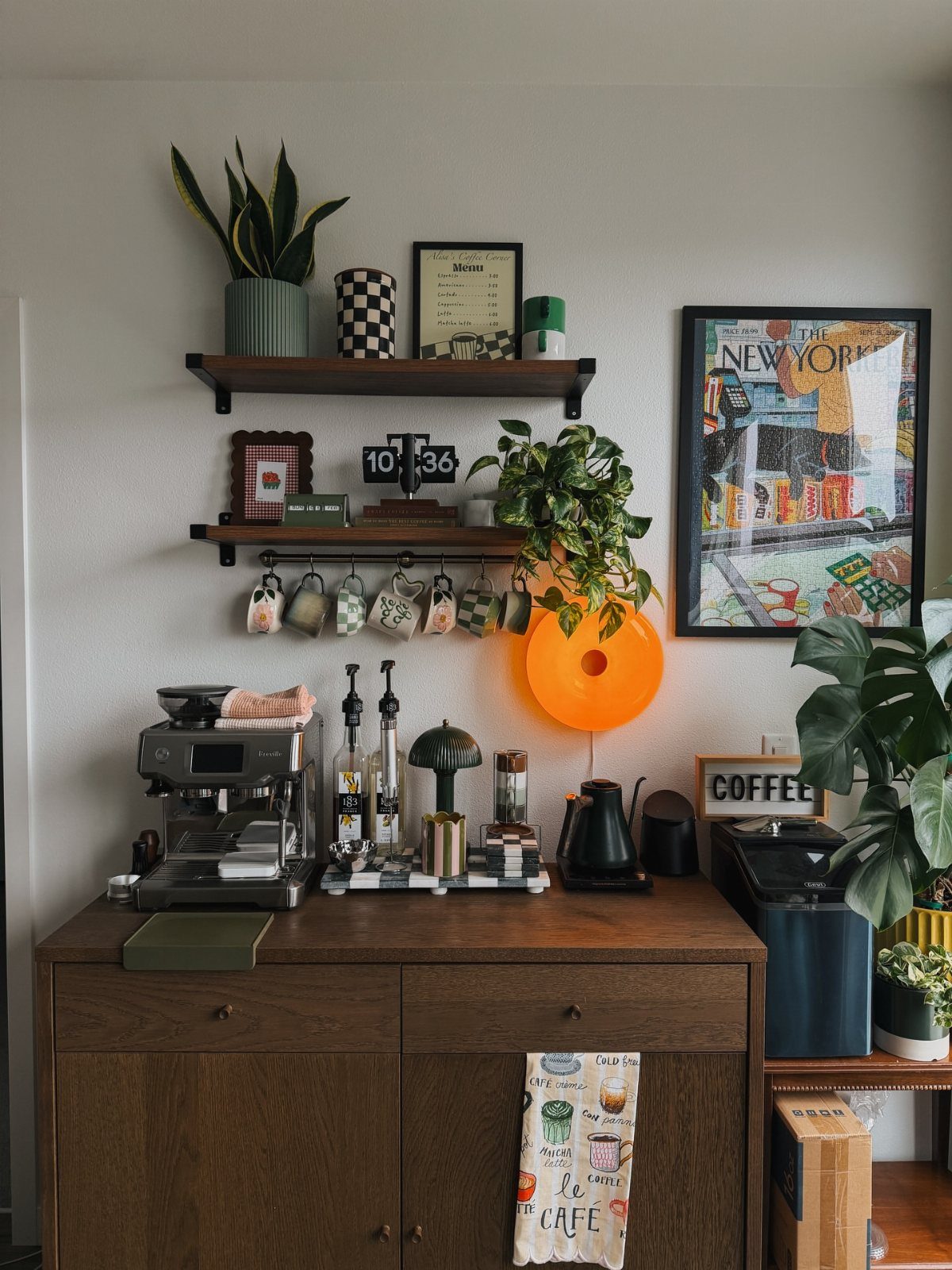
A console table slips a coffee station into a living room or entryway where no kitchen is near, which saves the morning walk for households that spread across floors.
The slim depth fits passages and behind-sofa placements that a hutch would block. Anchor the machine with a nonslip mat; vibration on a narrow table walks the unit toward the edge.
I add floating shelves above because the table surface alone holds barely the essentials. This is the choice when you want coffee accessible to guests without inviting everyone into your kitchen workflow.

【Ample Storage Space】: This microwave stand features 3 diamond mesh baskets, 2 shelves, 4 hooks, and a spacious top surface, offering generous room to organize your microwave, coffee maker, toaster, cookware, pantry items or other essentials, effortlessly decluttering your kitchen.

[Stylish Option Display]: Bar cabinets for home has multiple shelves, coffe bar and storage cabinets. The top of the coffee cabinet is the perfect place to place coffee machines and cups. Coffee bar table have built-in stainless steel invisible magnets, which are easy to open and close to maximize your space

Modern Farmhouse Style: The LIRY Collection combines recessed panels and barn door design for a refined touch. Create a cohesive look with the matching furniture
6. Stand-alone Coffee Bar Cabinet
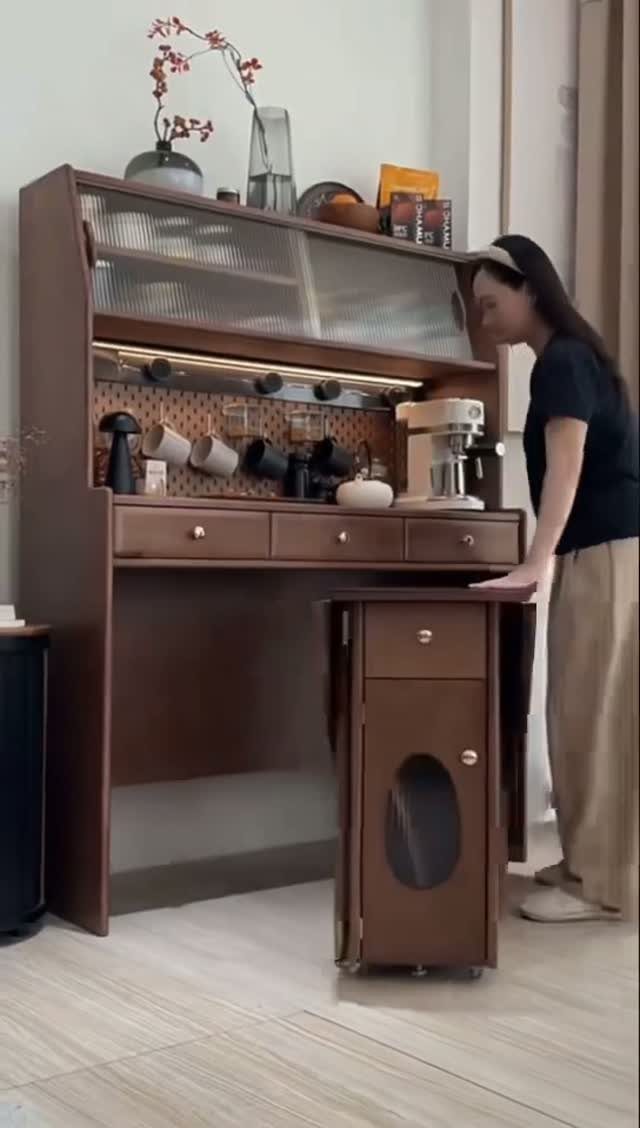
A bureau with drawers converts to coffee storage more naturally than most furniture because the shallow drawers were built for silverware and linens, which scale to filters, pods, and small tools.
The pull-out cart extends the work surface for morning prep, then stows to restore the traffic path. I would reserve the top drawer for daily items and the lower ones for backup stock, since bending slows you down before caffeine.
The hutch top is display space; keep it spare or it looms. This option costs more than a console table and earns its place in a home where coffee is ritual, not routine.

🌿 Natural Bamboo Sturdy Material: Crafted from premium bamboo, this 2-tier organizer is highly durable, water-resistant, and naturally sturdy. The renewable bamboo material offers a warm, rustic aesthetic while supporting long-term use without warping or degradation

Space-Saving yet 2 Large Capacity - Standing at 13.6"D x 6.7"W x 14.2"H, this coffee station organizer take up little countertop space while serving as a spacious organizational rack with 2 storage tiers (Top shelf: 13.6 x 5.7', Bottom shelf: 13.6 x 7.6'). It can hold coffee syrups, pods, coffee beans, sugar, stirrers, cups or other coffee and tea essentials, keeping everything easily within arm's reach.

The wooden plaque measures 5.9 ×5.9 x 0.32inches.The base is retro wooden stand, and the plaque is made of natural wood, which has no odor and is not easy to deform and fade
7. Fold-down Coffee Bar Cabinet
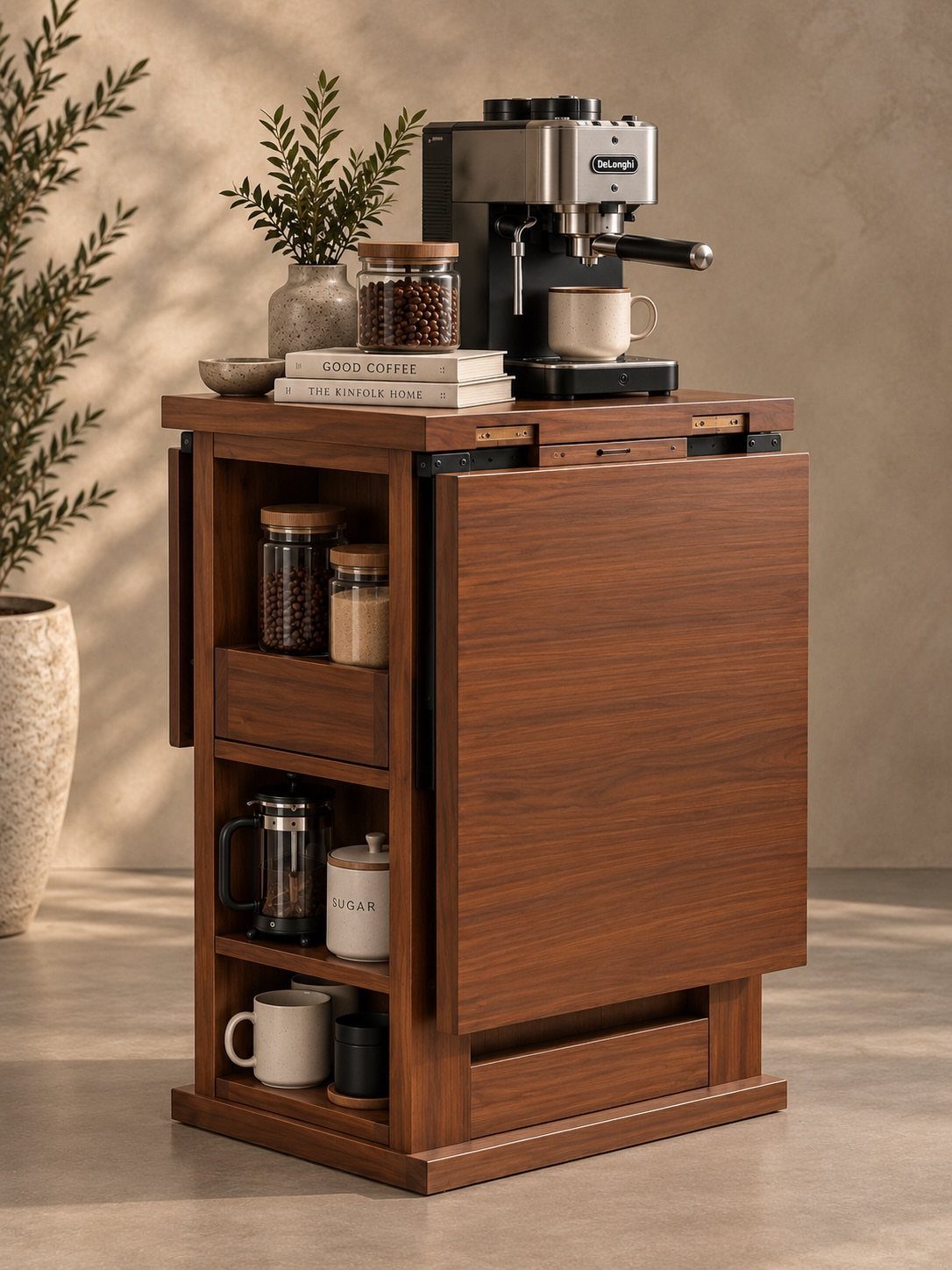
A fold-down front turns a wall cabinet into a serving surface that disappears after the last cup. The drop leaf needs a piano hinge rated for daily use; standard butt hinges sag within months.
I would mount this at standing height, not bar height, so the closed face reads as ordinary cabinetry. The interior shelves suit tall canisters and the machine, while the dropped front holds only what you need for one round.
This trades permanent counter space for a cleaner wall, which pays off in studios or guest rooms where a full station would dominate.
Stash the mugs on a rail mounted to the wall inside the cabinet so they stay put when the door folds down.

Belong To Your kitchen: The kitchen cabinet features 2 large door cabinets and 2 full extension drawers great for storing coffee beans, seasoner, spare kitchen paper, or some sundries. Meanwhile, your coffee maker, toaster, can sit on our wide tabletop

【MODERN FARMHOUSE STYLE】Clean white finish and simple lines bring warm farmhouse charm to your space, blending with contemporary and casual interiors. This farmhouse coffee bar cabinet adds practical storage with a welcoming look for your home.

【Super Bright】 --16W super bright (960 lumens) warm white 3000K under cabinet lights. Nice light color. No LED dots. No light glare.
8. Countertop Coffee Station
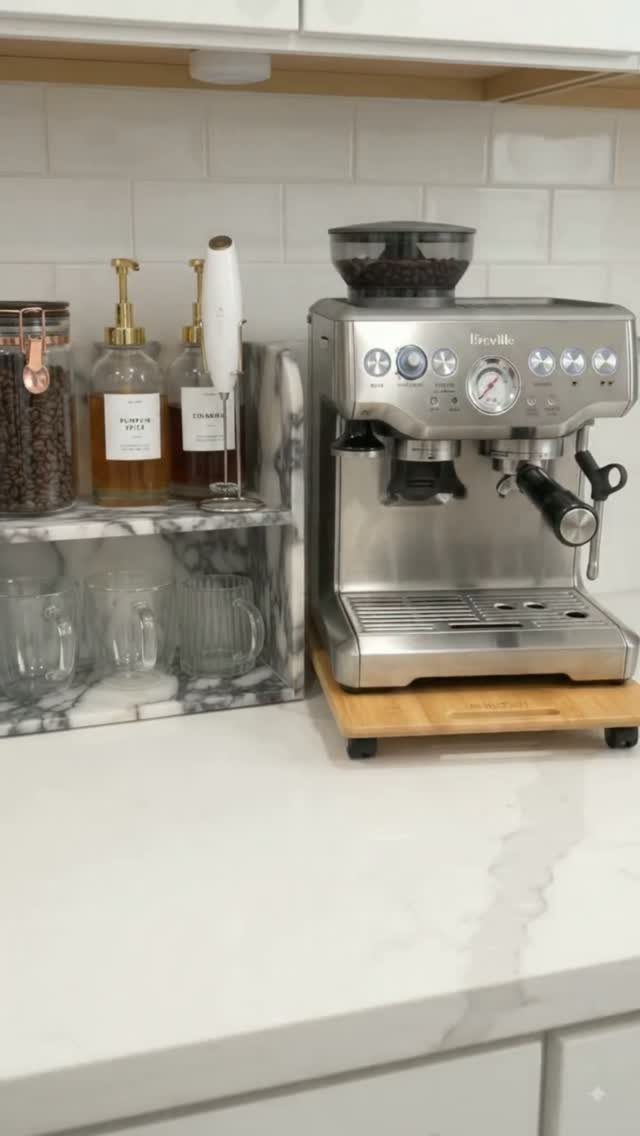
A tray on the counter corrals the machine, grinder, and daily supplies into one moveable zone. The tray’s edges contain drips and grounds that otherwise migrate across the surface; wood wears better than metal here, since hot cups scar lacquer.
I keep the tray shallow enough to slide under wall cabinets when not in use, though most owners leave it out.
A tray and a few canisters turn any spare counter into a coffee station without installing anything permanent. This suits renters and anyone whose kitchen layout already works but lacks discipline.

[Widely Used]- This industrial design floating shelf is constructed of heavy duty wrought iron pipe and chunky P2 particle boards, which will be an attractive decoration for modern and retro home style. Suitable for living room, bathroom, bedroom, kitchen, coffee bar, wine bar, restroom, garage, laundry room and farmhouse
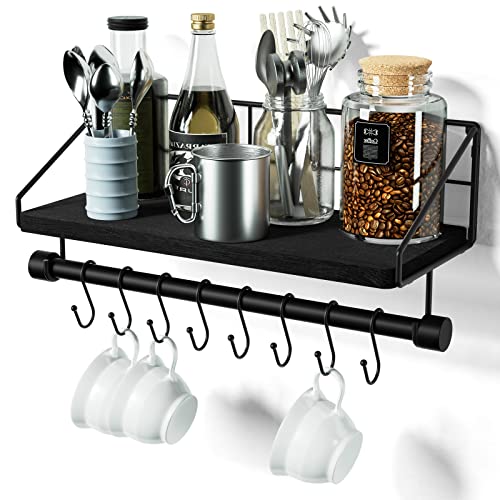
Wood Shelf for Wall: This floating shelf comes with 1 towel rack and 8 S-shaped removable hooks is very for every scene in the home, such like bathroom shelf, kitchen shelf, storage shelf and etc
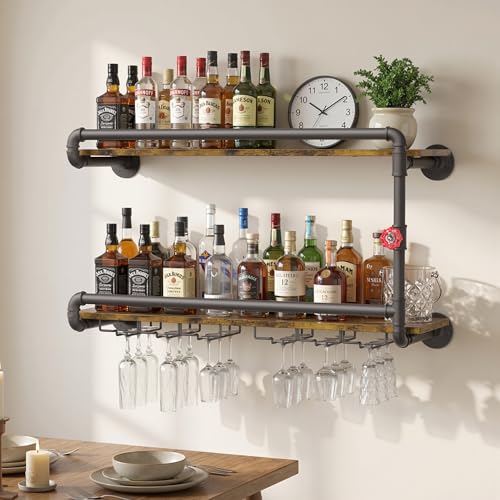
【CREATE A WARM HOME BAR & COFFEE BAR SPACE】 Turn an empty wall into a cozy home bar, coffee station, or farmhouse coffee bar decor area with this rustic floating wine rack. Designed for displaying liquor bottles, whiskey bottles, wine glasses, coffee mugs, espresso accessories, cocktail tools, candles, plants, and decorative accents, this wall mounted bar shelf helps create a warm entertaining atmosphere while adding stylish wall organization to kitchens, dining rooms, apartments, and coffee corners.
9. Narrow Coffee Bar Table
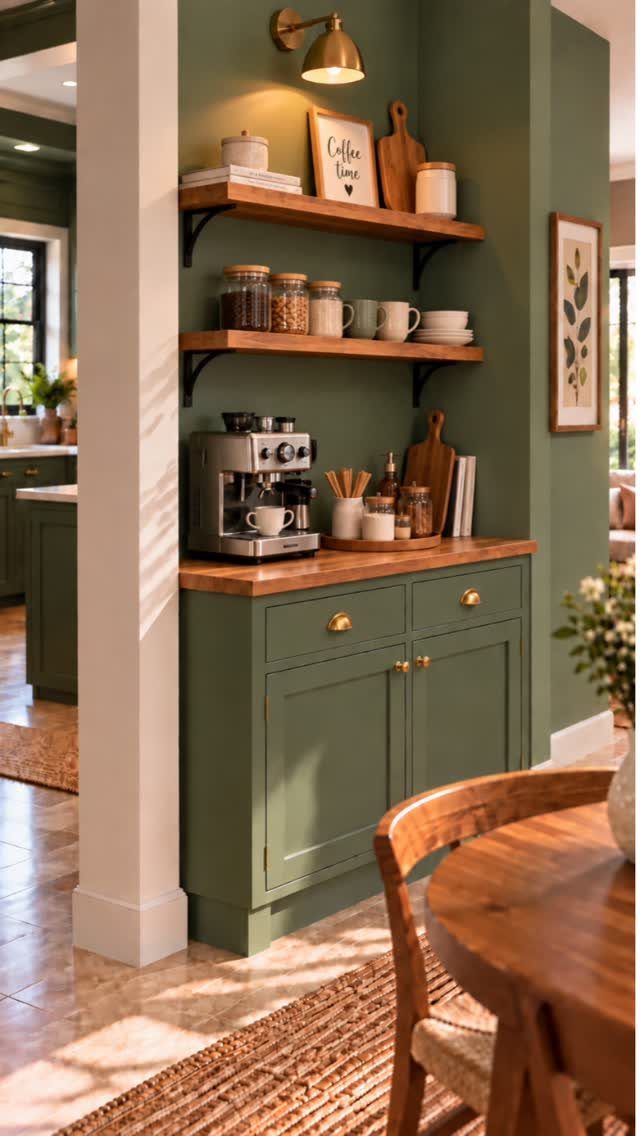
A narrow table or built-in run against an unused wall gains a coffee station without subtracting from the room’s open path.
I would keep the surface shallow; once it gets too deep, the unit reads as a room divider and blocks flow.
The wooden counter warms against painted cabinets, a combination that costs less than stone and forgives water rings. This is the choice for long kitchens or dining areas where the only free wall runs between doorways.

【LED LIGHTS & CHARGING STATION】The kitchen pantry storage cabinet is equipped with 2 power outlets, 1 USB charging port and 1 Type C for your microwave stand, coffee makers, toaster or bread maker to get charged. You can control and select different modes and colours of LED light to decorate the room via an APP on your phone. Control 20 lighting colors & 22 dynamic modes via a user-friendly app.
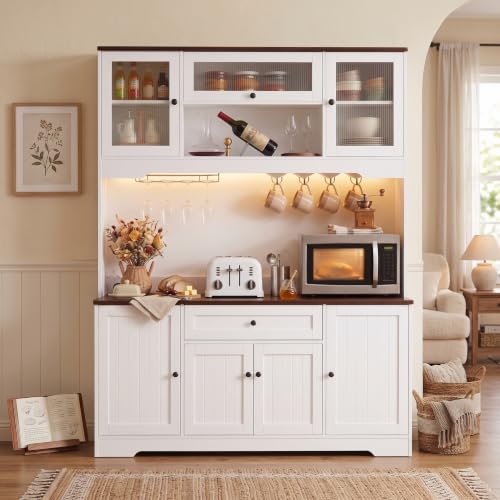
More pantry space, less kitchen clutter: Bring snacks, dry goods and dinnerware together in one spacious kitchen pantry cabinet. Upper cupboards, lower cabinets and a central drawer give everyday essentials a dedicated home, helping free up your main kitchen counters.

K-Cup Coffee Holder Space: On the left side coffee bar cabinet, 2 vertical columns of slots are designed intended for K-Cups, you can move them left or right to suit your preferences. They are neatly arranged and visible, saving counter space while seamlessly matching the daily coffee routines of households
Creating a Coffee Bar Setup
A bookshelf, console table, or hutch needs no installation beyond arranging what sits on it, which keeps the project movable and your security deposit safe.
Wall-mounted options like floating shelves or a fold-down cabinet do require drilling and anchors, but they free floor space in return.
The real decision is between permanence and flexibility.
If you rent or rearrange often, a cart, console, or tray on the counter lets the station follow your life. If you own and the wall is yours, built-in storage keeps the daily clutter invisible.
I would place any mobile setup where morning light is good and the path to the sink stays short; carrying a carafe across a living room ends with spills.

Modern Farmhouse Style: The LIRY Collection combines recessed panels and barn door design for a refined touch. Create a cohesive look with the matching furniture

[Smart Storage Capacity]: Maximize your kitchen with coffee bar cabinet with storage that features 2 drawers, 6 hooks, a large 13.78" deep countertop, and mesh doors for open visibility. From small buffet cabinet organization to a fully functional coffee station table

Bring in Farmhouse Flair: This buffet cabinet comes from our Liry Collection—a line of farmhouse-inspired storage furniture boasting elegant tall legs, versatile storage, and rustic charm to transform any room into an inviting, organized retreat
Coffee Bar Essentials
A coffee bar needs 3 things: a stable surface, power within reach, and enough room to work without dodging cords. Everything else follows from how you brew.
The machine and grinder are fixed costs. After that, storage matters more than display.
Canisters or boxes keep beans, filters, and sweeteners findable; open piles become chaos by Wednesday. Mugs, spoons, and a towel for spills complete the daily kit.
Extras scale to your ritual. A frothing pitcher, tamper, and knock box matter for espresso; pour-over drinkers need a kettle and scale instead.
Toppings and syrups are nice if you use them, dead weight if you don’t. A small garbage bin actually helps, though most people skip it and regret the walk to the kitchen trash.
Height Considerations for Coffee Bars
Standard counter height runs 36 inches, and that is where most coffee bars land.
The better test is your own body: you should stand at the machine with shoulders level and arms working below them, not hunched forward or reaching up. A station that fights your posture gets ignored by the second week.
Adjust when the user differs from average. A tall household might add an inch or two under a console or narrow table; shorter users need the surface lower than standard or the carafe becomes unwieldy.
Wall-mounted shelves and fold-down cabinets have more freedom here, since height is set at install rather than inherited from the furniture.
Some espresso machines sit tall on their bases, and a grinder beside them adds height you did not plan for. Test the reach before you mount anything permanent.
Frequently Asked Questions
What do you call a coffee bar furniture?
The common names depend on what you start with. A bookshelf, console table, kitchen hutch, bureau with drawers, or wall-mounted cabinet with a fold-down front each becomes a coffee bar with the right arrangement.
A cart, a slim console, or a wall-mounted ledge all serve the same purpose if they hold your gear at working height.
Can I build a home coffee bar on a budget?
Yes. Start with furniture you already own, such as a bookshelf with an open shelf, an underused closet, or a console table that is mostly decorative.
How tall should a home coffee bar be?
Thirty-six inches is the usual counter height, though I tell people to measure against their own elbows instead of trusting that number.
Adjust up or down for tall or short users, and test the reach before mounting anything permanent since espresso machines and grinders add height you may not have planned for.