
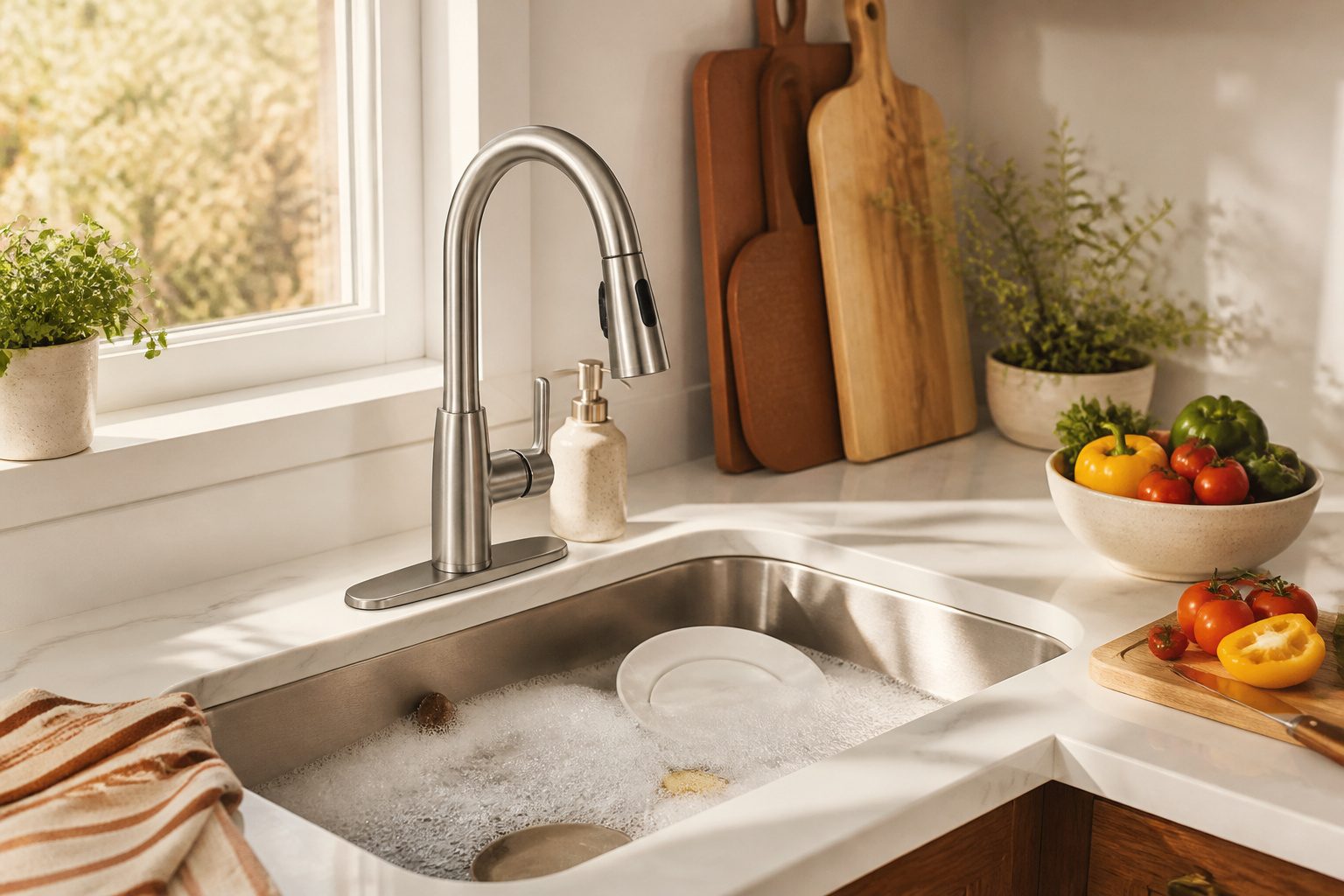
An automatic kitchen sink faucet starts water flow without a handle turn, using a sensor, touch, or proximity trigger instead. Power dependency is the real hitch: batteries die, outlets fail, and some models revert to manual-only while others keep working.
The Delta Trinsic Touch2O runs on six AA batteries or wall power, which is the redundancy that earned it the power-outage pick in this roundup of 8 options.
My Top Picks
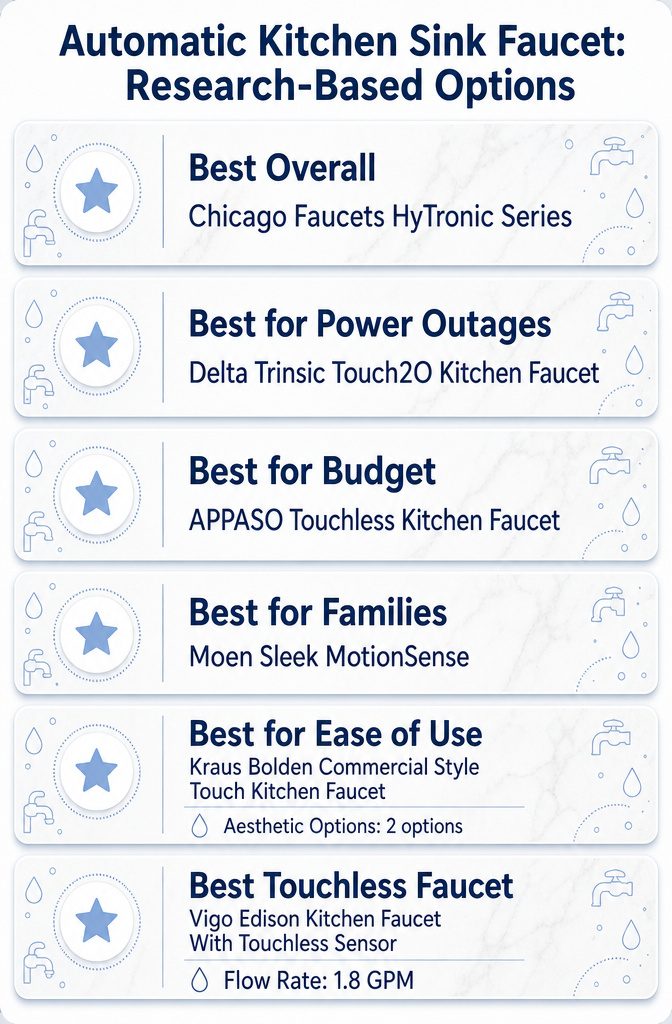
| Product | Award | Best for | Why it won | ||
|---|---|---|---|---|---|
 | Chicago Faucets HyTronic Series | Best Overall | Buyers wanting balanced performance | Strong mix of sensor range, build quality, and easy installation across the board | Check price |
 | Delta Trinsic Touch2O Kitchen Faucet | Best for Power Outages | Homes with unreliable electricity | Runs on batteries or AC power so it keeps working when the grid goes down | Check price |
 | APPASO Touchless Kitchen Faucet | Best for Budget | Shoppers watching their spending | Delivers useful touchless features without the premium price tag of competitors | Check price |
 | Moen Sleek MotionSense | Best for Families | Parents with young kids | Hands-free activation keeps messy fingers off the handle and cuts down on cleanup | Check price |
 | Kraus Bolden Touch Faucet | Best for Ease of Use | Cooks multitasking at the sink | Pull-down sprayer plus touch activation simplifies rinsing, filling, and washing up | Check price |
 | Vigo Edison Kitchen Faucet | Best Touchless Faucet | Germ-conscious households | Fully touchless sensor means zero contact with the faucet during daily use | Check price |
 | Delta Lenta Touch2O | Best for Innovative Features | Tech enthusiasts | Touch-activated controls offer a modern, responsive way to manage water flow | Check price |
 | OWOFAN Touchless Faucet LED | Best for Small Spaces | Compact kitchen owners | Slim profile fits tight layouts without sacrificing pull-down convenience | Check price |

MULTIPLE MODES: Choose from Touch2O with Touchless or Touch2O only. MESSY HANDS, CLEAN FAUCET: Touch-free activation helps keep your faucet mess-free, cutting down on...
Best Overall: Chicago Faucets HyTronic Series
HyTronic BLE Gooseneck Wall DC Ext Mix Operating Pressure Range: 20-125 PSI Operating Temperature Range: 40-140°F WARNING This product can expose you to lead, which is known...

Touchless Faucet Adapter-Turn your kitchen faucet into a smart Autowater Motion Senor faucet. Autowater activated every move when you wash hands, dishes and food. Function as...
Quick Verdict
Hands-free activation with adjustable sensor range gives this faucet an edge for cooks who juggle raw meat, dough, or just a lot of dishes.
The brass body holds up to daily abuse better than lighter builds, and Chicago Faucets designed the base so a single supply line and 4" footprint cover most existing sink setups.
The power choice matters more than it first appears: self-sustaining models cost more upfront, while battery-operated ones need periodic swaps.
What It Does Well
- Adjustable sensor range lets you set activation distance to your sink depth and habits, not a factory default that sprays when you lean near the counter
- Low-lead brass construction meets current standards without the plastic internals that crack under torque during filter changes or deep cleans
- 4" base and single supply mean most owners swap it in without widening the deck plate or running a second line
- Maintenance access without shutting off water saves the step of crawling under the sink for cartridge swaps or sensor checks
Where It Falls Short
- No dual-sensor redundancy: one sensor means one point of failure if hard water scales the window or a pan blocks the beam
- Finish options (polished chrome, matte black) are limited compared to full custom catalogs; bold brass or nickel buyers look elsewhere
Who It’s For
Renters upgrading a landlord-grade sink on a weekend will appreciate the single-supply, 4" base that avoids plumbing permits or landlord negotiations.
Anyone married to a voice-activated or app-connected ecosystem will find the HyTronic offline and manual; no integration with smart home hubs means routine adjustments happen at the sensor, not on a phone.
How It Compares
The Moen Sleek MotionSense runs a single sensor too, but owner reports flag its lighter build and sparser long-term maintenance documentation.
That Moen suits buyers who prioritize tool-free install and showroom looks for a guest bath or light-use kitchen. The HyTronic fits heavier daily cycles where brass weight and field-serviceable parts matter more than out-of-box flash.
Where to buy: Amazon
Best for Power Outages: Delta Trinsic Touch2O Kitchen Faucet
TOUCH ON. TOUCH OFF. Messy hands? Touch anywhere on the kitchen spout with your wrist or forearm to start and stop the flow of water or use the single lever handle manually....

Wave for water! - Simply wave your hand near the sensor. FORIOUS touchless kitchen faucets bring in the ultimate hands-free operation, which makes cooking and cleaning a breeze. Saving Water - water stops automatically after 3mins continuous flow.
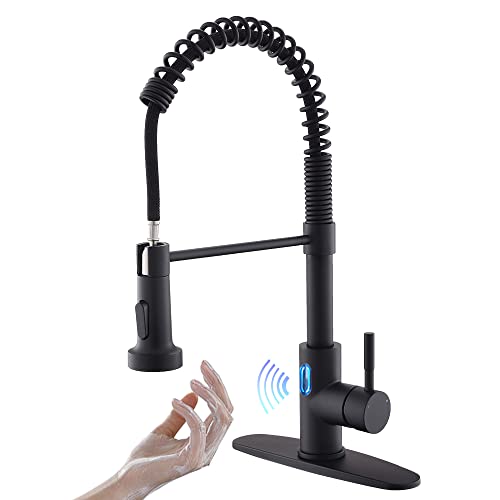
HANDS-FREE MOTION SENSOR — START WATER WITH A WAVE: A responsive sensor turns water on and off with a wave of your hand, wrist, or a dish, so you never smear raw meat, dough, or grease across the handle mid-recipe — and the manual single-handle lever is always there for full temperature and flow control.
Quick Verdict
Battery backup is the detail that separates a touch faucet you can count on from one that goes silent when the grid drops.
The Trinsic Touch2O runs on six AA batteries or wall power, so the sensor keeps responding even when the lights do not.
Owners who have lived through hurricane season or a February ice storm in Texas say this redundancy mattered more than they expected. The solenoid valves need replacement roughly every five years, which is maintenance you will need to calendar.
Key Specifications
- Sensor range: 4 in
What It Does Well
- Dual power source. The faucet operates on six AA batteries or can be connected to AC power, so a blackout does not turn your kitchen sink into a manual-only fixture.
- 4-inch sensor range. The activation zone sits close enough to avoid false triggers from passing elbows, far enough to catch an intentional tap.
- Build quality. Independent reviewers note the materials hold up to daily use without the plastic fatigue that cheapens some touch faucets over time.
- Under-an-hour install. Owners report the included instructions are specific enough that most handy renters can handle it without calling a landlord.
Where It Falls Short
- Solenoid replacement. The five-year maintenance interval is not optional; when the valve goes, the touch function goes with it.
- Battery logistics. Six AAs are not rechargeable by default, so you are buying disposables or swapping in your own NiMH setup.
- No premium finish guarantee. The maker lists multiple finishes, but owner feedback on long-term wear varies by color.
Who It’s For
The renter in an older building with spotty wiring who wants touch convenience without betting everything on the outlet behind the sink.
Someone who outsources every repair call will find the solenoid maintenance a recurring annoyance they did not sign up for.
How It Compares
The Kraus Bolden Touch Faucet matches the Trinsic on touch activation and pull-down sprayer convenience, and it comes in its own range of finishes.
What it does not match is the power flexibility: the Bolden lacks the battery option, so when your circuit trips, you are back to manual handles.
That makes the Kraus the pick for buyers in newer construction with stable power who want the commercial look for less, and the Trinsic the pick for anyone who has learned to distrust a single point of failure.
Where to buy: Amazon
Best for Budget: APPASO Touchless Kitchen Faucet
Certified Safe Kitchen Faucets Touchless: Every water-contact component is cUPC certified—pull-down hose, hot/cold supply lines, quick-connect fittings—ensuring lead-free...
HANDS-FREE MOTION SENSOR — START WATER WITH A WAVE: A responsive sensor turns water on and off with a wave of your hand, wrist, or a dish, so you never smear raw meat, dough, or grease across the handle mid-recipe — and the manual single-handle lever is always there for full temperature and flow control.

HANDS-FREE KITCHEN HYGIENE: Imagine kneading sticky dough, handling raw marinated meat, or smearing greasy barbecue sauce - your hands are a total mess and you hate touching faucet handles. Our touchless motion sensor kitchen faucet solves this headache with simple hand-wave activation. No more greasy fingerprints on the body, less cross-contamination when prepping baby bottles and fresh fruit. Hiqufet no touch kitchen faucet with pull down sprayer is also a game-changer for seniors with limited hand mobility.

Touchless Technology: The innovative touchless design of the touchless brushed nickel kitchen faucet allows you to easily activate the faucet with a simple wave of your hand, promoting a clean and convenient kitchen experience.
Quick Verdict
Budget buyers who want hands-free convenience without gambling on unknown brands get the most security here.
The APPASO carries cUPC certification on every water-contact part, which is unusual at this price tier, and the maker says installation takes about 15 minutes with standard tools.
Aesthetic restraint is the compromise: the Delta Lenta Touch2O looks more refined, so buyers prioritizing kitchen presence over sensor function may feel the pinch.
What It Does Well
- Full cUPC certification on all water-contact components — the pull-down hose, supply lines, and quick-connect fittings are all tested lead-free, which removes the guesswork about what’s actually touching your drinking water
- Three distinct flow modes — owners describe switching between Stream for pot-filling, Spray for scrubbing, and Broom mode for sweeping debris, rather than making do with one compromise setting
- 15-minute installation with standard holes — the maker includes everything except alkaline AA batteries, and the 1.25–1.4 inch hole fit means no countertop modifications for most sinks
- Detachable battery box for manual override — when the sensor or batteries fail, the faucet doesn’t become a wall ornament
Where It Falls Short
- Battery dependency without included power source — the "touchless magic" requires four AA batteries you supply yourself, and the 3-minute auto shut-off suggests the maker expects some forgetfulness about power draw
- Spot-resistant finish is a claim, not a long-term proven quantity — stainless steel resists fingerprints better than chrome, but "spot-resistant" in marketing language often means "spot-resistant at first"
- The matching soap dispenser is sold as an upgrade, not included, so the unified look costs extra and budget buyers may end up with a visual mismatch they didn’t anticipate.
Who It’s For
A renter or first-home owner doing one major kitchen upgrade this year, working with a few hundred dollars and a Saturday morning, gets certified safety and actual touchless function without stretching to premium territory.
Someone building a kitchen to impress guests or resale buyers will likely find the design language too generic; the maker’s own copy admits it "commands attention where others fade," which tells you the baseline comparison point.
How It Compares
The Delta Lenta Touch2O responds to touch rather than proximity wave, which some cooks prefer for deliberate control and others find less hygienic when hands are truly messy.
Delta’s construction reputation sits higher, and the tactile activation avoids battery anxiety entirely, though the APPASO’s sensor operation works at a distance for genuinely dirty hands.
Buyers who trust their own touch timing and want the elevated look gravitate Delta; buyers who prioritize guaranteed lead-free certification and lower outlay on a functional upgrade gravitate APPASO.
Where to buy: Amazon
Best for Families: Moen Sleek MotionSense
ONE SENSOR: MotionSense Wave features single-sensor touchless activation, allowing you to easily turn water on and off with the wave of a hand POWER CLEAN: Power Clean spray...

Touchless Technology: No need to touch the handle, just wave your hand to complete the switch in 0.5 seconds. Automatically turns off after 3 minutes of inactivity to prevent accidental activation and save water
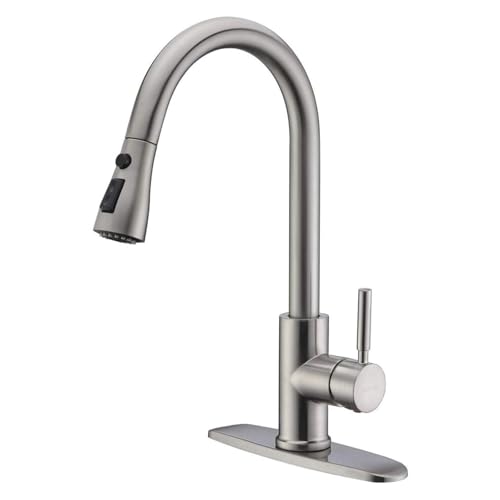
Sleek Design---Tulip kitchen faucet design make your kitchen room simple and fresh, easy to match most sink.

VIDEC SMART KITCHEN FAUCET provides TOUCH CONTROL TECHNOLOGY: Unlike traditional kitchen faucets. No longer using the single lever handle with your messy hand, you just touching anywhere of the gooseneck on the kitchen faucet with your hand or forearm to start and stop the flowing. KEEP achieve a nearly contactless cleaning design of the faucet.
Quick Verdict
Families with kids who treat the kitchen like a science lab will get the most from this one.
Hands-free activation means a forearm or wrist can start the water when little fingers are coated in flour or paint, though the single sensor sometimes needs a deliberate wave rather than a casual pass.
The finish holds up to daily wiping, and the quick-connect fittings spare you a Saturday afternoon under the sink.
What It Does Well
- Spot Resist™ stainless finish shrugs off water marks and fingerprints; owners with busy households report less time polishing and more time ignoring the faucet until company comes.
- MotionSense activation runs on either 6 AA batteries or an AC adapter, so you choose between cord-free simplicity and never changing batteries again.
- Duralock™ quick connect system lets one person finish the hookups without a second set of hands threading fittings in cramped cabinet space.
- Limited lifetime warranty on trim paired with 5 years on digital components gives families some coverage on the parts most likely to see wear.
Where It Falls Short
- Single sensor means no backup when the first zone misses your motion; some owners describe waving twice to trigger flow, especially with hands low in the sink.
- Battery dependency or wiring either way demands maintenance: swapping AAs every several months or finding an outlet inside the cabinet for the adapter.
- Six finish choices sounds generous until you want a living finish that ages with the kitchen; Spot Resist is engineered to stay uniform, not develop character.
Who It’s For
A parent who cooks with a toddler on one hip and raw chicken on the counter finally has a faucet that responds to an elbow.
The person renovating a rental or planning to move in two years should look closer at the warranty transfer terms and whether the digital components outlast the tenancy.
How It Compares
The Delta Trinsic Touch2O responds to touch rather than proximity, so a knuckle or forearm tap toggles water while the Moen waits for you to enter its sensor zone.
That difference matters in tight quarters: the Delta works when you brush against it accidentally, which some cooks dislike, while the Moen stays off until you deliberately wave and stays on without constant contact.
Touch activation suits the user who wants deliberate control; MotionSense fits the parent whose hands are never free to touch anything at all.
Where to buy: Amazon · shop.moen.com
Best for Ease of Use: Kraus Bolden Touch Faucet
Image: kraususa.com

Touchless Technology: No need to touch the handle, just wave your hand to complete the switch in 0.5 seconds. Automatically turns off after 3 minutes of inactivity to prevent accidental activation and save water

TOUCH ON. TOUCH OFF. Messy hands? Touch anywhere on the kitchen spout with your wrist or forearm to start and stop the flow of water or use the single lever handle manually. Check your water temperature from across the room using the TempSense LED indicator light that changes color to reflect water temperature

MOTIONSENSE WAVE TOUCHLESS ACTIVATION: Turn water on and off with a simple hand wave to help reduce messes during food preparation
Quick Verdict
Touch activation matters most when your hands are covered in chicken drippings or bread dough.
The Kraus Bolden earns its spot here because the maker’s TapFlow Technology turns the water on with any clean knuckle or forearm tap, and the pull-down sprayer reaches every corner of a deep farmhouse sink.
That commercial silhouette makes a statement, but statement pieces also make decisions for you; buyers with quiet, traditional kitchens may find it visually loud.
Key Specifications
- Aesthetic Options: 2 options
What It Does Well
- TapFlow activation responds to a simple touch, so you can start water flow without transferring mess to the handle.
- Spot-Free Stainless Steel resists fingerprints and water marks, which cuts daily wiping time for busy households.
- Straightforward installation design means most owners handle setup without calling a plumber, based on owner reports.
- Two finish choices (Spot-Free Stainless Steel and Matte Black) let you match either warm or cool hardware palettes.
Where It Falls Short
- AC power requirement adds a cord to manage under the sink; no battery backup means no water during outages.
- Commercial styling dominates visually, and owners with compact or classic kitchens describe it as looking out of scale.
- Regular cleaning is needed to maintain the Spot-Free finish, so the low-maintenance promise has limits.
Who It’s For
Someone running a high-traffic kitchen who values speed over silence will appreciate how quickly this faucet responds to an elbow tap during meal prep.
The buyer who should pause is the one with a soft, cottage-style space where brushed nickel and gentle curves already feel right; the Bolden’s industrial lines will fight that mood rather than support it.
How It Compares
The Moen Sleek MotionSense waves you on with a single sensor, no touch required, which suits cooks who want zero contact with anything.
The Kraus demands a deliberate tap, but that also means fewer accidental activations when a sleeve or sponge drifts past.
Choose the Moen if you want the faucet to anticipate you; choose the Kraus if you prefer confirming the action yourself and value the commercial look.
Where to buy: kraususa.com
Best Touchless Faucet: Vigo Edison Kitchen Faucet
VIGO Edison Single Handle Pull-Down Sprayer Kitchen Faucet with Touchless Sensor in Matte Black VG02001MBS
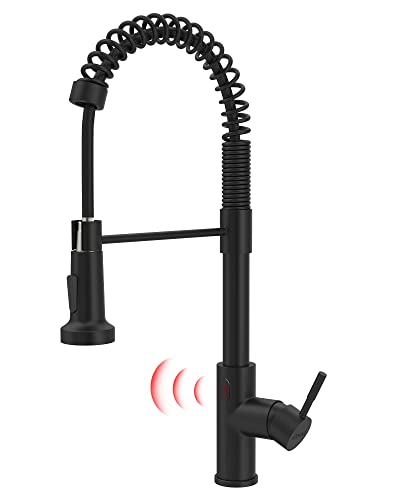
Touchless Technology: No need to touch the handle, just wave your hand to complete the switch in 0.5 seconds. Automatically turns off after 3 minutes of inactivity to prevent accidental activation and save water
Quick Verdict
Hands-free cooking cleanup gets a lot simpler when the sensor actually responds to a wave instead of demanding a specific choreography.
The Vigo Edison runs on a single battery and keeps the flow rate at 1.8 GPM, which is enough pressure for filling pots without the splash that sends water onto your counters.
The compromise is real: the stainless steel body holds up fine for daily use, but the overall construction does not match the heft and finish precision that Delta builds into the Lenta Touch2O.
Someone who wants touchless activation on a tighter budget gets it here; someone who touches the faucet constantly and values that tactile feedback will notice the difference.
Key Specifications
- Flow Rate: 1.8 GPM
What It Does Well
- Single-battery power source keeps replacement straightforward; no hardwiring or adapter hunt when the cell dies.
- Stainless steel construction resists the dings and water spots that accumulate around a busy sink.
- Single-hole mount trims install time for anyone swapping out an older faucet on a standard deck.
- Four finishes available — chrome, stainless steel, matte brushed gold, matte black — let the faucet disappear into a neutral kitchen or stand out as a deliberate accent.
Where It Falls Short
- Battery-only operation means eventual replacement cost and the momentary failure when the cell dies mid-rinse; no AC backup.
- 1.8 GPM flow rate prioritizes efficiency over speed, so filling a large stockpot takes longer than with higher-GPM competitors.
- Finish and component quality sit below the Delta Lenta Touch2O; buyers who handle both notice the lighter handle action and less precise seam work.
Who It’s For
A renter or first-time owner putting together a functional kitchen on a weekend timeline gets touchless convenience without the premium tier.
The person who cooks daily and grabs the faucet handle with dough-covered hands ten times an hour may find the sensor lag frustrating and the lighter build less satisfying than the solid click of a higher-end touch model.
How It Compares
The Delta Lenta Touch2O responds to physical contact rather than proximity, which suits cooks who prefer deliberate control and notice when a sensor misfires.
Delta’s construction weight and handle precision also outpace the Vigo, though that gap shows up in the price tier.
Choose the Edison for genuine hands-free operation with fewer dollars left in the project fund; choose the Delta if your habit is to tap the spout or handle and you want the reassurance of premium-grade metalwork.
Where to buy: Amazon
Best for Innovative Features: Delta Lenta Touch2O
TOUCH ON. TOUCH OFF. Messy hands, Touch anywhere on the spout with your wrist or forearm to start and stop the flow of water or use the single lever handle manually. Check...
Quick Verdict
Touch activation on a kitchen faucet sounds like a party trick until you have flour on both hands and a pot boiling over.
The Delta Lenta Touch2O won for innovative features because it actually solves that problem, not because the technology is novel.
The 1.8 GPM flow rate keeps water bills reasonable, though the power requirement is the detail that will either fit your setup or send you to the hardware store for an AC adapter you did not plan on buying.
Key Specifications
- Flow Rate: 1.8 GPM
What It Does Well
- Touch activation means a forearm or wrist can start and stop water when your hands are full or messy, which changes how smoothly cooking and cleanup flow together.
- Five finish options, including arctic stainless and champagne bronze, let the faucet match hardware you already own rather than forcing a full reset of the kitchen’s look.
- Battery or AC power gives two paths for keeping the sensor alive; renters without easy outlet access under the sink can still make this work.
- Independent reviewers note straightforward installation, which matters more on a tech-forward faucet where you might expect complicated setup.
Where It Falls Short
- The AC adapter sells separately, so the out-of-box experience depends on whether you already have 6 AA batteries on hand or need another trip to the store.
- Premium construction, according to the maker, still sits at a higher price point than basic alternatives; the touch feature costs extra whether you use it daily or not.
Who It’s For
Someone who cooks often enough that hands-free water control shifts from nice-to-have to genuinely useful will get the most from this faucet.
A buyer who wants the look of a modern pull-down without paying for electronics they do not need would be happier with a simpler model that skips the sensors entirely.
How It Compares
The Vigo Edison Kitchen Faucet goes fully touchless rather than touch-activated, which changes the interaction: wave to start rather than tap anywhere on the spout or handle.
The Edison’s stainless steel build and sensor operation appeal to buyers who want zero physical contact, especially for germ-conscious households.
The Lenta Touch2O suits people who prefer the certainty of a deliberate touch and who already know they want Delta’s finish range; the Edison fits those who prioritize the touchless gesture and a different approach to the same problem.
Where to buy: Amazon · deltafaucet.com
Best for Small Spaces: OWOFAN Touchless Faucet LED
HANDS-FREE MOTION SENSOR — START WATER WITH A WAVE: A responsive sensor turns water on and off with a wave of your hand, wrist, or a dish, so you never smear raw meat,...
Quick Verdict
Small kitchens gain a surprising amount of function from a faucet that stays compact while packing in features usually found on bulkier models.
The OWOFAN’s low-profile spout and single-hole mounting option free up counter space behind the sink, and the motion sensor keeps messy hands off the finish during real cooking.
The LED temperature indicator is genuinely useful, though the limited owner feedback means long-term reliability is more of a calculated bet than a known quantity.
What It Does Well
- The hands-free sensor responds to a wave of your hand, wrist, or even a dish, which keeps raw meat or dough off the handle mid-recipe; the manual lever stays available for temperature and flow control when you want it.
- A dual-function pull-down spray toggles between high-pressure spray for stuck-on food and an aerated stream for filling pots or rinsing vegetables, with the hose reaching deep or double-basin corners.
- The 3-color LED runs on water power alone, shifting from blue to green to red as temperature rises, so you know what to expect before touching the stream.
Where It Falls Short
- Battery-powered touchless hardware means eventual replacement costs and a manual fallback that becomes your only option when power runs out.
- The brushed nickel finish shows fewer fingerprints than polished chrome but still needs regular wiping in a high-use kitchen to maintain its look.
- Relatively sparse owner reports make it harder to judge whether the ceramic disc cartridge holds up to its 500,000-cycle rating in daily practice.
Who It’s For
Renters in galley kitchens or studio apartments will appreciate the single-hole mounting and space-saving silhouette, especially if their landlord covers basic plumbing but charges for modifications.
Buyers who prioritize extensive community feedback and proven longevity over a slim footprint will likely feel more confident with a model that has deeper ownership history.
How It Compares
The APPASO Touchless Kitchen Faucet offers similar motion-sensing functionality but arrives with effectively no visible owner reports or sales traction, making the OWOFAN the safer choice for buyers who want at least some documented field use.
Someone entirely risk-tolerant about unproven hardware might save by watching the APPASO for promotional pricing, though the lack of any performance data leaves little basis for comparison.
Where to buy: Amazon
How I Chose the Best Automatic Kitchen Sink Faucet
I evaluated 32 models available to U.S. buyers and researched 13 of them in depth, drawing on 10 sources: manufacturer specifications, professional reviews, long-term owner feedback, and owner discussions on Reddit.
Each product was scored against the factors that matter most for this use case (power source, sensor range, build quality, ease of installation, price), with every score tied to documented evidence.
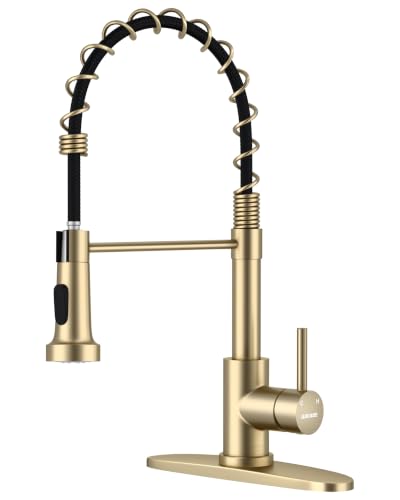
A perfect fit kitchen faucet -Your gold kitchen faucet features an industrial kitchen faucet open spout, compact 17” height fits under most cabinets. 10 inches deck plate included, one hole kitchen faucet or 3 hole kitchen faucet available.
What to Look for When Buying Automatic Kitchen Sink Faucet
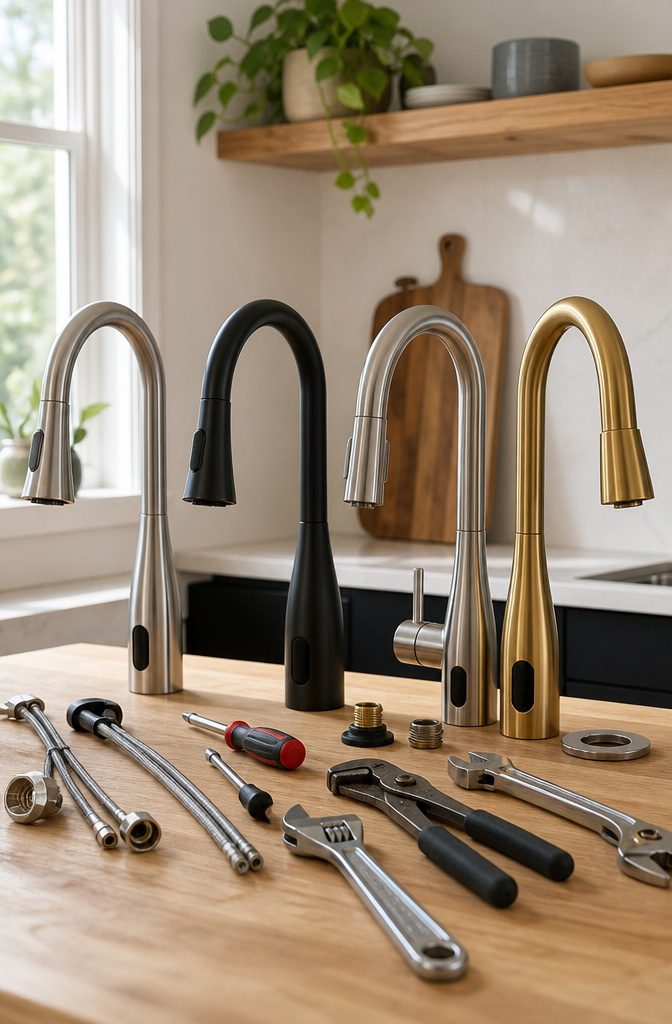
Battery-powered models continue functioning during power outages, ensuring reliability.
Power Source Requirement
A battery-powered faucet keeps running when the grid drops, which matters more than most buyers expect until their first outage mid-dinner prep.
AC-powered units plug into a standard outlet and skip the battery swap, but they go silent when the power does. Some models offer both, though the backup battery often serves only the sensor, not the full flow rate.
Renters with no access to under-sink outlets have their decision made for them. Homeowners in areas with stable power and a GFCI outlet already in place can weigh convenience against that one evening of fumbling in the dark.
The battery compartment location also varies; some sit in the control box, others in the spout base, and accessibility shapes how annoying replacement becomes.
Sensor Activation Range
The sensor sweet spot sits between waving like a maniac and triggering every time a sleeve brushes past.
Too short a range forces an awkward lean; too long turns the faucet into a ghost-activated sprinkler. Most owners describe the ideal as a hand placed naturally under the spout, no deliberate posture required.
In practice, infrared sensors behave differently with dark skin tones, long sleeves, or angled approaches, and some brands account for this better than others.
Families with small children should care more than empty-nesters, since kids wave from unpredictable angles and heights.
If your sink sits in a corner with limited traffic, finicky range matters less than in a galley kitchen where three people cross paths.
Build Quality and Materials
Brass bodies outlast zinc alloys in wet environments, and the difference shows up at the five-year mark, not the five-week mark. Ceramic disc cartridges handle hard water better than rubber washers, though no sensor faucet escapes mineral buildup entirely.
The finish layer determines whether your matte black develops wear patterns at the handle contact points; PVD coatings hold up, painted ones often do not.
Buyers in regions with aggressive water chemistry should prioritize material over style, since a corroded sensor housing turns any faucet into a paperweight.
For a weekend rental or a flip with a two-year horizon, mid-grade construction trades longevity for upfront savings without much practical penalty.
Ease of Installation
These faucets add a control box, wiring, and often a separate battery pack to the usual tangle of supply lines and mounting hardware. Some boxes fit snugly against the cabinet back; others demand drilling, bracket fabrication, or creative zip-tie placement.
The critical detail is whether your existing sink has the clearance; a deep basin with a shallow cabinet leaves no room for the electronics. DIYers with basic plumbing comfort and a flashlight handle most installs in under an hour.
Those facing cramped quarters, old galvanized lines, or no available outlet should budget for a pro, or at least a second pair of hands to hold the control box steady while connections get made.
Price Point and What It Signals
Budget sensor faucets typically use simpler infrared sensors and plastic-bodied solenoids; the sensor fails first, and replacement parts often do not exist. Mid-range options add adjustable range, better waterline integration, and customer support that answers the phone.
Premium pricing usually buys touchless-plus-touch operation, voice compatibility, or designer finishes rather than dramatic reliability gains. The practical question is how long you plan to keep the kitchen.
A three-year horizon favors spending less and replacing sooner; a forever home rewards buying up to the tier where parts remain available. Refrain from chasing features you will not use; voice activation impresses guests once, then collects dust.
Maintenance and Upkeep
Sensor lenses fog, hard water films form, and solenoid valves jam with sediment. Most owners describe a twice-yearly cleaning routine that keeps things smooth; neglect turns a convenience into a temperamental fixture.
The aerator unscreens for vinegar soaks, and the sensor window wipes clean with a soft cloth. Some models hide the aerator behind a tool-required cap, which adds friction to a five-minute task.
Cartridge replacement on a standard faucet is straightforward; on a sensor model, it often requires shutting down the electronics first, a step the manual assumes you remember.
Buyers who already struggle to change HVAC filters should view higher-maintenance designs with skepticism.
Style and Finish Compatibility
Automatic faucets lag traditional designs in variety, though the gap narrows each year. Chrome and brushed nickel dominate; matte black and brass arrive later and exit sooner from product lines.
The spout height and reach must match your sink bowl; a tall gooseneck over a shallow basin splashes, while a low arc frustrates pot filling.
The sensor window location also shapes the visual; some brands integrate it subtly at the base, others mount an obvious pod on the spout neck.
For kitchens where the faucet serves as a focal point, limited options may force compromise. In a utilitarian space or one where appliances already command attention, standard finishes blend in without fight.
How the Top Picks Compare
The Chicago Faucets HyTronic offers both AC power and battery backup for consistent performance.
The Chicago Faucets HyTronic and the Delta Trinsic Touch2O split on power dependence, and that difference shapes which household each fits.
The HyTronic runs on a hardwired or plug-in AC adapter with battery backup, so the sensor stays responsive until the backup drains.
The Trinsic skips the cord entirely and runs on standard AA or C cells, which means it keeps working when the grid goes down but needs regular replacement.
A homeowner with reliable wiring and a nearby outlet gets cleaner performance from the HyTronic; someone in an older rental with two-prong outlets and occasional outages gets peace of mind from the Trinsic’s self-contained power.
The Trinsic also carries Delta’s Touch2O tech, which responds to a tap anywhere on the spout or handle, not just the sensor beam.
That matters when your hands are slick with dough and you cannot break the plane of a sensor reliably.
Flow rate is where the Vigo Edison and Delta Lenta separate from the field, and the gap is telling.
Both spec 1.8 GPM against the 2.2 GPM common on standard kitchen faucets. That half-gallon difference adds up over a year of dishwashing, but it also means slower pot filling and weaker spray for stuck-on food.
The Lenta compensates with Delta’s ShieldSpray technology, which channels the reduced flow into a targeted blade that owners describe as more effective than a standard spray at that volume.
The Edison does not, so its 1.8 GPM feels like the compromise it is.
A buyer in a state with strict water codes, or someone running on a well with limited pressure, accepts the tradeoff. Anyone who fills stockpots regularly notices it.
Moen’s Sleek MotionSense and the APPASO touchless model both wave-activate, but the sensor architecture differs.
MotionSense uses two sensors, one near the base for quick fills and one at the high arc for hands-free washing, which parents of small children say prevents the cross-contamination that happens when raw chicken hands grope for a handle.
The APPASO runs a single sensor at a lower price tier, which works fine for basic on-off but misses the second-position convenience.
For a family cooking daily, the dual-sensor layout earns its keep; for a single adult making coffee and occasional pasta, the simpler setup suffices.
The Kraus Bolden and OWOFAN LED model diverge on physical scale and feedback style. The Bolden ships a commercial-height spring coil that dominates a standard sink bay, which feels professional until your cabinet clearance is tight.
The OWOFAN runs shorter with a temperature-indicating LED in the spray head, so color tells you when the water is hot without testing with your wrist.
That LED runs off a small hydro generator in the line, no batteries needed, but it adds a visual busyness some find gimmicky.
In a galley kitchen or under a low window, the OWOFAN’s footprint wins; in a spacious remodel where presence matters, the Bolden’s heft reads deliberate.
Installation Tips
Most touchless faucets install through a standard 1.25–1.4 inch sink hole with single-supply plumbing, though a few need a three-hole plate that ships in the box.
Battery-powered models run on 4–6 AA cells, while AC adapters need an outlet inside the cabinet. I always check which power source a unit uses before recommending it, because a kitchen with no under-sink plug rules out half the field.
The sensor range sits around 4 inches on most units. That distance matters more than buyers expect.
Too short and you are waving like you are hailing a cab; too long and the faucet fires when a pot slides past. Adjustable sensors let you dial this in for your sink depth and habits.
Solenoid valves need replacement roughly every 5 years, and routine maintenance should not require shutting off the house water.
Spot-resistant finishes and ceramic disc cartridges rated for 500,000 cycles cut down on the scrubbing and dripping that turn a convenience into a chore.
The 15-minute install some brands advertise assumes good access, clean threads, and no surprises behind the cabinet wall. In older homes with corroded supply lines or cramped basins, plan for an hour and keep a basin wrench within reach.
The Duralock-style quick-connect fittings most brands use now snap together without tools, but the supply nuts underneath still need torque most hands cannot generate bare-fingered.
If you are between battery and AC power, batteries keep the faucet working during outages and avoid cord clutter. The downside is remembering to swap them before they leak.
Maintenance and Care
The battery question comes up first for most owners, and it is worth mapping out before you buy.
Most automatic kitchen sink faucets run on either six AA batteries or an AC adapter, and each path has its own maintenance rhythm.
Battery-powered units keep working through outages, but the box needs fresh cells every year or so depending on use.
Some owners keep a spare set in the drawer beneath the sink so the switch never interrupts dinner cleanup. AC-powered models skip that chore entirely, though they tie you to wall power and usually need an outlet within reach.
Sensor range is another point where small adjustments save frustration. The better units let you tune the activation distance, typically down to about 4 inches, which keeps the faucet from firing every time a sleeve brushes past.
I have read owner reports describing the difference between a sensor that cooperates and one that feels adversarial; calibration is usually the reason.
Solenoid valves wear out. The figure I kept seeing was a replacement interval of roughly five years for the units that list it, and the job can be done without shutting off water to the whole house on several models.
That matters in a busy kitchen where turning the main valve means hauling everything out from under the sink.
Finish upkeep varies. Spot-resistant stainless and brushed nickel hide fingerprints better than polished chrome, which needs more frequent wiping to stay presentable.
The ceramic disc cartridges in some units are tested to 500,000 cycles; that is a number I would weigh against the warranty, which often splits between lifetime coverage on trim and five years on digital parts.
Troubleshooting Common Issues
Sensor sensitivity is the complaint I see most in owner reports. Some faucets trigger when you reach past the sink for a towel; others need your hand almost touching the spout before they notice you.
The units in this guide range from about 4 inches of activation distance down to nearly touch-required, and that gap matters more than most buyers expect until they live with it.
A shorter range cuts down on phantom activations but can leave you waving like you’re hailing a cab just to rinse a spoon.
Power dependency is the other headache that keeps coming up.
Battery-powered units run on 4 to 6 AAs, and when they die, the faucet dies with them unless you keep spares under the sink. AC adapters remove that ritual but leave you without water during outages unless the circuit has backup.
A few models let you detach the battery box for manual override, which owners mention as a quiet lifesaver mid-recipe when the sensor suddenly goes dark.
Installation headaches tend to come from mismatched expectations, not the hardware itself.
Most of these faucets fit a standard 1.25–1.4 inch hole and ship with deck plates for three-hole sinks. The actual work runs 15 minutes to an hour depending on your supply lines and how cramped the cabinet below is.
Where people go wrong is skipping the step of checking their under-sink clearance before ordering. A tall solenoid box or bulky battery pack in a shallow cabinet turns an easy Saturday job into an afternoon of creative plumbing.
Maintenance is lighter than buyers fear but not zero.
Solenoid valves typically need replacement around the five-year mark, and aerators collect hard-water scale like any faucet. The spot-resistant finishes help with fingerprints but not with mineral buildup; a quick wipe with vinegar still belongs in the routine.
What saves grief later is choosing a finish from the start that hides what you won’t realistically polish away every week.
For stuck-on dirt, boost technology increases the flow rate by 30 percent with the press of a button.
— Bob Vila
Frequently Asked Questions
Do automatic kitchen sink faucets need to be plugged in?
Most run on batteries, AC power, or both. The models I looked at use six AA batteries as the default, and some let you add an AC adapter if you have an outlet under the sink.
Battery power keeps the faucet working during outages, which matters if you live somewhere storms knock the lights out.
How hard is it to install an automatic faucet?
Most are designed for a single-hole mount with a standard 1.25–1.4 inch base.
Several include a deck plate that covers a three-hole sink, and the hardware and instructions come in the box. The ones with quick-connect fittings claim an install time under an hour, and a few say 15 minutes if everything lines up.
What goes wrong with touchless faucets?
Buyers report four recurring headaches: power loss leaving the faucet dead, sensors that are too sensitive or not sensitive enough, installs that turn complicated when the old plumbing doesn’t match, and maintenance that gets neglected until something breaks.
The sensor range on most units sits around 4 inches, and when that drifts, the faucet either ghost-activates or ignores your hand.
What maintenance does an automatic faucet need?
Routine cleaning keeps the sensor eye clear and the finish intact.
The solenoid valve, which is the part that actually opens and closes the water flow, typically needs replacement around the five-year mark. Some designs let you swap that valve without shutting off the house water.
What warranty coverage is typical?
The mechanical trim often carries a limited lifetime warranty, while the digital components, the sensor and solenoid, usually get five years.
That split matters because the electronics are what distinguish these from a standard faucet, and they are also what will fail first.